Match supply and demand to regenerate landscapes
 Landscape Enterprise Networks
Summary
Landscape Enterprise Networks (LENs) structures annual trades financing regenerative practices, enhancing landscape resilience and productivity in Europe
Context
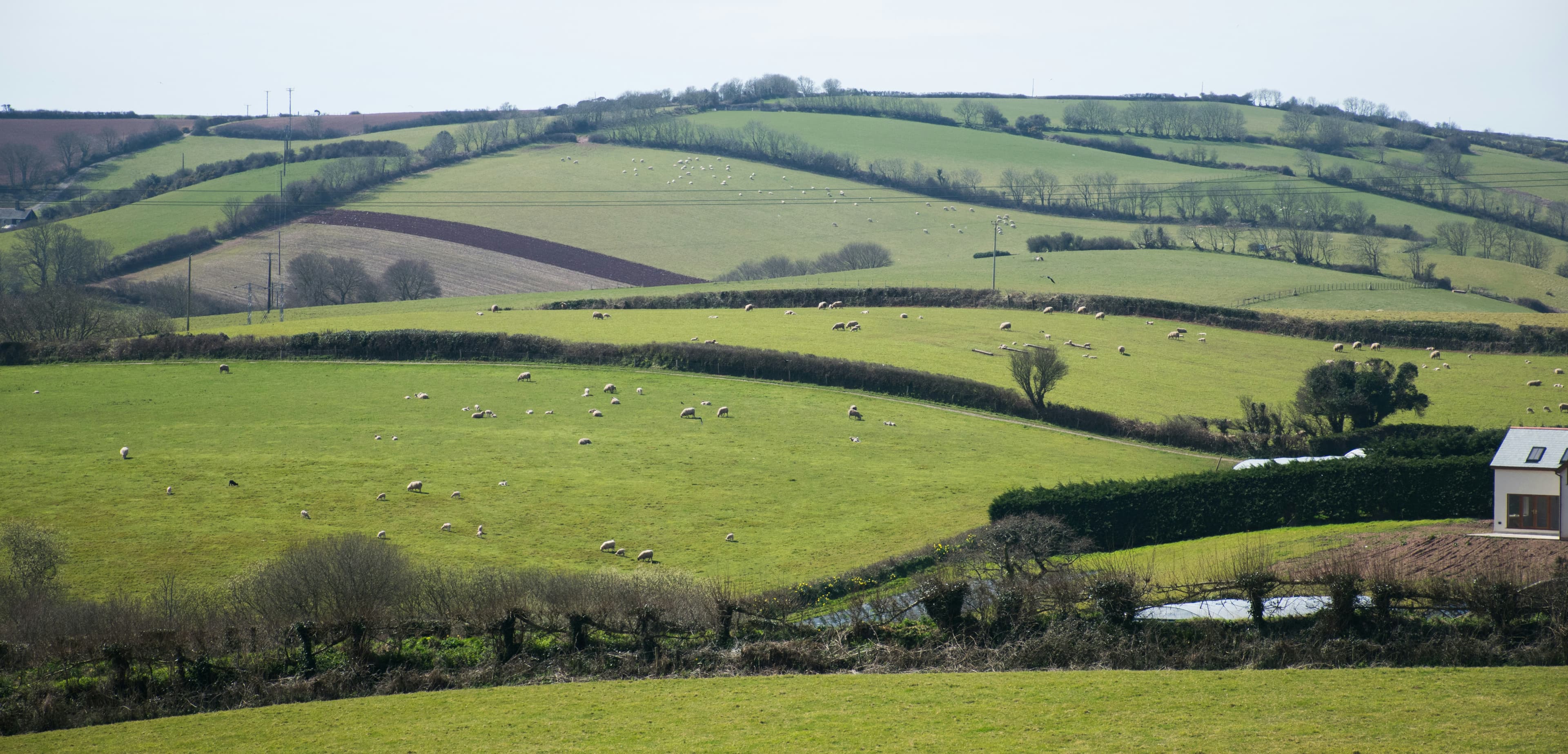
In the East of England, which accounts for 15% of the country’s total land area, agriculture is a key driver of the local economy. Through the region’s intensive, high-value production systems, it delivers twice the national average in gross added value. Rich soils and important water resources, supporting diverse habitats and a growing urban population, are the main characteristics of the landscape. However, current land uses – including intensive farming and water abstraction – are rapidly depleting many of the resources upon which these activities depend. The area is at increasing risk of flooding, sea level rise and water scarcity, which has significant potential to impact business operations, livelihoods and well-being. There is an urgent need to regenerate the landscape in a way that balances productivity with long-term resilience.

Solution
LENs structures annual trades that aggregate capital around shared landscape goals, reducing transaction costs and ensuring that individual investments contribute to system-level change. Each trade involves a group of buyers at one end – agrifood businesses, water companies, traders, millers, and local governments – and a group of land management enterprises at the other. The aim is to set up networks, including supply and demand partners, to work towards the shared goal of improving the health, productivity and resilience of the landscapes they all rely on. The initiative supports farmers in transitioning to regenerative agriculture by engaging them in a farmer-led process for practice selection, funding for various transition costs, resilience payments for the regenerative outcomes that farmers produce, targeted innovative measures. The funding supports both capital expenditures, such as the purchase of machinery and equipment, and operational expenditures, such as seeds and agricultural inputs.
As LENs aims to support the transition of whole landscapes, its approach is not tied to a single crop but rather defined by the sourcing interests of demand partners in the region, the catchments feeding the water bodies demand partners rely on, and what farmers in the landscape are producing. This case study refers to one landscape, in East of England.
Figure 1: Female farmer in the field

Impact
Sustainability impact
Climate
LENs targets Scope 3 emissions: demand partners may communicate Scope 3 emission reductions and removals, as well as contribution claims proportionate to the amount of their financial contribution to LENs.In 2024, LENs programs sequestered 46,390 metric tons of carbon dioxide equivalent (tCO2e) throughthe soil.
Nature
The initiative promotes holistic landscape outcomes (water, soil, biodiversity). The initiative promotes biodiversity by creating new habitats, reducing pesticideuse, and increasing the presence of key species (+80% woodland birds). In 2024, LENs planted 29 km of hedgerows, created 16 hectares of wildflower or pasture field margins, and established 21 hectares of woodland.
Social
LENs improves farmers' economic outcomes by providing financial support and technical assistance, leading to increased productivity and income. The initiative also promotes social inclusion by monitoring the number of women farmers and the ratio of farm ownership.
Business impact
Benefits
The initiative enhances farmers' productivity and income, reduces input costs, and improves water management. It also supports the resilience of agrifood supply chains and helps businesses meet their sustainability goals.
Costs
The initiative is designed to enable actors in the landscape to invest directly into farmers’ transitions and receive a return on their investment in the form of verified ecosystem services. In doing so, 80% of all funding goes directly to farmers. The remaining 20% is allocated to farmer education, technical assistance, network learning, and measurement, reporting, and verification (MRV) activities, and overall service delivery. LENs operates several landscapes across Europe. In the East of Englad landscape, LENs works with 13 farms covering 3.205 hectares and 7 demand partners, with a capital deployment of £865,615.00.
Implementation
Typical business profile
The LENs initiative is most relevant for agricultural businesses, particularly those involved in the production of wheat, oilseed rape, oats, sugar beet, and barley. The initiative is suitable for farmers who are at various stages of their transition to regenerative agriculture, from those just beginning to adopt regenerative practices to those who are more mature in their transition. LENs is also relevant for agrifood businesses, water companies, local governments, and other stakeholders who rely on the health, productivity, and resilience of agricultural landscapes. The initiative supports businesses in achieving their sustainability goals, improving supply chain resilience, and contributing to landscape-level environmental outcomes.
Approach
Engage demand partners to procure ecosystem services
Farmers submit practice and innovation proposals through the LENs Application Tool.
LENs assesses proposals and allocates funding based on demand partner specifications.
Farmers implement agreed measures and participate in MRV activities.
Stakeholders involved
Project Leads: 3Keel (founder)
Company functions: sustainability, procurement.
Main providers: Nestlé Purina, Anglian Water, Cereal Partners UK, West Northamptonshire Council (founding partners); Affinity Water, Anglian Water, Cargill, Cereal Partners UK, Nestlé Purina, PepsiCo, West Northamptonshire Council (demand partners); Cefetra, Charles Jackson & Co, Chilton Grain, Frontier Agriculture, Openfield Agriculture (supply aggregators); Landscape Enterprise Networks (LENs) (operator)
Other: NGOs, farmers, and land managers
Key parameters to consider
Initiative maturity: Well-established practice with ongoing research and development. Collective data collection across the landscape enables insights for year over year increases in cost-efficiency through more efficient deployment of high-performing practices.
Co-funding efficiency: By aligning actors across the landscape, LENs is designed to share the costs of transition among landscape actors who benefit from regeneration, enabling varified outcomes with optomized cost.
Subsidies: Public incentives and government funding can be stacked with LENs funding
Implementation and operations tips
Address farmers' key concerns and provide support during the transition to regenerative agriculture.
Leverage public incentives and government funding to make the transition more accessible.
Conduct field demonstrations and training sessions to support the adoption of regenerative practices.