Incentivize sustainable dairy through outcome-based payments
 FrieslandCampina
Summary
Rewards farmers for progress in climate, nature, animal welfare, and grazing, accelerating sustainable dairy production
Context
The dairy sector faces urgent decarbonization challenges. Major emission sources include methane from rumen fermentation, nitrogen from manure and fertilization, and the carbon intensity of feed and energy use. Biodiversity loss is also a critical concern, driven by habitat degradation from intensive agricultural practices. While biodiversity loss is a global issue, these climate and ecological pressures are especially relevant in the regions where 14,000+ member farmers operate: the Netherlands, Germany, and Belgium.
To address these challenges, Foqus planet incentivizes measurable sustainability improvements at farm level. Through performance-based premiums, it targets reductions in greenhouse gas emissions, ammonia, and nitrogen, while promoting biodiversity via herb-rich grasslands and nature-inclusive management. This strategy aligns farm-level actions with broader climate and ecological goals.
Solution
To tackle the climate and biodiversity challenges in dairy farming, FrieslandCampina implements the Foqus planet sustainable development table. This initiative tracks farm-level performance across key sustainability indicators—climate, biodiversity, animal health & welfare, and grazing—and ties financial rewards directly to measurable outcomes.
A central feature is the use of the Biodiversity Monitor for Dairy Farming, developed with Rabobank and WWF Netherlands, which includes indicators such as:
Nitrogen surplus
Ammonia emissions
Permanent grassland share
These metrics are also used in PlanetProof certification by SMK (Stichting Milieukeur), ensuring consistency across sustainability programs.
In 2024, FrieslandCampina paid out a total of €228 million to farmers for sustainability performance:
€173 million via the Foqus planet table, rewarding outcome-based improvements
€55+ million via certified milk streams (e.g. organic and PlanetProof), which also use biodiversity monitor metrics
Farmers can earn:
Up to €0.035 per kg of milk via Foqus planet
An additional €0.05 per kg for certified “On the Way to PlanetProof” milk
These premiums create a powerful financial incentive for farmers to invest in sustainable practices and accelerate the sector’s transition toward nature-positive, climate-resilient dairy farming.
What farmers do to reduce emissions and improve biodiversity
Optimizing protein in animal feed: This helps reduce ammonia and greenhouse gas emissions
Increasing fresh grass intake: For example, by extending grazing hours. This lowers ammonia emissions.
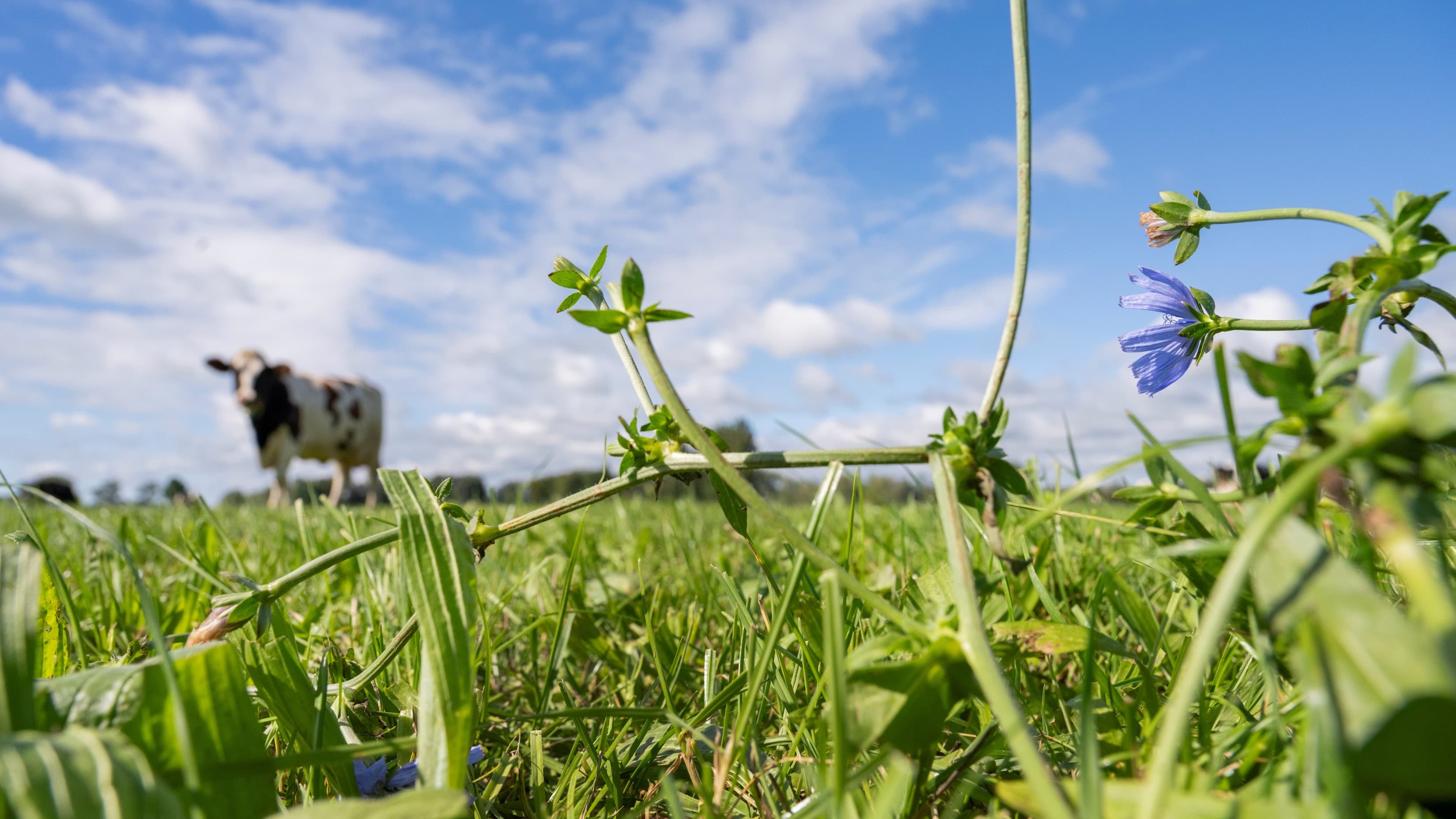
Herb-rich grasslands and grass-clover mixtures: These improve soil health and reduce the need for synthetic fertilisers.
Extending the longevity of cows: Healthier cows that live longer lead to lower greenhouse gas and nitrogen emissions.
Better-quality homegrown roughage: This contributes to animal health and less reliance on imported feed.
How the System Works
Annual monitoring of sustainability performance
Outcome-based indicators drive awareness and action
Integrated with CSRD reporting for transparency and accountability

Figure 1: Climate and sustainability metrics
Impact
Sustainability Impact
Climate
Scope 1 & 2
Foqus planet indirectly influences Scope 1 and 2 emissions at FrieslandCampina’s own operations by:
Promoting renewable energy and energy efficiency at farm level.
Supporting manure digestion and other on-farm innovations that may reduce direct emissions from company-owned assets.
Scope 3
Foqus planet primarily targets Scope 3 emissions, especially those associated with member milk production. Includes KPIs for CO₂ emissions per kg milk, nitrogen balance, and ammonia emissions
Foqus planet acts as a GHG reduction enabler by:
Structuring financial incentives based on sustainability KPIs (e.g., €1.50 per 100 kg milk for low GHG emissions).
Supporting customer partnerships with climate-aligned procurement (e.g., Mars, Nestlé)
Nature
Reducing Negative Environmental Pressures
Lower nitrogen surplus in soils reduces eutrophication and groundwater pollution.
Reduced ammonia emissions mitigate nitrogen deposition, which harms sensitive ecosystems.
Lower greenhouse gas emissions (methane, nitrous oxide, CO₂) from feed, manure, and energy use help protect climate-sensitive habitats.
Creating Positive Biodiversity Outcome
Increased permanent grassland improves soil biodiversity, carbon storage, and habitat for meadow birds.
More herb-rich grassland supports pollinators, improves drought resilience, and reduces methane emissions from ruminants.
Nature & landscape management (e.g. hedgerows, ditch banks, field margins) enhances landscape diversity and supports species richness.
Higher share of protein from own land reduces reliance on imported feed (e.g. soy), lowering global land-use pressure and biodiversity loss abroad.
Social
Positive Impacts on Farmers and Rural Communities
Financial Incentives for Sustainability - In 2024, FrieslandCampina paid €172 million in sustainability-linked rewards to member farmers, covering 98% of milk volume. This provides:
Income stability for farmers during volatile market conditions.
Recognition and motivation for sustainable practices.
Beyond financial rewards, the program fosters a sense of purpose and pride among farmers. By contributing to healthier ecosystems and improved air and water quality, farmers see themselves not just as producers, but as stewards of the land. This shift in identity strengthens community engagement and encourages broader participation in sustainability efforts.
Foqus planet empowers farmers to be part of the solution to environmental challenges—turning climate and biodiversity goals into tangible, local action.
Business Impact
Benefits
Market differentiation via certified milk streams
Improved environmental outcomes
Enhanced farmer engagement and pride
Costs
Premiums funded via cooperative and market revenue
Maximum sustainability premium: €0.035/kg milk
Additional premium for certified milk: €0.05/kg milk
Costs vary by indicator and market value of sustainability performance
Impact beyond sustainability and business
Co-benefits
Strengthened trust across stakeholders
Alignment with international regenerative agriculture standards
Potential side-effects
Risk of reduced crop yield due to biodiversity practices - mitigated through new revenue models and stakeholder support
Implementation
Typical business profile
Dairy cooperatives and processors
Companies with Scope 3 emissions from livestock
Relevant in EU agricultural sectors
Approach
Define sustainability KPIs: Identify key indicators across climate, biodiversity, animal welfare, and grazing, using tools like the Biodiversity Monitor for Dairy Farming.
Integrate KPIs into data infrastructure: Embed indicators into existing systems such as KringloopWijzer and align with certification schemes like SMK’s PlanetProof.
Embed KPIs into the Foqus planet table: Translate sustainability metrics into outcome-based thresholds that determine financial rewards.
Monitor performance annually: Use Foqus planet to track farm-level progress and ensure data consistency across regions.
Reward farmers based on performance: Link premiums directly to measurable outcomes, with up to €0.035 per kg of milk via Foqus planet and €0.05 per kg for certified milk streams.
Review and update indicators and incentives: Annually revise the development table to reflect new insights, policy changes, and sector goals.
Scale through certified milk streams: Expand impact by integrating sustainability KPIs into organic and PlanetProof-certified supply chains.
Engage partners to co-invest in premiums: Collaborate with customers, banks, and governments to co-finance sustainability rewards and accelerate sector-wide transformation.
Stakeholders involved
Project Leads: FrieslandCampina
Company Functions: Sustainability, procurement, farmer relations (cooperative affairs), public affairs, communication
Main Providers: Kringloopwijzer, SMK (certification), Rabobank, WWF Netherlands
Others: Farmers, NGOs, financial institutions
Key parameters to consider
The Foqus planet sustainable development table was first launched in 2015 by a cooperative of 14,183 dairy farmers.
Initially focused on six indicators (grazing, animal welfare, climate), it has evolved into a mature, outcome-based incentive system.
The Biodiversity Monitor for Dairy Farming, co-developed with Rabobank and WWF Netherlands, was integrated into Foqus planet 2.0 in 2018.
In 2023, the system was fully revised:
Points-based rewards were replaced by monetary incentives
Stronger alignment with CSRD reporting requirements
Focus shifted to outcome-based indicators to drive measurable impact
Currently the metrics are most mature in the Dutch dairy sector, and active and expanding in Germany and Belgium.
KPIs aligned with regenerative agriculture standards
Certification via “On the Way to PlanetProof”
Geographic relevance: Dutch dairy sector
The focus planet tabel with euro-based incentive structure was active in 2023 – 2024 with clear threshholds and top values for each KPI.
Implementation and operation tips
Challenge: Farmer awareness → Solution: Outcome-based indicators
Challenge: Financial viability → Solution: Collaborating with partners, co financing the premiums and certified streams
Tip: Build trust across stakeholders and align with market incentives
Tip: Better explanation why sustainability is important and long-term profitable. There is knowledge gap and lack of pride about potential of being part of the solution.
Going further
Source list