Recycle blended textile waste into circular raw material
 RE&UP Recycling Technologies
 SKD Türkiye
Summary
Post-consumer and post-industrial polyester-cotton textile waste is recycled back into fibre and PET at industrial scale, replacing virgin raw material.
Context
Submitted through the COP31 Sustainable Transformation Awards · SKD Türkiye (WBCSD Global Network Partner)
RE&UP Recycling Technologies is a textile recycling company established in 2023 within SANKO Holding, employing between 251 and 1,000 people, and operating textile-to-textile recycling capacity at industrial scale.
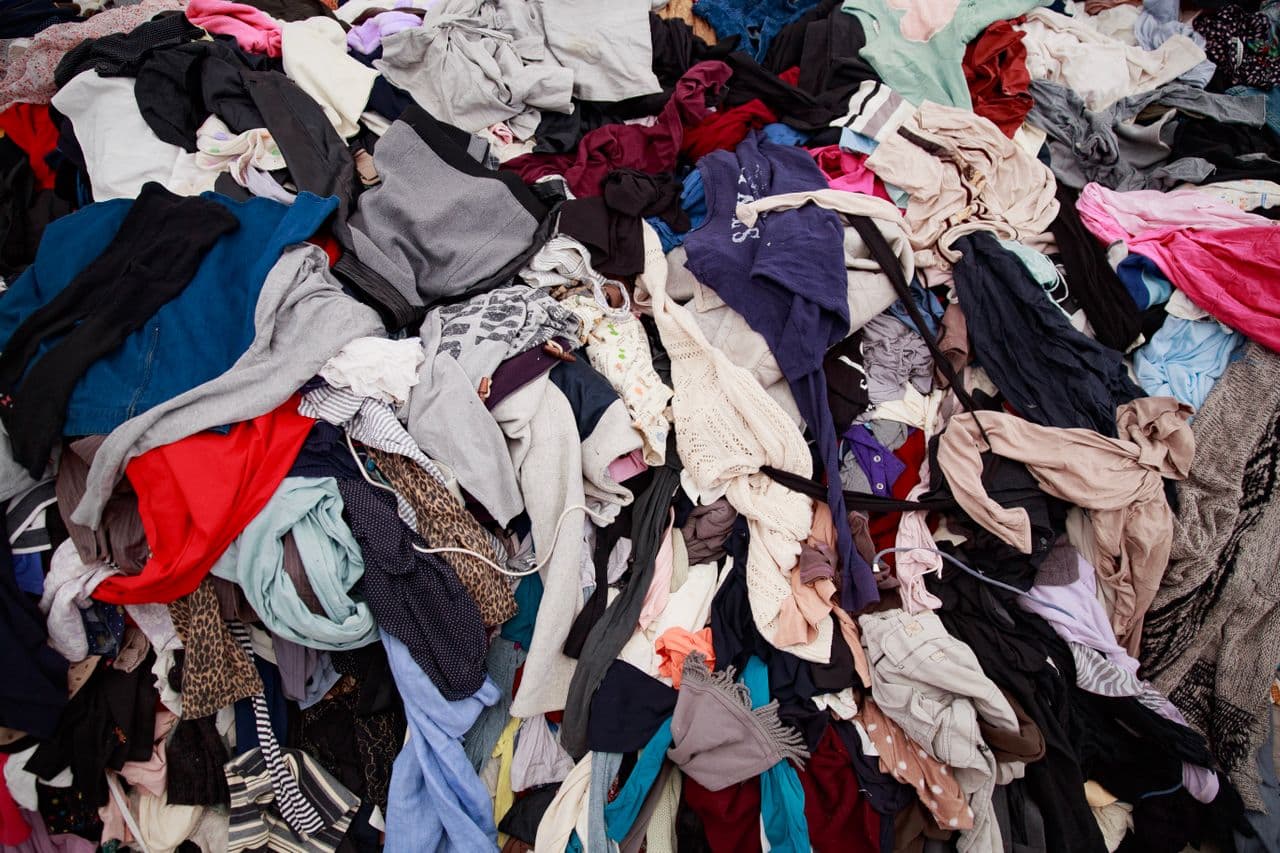
Some 92 million tonnes of textile waste is generated worldwide every year (2), and the greater part of it is disposed of. The material is difficult to recycle because most garments are blends: polyester and cotton combined, frequently with elastane, which conventional recycling routes cannot separate without destroying the value of one component.
The result is a linear system. Fibre is produced from virgin cotton and virgin polyester, used once as a garment, and then landfilled or incinerated, while the next garment starts again from new raw material.
The company's objective is not only waste reduction but the production of alternative raw materials that are low-carbon and cost-effective, and that comply with the circular economy and sustainability regulation in force in the European Union from 2025.
The technology was developed inside SANKO Holding and taken to the point where fabrics containing cotton, polyester and elastane can be recycled at industrial scale, independently of the raw material composition of the incoming waste. The company was established as a separate business in 2023 to run that capability as an industrial operation rather than as a research programme.
The base year for impact measurement is 2024, and all comparisons are made against that year's data.
Location of the initiative: Türkiye, with textile waste collection and supply networks in Europe, Asia and the Americas
Solution
The process takes polyester-cotton blended textile waste from both post-consumer garments and post-industrial production offcuts, decolourises and separates the blended materials, and transforms them back into recycled cotton fibre and recycled PET, enabling textile waste to re-enter the textile value chain as raw material.
The defining capability is composition and colour independence. Rather than requiring clean, single-fibre or colour-sorted inputs, the technology can process complex and coloured textile waste, including polyester-cotton blends and fabrics containing elastane. This ability to handle both fibre complexity and colour is what makes ordinary garment waste usable as feedstock, rather than limiting recycling to clean, pre-sorted industrial streams.
The output is positioned as a substitute rather than as an addition. Recycled cotton fibre and recycled PET enter the same processes as virgin material, so a brand can change raw material without redesigning the product, which is the condition for volume rather than niche adoption.
Measurement is built into the operation rather than reported after it. Impact assessment follows the ISO 14040 and ISO 14044 life cycle assessment standards, the Product Environmental Footprint methodology and the GHG Protocol. The scope is cradle-to-gate, covering raw material sourcing, recycling and product output. Calculations use plant data from the Turkish operation together with international databases, and are supported by independent verification.
An impact calculator tool gives customers scenario-based figures for their own material choices, so the environmental comparison can be made at the point of specification rather than in a later report.
Industrial capacity of 80,000 tonnes a year in Türkiye is what distinguishes the operation from demonstration-scale recycling: the volume is large enough for brands to place recycled material in main collections rather than in capsule ranges.
Figure 1: Recycled cotton fibre recovered from polyester-cotton blended textile waste.

Figure 2: T2T PET chips produced from the polyester fraction of blended textile waste.

Impact
Sustainability impact
Climate
The recycled materials replace virgin cotton and virgin PET, and the saving is measured on a cradle-to-gate boundary against 2024 baseline data. Recycled cotton delivers up to 62 per cent lower carbon than virgin cotton, and recycled PET up to 78 per cent lower carbon than virgin PET.
For the brands that buy the material, the effect falls in Scope 3, since purchased fibre is an upstream input to their own products rather than an emission from their operations. The company therefore functions as an enabler of reductions that appear in its customers' inventories, in addition to whatever occurs in its own production. For customers, the use of the company's recycled raw materials as a substitute for virgin materials would typically be reflected in Scope 3, Category 1: Purchased goods and services, as the associated upstream emissions are accounted for through the raw materials they purchase; the resulting impact depends on each customer's GHG accounting methodology and inventory boundaries.
Five indicators carry the measurement system: CO2 in kg CO2e per kg, water in m3 per kg, energy in MJ per kg, fossil resource use, and the substitution rate achieved against virgin material.
Data is monitored continuously, the life cycle assessment is updated annually and the results are subject to independent verification, so the reported percentages are maintained rather than fixed at a single point in time.
Nature
Water is the second measured dimension. Recycled cotton uses up to 89 per cent less water than virgin cotton, and recycled PET up to 80 per cent less than virgin PET, on the same cradle-to-gate boundary.
Fossil resource use is tracked as a separate indicator, since recycled PET displaces polyester made from fossil feedstock rather than only reducing its carbon intensity.
Diverting blended textile waste from landfill and incineration addresses the fraction that other recycling routes reject, which is the part of the waste stream with the fewest alternatives.
The company reports in line with the TNFD framework (1), which places these material flows inside a nature-related disclosure rather than only an emissions account.
Social
Stakeholder participation runs through public institutions, academia, local government, suppliers and non-governmental organisations, and is conducted in line with the principles of the United Nations Global Compact.
Academic institutions contribute methodological validation and scientific rigour, suppliers contribute operational feasibility and feedstock quality, and public bodies and local authorities guide regulatory compliance and infrastructure integration. Feedback on human rights, environment, ethics and transparency is fed back into process improvement rather than recorded separately.
The long-term shared value objectives include local capacity development, knowledge transfer and strengthening low-carbon production infrastructure, alongside traceable and transparent supply chains that make responsible production verifiable rather than asserted.
Business impact
Benefits
The commercial proposition is a scalable raw material solution rather than a waste-management service. Brands gain access to traceable, lower-impact recycled cotton fibre and recycled PET that can substitute virgin materials in mainstream textile production, turning circularity commitments into a sourcing decision.
The model is also aligned with the direction of regulation. Extended Producer Responsibility, ecodesign requirements and Digital Product Passport requirements are increasing the importance of recycled content, traceability and material-level data, which makes recycled material relevant to customers' regulatory readiness as well as to their sustainability targets. Traceability and impact measurement are embedded in the material proposition, so customers can understand the origin and environmental performance of the recycled inputs they procure and integrate this information into their own sustainability and supply-chain reporting.
The value extends beyond environmental impact. By replacing part of the demand for virgin cotton and fossil-based polyester, recycled feedstock can reduce exposure to agricultural volatility, fossil feedstock dependency and associated supply risks, which places circular materials within a long-term sourcing and resource-security strategy.
Long-term offtake agreements and strategic industrial partnerships give the operation demand visibility, which is what allows capacity investment to be financed against contracted volume rather than speculative demand.
Sustainability performance is integrated into production planning, supply chain, product development and commercial strategy rather than reported separately, so circularity indicators sit inside day-to-day decisions.
Costs
Industrial-scale textile-to-textile recycling requires sustained investment across technology development, industrial infrastructure, process optimisation, quality systems and impact measurement. With 80,000 tonnes of annual recycling capacity, the company continues to invest in research and development and industrial capabilities to improve efficiency, performance and scalability, while actively advancing expansion plans to further increase recycling capacity.
At industrial scale, the economics of textile-to-textile recycling can be increasingly supported by operational efficiency, capacity utilisation and reliable feedstock supply. Continued scaling can further strengthen these economics through greater utilisation of infrastructure and deeper supply-chain integration. The company's approach to pricing is focused on avoiding a green premium, supporting the commercial viability and broader adoption of recycled fibres. By making circular materials commercially accessible, the company aims to enable their integration into existing sourcing and procurement frameworks and support the transition towards textile-to-textile circularity at scale.
Looking ahead, the company is working to expand its recycling capacity, alongside the continued development of collection and sorting systems across key textile production and waste-generation regions. Together, these efforts can strengthen the infrastructure required to enable textile-to-textile recycling at scale.
Impact beyond sustainability and business
Co-benefits
The model changes behaviour upstream of itself. Brands are directed towards recyclability criteria at the design stage, which supports design for circularity as a general practice rather than as a property of one supplier's material.
For manufacturers, traceable and transparent material use becomes standardised, which makes recycled content verifiable through the supply chain instead of relying on declarations.
Building collection and supply networks in Europe, Asia and the Americas develops sorting and collection capability in each region, which is infrastructure the wider industry can use.
Local capacity development and knowledge transfer are treated as shared value objectives alongside the commercial output, positioning stakeholders as co-designers of the system rather than as external parties.
Potential side-effects
The continued expansion of textile-to-textile recycling requires collection and sorting infrastructure to develop alongside recycling capacity. Differences in collection maturity across markets can affect the availability and movement of suitable feedstock, making diversified sourcing networks and strong supply-chain partnerships increasingly important as the industry scales.
Textile waste is inherently variable in composition, colour and construction. Rather than making consistent output unattainable, this variability increases the importance of advanced sorting, decolourisation, process control and quality management. The ability to process complex inputs, including polyester-cotton blends, coloured textiles and fabrics containing elastane, while delivering recycled materials to defined specifications is therefore a critical capability for industrial-scale textile recycling.
Regional regulatory differences create both opportunities and operational complexity. Policies such as Extended Producer Responsibility, ecodesign requirements and recycled-content expectations can accelerate demand for circular materials, while differences in waste classification and cross-border movement rules require recycling networks operating across multiple regions to adapt to different regulatory frameworks.
Recycling is one component of the broader transition towards a circular textile system. By converting post-consumer and post-industrial textile waste into recycled cotton fibre and recycled PET, the company can reduce dependence on virgin raw materials and return materials that would otherwise leave the textile value chain to production. Its system-level impact can be strengthened further when recycling is combined with circular design, durability, effective collection systems and responsible production practices.
Implementation
Typical business profile
The model is relevant to textile and fibre producers operating at industrial scale, as well as industrial groups with the manufacturing, engineering and investment capabilities required to develop and operate textile-to-textile recycling infrastructure.
Successful deployment depends on the combination of three core capabilities: reliable access to suitable textile waste at scale, industrial process and engineering expertise, and established commercial relationships with brands and manufacturers seeking recycled raw materials at meaningful volumes.
For brands and manufacturers purchasing the resulting materials, adoption primarily involves material specification, testing and qualification, sourcing and supplier management. Where recycled cotton fibre and recycled PET meet the required technical specifications, they can substitute virgin raw materials without requiring a fundamental redesign of the existing manufacturing infrastructure.
Delivery requires coordination across sustainability, production, quality, compliance, research and development, supply chain and commercial functions. Given the capital requirements, industrial scale and potential geographic expansion involved, major capacity and investment decisions also require senior management oversight.
Approach
Design the process around real textile waste streams: Develop the recycling route to process the complexity found in post-consumer and post-industrial textile waste, including coloured polyester-cotton blends and fabrics containing elastane. A system dependent only on clean, single-fibre inputs would address a substantially narrower portion of the available textile waste stream.
Establish a robust measurement framework before communicating environmental performance: Define clear system boundaries and apply recognised methodologies, including ISO 14040 and ISO 14044 for life cycle assessment, the Product Environmental Footprint methodology where applicable, and the GHG Protocol for greenhouse gas accounting, using 2024 as the documented reference year for performance comparisons.
Prioritise primary operational data: Use measured data from operating facilities wherever available and complement it with recognised international life cycle inventory databases for upstream or background processes, so that impact calculations reflect actual operational performance rather than generic assumptions.
Maintain and independently validate environmental performance data: Subject key environmental assessments to independent review or verification and update calculations periodically to reflect changes in process efficiency, energy sourcing, production scale and other material parameters, so that life cycle assessment functions as an evolving management tool rather than a one-off exercise.
Build recycling capacity at commercially relevant scale: Industrial-scale capacity — 80,000 tonnes a year in this case — enables recycled materials to move beyond pilots and capsule collections into mainstream sourcing strategies, so that brands and manufacturers can integrate recycled raw materials into longer-term procurement planning and larger product programmes.
Develop diversified feedstock sourcing and collection networks: Build relationships with collection, sorting and textile waste suppliers across relevant regions to secure both post-consumer and post-industrial feedstock; geographic and source diversification strengthens feedstock availability and reduces dependence on individual waste streams or collection systems.
Translate customer demand into long-term commercial visibility: Use long-term offtake agreements, strategic partnerships and other forms of customer commitment to improve demand visibility and support investment decisions related to capacity expansion.
Equip customers with credible impact data: Provide product-level environmental data and, where methodology permits, scenario-based tools that help customers assess the implications of substituting virgin raw materials with recycled alternatives, so that environmental performance informs sourcing and procurement decisions rather than remaining within sustainability reporting.
Connect recycling capability with circular product design: Engage with brands and manufacturers on recyclability and material choices at the design stage, since better alignment between product design, collection, sorting and recycling increases the proportion of future textile waste that can remain within a textile-to-textile circular system.
Stakeholders involved
Project leads: Senior management provides strategic oversight of textile-to-textile recycling, particularly in relation to major investment, capacity expansion, partnerships and geographic growth. Relevant senior leaders and responsible teams coordinate sustainability, operations, research and development, supply chain, quality, compliance and commercial priorities to support industrial-scale implementation.
Company functions: Sustainability, production, quality, compliance, research and development, supply chain and commercial teams contribute complementary capabilities to the model. Integrating environmental and circularity considerations into production planning, product development, sourcing and commercial decision-making positions sustainability as part of the operating model rather than as a standalone reporting activity. Continued investment in research and development, industrial scaling, life cycle assessment and impact measurement supports both technology development and commercial expansion.
Main providers: Textile waste suppliers, collection organisations and sorting partners form an important part of the feedstock ecosystem. Close collaboration improves understanding of material composition, availability and quality requirements while supporting more efficient integration between collection, sorting and recycling. Technology, engineering and industrial partners may also contribute to process development and capacity expansion in new markets.
Other: Brands, textile manufacturers and other material buyers play a central role by defining technical requirements, qualifying recycled materials and translating sustainability commitments into procurement demand; longer-term collaboration can also connect material sourcing decisions with product design, recyclability requirements, traceability and future feedstock availability. Academic and technical institutions contribute scientific expertise, methodological review and validation of environmental assessment approaches. Public authorities and industry bodies shape the regulatory and infrastructure environment through waste classification, collection systems, Extended Producer Responsibility and cross-border material movement, and NGOs and other multi-stakeholder organisations contribute expertise, standards development and broader industry collaboration where relevant.
Key parameters to consider
Capacity of 80,000 tonnes a year in Türkiye is the reference scale for the model, and feedstock flexibility — the ability to process complex textile waste streams, including coloured polyester-cotton blends and fabrics containing elastane, and convert them into recycled raw materials that meet defined quality specifications — is the technical parameter that determines what fraction of collected waste is usable.
The measurement boundary is cradle-to-gate, the base year is 2024, and the standards applied are ISO 14040, ISO 14044, the Product Environmental Footprint methodology and the GHG Protocol; the assessment combines primary operational data with recognised international databases and is supported by independent verification and periodic updates to reflect changes in operations, energy sourcing and process performance.
The scaling horizon is three to seven years, with capacity increase, integrated collection and recycling networks in new geographies and stronger integration with global textile supply chains as the stated priorities.
Key external considerations include differences in the maturity of textile collection and sorting systems across regions, the availability and consistency of feedstock, and varying regulatory frameworks governing textile waste, recycled materials and cross-border material flows. Diversified sourcing networks, processing flexibility and geographic integration are therefore important elements in supporting the resilience and scalability of the model.
Implementation and operations tips
Design the process around the complexity of real textile waste streams rather than limiting it to materials that are easier to recycle. Feedstock flexibility, including the ability to process coloured polyester-cotton blends and fabrics containing elastane, broadens the range of post-consumer and post-industrial textile waste that can be returned to the textile value chain.
Establish the environmental measurement framework before communicating performance claims. Clearly defined system boundaries, consistent reference periods, recognised methodologies and appropriate independent verification provide a credible basis for environmental performance data and enable it to withstand customer and stakeholder due diligence.
Develop feedstock sourcing, collection and sorting networks alongside recycling capacity. The maturity of textile waste infrastructure varies significantly across regions, making diversified sourcing relationships and supply-chain integration important for maintaining reliable feedstock availability as capacity expands.
Integrate environmental performance data into the material selection and procurement process. Providing buyers with credible product-level data and, where appropriate, scenario-based impact calculations enables them to evaluate the implications of substituting virgin raw materials with recycled alternatives at the point of specification, helping translate sustainability objectives into informed sourcing decisions.