Redesign power lines to stop bird deaths and protect nests
 IC Holding
 SKD Türkiye
Summary
Insulation, nesting platforms, ringing and GPS tracking made the network a monitored, wildlife-friendly habitat, with no electrocution deaths at 46 imperial eagle nests in 2025.
Context
Submitted through the COP31 Sustainable Transformation Awards · SKD Türkiye (WBCSD Global Network Partner)
The company is the electricity distribution business of a diversified holding group with more than 1,000 employees, operating the network across the Thrace region of Türkiye.
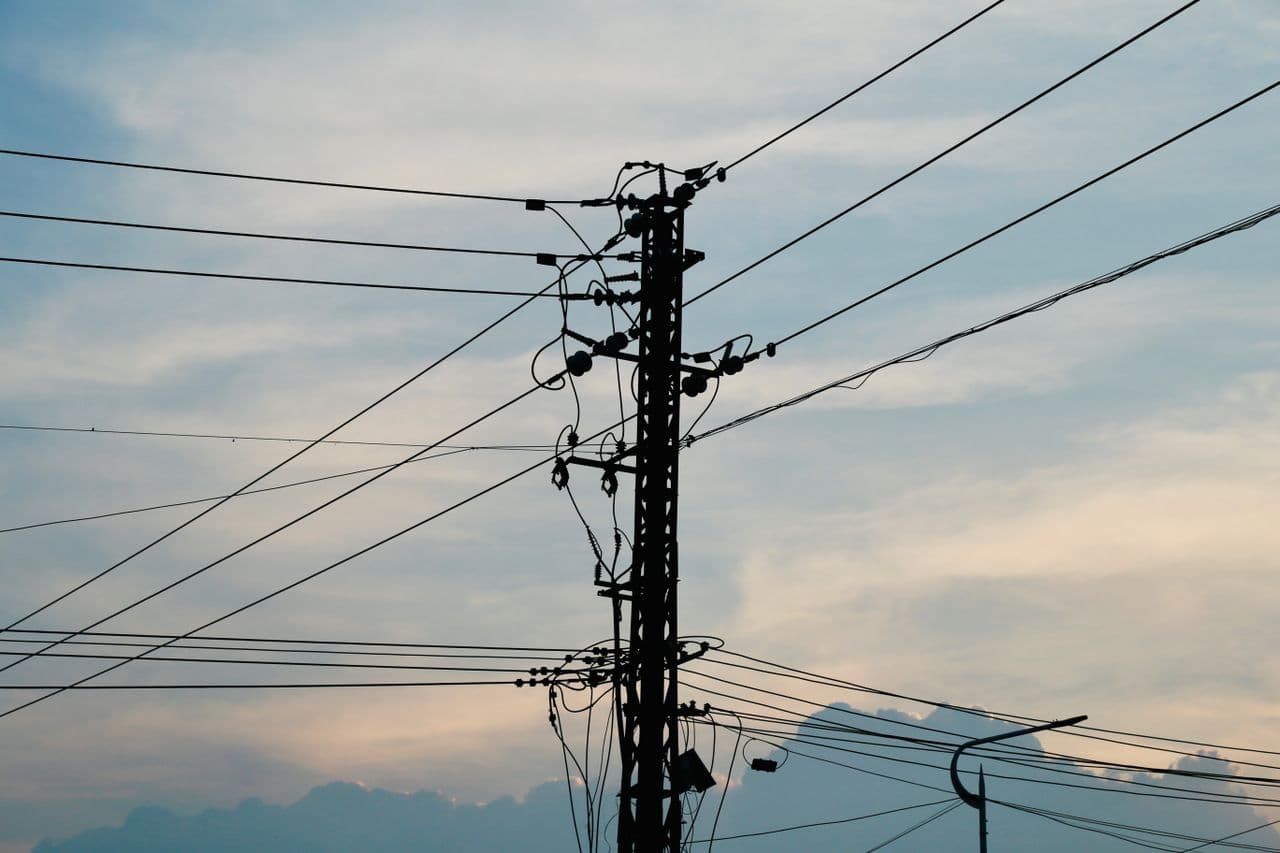
Overhead distribution lines and the birds that use them occupy the same landscape. Poles are the highest structures in open farmland, which makes them attractive to storks for nesting and to raptors for perching, and the same features that make a pole useful to a bird make contact with live equipment likely.
Before the initiative, deaths on power lines and losses of nests were observed at higher levels, particularly among white storks and among young eastern imperial eagles, a species under threat of extinction.
The cost is not only ecological. Bird contact causes faults, and faults cause outages, so the same events that kill birds interrupt supply to customers.
The company's response, launched in 2020, was to treat the network as habitat to be designed rather than as infrastructure to be defended. The scope was widened in 2024 through a partnership with the 1st Regional Directorate of Nature Conservation and National Parks and with advice from the director of the natural history museum at Trakya University, extended to scientific ringing in 2025 and to GPS tracking in 2026.
The work is aligned with the National Biodiversity Strategy and Action Plan, and it goes beyond what legal obligation and sector technical standards require.
Location of the initiative: Thrace region, Türkiye
Solution
The model runs physical protection and scientific monitoring together, so that the network is modified to remove the hazard while the birds using it are tracked individually to show whether the modification worked.
The physical side removes the point of contact. Since 2021 the company has installed 32,687.9 metres of conductor insulation, 11,558 bushing insulations, 8,674 VHD insulations and 2,774 insulation rings, which cover the live components a bird is most likely to touch.
Nesting is redirected rather than prevented. A total of 1,196 stork nesting platforms have been placed on electricity lines, which gives the birds a safe structure on the pole instead of a nest built directly onto energised equipment, and preserves the nest sites the population depends on.
The scientific side turns protection into evidence. Scientific ringing and GPS tracking were introduced so that individual birds could be followed: 69 white storks and 31 eastern imperial eagles, 100 individuals in total, have been marked. In addition, 4 eastern imperial eagles and 2 Egyptian vultures have been fitted with GPS tracking devices. The resulting data underpins the analysis of migration routes, habitat use and behaviour patterns.
Monitoring of nests is carried out with the public conservation authority, which gives the results independence from the company that installed the equipment.
Field data, public reports and scientific analysis shape the work continuously. Members of the public report nests and incidents, field crews verify them, and the findings determine where the next insulation and platform work is directed, alongside communication activity designed to raise local environmental awareness.
Figure 1: A distribution pole before and after modification: insulated conductors, bushings and VHD equipment, insulation rings and a raised stork nesting platform

Figure 2: Ringing a young eagle as part of the scientific monitoring programme

Impact
Sustainability Impact
Climate
The initiative does not target Scope 1, Scope 2 or Scope 3 emissions and no greenhouse gas figure is calculated for it. The five indicators defined for the work are biodiversity, infrastructure and awareness measures, tracked since the initiative started in 2020, with insulation quantities counted from 2021 and a roadmap running from 2025 to 2030.
The enabling effect is operational. Bird contact with live equipment causes faults, so insulating the contact points and moving nests onto platforms removes a recurring cause of outages and of the emergency callouts that follow them, which reduces the vehicle journeys field crews make to remote rural sections of the network. The company reports the resulting reduction in interruptions as a contribution to security of supply.
The company frames this as adaptation and resilience rather than as mitigation: a network that fails less often under wildlife pressure holds supply better under stress, and the application aligns the work with the goal on climate action on that basis.
Nature
The result is measured at species level rather than at project level. In 2025, across the 46 active nests monitored by the Directorate of Nature Conservation and National Parks, no death caused by electricity was recorded, which is the direct measure of whether the insulation and platform work has removed the hazard.
Stork deaths fell following the installation of 1,196 nesting platforms on electricity lines and the accompanying insulation work. Before the initiative, deaths and nest losses linked to power lines were observed at markedly higher levels, particularly among storks and young eastern imperial eagles.
The physical scope behind that result is specific: 32,687.9 metres of conductor insulation, 11,558 bushing insulations, 8,674 VHD insulations and 2,774 insulation rings installed since 2021.
Protection has been converted into scientific capability. Ringing and GPS tracking have marked 69 storks and 31 eastern imperial eagles, 100 individuals in total, producing data on migration routes, habitat use and behaviour that turns conservation from intervention into evidence-based biodiversity management.
The five indicators tracked are the continued increase in stork nest numbers, the number and total length of insulated lines, the rate of reduction in bird deaths caused by power lines, ringing counts and GPS-based movement maps, and the rate of increase in local environmental awareness.
The work supports the protection and monitoring of threatened species in parallel with the National Biodiversity Strategy and Action Plan.
Social
Local communities are participants rather than an audience. Public reports of nests and incidents provide valuable input to the field programme, while local administrations and residents contribute to identifying needs and supporting field observations. Community engagement has included information meetings with village representatives and local residents, as well as participation in local events.
As part of the community engagement activities, information meetings were conducted in collaboration with the 1st Regional Directorate of Nature Conservation and National Parks across four villages and one town, reaching a total of 107 people. In addition, meetings with village heads (muhtars) reached 580 people. At the Stork Festival, 51 people were directly informed about the project, informational brochures were distributed, and participants' questions were addressed through verbal discussions.
In addition, verbal surveys and interviews were conducted with local residents in the company's area of operation, particularly in areas where bird nests are located. These interactions provided an opportunity to gather local perspectives on the project, bird conservation and nature-compatible electricity infrastructure. However, as these verbal surveys and interviews were not systematically documented, no quantitative results have yet been established from these interactions.
The information, communication and field engagement activities carried out to date have contributed to increased awareness among local communities of bird conservation and the importance of nature-compatible electricity infrastructure. The increase in environmental awareness is planned to be quantitatively assessed and documented through structured, measurable surveys as part of the project's ongoing impact assessment.
Customers benefit through improved security of supply. Nature-compatible infrastructure contributes to reducing bird-related faults, thereby lowering the number of interruptions and supporting the continuity and reliability of electricity supply across the region.
Academics and birdwatchers contribute scientific expertise to the ringing and monitoring activities. These efforts provide the region's research community with an ongoing field programme rather than a one-off survey, supporting the continued collection of scientific data on bird movements, habitat use and behaviour.
A Social Return on Investment (SROI) analysis is planned to quantify the social, environmental and economic value created by the project and to assess its long-term impacts. The analysis has not yet been conducted.
Business Impact
Benefits
Fault reduction is the operating return. Bird contact with live equipment causes faults, so insulating the contact points and moving nests onto platforms removes a recurring cause of outages, which the company reports as a contribution to security of supply.
Fewer bird-related faults also means fewer emergency callouts to remote rural sections, which reduces unplanned maintenance work and the crew time that goes with it.
Nest platforms protect the asset as well as the bird. A nest built directly onto energised equipment is a fault waiting to happen and a repair that must be timed around a protected species; a platform separates the two.
The scientific programme produces data the company would otherwise have to commission. GPS tracks and ringing records show which line sections sit on migration routes and in habitat, which allows insulation investment to be directed at the highest-risk sections rather than spread evenly.
The partnership structure has its own value. Working with the public conservation authority, universities and local administrations gives the company standing in permitting and regional planning that a purely technical compliance programme does not produce.
The company does not disclose a quantified reduction in bird-related faults or outage minutes.
Costs
The cost base is material and installation across a large rural network: 32,687.9 metres of conductor insulation, 11,558 bushing insulations, 8,674 VHD insulations, 2,774 insulation rings and 1,196 nesting platforms, all fitted on live overhead infrastructure by field crews.
These measures have been implemented and maintained since 2021. The total cost of these interventions to date is TRY 6 million.
The scientific programme adds a separate and recurring cost: ringing operations, GPS transmitters and the fieldwork to fit them, plus the analysis of the data they produce.
Coordination is a real cost rather than an administrative one. The work runs with a public conservation directorate, university specialists, birdwatchers, local administrations and several internal directorates, and that coordination must be maintained for the roadmap covering 2025 to 2030.
The company identifies continuity of financing, inter-institutional coordination and sustained local stakeholder participation as the success factors that carry the greatest risk.
Costs are contained by directing insulation work to sections identified as high-risk based on field data and public reports, by sourcing scientific expertise from public institutions and academic partners rather than relying solely on commercial contracts, and by carrying out the work within existing corporate investment plans and maintenance cycles instead of funding it as a separate programme.
Impact Beyond Sustainability And Business
Co-benefits
The data produced has value beyond the network. Migration routes, habitat use and behaviour patterns derived from 100 marked individuals contribute to the scientific record for two species, one of which is threatened with extinction, and that record is available to conservation work far outside the company's licence area.
Public awareness rises through the communication activity, and residents who report nests and incidents become part of the monitoring system rather than bystanders to it.
The approach transfers across sectors. Any operator of linear infrastructure, including power generation, transport and other infrastructure investment, faces the same conflict between structures and wildlife, and the combination of physical modification, scientific monitoring and multi-stakeholder cooperation adapts to those settings with low adaptation cost.
Nature-compatible infrastructure also supports climate adaptation and resilience objectives, because a network with fewer wildlife-caused faults is a more reliable network under stress.
Potential side-effects
Nesting platforms attract birds to the network rather than away from it. Concentrating a protected population on distribution poles makes the ongoing insulation and maintenance programme a permanent obligation, because a lapse would put more birds at risk than before the platforms existed.
Fitting GPS transmitters and rings involves handling wild birds, which carries a welfare cost that has to be justified by the scientific value of the data and managed through the expertise of the conservation authority and academic partners.
Maintenance on a pole carrying an active nest is constrained by the breeding season, so protection can delay repair work and has to be planned into outage scheduling.
The absence of a social return analysis leaves the economic value of the work unquantified, which makes the case harder to defend when investment budgets are compared.
Results depend on continuous funding and on institutional coordination that no single organisation controls, and the monitoring record loses its value if either lapses.
Implementation
Typical Business Profile
The model suits operators of linear infrastructure whose assets run through open landscape and cross bird habitat and migration corridors: electricity distribution and transmission networks first, and also rail, road and other infrastructure investments.
It requires a licensed operator with field maintenance crews, an investment planning function able to schedule component-level work across a wide area, and access to a public conservation authority and academic specialists, since neither the species expertise nor the monitoring credibility can be produced internally.
It is most applicable where the operator already carries out regular pole-level maintenance, because the insulation and platform work can be added to existing field cycles rather than mobilised separately.
Delivery engages operations, investments, provincial directorates and operating units, corporate communications and occupational health and safety, alongside the public conservation authority, universities, local administrations and residents.
Approach
Map where the network and the birds actually meet: Combine field observation, public reports and scientific input to identify the line sections, poles and nest sites where contact and nest loss are concentrated, rather than treating the whole network as equally exposed.
Partner with the public conservation authority before designing the fieldwork: Bring in the regional directorate responsible for nature conservation and national parks to set the protection strategy and provide the scientific direction, since the credibility of the later results depends on who defines the method.
Insulate the components a bird can touch: Fit conductor insulation, bushing insulation, VHD insulation and insulation rings on the identified sections, and record the quantity and length installed so that coverage can be reported and audited.
Give the nests a safe structure instead of removing them: Install nesting platforms on the poles so that storks nest clear of energised equipment, which protects both the population and the asset and avoids a cycle of nest removal and rebuilding.
Ring individual birds to convert protection into evidence: Run a scientific ringing programme with academic and conservation partners so that survival and movement can be measured at individual level rather than inferred from fault statistics.
Add satellite tracking to the highest-value individuals: Fit GPS transmitters to a subset of the marked birds to produce migration routes, habitat use and behaviour data that show where future protection work should be directed.
Have the outcome verified by someone other than the installer: Let the public conservation authority monitor active nests and record electricity-related deaths, so that the headline result is independent of the company that carried out the work.
Bring residents into the monitoring system: Run communication activity, collect public reports of nests and incidents, and survey awareness levels, since local observation extends field coverage well beyond what crews can inspect.
Set a multi-year roadmap with species-level targets: Plan financial, technical and human resources against a defined horizon, here 2025 to 2030, with explicit targets for ringing, transmitter deployment and new high-risk sections to be insulated.
Embed the work in the operating model rather than in corporate responsibility: Run it through field operations, maintenance, investment planning, sustainability policy and stakeholder management so that it survives changes in budget priority.
Stakeholders Involved
Project leads: The initiative is owned by the General Manager and the Board of the distribution company, which places nature conservation among the organisation's long-term strategic priorities rather than within a communications budget. Continuity is secured through corporate investment plans and operational resources, supported by strategic cooperation with public institutions, universities and local administrations. Financial, technical and human resource planning has been completed for the roadmap covering 2025 to 2030, so that ringing, GPS tracking, insulation and platform work continue without interruption.
Company functions: The Operations Directorate and the Investments Directorate lead delivery, working with provincial directorates and operating units that carry out the field work. Corporate Communications runs the public awareness and reporting channels, and the Occupational Health and Safety Directorate takes an active part, since the work is carried out on live overhead infrastructure. The company also handles material supply, vehicle and equipment organisation, technical infrastructure planning and the coordination of field applications, which keeps the conservation work inside the same operating machinery as ordinary maintenance.
Main providers: Equipment suppliers provide the insulation components, nesting platforms and satellite tracking devices. Their role is supply and technical specification; the design of where and how the components are deployed sits with the company and its scientific partners rather than with the vendors.
Other: The 1st Regional Directorate of Nature Conservation and National Parks takes an active role in setting conservation strategy, providing scientific direction and carrying out the ringing and GPS tracking work, and it monitors the active nests on which the headline result is based. Trakya University contributes through the director of its natural history museum, who has advised the initiative since 2024, and academics and birdwatchers contribute scientific expertise to the ringing and monitoring activity. Local administrations and residents in the region take part through field observation and by identifying needs, which improves the accuracy of where work is directed. Feedback from all parties is assessed systematically through regular field work, coordination meetings, technical reviews and joint monitoring activity, and the findings are used to adjust the programme continuously.
Key Parameters To Consider
The initiative started in 2020, insulation quantities are counted from 2021, the conservation partnership and academic advice were added in 2024, ringing began in 2025 and GPS tracking in 2026, so the model was built in stages rather than commissioned complete.
The current roadmap runs from 2025 to 2030. Over the next five years the targets are to ring a total of 500 storks and 100 eastern imperial eagles and to fit GPS transmitters to at least 20 individuals. These are targets rather than results.
Verification depends on an external party: the count of active nests monitored and the absence of electricity-related deaths are recorded by the public conservation authority, not by the company.
Adaptation cost in other regions is low because the cooperation model with public institutions, universities and local administrations is reproducible, but the species mix, the migration corridors and the pole design all have to be established locally before the components are specified.
Implementation And Operations Tips
Insulate on evidence, not on average risk. Field data, public reports and scientific analysis identify the sections where contact actually happens, and directing components there produces a species-level result far faster than uniform coverage across a network.
Redirect nesting rather than preventing it. Removing nests from poles starts a cycle that neither the birds nor the maintenance crews win; a platform on the same pole resolves it permanently.
Let the conservation authority own the verification. The strongest claim in the programme is that no electricity-related death was recorded at the monitored nests, and it carries weight precisely because the organisation that installed the equipment is not the one that counted the outcome.
Add individual-level monitoring as early as the budget allows. Ringing and GPS tracking convert a protection programme into a dataset, and that dataset is what makes the next round of investment defensible and the model transferable.
Use public reporting as field capacity. Residents observe poles that crews visit rarely, and a reporting channel turns that observation into a maintenance input at almost no cost.
Plan the value analysis while the work is running. The social return study is intended but not yet done, and the baseline data it needs is far easier to capture during delivery than to reconstruct afterwards.