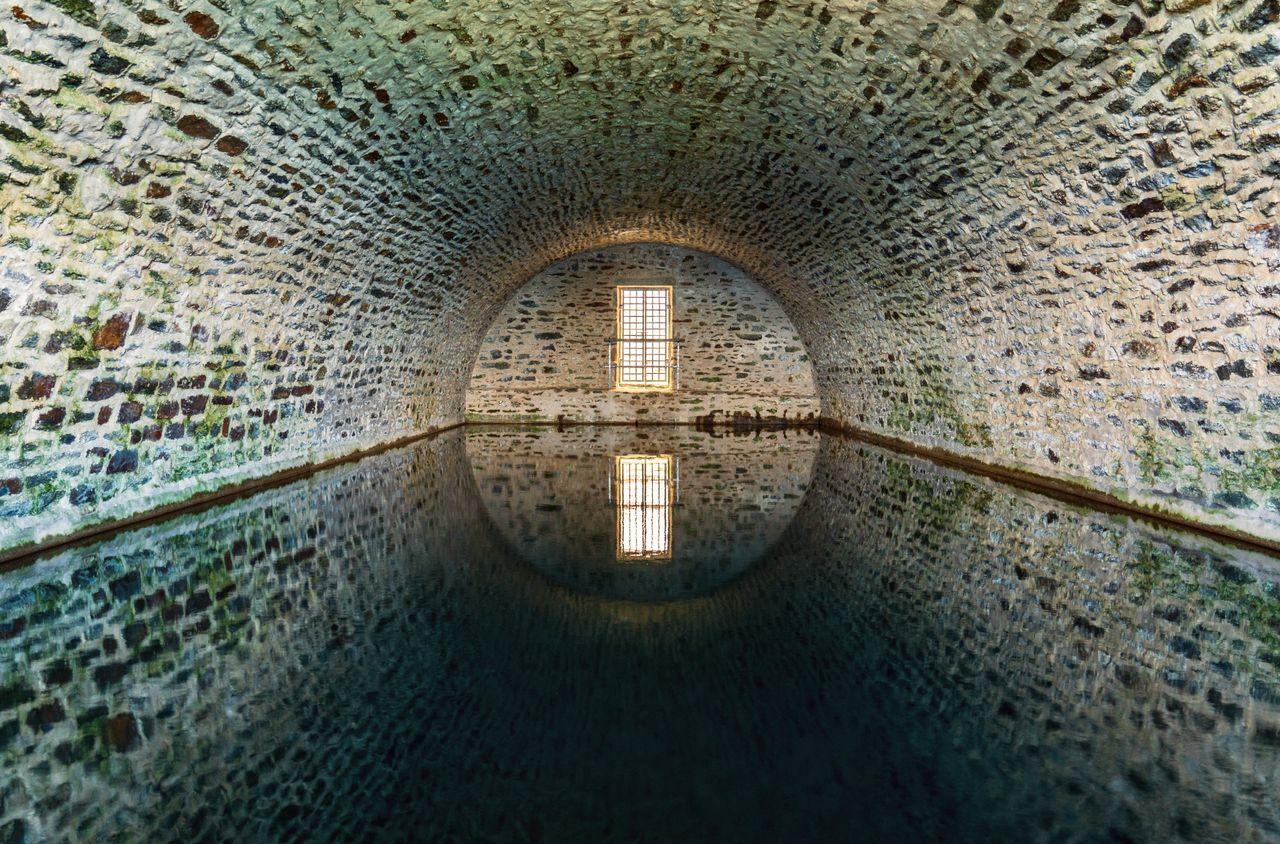
Renovating traditional water systems to improve water access
 BP
Summary
Restore two gravity-fed kahrizes to improve irrigation and community water access, measuring benefits through baseline-adjusted flow monitoring.
Context
bp is a global, integrated energy company with upstream and downstream operations spanning exploration, production, refining and trading. Freshwater is essential to these operations, used in extraction, refining, cooling, and processing. As a result, water scarcity in the basins where bp operates can challenge operational continuity. In 2025, 22% of bp's freshwater consumption occurred in areas classified as experiencing at least high-water stress.
bp prioritizes water stewardship accordingly. The approach seeks to avoid or replace freshwater use first, then focuses on reducing consumption and withdrawals through efficiency, reuse, and recycling measures. In addition to efforts to avoid and reduce freshwater use, bp’s approach then allows replenishment as a complementary catchment-level action to restore or increase water availability.
bp’s approach to water stewardship prioritizes actions where resilience is most needed. As part of this approach and where appropriate, bp targets replenishment projects in high-priority, stressed basins where it operates. bp's replenishment programme encompasses a range of project types including, but not limited to water treatment, water access, rainwater harvesting and managed aquifer recharge. Potential projects are screened for hydrological relevance to bp’s operations and for local stakeholder input regarding on-the-ground community and environmental needs and overall cost of implementation. Once a project area is identified, local evidence and stakeholder needs further inform the selection and design of the specific project.
One such priority area is in Azerbaijan, home to bp's major Azerbaijan–Georgia–Türkiye (ACG) export corridor and faces "Extremely High" (>80%) water stress in parts of the basin, per WRI Aqueduct.
One of the most ancient but sustainable means of water abstraction in the region is a kahriz, an underground network of gently sloping horizontal subterranean canals with interconnected wells, which delivers water through a passive collection system. Kahrizes have been a key feature in arid and semi-arid environments since antiquity. However, they have gradually been replaced by alternative means of abstraction and consequently fallen into disrepair. In addition, the skills required to design, build and maintain them have almost disappeared.
To help address this, bp engaged the organisation PULS-R to carry out the refurbishment of two kahrizes in the Tovuz region of Azerbaijan while simultaneously providing training for local people to learn the skills needed to maintain them and possibly design and build more in the future.
The progressive deterioration of these systems in Tovuz, the Dovshanli and Mahammadaghali kahrizes, constrained domestic and agricultural water access to Ashaghi Gushchu, a rural village of more than 14,500 residents. Therefore, their restoration was a major priority for the local community.
Kahrizes are gravity-fed underground channels that tap shallow groundwater and convey water to the surface without mechanical pumping. The Dovshanli and Mahammadaghali systems deteriorated over extended periods of limited maintenance. Historically, the Dovshanli served as the village's primary domestic water source, while Mahammadaghali supported irrigation. By the time of the project, Mahammadaghali ceased flowing entirely. Approximately 600 hectares of the village's 2,000 hectares of agricultural land could not be cultivated because of insufficient water supply.
Location of the initiative: Tovuz region, Azerbaijan.
Figure 1: Azerbaijan kahriz system – Natural gravity flow from mountains to the fields

Solution
bp funded the project through its replenishment programme, covering the full project cost. bp worked with local implementing partner PULS-R to restore the two kahrizes and associated distribution infrastructure. This work was underpinned by a cooperation agreement between bp and the Azerbaijan State Water Resources Agency.
Before restoration began, the project team conducted detailed site assessments in close collaboration with local stakeholders. The team mapped shafts, wells and exit points, identified infrastructure requirements, and developed restoration plans. Community members and local authorities contributed knowledge of the kahriz systems' history, alignment and past productivity. The process prioritized local expertise and led bp to support the financing and implementation of tested local solutions rather than imposing the recommendations of an outside party. To support local implementation, eight people from Tovuz and neighbouring regions were selected and trained to serve as kankans, specialists in traditional kahriz restoration and maintenance.
The restoration combined traditional techniques with modern field equipment. Workers removed accumulated silt and sediment, reinforced tunnels and wells, excavated water reservoirs, and installed pipes and other infrastructure to facilitate community water use. As a result, both kahrizes were restored as functional water supplies.
Figure 2: Sub-horizontal shaft channelling groundwater toward the kahriz exit

Dovshanli provided water for both domestic use and irrigation, conveyed across Ashaghi Gushchu through a 200 mm pipeline. Mahammadaghali, which had been completely non-functional prior to the project, was restored to provide water solely for irrigation. Restored water was put to use directly after implementation, with farmers using storage ponds to manage variability in supply. The spatial plan provided by bp illustrates the two kahriz systems, the village-supply route and the irrigation channels serving surrounding agricultural areas.
Figure 3: Google Earth imagery of the Tovuz catchment area, Azerbaijan. Imagery © Google Earth and data providers shown on image. Accessed September 2026.

Measuring The Water Benefit
Critical to assessing the project's success was identifying the appropriate volumetric metric to measure its benefits. bp applied the Volumetric Water Benefit Accounting (VWBA) methodology published by the World Resources Institute (WRI) in 2019 and used across its replenishment programme, which favours actions where water flows can be directly measured.
Baseline flow was established for each kahriz addressed in the Tovuz project. Dovshanli’s average pre-project flow was 15 litres per second and Mahammadaghali’s was zero.
Dovshanli’s baseline flow was measured using stream velocity and cross-sectional area at the kahriz exit point. Post-restoration flows from both kahrizes were monitored periodically using a timed bucket method with photo and video records maintained as supporting evidence. Measured flows were converted into monthly water volumes. Where direct measurements were not available for a given month, values were estimated using linear regression, and these modelled values were documented separately from directly measured data.
The VWBA calculation deducts the estimated baseline volume from the volume delivered after restoration, so that only the additional water attributable to the action is counted. At Dovshanli, 79% of the post-restoration volume counted as benefit whilst, at Mahammadaghali, full post-project flow was attributed to the action because the system was non-functional before the project.
By the end of 2025, the project produced a total attributed volumetric water benefit of 1,848,209 m3; 893,638 m3 from Dovshanli and 954,571 m3 from Mahammadaghali. The calculation and underlying assumptions were independently reviewed by LimnoTech using the VWBA methodology.
Impact
Sustainability Impact
Nature
The primary concern addressed through this restoration project was increasing the available water, tracked via the VWBA, which attributes changes in availability to actions but does not address broader ecological factors like groundwater levels or soil condition impacts. Considering these indicators in future projects, where appropriate, could link water restoration initiatives to nature outcomes.
Climate
As local water stress intensifies with increases in global average temperatures, restoring an ancient, natural water source is an important contribution to climate resilience in the Tovuz region. According to WRI Aqueduct, the Tovuz region and the broader basin containing bp's Sangachal Terminal and associated operations are classified as experiencing up to Extremely High baseline water stress, conditions that are projected to intensify under a range of future climate-change scenarios. By returning the kahrizes to functional supply, the project helps the local community sustain water access during periods when surface-water sources may be constrained by drought or seasonal variability.
Additionally, the kahriz systems operate entirely by gravity and require no mechanical pumping energy during routine operation.
Social
The two restored kahriz systems generated an estimated 1.85 million m3 of incremental volume in 2025 for domestic and agricultural use by Ashaghi Gushchu’s 14,500+ residents. The project also invested in local capacity by training eight kankans in traditional kahriz restoration and maintenance techniques, supporting the skills needed for ongoing system upkeep. These social outcomes are supported primarily by stakeholder feedback. Quantitative changes in crop yields (primarily grapes), household water-service reliability or farmer income were not reported at the time of writing.
Business Impact
Benefits
For bp, the project generated a quantified and independently reviewed replenishment that could be incorporated into its water-management programme (bp Sustainability Report 2025). It also provided practical experience in VWBA Projects through a local delivery partner, including establishing arrangements for continued monitoring and maintenance with the local authority after project completion.
The project also illustrates the value of using existing regional and community stakeholder networks. bp's replenishment programme identifies local implementing partnerships as an important delivery component, particularly for actions outside the company's direct operational boundary.
Costs
The total reported project cost was approximately $750,000 USD and was fully funded by bp.
Implementation
Typical Business Profile
A solution like this is most relevant for organizations that:
Rely on freshwater use for their operations
Are exposed to local water stress across their operations or value chains
Already implement solutions to limit freshwater use, increase water-use efficiency, reuse and recycle water and are looking to supplement those efforts with basin-level solutions
Approach
Step-by-step implementation
Identify priority basins and potential projects
Overlay water use with basin-level stress to determine where action is most needed. In bp's framework, sites consuming more than 20,000 m3 of freshwater per year in areas classified as experiencing high-or-above water stress are prioritized for further assessment, subject to local data confirmation. Candidate replenishment projects should also have a demonstrable hydrological relationship to the relevant operation, falling within the same basin.
Validate the local water challenge with stakeholders
While global water risk screens identify stressed basins, local stakeholders can provide knowledge of on-the-ground conditions, community and environmental needs, and interventions that work in the local context. In Tovuz, local stakeholders identified the importance of restoring the kahrizes to support basic community water access and provide expert insight on solution implementation.
Establish the baseline metric before implementation
Determine the metric or metrics that capture the intended benefit. Local stakeholders can inform what metrics address local needs. In Tovuz, bp measured pre-project water flow at each kahriz and converted it to an annualized volume, enabling the calculation to distinguish water attributable to restoration from water that would have been available without the project. Establishing the baseline before works begin is essential for credible benefit accounting.
Design the action in partnership with local stakeholders
Work with local communities, authorities and technical experts, drawing on their knowledge of the water system and existing solutions. In many cases, as in Tovuz, communities possess solutions to their water challenges and need financial or implementation support rather than an externally designed action. Combine this local knowledge with hydrological, engineering and implementation expertise to adapt the solution to site conditions and long-term operating requirements.
Implement the action and invest in local capability
Invest in local operation and maintenance capability alongside physical works. In Tovuz, this included training eight local kankans in kahriz restoration and maintenance techniques, defining maintenance protocols, and ensuring the community would have the skills to sustain the systems after the implementing partner's direct involvement ends.
Measure the resulting water benefit
Define the monitoring protocol before implementation, including measurement methods, frequency, data ownership and treatment of missing data. Clearly distinguish directly measured values from modelled estimates and document all assumptions. In Tovuz, baseline flows were measured using stream velocity and cross-sectional area, post-restoration flows were monitored by timed bucket method with photo and video evidence, and gaps were filled using documented linear-regression modelling.
Commission independent review where appropriate
Involve an independent reviewer to validate monitoring data, baseline assumptions, treatment of modelled data, calculation methodology and/or the attribution of the reported benefit, particularly where the result supports corporate targets or external reporting. For the Tovuz project, LimnoTech independently quantified the volumetric water benefit using the VWBA methodology and reviewed the supporting data and assumptions.
Establish governance before handover
Establish long-term ownership, maintenance responsibilities, monitoring requirements and data-sharing arrangements at the outset of the project. The Tovuz project oversight transition was staged: day-to-day supervision was first transferred to the Ashaghi Gushchu municipality in December 2025, with responsibility expected to transition subsequently to the Azerbaijan State Water Resources Agency. PULS-R and the Water and Amelioration Scientific Research Institute of the same Agency are expected to conduct ongoing monitoring visits and maintain photo and video documentation. PULS-R is positioned to continue providing technical support. Trained local kankans may be engaged by the municipality or SWRA for future operation and maintenance.
Stakeholders Involved
Project sponsor: bp
Implementing partner: PULS-R
Local community: Residents and farmers of Ashaghi Gushchu
Local government: Ashaghi Gushchu municipality and Tovuz regional authorities
Technical/research support: Water and Amelioration Scientific Research Institute
Long-term water governance: Azerbaijan State Water Resources Agency
Independent measurement review: LimnoTech
Other relevant stakeholders: Ministry of Agriculture and locally trained kankans
Key Parameters To Consider
Maturity: Most applicable to organizations with established water programs, identified priority basins, and capacity to manage portfolio screening to catchment-level action.
Timeline: Grant agreement in November 2023; implementation started January 2024; restoration was complete for VWB accounting purposes by March 2025, with additional water-supply infrastructure completed in September 2025. Handover to the local municipality occurred in December 2025.
Lifetime: Monitoring and maintenance are expected to continue for 10+ years. bp plans to count the project’s volumetric water benefit over this period, conditional on the monitoring demonstrating that the action continues to deliver the expected benefit.
Prerequisites: A locally identified water challenge in a priority basin, a technically viable solution, sufficient data to quantify the benefit attributable to the solution, and local stakeholders to inform solution selection/development, implementation, and long-term management.
Geographical factors: Local water stress and hydrogeologic features, seasonal water availability, and use variability.
Subsidies: No third-party subsidy identified.
Other: Intended water use matters. Domestic water projects require additional attention to water quality and public-health requirements. Irrigation projects also require evidence that water delivered can be beneficially used.
Implementation And Operations Tips
Invest in local stakeholders and solutions. The Tovuz project restored a traditional water-management system that locals previously relied on and had sought to rehabilitate, rather than introducing an entirely new solution. bp’s project included training local kankans in kahriz restoration, supporting the skills needed for future maintenance of the systems.
Agree to governance, maintenance and data-sharing arrangements before handover. bp emphasizes the need for aftercare monitoring and formal transfer arrangements. In Tovuz, responsibility was transferred to the local administration with continued technical support and monitoring arrangements in place.
Continue monitoring after project completion. bp expects monitoring and maintenance to continue for 10+ years, and the project’s volumetric benefit is only expected to continue being counted where monitoring confirms that the action is still delivering the anticipated benefit.
Account for the intended end use of the water. Irrigation and domestic water projects carry different operational considerations. bp notes that drinking-water projects introduce additional water-quality requirements, over and above irrigation water supply schemes.
Define the benefit metric and baseline before implementation. Determine how the action’s contribution will be measured and what pre-project condition it will be compared against, so that only the incremental benefit attributable to the project is counted.
Use independent review for material water-benefit claims. The underlying monitoring data, baseline assumptions, modelling and calculation methodology should be reviewed where the resulting benefit supports corporate targets or external reporting. In Tovuz, LimnoTech independently quantified the volumetric benefit using the VWBA methodology.