Turn olive stone waste into effervescent tubes
 Abdi İbrahim
 SKD Türkiye
Summary
Waste olive stones become a bio-based raw material that replaces part of the fossil-based plastic in effervescent tube packaging, cutting the carbon footprint per tube.
Context
Submitted through the COP31 Sustainable Transformation Awards - SKD Türkiye (WBCSD Global Network Partner)
The company is a pharmaceutical manufacturer in Türkiye with nearly 5,800 employees, producing prescription medicines and consumer health products, with nearly 250 brands and more than 500 products developed in-house or under licence from 30 licensors.
Packaging is one of the largest material-related sources of emissions in pharmaceutical production, and most of it is fossil-based polymer. In a regulated sector the packaging specification is also difficult to revisit: once a pack is approved, changing the material means stability testing, quality re-verification and regulatory review, so packaging tends to stay as designed for the life of the product.
The company's answer is a packaging strategy called Green Harmonization, developed inside its HEAL2050 sustainability strategy and organised into three phases: reduce the material used, replace what remains with lower-impact alternatives, and collect back what reaches the market. The initiative described here belongs to the replace phase.
The question the replace phase set was whether fossil-based plastic in a primary pack could be substituted with a material derived from agricultural residue, without any loss of product protection or shelf life. The pack chosen was the tube used for effervescent products in the consumer health portfolio, a category governed by the Ministry of Agriculture and Forestry, so the change had to satisfy that regulatory frame as well as the company's own quality requirements.
Work started in 2023 with a domestic start-up engaged through the company's DOZ open innovation programme, which supports social innovation in health. The initiative supports the company's 2050 net-zero ambition and GHG emission reduction targets validated by the Science Based Targets initiative (SBTi), and its results have been disclosed through the company's Sustainability Reports and CDP reports.
Location of the initiative: Türkiye
Solution
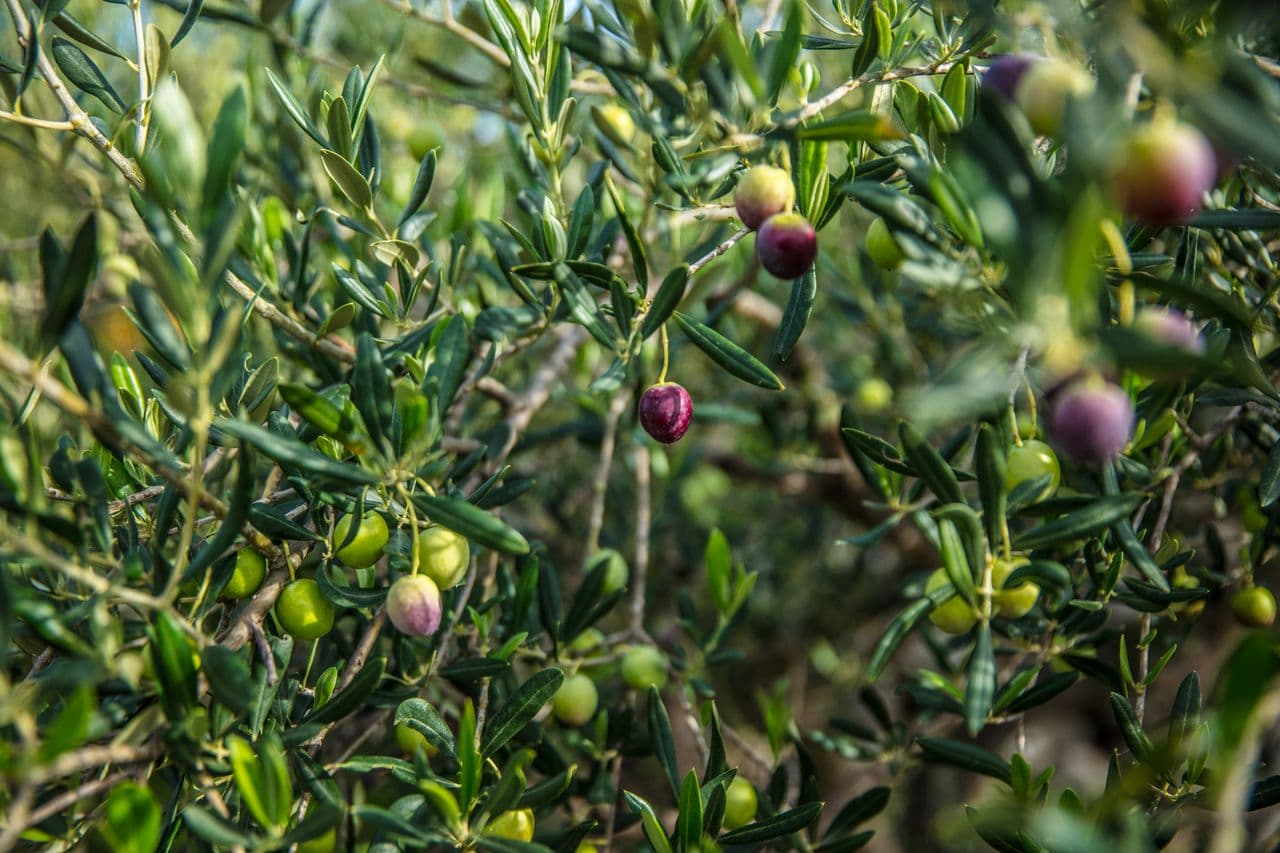
The solution replaces part of the polymer in an effervescent tube with a bio-based compound made from waste olive stones, an agricultural by-product with little economic value that would otherwise be discarded or burnt.
Approximately 25 per cent of the raw material in the tube is bio-based. The pack format itself is retained, so the product remains an effervescent tube of the same type, but the material specification and the processing behind it change.
The compound was developed by a domestic start-up brought in through the company's open innovation programme, and the tubes are produced by a domestic converter. That combination matters: a bio-composite that performs in the laboratory still has to run on commercial tube-making, printing and filling equipment, and it was the converting and filling behaviour, rather than the chemistry alone, that drove most of the development work.
Environmental performance was measured by life cycle assessment carried out to ISO 14040 and ISO 14044. Rather than a historical baseline, the calculation uses a reference scenario: the incumbent polypropylene and polyethylene effervescent tube. Against that reference, the carbon footprint attributable to plastic falls by 24 per cent per tube, equal to 0.021 kg CO2e per tube.
Equivalence on quality was established separately, through a two-year stability study covering appearance, odour, hardness, pH, disintegration and content values. All parameters matched the incumbent pack, which is what allowed the material to be accepted for a regulated consumer health product.
The bio-based tube has completed research, development and quality processes, its technical suitability has been verified, and it has reached the commercialisation stage. Extending the material to other product groups is a target supported by the assessment and stability data, not a delivered result.
Figure 1: The three phases of the packaging strategy: reduce the pack, switch the material, then recover the tube.

Figure 2: The same effervescent tube before and after: conventional petroleum-based plastic on the left, 25 per cent bio-based content on the right.

Impact
Sustainability impact
Climate
The initiative addresses Scope 3, Category 1: Purchased goods and services, because what changes is the embedded carbon of the packaging material the company buys, not the energy used at its own sites.
The reduction was quantified through a life cycle assessment carried out in accordance with ISO 14040 and ISO 14044. The base year is 2023, the year the project began. Greenhouse gas reduction is calculated by the reference scenario method rather than against a historical trend: the incumbent polypropylene and polyethylene effervescent tube is the reference, and the new pack, containing approximately 25 per cent bio-based raw material obtained from waste olive stones, is assessed against it.
On that basis the carbon footprint arising from plastic use falls by 24 per cent per tube, equal to 0.021 kg CO2e per tube.
Expressing the result per pack rather than as a site total is deliberate, because it allows the saving to be multiplied by production volume and applied to any candidate pack. It also shows the limit of the approach: roughly three quarters of the tube is still conventional polymer, so deeper reduction depends on raising the bio-based fraction rather than on repeating the same substitution.
The result feeds the company's 2050 net-zero pathway, which carries targets validated by the Science Based Targets initiative. The results have been disclosed through the company's Sustainability Reports and CDP reports.
Nature
The material input is an agricultural residue. Olive stones left over from processing have low economic value and are treated as waste; converting them into a packaging raw material returns them to the economy instead, which is the circular economy element of the initiative.
Every unit of bio-based compound used also displaces virgin fossil-based polymer, reducing upstream extraction and refining demand for the share of the pack it replaces.
No land, water or biodiversity indicator was quantified for the initiative. The measured environmental outcome is the carbon footprint per tube; the residue diversion and the avoided virgin polymer are reported qualitatively.
Social
The project was built through the company's DOZ open innovation programme, which exists to support social innovation in health and to work with start-ups. The bio-based material was developed by a domestic start-up under that programme and the tubes are made by a domestic converter, so the initiative directs development work and orders into the local entrepreneurship ecosystem rather than into an imported material supply chain.
Olive stone waste, which has low economic value, is transformed into a bio-based material suitable for use in the packaging industry through a new business model. This approach contributes not only to reducing the environmental impacts associated with packaging, but also to bringing agricultural waste back into the economy. The project contributes to a circular economy approach that supports farmer welfare.
Business impact
Benefits
The primary business benefit is a validated route to lower-carbon packaging that does not compromise the product. Two years of stability data show equivalence on every critical quality parameter, so the change carries no reformulation requirement and no change to the consumer experience.
The opportunities for scaling up the project include growing demand for sustainable materials, the increasing adoption of circular economy practices, and the need to transition towards low-carbon production models. Key risks include the availability of bio-based raw materials at scale, cost competitiveness, and regulatory requirements. In this respect, the project creates systemic impact by driving transformation across the value chain in waste management, sustainable material use, and low-carbon production, while bringing together entrepreneurship, innovation, and sustainability.
The work also produced transferable assets: a qualified domestic material developer, a converter able to run the compound, and a body of life cycle and stability evidence that can be reused when the same material is assessed for other packs.
The long-term continuity of the project is supported by the HEAL2050 strategy, the climate targets set under the Science Based Targets initiative (SBTi), and the company's sustainable packaging transformation roadmap. Following completion of the commercialisation which is under evaluation, the company aims to evaluate and scale up the bio-based packaging solution across different product groups.
Costs
The main cost is time and development effort. The project ran for approximately two years of research, development and validation before reaching commercialisation stage, covering compound development, packaging printing trials, filling operations and cap sealing, with the material and process settings revised repeatedly as the technical teams reported problems.
A two-year stability programme in the company's own research and development laboratories ran alongside, testing appearance, odour, hardness, pH, disintegration and content. That schedule, rather than the technology, sets the minimum time to market for a change of this kind in a regulated product.
Three dependencies determine the operating cost position. Bio-based raw material has to be available at scale, which is the company's stated supply risk. Cost competitiveness against conventional polymer is not yet settled. And regulatory requirements apply each time the material is proposed for a new product category or market.
Costs are contained by working through the open innovation programme rather than a conventional development contract, by keeping the existing tube format and converter so that no new tooling or filling line is required, and by reusing the life cycle assessment and stability evidence for subsequent applications.
Impact beyond sustainability and business
Co-benefits
The initiative creates demand for a residue stream that currently has little value, which gives olive processing operations and the growers behind them an additional outlet and supports the circular economy case beyond the company's own footprint.
It also strengthens a domestic entrepreneurship ecosystem. The compound was developed by a start-up working under an open innovation programme, and a domestic converter carried it into production, so the capability now exists outside the company as well as inside it.
Because the evidence base is a standards-based life cycle assessment plus a full stability data set, the same material can be evaluated for other product groups and, in principle, by other sectors that use similar tube and container formats.
Potential side-effects
The substitution is partial. With approximately 25 per cent bio-based content, the pack remains predominantly conventional polymer, so the change reduces embedded carbon rather than removing plastic from the system. End-of-life recovery is addressed by the collect-back phase of the packaging strategy, not by this project.
Supply is the main exposure. Scaling the application depends on bio-based raw material being available in the volumes a portfolio rollout would require, and the company identifies scaled supply, cost competitiveness and regulatory requirements as the three risks to wider deployment.
Regulatory classification travels poorly. The pack sits under the Ministry of Agriculture and Forestry frame for effervescent consumer health products; applying the same material to a medicinal product, or in another market, means re-entering a different approval route rather than extending an existing one.
Implementation
Typical business profile
The Bio-based Packaging Project is not a solution limited to a specific product or packaging application; it offers a scalable transformation model that can be adapted to different product groups and industries. While the first application was developed for the packaging of an effervescent product in the Consumer Health portfolio, the results indicate that the bio-based material has the potential to be evaluated for other packaging applications.
The project supports the circular economy by transforming agricultural waste into higher-value raw materials. Olive stone waste, which has low economic value, is transformed through a new business model into a bio-based material suitable for use in the packaging industry. This approach contributes not only to reducing the environmental impacts associated with packaging, but also to bringing agricultural waste back into the economy. In this way, the project contributes to a circular economy approach that supports farmer welfare.
Delivery engages sustainability, consumer health, research and development, quality, production, technical operations, procurement and supply chain functions, together with an external material developer and a packaging producer working inside the development loop.
Approach
Structure the packaging agenda before selecting projects: Divide packaging work into a reduce phase, a replace phase and a collect-back phase, so that material substitution is pursued where reduction has already been taken as far as it will go, and so each project has a defined place in a strategy rather than being a standalone trial.
Choose a first application with a contained risk profile: Select a single product and pack format rather than a portfolio, and prefer one whose regulatory route and stability requirements are already well understood, because the first application has to carry the full evidence burden.
Secure the residue stream and a material developer together: Identify an agricultural by-product with low market value and engage a partner able to convert it into a compound that meets packaging requirements; an open innovation programme gives access to start-ups that a conventional procurement route would not reach.
Fix the reference scenario before measuring anything: Define the incumbent pack, here a polypropylene and polyethylene tube, as the reference against which reduction is calculated, and set the base year at project start, so later results cannot drift with the baseline.
Set a bio-based content target and test it against processability: Establish the substitution rate the converter can actually run, then verify raw material behaviour through printing trials, filling operations and cap sealing tests, revising the compound and the process settings each time a technical team reports a problem.
Quantify the environmental gain to a recognised standard: Run a life cycle assessment to ISO 14040 and ISO 14044 and report the result both as a percentage and as an absolute figure per pack, so the saving can be multiplied by volume and applied to other candidate packs.
Prove equivalence with a full stability programme: Test appearance, odour, hardness, pH, disintegration and content against the incumbent pack over two years, and treat that data set, not the environmental result, as the gate that allows the change to be approved.
Convert validated evidence into a rollout decision: Use the assessment and stability data to judge which other product groups the material can carry, publish the results through the sustainability report and climate disclosure so they are auditable, and keep the wider rollout labelled as a target until each pack has passed the same gate.
Stakeholders involved
Project leads: Senior management sponsored the initiative, with close oversight from the group presidency covering human resources, corporate communications and sustainability. Placing sponsorship at that level, rather than inside a single technical function, is what allowed a packaging material change in a regulated product to be pursued alongside commercial priorities. Continuity is anchored in the HEAL2050 sustainability strategy, the climate targets validated by the Science Based Targets initiative and the company's sustainable packaging transformation roadmap, so the project does not depend on the individuals who started it.
Company functions: Sustainability, consumer health, research and development, quality, production, technical operations, procurement and supply chain teams worked as one group across development, testing and verification rather than reviewing the work in sequence. The practical mechanism was iteration. Technical teams reported on raw material properties, packaging printing, filling operations and cap sealing, and the compound and process settings were revised repeatedly against that feedback. Stability data generated in the company's own laboratories then fed back into material and production optimisation, so the solution was developed in stages rather than specified once. Because sustainability, product development and operational requirements were assessed together, the environmental criterion entered the decision at design stage instead of being applied to a pack that had already been fixed.
Main providers: A domestic start-up developed the bio-based raw material. It was engaged through the company's open innovation programme for social innovation in health, which is how the relationship was formed rather than through a conventional tender. A domestic tube producer manufactured the packs and carried the printing and forming trials. Its involvement from the first trial, rather than after the material was finalised, is what made the compound manufacturable on existing equipment.
Other: The Ministry of Agriculture and Forestry sets the regulatory frame for the effervescent consumer health products concerned, which defined what the change had to demonstrate.
Key parameters to consider
The initiative reached technical completion after approximately two years of research, development and validation. Research and quality processes are finished, technical suitability is verified and the pack has reached the commercialisation stage which is under evaluation; application to other product groups is a target, not a delivered outcome.
The base year is 2023 and the greenhouse gas result is calculated against a reference scenario rather than a historical baseline. The saving is therefore expressed per pack, at 0.021 kg CO2e per tube, and has to be multiplied by production volume to give a portfolio figure.
The bio-based fraction is approximately 25 per cent. Substitution rate, converter capability and the regulatory classification of the product are the three parameters that determine whether the approach transfers to another pack.
The critical technical parameters during development were raw material properties, packaging printing, filling operations and cap sealing. Stability was assessed on appearance, odour, hardness, pH, disintegration and content over two years.
Implementation and operations tips
Focus on a lower-impact raw material that meets the required quality standards. For the environmental benefits of the bio-based material to translate into a viable packaging solution, it must meet the product's quality and stability requirements. The two-year stability programme demonstrated suitability across appearance, odour, hardness, pH, disintegration and content. Stability testing should therefore be planned from the beginning of the development process.
Bring the converter in with the material developer. Most of the iteration was on printing, filling and cap sealing rather than on the compound itself, and a material that cannot be run on existing tooling has no route to market however good its footprint.
Express the result both as a percentage and as an absolute value per pack. Reporting the saving of 0.021 kg CO2e per tube allows the environmental benefit to be scaled according to production volume and the total impact to be calculated.
Assess each new application against its own technical and quality requirements. Existing knowledge of the bio-based raw material can provide a useful reference for future applications, but packaging specifications, the product being packed and the required stability conditions may differ from one application to another. Each new application should therefore be evaluated individually for technical suitability, regulatory & quality requirements and stability performance.