Build inclusive employment with dedicated job coaching
 CarrefourSA
 SKD Türkiye
Summary
Employees with Down syndrome are placed in restaurant roles and supported by counsellor job coaches, buddy colleagues, families and managers trained before they arrive.
Context
Submitted through the COP31 Sustainable Transformation Awards · SKD Türkiye (WBCSD Global Network Partner)
The company is a food retailer operating supermarkets, hypermarkets and in-store restaurants in Türkiye, with more than 1,000 employees.
People with Down syndrome are largely absent from formal employment. The barrier is rarely the task itself; it is the absence of a structure around the task — a colleague who knows how to explain a shift routine, a manager who has been prepared for the first day, a family that is part of the conversation, and a specialist who can adjust the job when something is not working.
Where employers do act, the response is often framed as a charitable gesture: a placement created for visibility, without job content, without preparation of the receiving team, and without a mechanism to sustain it when the individual sponsor moves on.
The company took the opposite position and treated disability inclusion as a human resources process question. The objective was that people living with a genetic difference become visible, productive and active participants in economic life, and that the practice becomes a repeatable business standard applied through recruitment, onboarding, training, follow-up and development rather than a communication theme.
The initiative is delivered in eight in-store restaurants across five cities.
Location of the initiative: Eight in-store restaurants across five cities in Türkiye
Solution
The model puts a support ecosystem around each employee rather than around the initiative.
At the centre is the individual and the family. A counsellor job coach — a psychological counsellor working as a job coach — is assigned to the person and stays involved after placement, which distinguishes the model from an induction programme that ends when the probation period does.
The receiving workplace is prepared before the person starts. Colleagues and managers are trained on communication with people with Down syndrome, the appropriate approach, inclusion in work processes and day-to-day support, so that the burden of explaining the situation does not fall on the new employee.
A buddy colleague works alongside the individual in the daily workflow. Store management and human resources hold the process rather than delegating it to goodwill, and the first day is planned in detail for every individual.
A structured feedback cycle keeps the placement adjustable. Weekly and monthly feedback flows track needs, action plans are created from them, and evaluations are gathered from the family, the manager and the job coach together, so that three perspectives on the same placement are compared rather than one being taken as fact.
Communication runs in parallel, inside and outside the company. Social media channels — Instagram, Facebook, X and YouTube — carry the message externally, while in-store digital screens, restaurant screens, head office screens and screensavers reinforce it at multiple internal touchpoints. The purpose is perception change among colleagues and customers, which is what makes the next placement easier than the last.
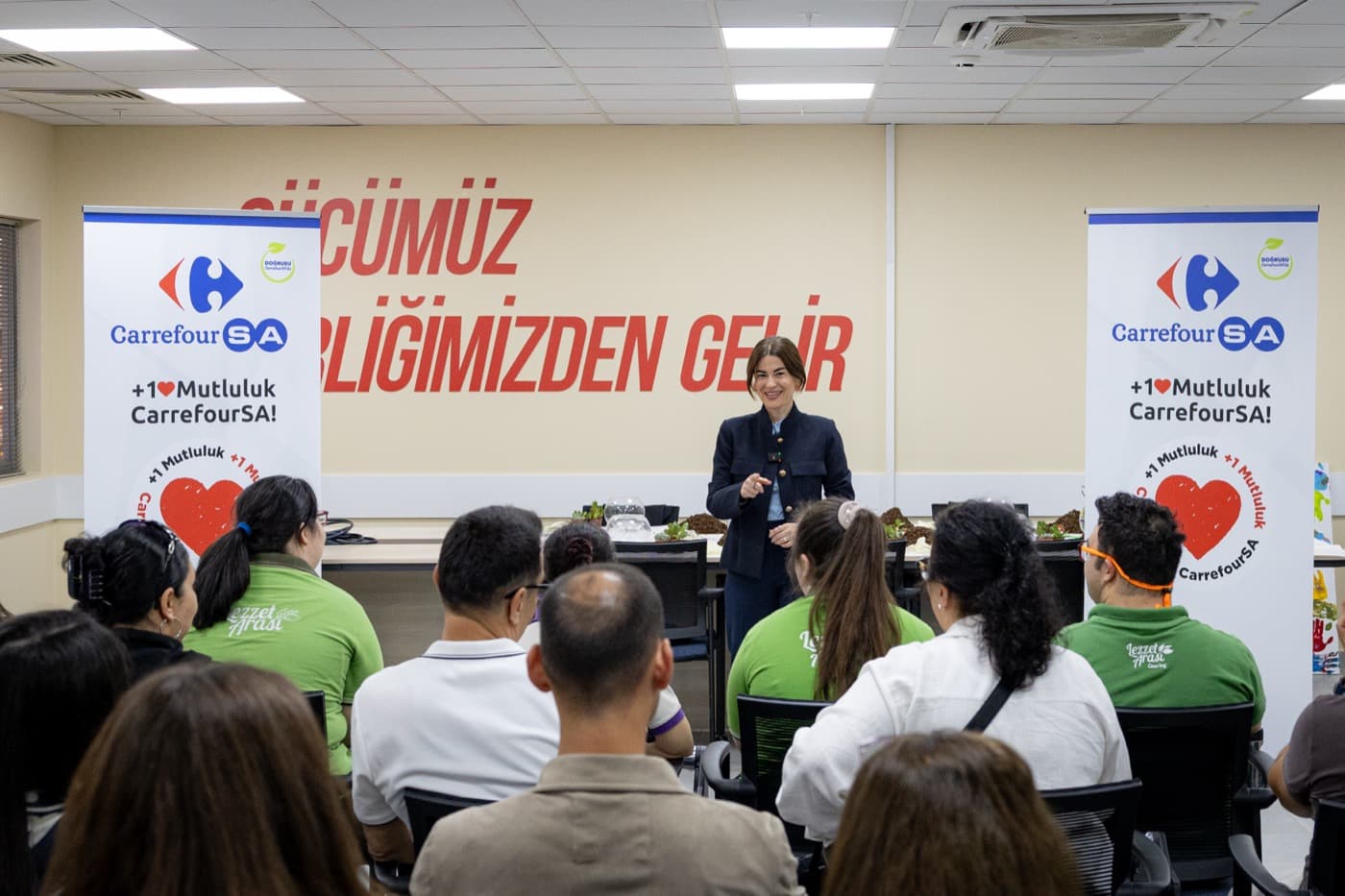
Figure 1: A training and orientation session under the programme, with colleagues from the in-store restaurant teams.

Figure 2: The programme's restaurant team together with company representatives.

Impact
Sustainability impact
Climate
The initiative does not target greenhouse gas emissions. Employing 8 people in in-store restaurants and training 2,000 people on inclusive working changes neither the Scope 1 emissions of the company's own vehicles and in-store equipment nor the Scope 2 emissions of the electricity purchased for its stores, and no reduction in value chain emissions is claimed over the whole period the initiative has run.
No enabling emission effect is claimed either. The training content covers communication with colleagues with Down syndrome, the appropriate approach, inclusion in work processes and daily support, rather than energy use, waste handling or transport behaviour, so there is no mechanism through which the initiative would change emissions indirectly. The initiative has been running since 2023.
The sustainability impact of the initiative is social and is reported under Social impact below.
Social
The employment result is deliberately modest in headcount and deep in structure: eight people with Down syndrome are employed in eight in-store restaurants across five cities, each with a counsellor job coach, a buddy colleague, a prepared manager and a family engaged in the process.
The training result is much larger. A total of 2,000 people have been trained under the initiative, of whom 1,300 are the company's own employees and 700 are employees of contractor firms. In addition, 1,015 employees received training on communicating with people with Down syndrome, taking the right approach, including them in work processes and supporting them in the daily working routine.
Reach extends beyond the workforce. Communication through Instagram, Facebook, X and YouTube achieved 100,000 in reach, and in-store digital screens, restaurant screens, head office screens and screensaver communication strengthened awareness at multiple contact points.
Effect is tracked through training participation numbers, the number of individuals employed, feedback meetings, attitude scales, evaluations from families, managers and job coaches, and social media reach results — so attitude change is measured alongside headcount rather than inferred from it.
The target group extends past the employees themselves to their families, trainers, counsellor job coaches, educational institutions and non-governmental organisations working in the field.
Business impact
Benefits
The clearest business return is management capability. Running the model develops inclusive leadership skills among store and restaurant managers — planning a first day, adjusting a task set, giving structured feedback — which transfers to the rest of the team.
Among colleagues, the buddy model strengthens empathy, collaboration and a culture of shared responsibility. Those are the same behaviours a service operation needs during a busy shift, which is why the effect is not confined to the individual being supported.
Because inclusion is implemented as a business standard applicable in recruitment, onboarding, training, follow-up and development processes rather than as communication language, the practice continues independently of any particular person, which removes the key risk in voluntary inclusion schemes.
The model is repeatable across restaurants and store formats and is applicable in retail, service and food and beverage businesses with comparable operating structures, so the investment in designing it is amortised over further placements rather than spent once.
Costs
The cost is time and expertise, not capital. The principal items are the counsellor job coaches engaged for each individual, the delivery of training to 2,000 people including 700 contractor employees, and the management and human resources time absorbed by first-day planning and the weekly and monthly feedback cycles.
Communication production is a secondary cost: content for in-store digital screens, restaurant screens, head office screens, screensavers and the social media channels.
Task design carries a hidden cost. Roles have to contain real work, which means the operation adapts the job rather than the individual adapting to a job designed for someone else — that is management effort at the store level.
Scaling is constrained by coaching capacity rather than by budget. Each additional placement requires a qualified counsellor job coach and a prepared receiving team, so growth is limited by the availability of specialists and by the throughput of the training programme. Costs are reduced by training in cohorts, by extending training to contractor employees so that the whole site operates on the same understanding, and by reusing the same first-day and feedback templates for every placement.
Impact beyond sustainability and business
Co-benefits
The effect does not stop at the eight people employed. Each individual's development reaches their family, their social environment, their colleagues and the customers of the restaurant, so the awareness created spreads well beyond the payroll.
Perception of disability in the workplace changes among employees, customers and the wider community — the belief that the work will be slower or riskier is displaced by daily observation of the opposite.
Educational institutions, trainers and non-governmental organisations working in the field gain a live reference for what a supported placement looks like in a commercial operation, which is more useful to them than an advocacy argument.
Potential side-effects
The placement depends on the support structure. Withdrawing the counsellor job coach, or moving a prepared manager without preparing the replacement, puts the placement at risk — the model creates a dependency that has to be resourced permanently rather than during a launch phase.
Scale is limited by design. With eight people employed, the direct employment effect is small relative to the workforce, and an organisation adopting the model should be explicit that the larger measurable outcomes in the short term are the training and awareness results rather than headcount.
There is a real risk of the practice sliding into symbolism if roles are created for visibility rather than for work. The safeguards here are job content, structured feedback from family, manager and coach, and attitude measurement — without those, a placement becomes a communication asset instead of a job.
Implementation
Typical business profile
The model fits retail, food and beverage and service businesses running distributed store or restaurant operations with standardised, repeatable task sets, where a role can be defined precisely and supported locally.
It requires a human resources function able to coordinate across sites, and store or restaurant managers with enough authority to adapt a task set.
Access to specialist partners — counsellor job coaches, trainers, educational institutions and non-governmental organisations working with people with Down syndrome — is a precondition rather than an enhancement.
Approach
Define roles with real task content: Start from the work that needs doing in the restaurant and identify tasks a new colleague can own, so that the placement is a job rather than a presence; a role created for visibility will not survive a busy shift.
Build the specialist network before recruiting: Engage counsellor job coaches, trainers, educational institutions and non-governmental organisations working in the field, and involve families from the first conversation, because they hold the information about what the individual can and wants to do.
Assign a counsellor job coach to each individual: Make the coaching relationship permanent rather than time-limited, so that adjustments can be made months after placement when the initial attention has faded.
Prepare the receiving team before the first day: Train colleagues and managers on communication with people with Down syndrome, the appropriate approach, inclusion in work processes and support in the daily working routine — 1,015 employees received this training.
Plan the first day in detail for every individual: Agree who meets the person, which tasks are covered, who answers questions and how the shift ends, so that the first day is designed rather than improvised.
Appoint a buddy colleague in the daily workflow: Position a co-worker beside the individual for routine questions, which keeps day-to-day inclusion inside the team instead of routing every issue to management.
Run weekly and monthly feedback cycles and convert them into action plans: Collect evaluations from the family, the manager and the job coach, apply attitude scales, hold feedback meetings, and record the resulting adjustments so the placement is managed with data.
Extend training and communication beyond the immediate team: Train the wider workforce and contractor employees — 2,000 people in total, 1,300 own employees and 700 from contractor firms — and communicate through social media and in-store, restaurant, head office and screensaver channels so that perception changes ahead of the next placement.
Stakeholders involved
Project leads: The initiative is led by human resources with senior management ownership, and is run as a strategic practice integrated into corporate culture rather than as a corporate social responsibility activity. That placement matters: because human resources owns the process, inclusion is implemented through recruitment, onboarding, training, follow-up and development procedures, which is what allows the practice to continue as a corporate process without depending on a particular individual.
Company functions: Store human resources teams, restaurant and store managers, buddy colleagues and the wider team deliver the model day to day, with human resources following the process end to end. Managers and buddy colleagues carry the daily workload of inclusion, while human resources maintains the first-day plans, the feedback cadence and the action plans that follow from it. The regular collaboration between counsellor job coaches, store human resources teams, managers, buddy colleagues and families is what holds the process together.
Main providers: Counsellor job coaches, trainers and educational institutions provide the specialist input: assessing fit, preparing the individual, training the receiving team and advising on adjustments. Non-governmental organisations working with people with Down syndrome contribute expertise to the design of the practice and act as a route to candidates and their families.
Other: People with Down syndrome and their families sit at the centre of the process rather than at the end of it; families take part in the regular evaluation cycle alongside managers and coaches. Customers of the restaurants experience the model directly and form part of the awareness effect. Local communities and the wider sector engage through the communication programme, which reached 100,000 through social media channels.
Key parameters to consider
The initiative started in 2023 and the initiative operates in eight in-store restaurants across five cities, currently with eight employees with Down syndrome, supported by counsellor job coaches, buddy colleagues, managers, human resources teams and families.
Monitoring uses training participation numbers, the number of individuals employed, feedback meetings, attitude scales, evaluations from families, managers and job coaches, and social media reach results. The cadence is weekly and monthly for the individual placement, with action plans produced from each cycle.
Corporate sustainability reporting covering the initiative is subject to independent third-party external assurance.
The binding constraints on scaling are the availability of qualified counsellor job coaches and the throughput of the training programme, not capital. A company replicating the model should size its ambition against coaching capacity.
Implementation and operations tips
Give the process to human resources, not to a champion. The most common failure mode in inclusive employment is that the practice ends when the person who started it changes role; embedding it in recruitment, onboarding, training and follow-up procedures prevents that.
Train the receiving team before the individual arrives. Preparation removes the awkwardness that otherwise falls on the new colleague to manage.
The buddy colleague carries the day. A named co-worker for routine questions does more for daily inclusion than any policy document.
Measure attitude as well as headcount. Attitude scales and evaluations from family, manager and coach reveal whether the placement is working long before a headcount figure would.
Extend training to contractor employees. A site where only the direct workforce has been trained produces inconsistent daily experience; 700 of the 2,000 people trained here work for contractor firms.
Keep families formally in the loop. Families notice changes at home that neither the manager nor the coach will see at work.