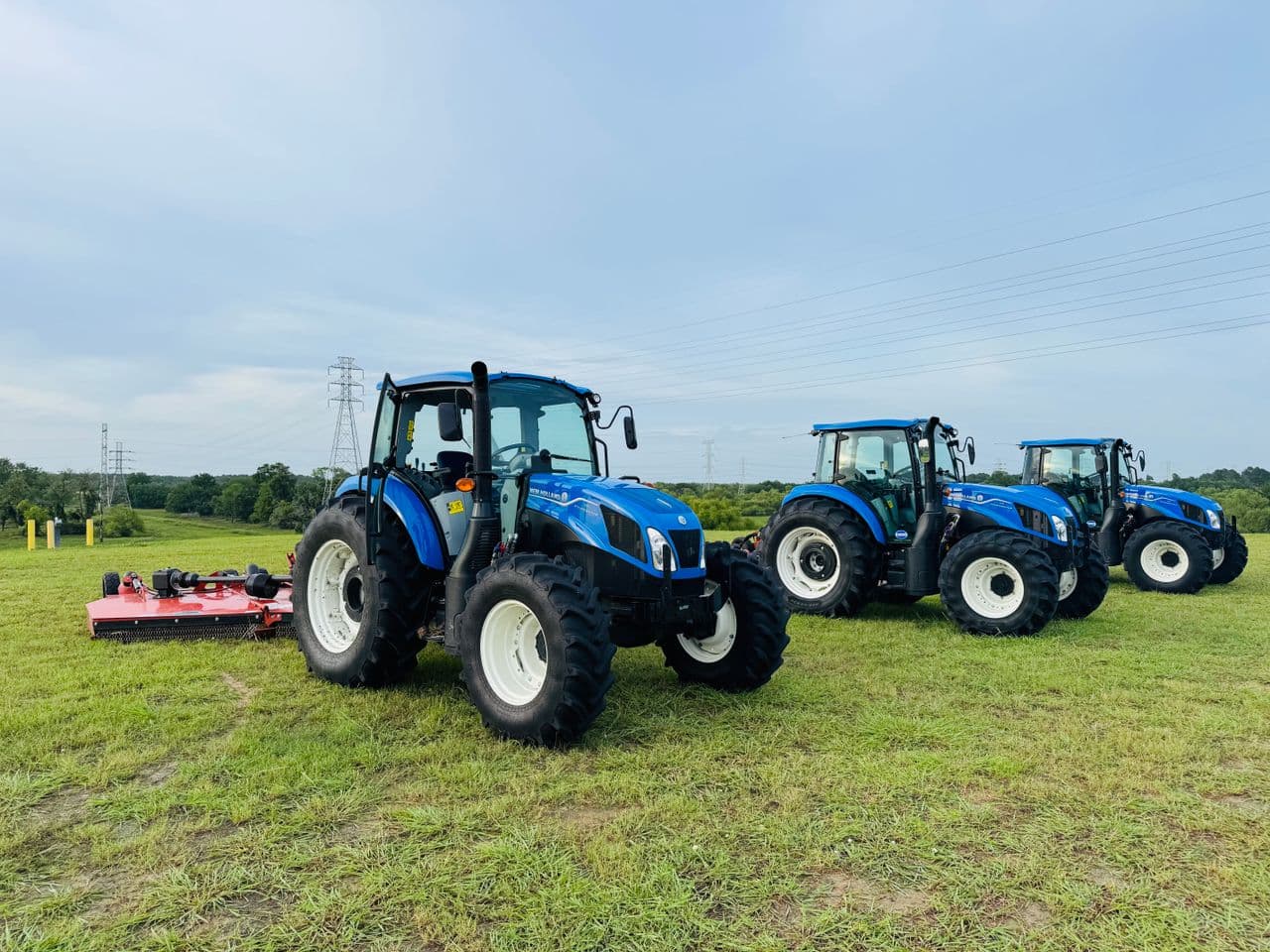
Electrify heavy road freight to cut logistics emissions
 Unilever
 SKD Türkiye
Summary
Three battery-electric tractor units run a fixed factory to warehouse route on certified renewable electricity, replacing diesel haulage with near-zero direct emissions.
Context
Submitted through the COP31 Sustainable Transformation Awards · SKD Türkiye (WBCSD Global Network Partner)
The company manufactures home care, personal care and food products in Türkiye and employs more than 1,000 people.
Heavy road freight is one of the harder parts of a manufacturer's footprint to address. The vehicles are usually owned and operated by a contracted logistics operator, the emissions sit in the purchased transport part of the value chain, and the commercial barriers to changing the fleet — vehicle price, charging infrastructure and range — belong to the operator rather than to the shipper.
In Türkiye there is no regulatory requirement to move heavy commercial haulage to electric vehicles. The transition was started voluntarily, under the group's commitment to net zero across the value chain by 2039 (1), and the fleet conversion is the local application of corporate emission reduction targets rather than a compliance response.
The base year is 2023, when the route in question was operated with diesel tractor units. In that scenario each vehicle consumed 42 litres per 100 km, which at 2.68 kg CO2 per litre gives an emission intensity of 1.12 kgCO2 per km, all of it direct fossil fuel combustion.
The initiative began in June 2023 with the first electric tractor units to enter logistics operations on Turkish roads. It has since moved out of pilot status into an established operating model and is being prepared for fleet-level scaling.
Location of the initiative: Tuzla, İstanbul, Türkiye — factory to warehouse route
Solution
The operating model puts three battery-electric tractor units on a fixed factory to warehouse route and supports them with a partnership structure covering vehicle supply, technical service and financing.
Charging is the element that determines whether the switch produces a real reduction. The vehicles are charged at the company's Tuzla factory, which is supplied entirely by certified renewable electricity, so the operation runs at close to zero direct emissions rather than shifting fuel combustion to the power sector.
The partnership structure is what distinguishes the model from a straight vehicle purchase. The vehicle manufacturer supplies the electric truck technology; its distributor provides distribution and after-sales technical support; the manufacturer's financial services arm provides flexible financing; and the contracted logistics operator carries operational execution and fleet management. That combination addresses vehicle price, service availability and capital exposure at the same time, which is what allows an operator to take on an electric heavy vehicle at all.
The route choice reflects the current technology envelope. A fixed, repeated shuttle between a factory and a warehouse has a known daily distance and returns to a site with charging, which removes the range and infrastructure risk that makes long-haul electrification difficult today.
Measurement is built into the operation rather than reconstructed afterwards. Trip counts and distance are recorded monthly from the logistics operator's operational data, tonnage is logged, and the cumulative emission reduction is recalculated on the GHG Protocol framework using IPCC emission factors, then integrated into corporate sustainability tracking.
Figure 1: Cumulative distance covered and CO2 avoided by the three electric tractor units, January 2024 to May 2026

Impact
Sustainability Impact
Climate
The initiative targets Scope 3 emissions from purchased road freight — the haulage the company buys from a contracted logistics operator, rather than fuel burned in company-owned vehicles, and is accounted under GHG Protocol Scope 3, Category 4: Upstream transportation and distribution.
Because the vehicles are charged at a factory supplied entirely from certified renewable sources, the same transport operation now runs with close to zero direct emissions instead of the fossil fuel combustion recorded in the base year.
The calculation uses the GHG Protocol framework and IPCC emission factors applied to diesel consumption, distance covered and load data, against a 2023 baseline of 42 litres per 100 km and 2.68 kg CO2 per litre, giving 1.12 kgCO2 per km in the diesel scenario.
Between January 2024 and May 2026 the three vehicles covered a cumulative 121,016 km and avoided 115 tonnes of CO2.
Data are recorded monthly, which keeps the result auditable and continuously updatable rather than dependent on an annual estimate.
Nature
Replacing diesel tractor units removes the local air pollutant emissions associated with heavy vehicle combustion along the route, which runs through populated areas between the factory and the warehouse.
Noise is the second local effect. Electric heavy vehicles operate substantially more quietly than diesel equivalents, which reduces noise exposure for communities along the route and at the loading points, particularly during early and late movements.
Social
Drivers gain from the change directly. The electric tractor units improve driving safety and ergonomics compared with the diesel vehicles they replace, and the reduction in noise and vibration affects the working environment of the people in the cab for the whole shift.
Communities along the route benefit from cleaner air and lower noise without having to make any change themselves.
The logistics operator gains low-emission fleet capability and the operating experience that goes with it, which is a capability transfer into a supplier that would otherwise have had no commercial route to acquire it.
Business Impact
Benefits
The clearest benefit is that a Scope 3 transport reduction is delivered through a supplier rather than negotiated with one. The logistics operator invested in electric fleet capability, which changed stakeholder behaviour in the value chain instead of shifting the shipper's demand to a different haulier.
Energy efficiency improves relative to diesel operation, and the fuel cost line is replaced by an electricity cost line drawn from a renewable supply the company already contracts for its factory.
Exposure to future carbon regulation and to diesel price volatility falls for the routes converted, which is the commercial reason the model is being prepared for fleet-level scaling.
The partners each take value out of the arrangement: the operator gains fleet capability, the vehicle manufacturer and its distributor gain a reference deployment in a market without one, and the company gains verified progress against its climate targets. That distribution of benefit is what makes the structure repeatable rather than dependent on one party absorbing the cost.
Costs
The high initial capital cost of electric tractor units is the principal barrier, followed by limited charging infrastructure and range constraints. These are identified in the company's own assessment as the main risks to wider deployment.
The capital exposure is addressed through the flexible financing model offered by the vehicle manufacturer's financial services arm, which spreads the cost for the logistics operator rather than requiring it to carry the full purchase price. After-sales technical support from the distributor covers the service risk of operating an unfamiliar drivetrain.
Charging infrastructure cost is contained by charging at the company's own factory, which already holds a renewable electricity supply, rather than building public or third-party charging capacity.
The remaining dependencies are real: the model works where a fixed route returns to a site with charging, and its economics improve with public incentives, private sector collaboration and wider infrastructure investment.
Capital cost per vehicle, charging infrastructure cost and payback period are not disclosed.
Impact Beyond Sustainability And Business
Co-benefits
The arrangement created a commercially repeatable ecosystem rather than a single deployment. Vehicle supply, after-sales service and flexible financing were combined so that the commercial obstacles to electric heavy haulage were reduced for the operator, and the same structure can be offered to other shippers.
Driving safety and ergonomics improve for drivers, and local communities gain from lower noise and better air quality, none of which appears in the carbon figure.
The deployment gives the wider Turkish logistics sector a reference point that electric heavy haulage is operable in commercial conditions, which shifts demand rather than only supply.
Potential side-effects
The result depends on the electricity supply. The near-zero direct emissions claim holds because charging draws on certified renewable electricity; replicated on a standard grid connection, the reduction would be materially smaller and would need to be recalculated against the local grid emission factor.
The model is route-dependent. A fixed factory to warehouse shuttle suits current battery range and charging patterns; longer or less predictable routes will not convert on the same terms until charging infrastructure and range improve.
Concentrating on a small number of vehicles also concentrates operational risk. With three units on one route, a vehicle out of service has a proportionally larger effect than in a diesel fleet with spare capacity, so service response arrangements have to be agreed before deployment rather than after a failure.
Implementation
Typical Business Profile
The model suits manufacturers and distributors that run fixed, high-frequency shuttle routes between a production site and a warehouse, where the daily distance is known and the vehicle returns to a company site that can host charging.
It is most relevant for companies that buy haulage from contracted logistics operators rather than owning the fleet, because the central task is enabling a supplier to invest rather than replacing vehicles directly.
A renewable electricity supply at the charging site is close to a precondition, otherwise the reduction depends on the grid emission factor.
Delivery engages supply chain, logistics and sustainability functions, with senior management sponsorship needed to commit to a multi-year supplier arrangement.
Approach
Choose a route where the technology already works: Identify a fixed, repeated shuttle with a known daily distance that returns to a company site, so that range and charging risk are removed before vehicle selection begins.
Build the diesel baseline from operational data: Record consumption per 100 km, distance and load for the route as currently operated, apply the relevant emission factor per litre of fuel, and fix the resulting intensity per km as the base year against which the electric operation is compared.
Assemble the partner set before ordering vehicles: Bring together the vehicle manufacturer, its distributor for after-sales service, a financing provider and the logistics operator, so that vehicle price, service availability and capital exposure are addressed as one package rather than sequentially.
Structure the financing so the operator can invest: Use a flexible financing model that spreads the capital cost of the electric tractor units for the logistics partner, since the shipper cannot deliver the reduction if the supplier cannot fund the fleet.
Site charging at a facility already on renewable supply: Install charging at a company site supplied by certified renewable electricity, so that the emission reduction is real rather than transferred to the power sector.
Take vehicle selection, route planning and charging design as a joint decision: Agree these between the company's operations teams and the partners rather than specifying them unilaterally, because charging window, payload and turnaround time interact.
Instrument the operation for monthly reporting: Take trip count, distance and tonnage from the logistics operator's operational systems each month, recalculate cumulative avoided emissions on the GHG Protocol framework, and integrate the result into corporate sustainability tracking.
Run structured feedback and then scale route by route: Hold regular performance review meetings with the partners, feed operational experience back into the design, and extend the model to further routes and warehouses before attempting fleet-wide conversion.
Stakeholders Involved
Project leads: The initiative is owned by the senior management of the Türkiye business and aligned with the group commitment to net zero across the value chain by 2039. Strategic decisions sit with senior management while implementation and performance tracking sit with the operations teams, with periodic monitoring and reporting against defined indicators.
Company functions: Supply chain, logistics and sustainability teams work as an integrated group. Logistics owns route planning and the operational interface with the haulier, supply chain owns the commercial arrangement, and sustainability owns the emission calculation methodology and the reporting line into corporate governance. The emission results are reported inside the company's sustainability governance rather than kept as a project record.
Main providers: Four commercial partners carry the delivery. The vehicle manufacturer supplies the electric tractor unit technology; its distribution and service partner provides distribution and after-sales technical support; the manufacturer's financial services arm provides the flexible financing that makes the fleet investment possible for the operator; and the contracted logistics operator carries operational execution, fleet management and the supply of operational data used for emission tracking.
Other: Public authorities and sector representatives are indirect stakeholders, since incentives and charging infrastructure policy determine how far the model can be extended. Local communities along the route are affected by the reduction in noise and local air pollutants. Decisions on vehicle selection, route planning and charging infrastructure design are taken jointly by the company's operations teams and the partners, and feedback from the field is fed back into the arrangement through regular review meetings.
Key Parameters To Consider
Four indicators are tracked: avoided CO2 emissions in tonnes; distance covered by the electric vehicles in km; emission intensity per unit distance in kgCO2 per km; and an equivalent tree carbon sink figure used for communication.
The scope is three tractor units on one factory to warehouse route, monitored monthly, with impact data covering January 2024 to May 2026 against a 2023 base year.
The model is technology-limited rather than concept-limited. It applies today to short and medium distance fixed routes; extension to long-distance haulage depends on charging infrastructure and range development, and on the electricity supply at the charging point being renewable.
Scaling is planned in stages: pilots on further routes and warehouses, integration into partners' fleets, and then extension to the company's other lines.
Implementation And Operations Tips
Solve the supplier's balance sheet problem, not only the vehicle specification. The determining factor was a financing structure that allowed the logistics operator to invest, and no amount of shipper commitment substitutes for that.
Start where the technology is already comfortable. A fixed shuttle with a known daily distance and charging at one end proves the operating model without exposing it to range risk.
Secure renewable electricity at the charging point before commissioning the vehicles, otherwise the headline reduction becomes a grid emission factor calculation.
Take the operational data from the haulier's own systems monthly. Building the measurement into the operator's routine reporting is what keeps the result verifiable and continuously updatable.
Use the deployment as a sector reference. The commercial obstacles to electric heavy haulage fall fastest when an operator can point to a working example in the same market rather than to a specification sheet.