Recover waste heat to decarbonise process heating
 Türk Tuborg Bira ve Malt Sanayi A.Ş.
 SKD Türkiye
Summary
Waste heat from ammonia refrigeration is lifted by an industrial heat pump into high-temperature process energy and reused in wort production, displacing fuel.
Context
Submitted through the COP31 Sustainable Transformation Awards - SKD Türkiye (WBCSD Global Network Partner)
Türk Tuborg Bira ve Malt Sanayi A.Ş. is a brewer and malt producer with more than 2,000 employees, operating an integrated production facility.
Brewing needs both intensive cooling and high-temperature process heat, and the two have traditionally been met separately. Ammonia refrigeration systems reject their waste heat to the atmosphere, while the heat demand of wort production is met by burning fuel, so the same site pays to remove energy at one point and to create it at another.
Current regulation encourages energy consumption monitoring and efficiency work, but it does not require the process redesign that connects the two flows. The company treated that gap as the opportunity: the objective was to convert energy previously released to the atmosphere into an active input to production.
The project started in 2024 and was commissioned in 2025. It is in active use and integrated into production rather than operating as a trial. The 2024 performance is used as the baseline and compared with the 2025 operating results following the system’s commissioning.
Energy performance is monitored under the ISO 50001 energy management system, greenhouse gas emissions are calculated in line with the GHG Protocol approach, and recovery and process data are tracked through the facility automation and energy monitoring infrastructure.
Location of the initiative: Türkiye
Solution
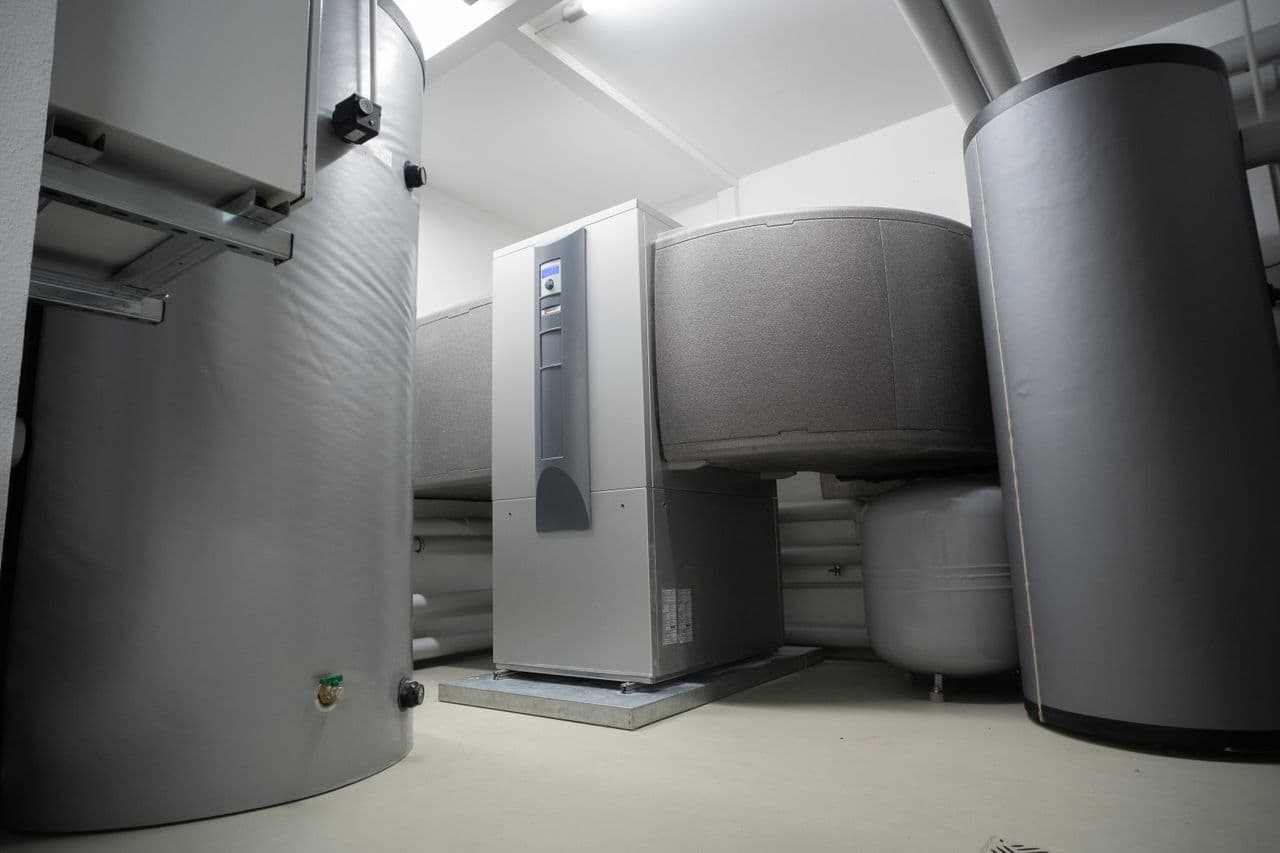
The system connects the site's refrigeration plant to its process heating demand through an industrial heat pump.
Waste heat rejected by the ammonia refrigeration systems is captured and lifted to a higher temperature by the heat pump, at which point it becomes usable process energy. That energy is delivered into wort production, one of the most heat-intensive stages of brewing.
The existing cooling infrastructure is therefore given a second function. It continues to provide cooling, and at the same time becomes a source of process energy, so energy previously treated as a loss becomes an active input to the production process.
No wholesale replacement of plant was required. The transformation comes from redesigning the energy flows between existing systems rather than from rebuilding them, which is what keeps the approach applicable to facilities already in operation.
The result is a partial electrification of process heat: energy that was supplied by fuel combustion is now supplied by a heat pump driven by electricity, drawing on a heat source the site already produces.
Automation, metering and performance monitoring are built into the installation, so recovered energy and process energy performance are read continuously rather than estimated, and the same data supports the energy management system and the corporate sustainability account.
Figure 1: The heat pump draws hot ammonia gas from the refrigeration compressors, transfers the recovered heat into hot water for wort production and returns cooled ammonia to the cooling circuit

Impact
Sustainability Impact
Climate
The initiative targets Scope 1 emissions: the fuel burned on site to raise process heat for wort production, part of which is now supplied by recovered waste heat instead. The 2025 results show 3,723,947 kWh of energy recovered over the year, reported by the company as approximately 3.7 million kWh, an energy saving of approximately 320 tonnes of oil equivalent, and an improvement of 6.8 per cent in the energy performance of the wort production process. Emissions fell by approximately 752 tonnes of CO2e, a reduction of approximately 7.4 per cent in production-related emissions, measured against the 2024 base year using a GHG Protocol-aligned calculation. Because a heat pump is driven by electricity, part of the energy demand moves from on-site fuel combustion into purchased electricity, which sits in Scope 2. The company calculates greenhouse gas emissions in line with the GHG Protocol approach and monitors energy performance under an ISO 50001 energy management system, which is the basis on which the reduction is stated.
Nature
Reducing the load on the refrigeration systems produced a water saving of approximately 8,550 m3, because less cooling duty means less water consumed in the cooling process. Energy and water efficiency therefore improved through one intervention rather than two, which is unusual: measures that reduce thermal energy use frequently increase cooling or water demand elsewhere. The recovery also reduces the heat rejected to the surrounding environment from the refrigeration plant, since energy that was previously discharged is now carried into the process instead.
Social
Technical capability in the operation, maintenance and energy management teams was developed through the design, commissioning and optimisation of the system, and those teams carry the ongoing performance monitoring. The project supported knowledge sharing on energy efficiency and the dissemination of good practice experience beyond the facility boundary, which is how the company positions its contribution to low-carbon production practice in the wider sector.
Business Impact
Benefits
The project generated an economic benefit of approximately TRY 7.8 million a year, arising from energy that no longer has to be purchased because it is recovered from the site's own processes. Energy performance in wort production improved by 6.8 per cent, which is a permanent change in the specific energy consumption of a core process rather than a one-off saving. The water saving of approximately 8,550 m3 reduces both consumption and the associated cost, and lightens the duty on the cooling systems, which supports their reliability and maintenance profile. Because the existing infrastructure was retained and reconfigured rather than replaced, the capital requirement was contained to the heat pump and its integration, which is materially less than a new thermal plant would have cost. The operation is less exposed to fuel price movements as part of the process heat demand is now met by recovery, and the ISO 50001 framework also ensures that the performance gains are continuously monitored and maintained over time.
Costs
The cost base is the industrial heat pump itself and its integration into live refrigeration and process systems, together with the automation, metering and control work required to operate and monitor it. Integration with existing systems is identified by the company as one of the principal risk areas, alongside investment cost and the technical expertise the design and operation require. A brewery cannot take its refrigeration plant out of service for a redesign, so the work has to be fitted around production. Operating cost shifts rather than disappearing: fuel consumption falls, while electricity consumption for the heat pump, maintenance of an additional item of plant, and the monitoring and optimisation effort rise. The benefit is coupled to the refrigeration load. Recovered energy is only available while the cooling systems are running at the expected duty, so a change in production volume or product mix affects the heat source as well as the heat demand. Costs were contained by working with the existing infrastructure rather than replacing it, and by developing the design with technology and engineering partners rather than building the capability internally. The total investment amount and the payback period are treated as commercially confidential and are not disclosed.
Impact Beyond Sustainability And Business
Co-Benefits
One intervention delivered energy recovery, emission reduction and water saving together, which strengthens the business case beyond what an energy-only assessment would show. The approach transfers to any energy-intensive facility that rejects low-grade heat and needs process heat at the same site, which covers a wide range of food, beverage and chemical production. Working with technology and engineering partners supported technology transfer and knowledge sharing, so the design experience is available beyond the company that commissioned it. The project changed how energy is regarded in the value chain: waste energy is treated as a strategic resource rather than a loss, which makes energy efficiency an element of climate action and resource efficiency rather than only a cost reduction measure.
Potential Side-Effects
Electrifying process heat moves emissions rather than eliminating them where the electricity carries a carbon intensity. The benefit depends on the grid factor or on renewable electricity procurement, and it will change as either changes. The heat source is a by-product of refrigeration. If cooling demand falls, through a change in production volume, seasonality or product mix, the recoverable heat falls with it, at a time when process heat may still be needed. Adding a heat pump to an ammonia refrigeration circuit introduces an interface that both systems now depend on, so maintenance planning and fault response have to cover the combined system rather than each part separately. The design and operation require technical expertise that is not standard in a production facility, which the company identifies as a risk area for others attempting the same approach.
Implementation
Typical Business Profile
The model suits energy-intensive manufacturers that operate substantial refrigeration or cooling plant and simultaneously require medium or high-temperature process heat on the same site - food and beverage production, brewing, dairy and comparable process industries. It is most applicable to existing facilities rather than new build, because the value comes from reconfiguring energy flows between systems that are already installed and already paid for. The adopting company needs an energy management system capable of establishing a credible baseline, plant automation and metering to verify the result, and access to engineering expertise for the integration work. Delivery engages energy management, sustainability, maintenance and operations functions, with senior management sponsorship because the investment decision is taken against corporate climate and efficiency priorities rather than a departmental budget.
Approach
Map the waste heat actually available: Record the temperature, flow and operating hours of the heat rejected by the refrigeration systems, because the usable quantity depends on the temperature level and its availability profile, not on the total energy rejected.
Identify the process that can absorb it: Match the recovered heat to a specific demand - wort production in this case - so the energy has a defined destination at a defined temperature rather than being fed into a general heating circuit.
Establish the baseline before commissioning: Set a base year, here 2024, and record performance under the ISO 50001 energy management system so that the improvement can be measured against a documented starting point.
Select a heat pump for the required temperature lift: Specify the equipment against the gap between the available waste heat temperature and the temperature the process needs, since this determines both feasibility and the electricity the system will consume.
Redesign the energy flows instead of replacing the plant: Route the recovered heat between existing refrigeration and process systems, which keeps the capital requirement to the heat pump and its integration.
Integrate automation and metering from the start: Connect the installation to facility automation and energy monitoring infrastructure so recovered energy and process performance are measured continuously rather than estimated after the fact.
Commission and test against the design case: Run performance tests after commissioning, monitor energy data and collect feedback from the operations teams, then use the results to optimise the system rather than treating handover as completion.
Track a fixed indicator set: Report recovered energy in kWh, avoided greenhouse gas emissions in tonnes of CO2e, water saving in m3, process energy performance as a percentage and economic benefit in local currency, so that the result is visible in operational and financial terms at once.
Keep optimising inside the energy management system: Review performance indicators on a defined cycle with the responsible managers, continue system optimisation on the results, and use the same framework to identify the next efficiency opportunity.
Stakeholders Involved
Project leads: The initiative was carried out with senior management support, in line with the company's objectives on climate change, energy efficiency and low-carbon production, and the investment decision was taken against corporate priorities rather than site-level budget. Performance indicators are assessed on defined periods and shared with the responsible managers, which keeps the system inside a continuous improvement cycle rather than treating the commissioning as the end of the project.
Company functions: Sustainability, energy management, maintenance and operations teams took an active role in the design and decision-making processes, and continue to carry the monitoring. Energy performance work is conducted under the ISO 50001 energy management system, with data drawn from facility automation, the energy monitoring infrastructure and operational monitoring mechanisms. Medium and long-term continuity rests on that system together with maintenance processes, technical expertise and ownership by the operations teams.
Main providers: The design was developed with a heat pump technology partner that contributed to system design, equipment selection, integration and performance optimisation. Further engineering, pump, insulation and automation contractors supported the mechanical, automation and technical implementation work. Collaboration ran through regular technical meetings, performance reviews and operational feedback, and after commissioning the performance tests, energy data and operator feedback fed directly into system optimisation.
Other: The collaboration model built with technology and engineering partners supports technology transfer and knowledge sharing beyond the individual project. Sector-level collaboration and the sharing of good practice experience extend the outcome past the facility boundary, which is how the company describes its contribution to wider adoption of low-carbon production practice. Energy management system requirements and efficiency policy provide the external framework within which the performance is monitored.
Key Parameters To Consider
The base year is 2024 and results are reported for the 2025 operating period, so the figures represent one full year of operation rather than a projection.
Energy performance is monitored under ISO 50001, greenhouse gas emissions are calculated in line with the GHG Protocol approach, and recovery and process data come from facility automation and energy monitoring infrastructure.
The defining technical parameter is the temperature lift: the recovered heat has to reach the temperature wort production requires, which is what makes an industrial high-temperature heat pump the enabling equipment rather than a conventional heat exchanger.
Opportunities for wider application come from rising energy costs, carbon reduction targets, energy efficiency policy and the trend towards electrification in industry. The main risk areas are investment cost, technical expertise requirements and integration with existing systems.
Implementation And Operations Tips
Start from the demand, not the waste. Identifying a process that needs heat at a specific temperature is what determines whether recovered energy is usable; a survey of available waste heat on its own tends to produce projects with nowhere to send the output.
Establish the baseline under a formal energy management system before commissioning. Working inside ISO 50001 gave the company a documented starting point, which is what allows a 6.8 per cent process improvement to be stated rather than estimated.
Instrument the installation as part of the project. Automation and metering built in at the outset produced verifiable figures for energy, emissions, water and cost, and the same data now drives the optimisation cycle.
Expect the integration, not the equipment, to be the difficult part. The company identifies integration with existing systems as a principal risk area, because the work has to be carried out around a refrigeration plant that cannot stop.
Report the water effect as well as the energy effect. The reduced cooling load produced approximately 8,550 m3 of water saving, which would have gone unrecorded if the project had been assessed only on energy and carbon.