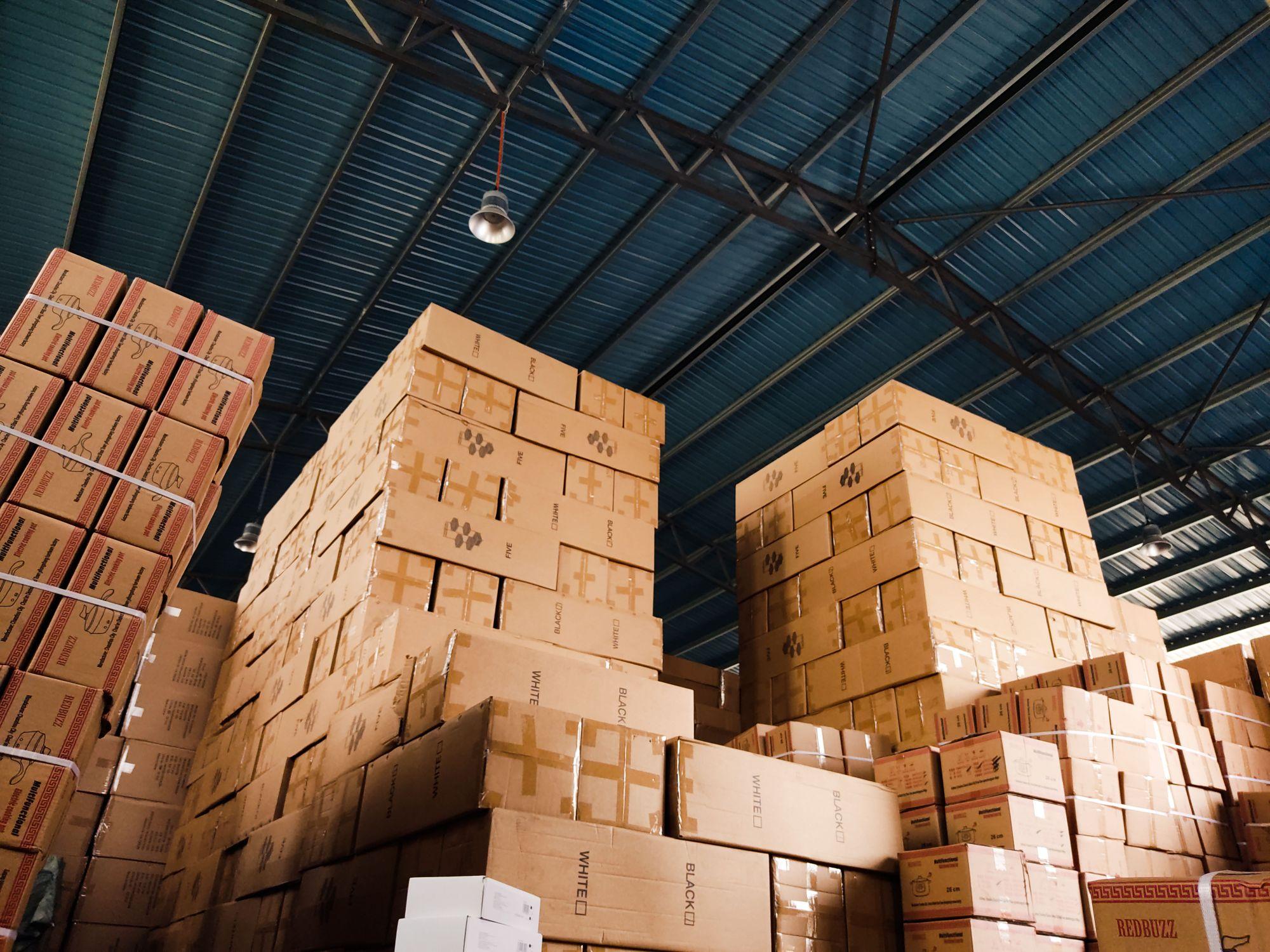
Redesign packaging to cut material use and emissions
 Trendyol
 SKD Türkiye
Summary
Box sizes, material weights and labels are systematically reduced and packaging is reused inside the operation, lowering material use, cost and packaging-related emissions.
Context
Submitted through the COP31 Sustainable Transformation Awards · SKD Türkiye (WBCSD Global Network Partner)
Trendyol is an e-commerce company running one of the largest online marketplaces and fulfilment operations in Türkiye.
Packaging is the material consequence of order growth. Every additional parcel consumes cardboard, plastic film, tape and labels, and every oversized box carries air through the logistics network, which raises material consumption and transport volume at the same time.
A common approach in the sector is to switch to recycled or recyclable materials and to treat packaging as a procurement cost line. That reduces the impact of each unit but leaves the quantity of packaging unchanged, so consumption continues to rise with order volume.
The adopting company's approach is to reduce the requirement itself. Packaging is managed as a resource efficiency and circularity subject across the whole operation, bringing packaging design, material weight, label and consumable consumption, reuse inside the operation, supply chain localisation and alternative packaging solutions under one structure.
The consolidated programme was established in 2026, bringing together packaging optimisation initiatives implemented across the business, using 2025 operational packaging consumption data as the base year against which project-level results are compared. Packaging and resource efficiency performance is reported through the company's sustainability disclosures (1).
Location of the initiative: Türkiye, with packaging localisation in the United Arab Emirates and Saudi Arabia
Solution
The programme runs as a portfolio of packaging projects managed under one method rather than as a series of separate procurement decisions.
Box optimisation is the first element. Box dimensions are matched more closely to what is actually shipped, so fewer sizes carry less void volume, which reduces material use and the transport volume each parcel occupies.
Material weight reduction follows. The grammage of cardboard and the thickness of plastic films are lowered to the minimum required to protect the product, which cuts consumption per unit without changing the packaging format or the packing process.
Label and consumable consolidation removes duplication. Labels applied at different points in the process are merged, which removes label stock, adhesive and the handling steps attached to them.
Reuse inside the operation closes part of the loop. Cardboard arriving at the fulfilment operation is recovered and used again within the same site instead of being discarded after a single journey.
Localisation addresses the supply of packaging itself. Boxes, shrink film and bubble wrap are sourced closer to the operations that consume them, which removes long-distance road transport from the packaging supply chain.
Every project is assessed the same way. Consumption and cost in a reference period before implementation are compared with the period after, and the emission effect is calculated in accordance with GHG Protocol principles using the relevant material and logistics emission factors. Successful projects are standardised and transferred to other operations rather than left at the site where they were first run, which is what converts individual improvements into a repeatable method.
Figure 1: Avoided emissions by packaging optimisation initiative: plastic film thickness reduction 74.0 tCO2e, last-mile and light commercial vehicle transport optimisation 69.3 tCO2e, packaging supply localisation 32.98 tCO2e, heavy-duty transport optimisation 4.55 tCO2e, and cardboard reuse with the replacement of air cushions 3.54 tCO2e, totalling 184.37 tCO2e of project-level impact that can currently be quantified.

Impact
Sustainability Impact
Climate
The initiative reduces emissions embedded in packaging materials and in the transport of those materials, which sit in Scope 3. Packaging purchased and consumed falls under Scope 3, Category 1: purchased goods and services, and the road transport of packaging and of parcel volume falls under Scope 3, Category 4: upstream transportation and distribution. Emission effects are calculated under the GHG Protocol approach using the relevant material and logistics emission factors, with 2025 operational packaging consumption as the base year.
The projects implemented so far have avoided more than 500,000 km of road distance and 40,000 litres of diesel fuel, saved 30 tonnes of polyethylene plastic and returned 35 tonnes of cardboard to use inside the operation. Taken together, these results have prevented approximately 200 tonnes of CO2e from being generated.
Each project carries its own before-and-after comparison against a defined reference period, so the consolidated figure is the sum of verified project results rather than a modelled estimate.
Effects are monitored on monthly and annual cycles, and the same data set identifies where the next reduction is available, which keeps the reduction continuous rather than one-off.
Packaging-related cost savings are tracked internally in Turkish lira as part of the programme's financial performance. However, these figures are commercially sensitive and are therefore not publicly disclosed.
Greenhouse gas calculations are performed in accordance with the GHG Protocol using project-specific emission factors. These include DEFRA 2025 emission factors for road transport and diesel fuel consumption, GEMIS emission factors for LDPE, DEFRA/DESNZ emission factors for avoided waste cardboard, and an emission factor of 1.56 kgCO2e/kg for labelling paper, as applicable to each project.
Nature
Material reduction prevents waste at source instead of managing it after disposal. Lower cardboard grammage, thinner films and consolidated labels mean less material enters the operation and therefore less leaves it as waste.
Reuse of cardboard inside the operation keeps 35 tonnes of material in service for a second use rather than sending it to recovery after a single journey, which avoids both the disposal and the replacement material.
Reducing polyethylene consumption by 30 tonnes lowers the volume of plastic packaging entering the waste stream, and box optimisation reduces the void volume shipped, which lowers the number of vehicle movements required for the same order volume.
Localising packaging supply shortens the distance materials travel before they are used, which reduces the land transport impact attached to packaging itself.
Business Impact
Benefits
Packaging reduction produces cost savings directly, because less material is purchased for the same order volume and fewer consumables are handled in the packing process.
Box optimisation adds a second saving in logistics. Smaller parcels occupy less vehicle volume, so the same shipment volume requires fewer vehicle movements, which is where the avoided 500,000 km of road distance and 40,000 litres of diesel fuel arise.
Label consolidation and material weight reduction simplify the packing process, which reduces handling steps at the packing station and shortens the time each parcel takes.
Localisation of box, shrink and bubble wrap supply in the United Arab Emirates and Saudi Arabia shortens lead times and reduces exposure to long-distance freight cost and disruption, in addition to the transport emissions avoided.
Suppliers benefit as well, because the requirement to develop lighter and better-fitting packaging builds capability that they can apply across their own customer base, which is what keeps them engaged in the redesign work.
Packaging-related cost savings are measured and tracked internally in Turkish lira as part of the programme's financial performance. However, these figures are commercially sensitive and are therefore not publicly disclosed.
Costs
The cost base is the engineering and design effort to redesign packaging specifications, the pilot testing required to confirm that lighter materials still protect the product, changes to packing lines and equipment settings, and the supplier development work behind localisation.
Material reduction carries a direct operational risk: packaging that is too light increases damage in transit, which costs more in replacement and customer service than the material saved. Pilots, performance tracking and supplier collaboration are used to find the point where protection is retained.
Product safety criteria and supply chain constraints set the floor. Certain categories cannot accept reduced protection, so the addressable share of packaging volume is smaller than total consumption.
Projects requiring low investment, such as box optimisation, grammage reduction and localisation, are adapted quickly across operations, while more extensive transformation projects are prioritised by impact potential and payback period, which spreads capital demand over time.
The programme is funded through annual operational improvement budgets and the packaging procurement process rather than through a separate capital allocation, which ties its continuation to demonstrated savings.
The programme is implemented through multiple packaging optimisation initiatives delivered as part of routine operational improvement and packaging development activities. Accordingly, no separate programme-level capital investment has been defined. Investment requirements and payback periods are evaluated individually for each project through the company's standard operational budgeting and approval processes rather than being tracked at programme level.
Impact Beyond Sustainability And Business
Co-benefits
The method spreads beyond the company. Suppliers asked to develop lighter and better-fitting packaging build capability they can offer to other customers, which extends the benefit through the packaging supply chain.
Operational teams develop awareness of material consumption and waste generation as a performance area rather than as a fixed cost of doing business, which surfaces further improvement ideas from the packing floor.
Localisation of packaging supply supports suppliers in the markets where the operations sit, which builds regional supply capacity alongside the transport reduction.
Because packaging is treated as a resource efficiency subject rather than a purchasing line, the same method transfers to other consumables in the operation where consumption is driven by process design rather than by product requirements.
Potential side-effects
Reducing material protection increases the risk of damage in transit, and a damaged order costs more than the packaging saved once replacement, return transport and customer service are counted. That risk is managed through pilot applications and performance monitoring before a specification is rolled out, and it sets a genuine limit on how far grammage can fall.
Reuse of cardboard inside the operation requires sorting, storage and quality checking, which adds handling work at the site and only pays where material volumes are high enough to justify the space.
Localisation reduces transport emissions but concentrates supply on fewer regional suppliers, which raises exposure if one of them fails, so supplier collaboration has to be paired with alternative sourcing.
There is also a measurement trade-off. Savings are calculated project by project against a reference period, so results depend on the comparability of those periods, and order mix changes between periods have to be accounted for or the figures overstate the effect.
Implementation
Typical Business Profile
The method suits e-commerce, retail, distribution and logistics operations that consume packaging at volume and control their own packing process, where packaging is currently managed as a procurement cost rather than as a resource efficiency area.
It is most relevant for operations running several fulfilment sites, because the value comes from standardising a proven change and transferring it, and for businesses whose parcel profile includes a wide range of product sizes, where void volume is significant.
Delivery engages operations, procurement and supply chain, and the sustainability function, with packaging suppliers involved in specification development rather than only in supply.
Approach
Set a consumption baseline before changing anything: Use a full year of operational packaging consumption data, in this case 2025, as the base year, and record material quantities, cost and shipment volumes so every later project has a comparable reference period.
Build a project portfolio rather than a single initiative: List candidate changes across box design, material grammage, labels and consumables, internal reuse, localisation and alternative materials, and manage them under one method with common measurement rules.
Optimise box dimensions against the actual order profile: Match box sizes to what is shipped so void volume falls, which reduces both material consumption and the vehicle volume the parcel occupies.
Reduce material grammage to the tested minimum: Lower cardboard weight and film thickness step by step, and confirm through pilot shipments that damage rates do not rise before the specification is standardised.
Consolidate labels and consumables: Merge labels applied at different process points and remove duplicated consumables, which cuts material, adhesive and handling steps at the packing station.
Recover and reuse packaging inside the operation: Sort and store incoming cardboard for a second use within the same site, and set quality criteria so reused material does not increase damage.
Localise packaging supply to the consuming operation: Source boxes, shrink film and bubble wrap regionally, as was done for the United Arab Emirates and Saudi Arabia operations, to remove long-distance freight from the packaging supply chain.
Measure each project before and after, then standardise: Compare consumption, cost and shipment data for the reference and post-implementation periods, convert the result into avoided emissions using GHG Protocol material and logistics factors, and transfer proven changes to other operations as standard practice.
Stakeholders Involved
Project leads: The programme is run in line with the company's sustainability strategy and long-term climate targets, and is sponsored by senior management because it contributes to resource efficiency, cost optimisation and emission reduction at the same time. Results are reviewed regularly and decisions to extend a proven change to other operations are taken with senior management support, which is what turns individual projects into standard practice.
Company functions: Operations teams identify packaging requirements and implement changes on the packing floor. Procurement and supply chain teams handle material selection, supplier collaboration and localisation. The sustainability team calculates environmental effects and manages reporting. Because operational and sustainability objectives are managed together in one structure, packaging decisions carry both a cost and an emissions test rather than only a cost test.
Main providers: Packaging suppliers are the principal external partners. They are engaged in specification development, not only in supply, and are asked to develop lighter and better-fitting materials, regional supply options and alternative packaging solutions. Feedback from suppliers is used alongside feedback from operations teams to identify the next improvement area.
Other: Operations teams in the United Arab Emirates and Saudi Arabia participate in the localisation of box, shrink and bubble wrap supply, which extends the method beyond the domestic operation. Project priorities are set jointly against resource saving potential, operational suitability and environmental impact criteria, so no single function can push a change that fails one of the three tests.
Key Parameters To Consider
Performance is tracked through five key performance indicators: total packaging material reduced in tonnes, total plastic consumption reduced in tonnes, greenhouse gas emissions avoided in tCO2e, packaging-related cost saving in Turkish lira, and the volume of shipment and logistics operations optimised.
The programme is not tied to a specific facility or operating model, so the method transfers to other operation centres, countries and sectors, but each transfer needs its own reference period because order mix differs between sites.
Low-investment changes such as box optimisation, grammage reduction and localisation move quickly, while more extensive transformation projects are prioritised by impact potential and payback period, which is what keeps the portfolio affordable.
The binding constraints are operational requirements, product safety criteria and supply chain limits, and they determine how much of total packaging volume is actually addressable.
Implementation And Operations Tips
Set the baseline before the first project, not afterwards. Without a defined reference period the savings cannot be verified and the consolidated figure becomes an estimate.
Pilot every material reduction before standardising it. Damage in transit costs more than the material saved, and the only reliable way to find the limit is to test it on real shipments.
Measure each project separately and consolidate afterwards. A single programme-level number hides which changes worked, and the portfolio then cannot be prioritised.
Treat packaging as a resource efficiency area rather than a purchasing line. Once the objective is quantity rather than unit price, options such as internal reuse and label consolidation become visible, and they carry no material substitution risk.
Bring suppliers into specification development early. The lighter and better-fitting formats come from supplier engineering capability, and a supplier asked only to quote a price has no reason to offer them.