Reinject geothermal gases to decarbonise renewable power
 Zorlu Enerji
 SKD Türkiye
Summary
Non-condensable gases separated from geothermal fluid are dissolved in water and reinjected into the deep reservoir instead of being released to the atmosphere.
Context
Submitted through the COP31 Sustainable Transformation Awards · SKD Türkiye (WBCSD Global Network Partner)
The company is an electricity generator in the energy sector with more than 1,000 employees, operating geothermal capacity in Türkiye.
Geothermal power is treated as a renewable source, but the fluid brought to the surface carries dissolved gases that do not condense, principally carbon dioxide. In conventional operation these non-condensable gases are released to the atmosphere, which leaves a carbon footprint on an otherwise renewable generation asset. Their removal from the reservoir also lowers reservoir pressure over time, which reduces yield.
There is no binding legislation in Türkiye requiring geothermal plants to reinject non-condensable gases underground. The investment was therefore made voluntarily, ahead of regulation, under the group's Smart Life 2030 sustainability vision and its principle of leaving no trace in the environment.
A second operational problem sits alongside the emissions question. Mineral scaling in wells and surface equipment restricts flow and reduces plant efficiency, and it is conventionally managed with chemical inhibitors that carry their own cost and environmental load.
The initiative began in 2018 as the Geothermal Emission Control project, launched as an EU Horizon 2020 project with 17 international partners and completed successfully. It has since moved to a corporate stage, in which commercial scale-up and feasibility work for further sites are carried out with the company's own resources using the knowledge gained.
Location of the initiative: Kızıldere 3 geothermal power plant, Türkiye
Solution
The principle is to keep the gas in the ground rather than to capture it after release. Non-condensable gases separated from the geothermal fluid are dissolved in water and the resulting solution is reinjected into the deep reservoir, where the carbon dioxide remains rather than reaching the atmosphere.
Dissolution before injection is what makes the method work at a power plant. Handling the gas in solution rather than as a compressed gas stream keeps the injection system compatible with the water circuits the plant already operates, and it places the carbon dioxide in contact with the reservoir rock.
The design is site-specific. An injection technology with few precedents worldwide was adapted to the conditions of the Kızıldere 3 plant, and the main equipment was manufactured domestically, which the company reports at 100 per cent for the principal components.
The chemistry produces a second effect that was not the original objective. Because dissolved carbon dioxide is acidic, injecting it suppresses the mineral scaling that restricts well flow, so the need for chemical inhibitors falls and well and plant performance improve. The same effect allows smaller pipe diameters to be specified in new plants, which lowers their capital cost.
Measurement is direct rather than modelled. Flow measurement devices installed in the field record injection continuously, and the site automation infrastructure carries the data into the monitoring system, so the reported reduction is based on measured flows rather than on emission factors.
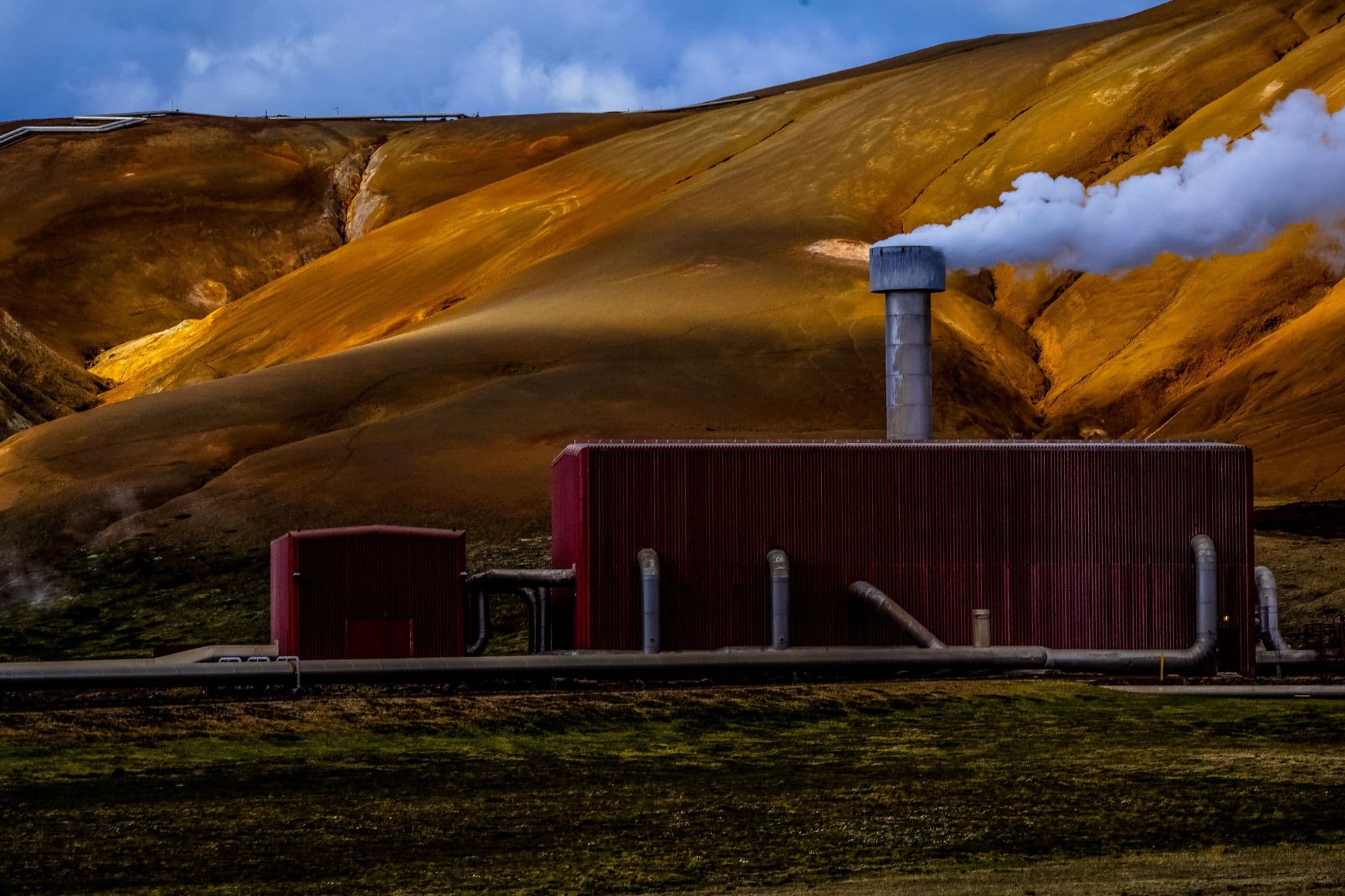
Figure 1: The non-condensable gas injection system at Kızıldere 3

Figure 2: Measured non-condensable gas injection rate at Kızıldere 3

Impact
Sustainability Impact
Climate
The initiative targets Scope 1 emissions, the direct process emissions of the generation asset itself, since the non-condensable gases released from geothermal fluid are emitted at the plant rather than in the supply chain.
Results come from direct measurement by flow meters installed in the field and monitored continuously. The work started in 2018 as an EU Horizon 2020 research project and has since moved to a corporate stage. Across the test and operating period an average non-condensable gas injection rate of 230 kg per hour was achieved, and over a six-month monitoring period approximately 1,000 tonnes of carbon dioxide were injected safely into deep reservoirs instead of being released to the atmosphere.
Because there is no binding requirement in Türkiye for reinjection of non-condensable gases from geothermal plants, the reduction is additional to both regulation and prevailing sector practice, and it supports the company's corporate objective of fully renewable generation.
Nature
Injecting acidic carbon dioxide solution suppresses mineral scaling in the wells, which reduces consumption of the chemical inhibitors conventionally dosed to control it. Less inhibitor means a smaller chemical load handled, stored and injected at the site.
Returning gas to the reservoir also supports reservoir pressure, which is monitored through a reservoir pressure and sustainability index. Maintaining pressure protects the longevity of the geothermal resource itself rather than depleting it, which is the condition for the asset remaining renewable in practice as well as in classification.
Operational risks specific to the subsurface, including corrosion and scaling in the injection system, were assessed and managed with the research partners before commissioning.
Social
Selecting domestically manufactured main equipment created a specialist capability among local suppliers. The company reports 100 per cent domestic supply for the main equipment, which built a research and development competence and a supply ecosystem for this technology inside the country rather than importing a packaged system.
The project also transferred knowledge into the Turkish research base through participation in an international consortium, with a domestic university representing the country alongside European research institutes.
Demonstrating that a geothermal plant can operate without releasing its process gases changes what neighbouring operators and communities can expect from the technology, and the company reports that it has encouraged similar decarbonisation work among other operators.
Business Impact
Benefits
The strongest business effect is operational rather than reputational. Preventing scale formation improves well flow and plant efficiency, which raises output from the same resource.
Chemical inhibitor consumption falls because the acidic property of the injected carbon dioxide performs part of the same duty, removing a recurring operating cost.
The method also lowers the capital cost of future plants, because pipe diameters can be reduced in new installations designed around it.
Preserving reservoir pressure protects the productive life of the field, which is the asset the whole business case rests on.
Strategically, the company positions the capability against carbon border mechanisms and carbon markets, where verified injection of carbon dioxide is expected to carry financial value, and notes that the system could later be supplied with emissions captured from the air, which would change it from a cost avoided into a revenue model. Both of these are prospects rather than realised results.
Costs
The cost base is the injection system itself: gas separation and dissolution equipment, injection wells and pumping, flow measurement instrumentation, site automation, and the engineering to adapt an injection technology with few precedents to the conditions of a specific plant.
Development costs were shared during the first phase through an EU Horizon 2020 project with 17 international partners. Commercial scale-up and the feasibility work for new sites are being funded from the company's own resources, so the next phase carries the full cost.
Operating costs shift rather than disappear. Chemical inhibitor consumption falls, while injection pumping, instrumentation, corrosion management and continuous monitoring are added.
The main dependencies are technical infrastructure compatibility, complex field conditions, and corrosion and scaling risk in the injection system; each has to be assessed for a site before the design is fixed.
Costs are contained by sourcing the main equipment domestically, by reusing the site automation infrastructure for monitoring, and by carrying the knowledge from the first installation into subsequent sites.
Capital expenditure for the injection system at the pilot site was approximately EUR 430,000, with main equipment sourced domestically. Operating cost is essentially the parasitic electrical load of the compressors and pumps, around USD 100,000 a year, partly offset by the chemical inhibitor doses avoided.
For replication the return depends almost entirely on the carbon price, so a single payback figure would be misleading. Modelling a scale-up of this system at the company's own plant, the investment breaks even at a carbon price of around USD 18 per tonne, taken as a conservative upper-bound estimate; at any price above that level the investment is profitable, and payback shortens from roughly ten years under a conservative price path to around three years under net-zero-aligned trajectories. The figure is specific to the design and conditions of this site — another plant, with different reservoir conditions, gas composition and equipment scope, could break even above or below it.
Impact Beyond Sustainability And Business
Co-benefits
The same infrastructure has a future use beyond the plant's own gases: it could accept carbon dioxide captured from other emission-intensive industrial facilities, or from the air, using the reservoir as the storage destination.
The domestic supplier ecosystem created for the main equipment is reusable. Manufacturers that developed the capability for this installation can supply the next ones, which shortens lead times and keeps the value inside the local economy.
Demonstrating a working installation shifts the sector benchmark. Once one operator has shown that process emissions from geothermal generation can be eliminated, the practice becomes an expectation rather than an exception.
Potential side-effects
Injection adds a subsurface dependency to a power plant. Corrosion, scaling in the injection system and the response of the reservoir have to be monitored continuously, and a plant that relies on injection needs a defined fallback for periods when the injection system is unavailable.
The method is site-specific. It depends on reservoir geology, on the composition of the non-condensable gas stream and on the availability of injection capacity, so results at one field are not transferable without assessment at the next.
Injection consumes energy and equipment, and the parasitic load has to be set against the emissions avoided; the case for the investment rests on the operational gains from reduced scaling as much as on the carbon result.
Finally, the value attached to verified injection in future carbon markets is a projection. The operational benefits are realised today; the market benefit depends on regulation that does not yet exist.
Implementation
Typical Business Profile
The model suits geothermal power operators whose fluid carries a significant non-condensable gas fraction, and it is most valuable where scaling in wells and surface equipment already imposes an inhibitor cost, because the operational saving then carries part of the investment.
It also applies, with adaptation, to emission-intensive industrial facilities located above suitable geology, where the same dissolution and injection route could take a captured carbon dioxide stream.
Delivery engages general management, an investments and operations function, a research and innovation function and a sustainability department, together with reservoir engineering and plant operations.
Approach
Characterise the gas stream and the reservoir first: Measure the composition and flow of the non-condensable gases at the plant and assess reservoir geology and injection capacity, because both determine whether dissolution and reinjection are feasible before any equipment is specified.
Assemble a research consortium for the unproven elements: Bring in carbon mineralisation, materials and reservoir expertise from research institutes and universities for the parts of the process with few precedents, and use public research funding for the development phase.
Design for the specific plant rather than buying a package: Adapt the injection concept to the plant's existing water circuits, pressures and layout, since a geothermal facility cannot be rebuilt around a standard design.
Dissolve the gas before injecting it: Take the gas into solution in water rather than handling a compressed gas stream, which keeps the system compatible with plant water handling and places the carbon dioxide in contact with the reservoir rock.
Source the main equipment domestically where capability exists: Develop local manufacturers for the principal components, which shortens supply chains, builds a supplier ecosystem and reduces dependence on imported systems.
Instrument the system for direct measurement: Install flow measurement devices on the injection line and connect them to the site automation infrastructure, so that the emission result is measured continuously rather than estimated from factors.
Manage corrosion and scaling as design conditions: Assess corrosion and scaling risk in the injection system explicitly, select materials accordingly, and monitor the reservoir pressure and sustainability index during operation.
Convert the pilot into a replication programme: Record the technical and operational knowledge from the first installation, run feasibility studies for further fields, and treat future carbon market and border mechanism requirements as design inputs for the next sites.
Stakeholders Involved
Project leads: The initiative sits inside the group sustainability vision, which is governed by a holding-level sustainability committee represented at board level, and inside the operational roadmap of the company's own sustainability committee. General management leads delivery, with the deputy general management responsible for investments and operations, the research and innovation directorate and the sustainability department working as a coordinated, cross-disciplinary structure.
Company functions: Investments and operations, research and innovation, sustainability, plant operations and reservoir engineering work to a shared plan. Site automation and monitoring teams maintain the flow measurement and data infrastructure that produces the emission and injection figures, and the same data feeds corporate climate reporting.
Main providers: Domestic manufacturers supplied the main equipment for the injection system, developing the specialist capability required for it in the process. An Icelandic carbon mineralisation technology partner contributed the subsurface carbon dioxide handling expertise within the research consortium.
Other: The project ran as an EU Horizon 2020 project with 17 international partners. Middle East Technical University represented Türkiye in the consortium, alongside the Fraunhofer institutes in Germany, the University of Florence in Italy, the French national research agency and the CIRCE research centre for energy resources and consumption in Spain. Public authorities, local administrations and suppliers in the region of the plant were engaged through the permitting and operating process.
Key Parameters To Consider
The initiative started in 2018 and completed its European research phase before moving to a corporate stage; scale-up and new site feasibility work are now funded from the company's own resources.
Five performance indicators are tracked: annual carbon dioxide reduction, non-condensable gas injection flow rate, the Scope 1 emission reduction rate, the reservoir pressure and sustainability index, and the domestic equipment supply ratio.
The reported climate result covers a six-month monitoring period, so it is a measured operating result rather than an annualised projection.
Replication depends on reservoir geology and gas composition at the receiving site; the technology is transferable but the design is not.
The company reports through CDP, applies reporting aligned with ISSB standards IFRS S1 and S2 and with TNFD, and holds targets validated against the Science Based Targets initiative.
Implementation And Operations Tips
Look for the operational payback, not only the carbon result. Reduced scaling, lower inhibitor consumption and smaller pipe diameters in new plants are what make the investment defensible without a carbon price.
Measure with flow meters from the start. An injection project whose result rests on emission factors will not withstand external assurance or qualify in a future carbon market; direct measurement will.
Use public research funding for the unproven phase and own resources for replication. The consortium carried the technical risk of a first installation; once the knowledge is internal, the company can move faster alone.
Build domestic supply deliberately. Specifying local manufacture for the main equipment cost time at the beginning and produced a supplier base that makes the second and third installations cheaper.
Treat reservoir pressure as part of the business case. Returning gas underground protects the resource that the generation asset depends on, which is a longer-lived benefit than the emissions avoided in any single year.