Turn a rainwater pond into a habitat and a water source
 Brisa
 SKD Türkiye
Summary
An industrial rainwater pond was restored with oxygenation and native fish instead of chemical dosing, recovering 54,000 m3 of water a year and rebuilding habitat.
Key resources
Context
Submitted through the COP31 Sustainable Transformation Awards · SKD Türkiye (WBCSD Global Network Partner)
The company manufactures tyres in Türkiye and employs more than 1,000 people; the initiative sits at its Aksaray plant on the central Anatolian plateau.
A rainwater collection pond was built at the plant in 2021 as a water-saving asset, on the assumption that its value was storage. The first scientific survey of the water body found something else: the pond was already a living ecosystem, but it had lost its function because it was starved of oxygen. Microbiological pollution was severe, with a faecal coliform value 214 times the permitted limit, which made the stored water unusable and made the pond a liability rather than a resource.
The conventional answer in industry is chemical treatment. The company took the opposite route and treated the pond as an ecosystem to be rebalanced, on the reasoning that a self-sustaining biological system needs no continuous dosing and can be maintained at low cost once it is stable.
Water stewardship is a governed priority rather than a site-level initiative. In the CDP Water Security 2023 assessment the company received an A, placing it in the Leadership band, above the Europe regional average of C and above the light manufacturing sector average of B-; only 16 per cent of companies in its activity group reached that level (1). The pond project is positioned as one of the core actions of the company's biodiversity strategy, alongside its CDP biodiversity disclosure and its work under the Science Based Targets Network approach.
Location of the initiative: Aksaray, Türkiye
Solution
The model replaces chemical treatment with ecosystem engineering: oxygen is restored first, then a biological balance is established that keeps the water clean without further intervention.
A hydraulic oxygenation system was installed as the first physical measure, because dissolved oxygen was the limiting factor identified in the initial survey. Once the water column was aerated, the biological route became viable.
The biological stage was designed with the faculty of fisheries of the state university in the province. Fish species native to the area and able to tolerate the local climate range, which runs from -18°C to +40°C, were introduced and balanced against each other so that a controlled life cycle regulates the population rather than an operator dosing the pond.
Water quality is verified against the national Water Pollution Control Regulation (SKKY) parameters, while the biodiversity side is assessed against the TNFD framework, so that both the regulatory and the nature-related view of the same water body are covered by one monitoring routine.
The recovered water is connected to two uses on site: irrigation of more than 4,000 trees within the plant boundary, and reuse in production processes. That connection is what converts a restored pond from an environmental amenity into an operating water source.
A second phase is designed around aquatic plants with bio-absorption capacity, intended to remove a wider range of pollutants, including heavy metals, by natural means. This phase is planned rather than delivered.
Figure 1: Rainwater is collected from the roofs, settled, held in the pond and returned to the cooling tower, process water and site irrigation

Impact
Sustainability Impact
Climate
The initiative is an adaptation and water-resilience measure rather than an abatement measure. Recovering 54,000 m³ a year reduces the volume the site has to draw from other sources, which lowers exposure to drought and to restrictions on abstraction in a region where water availability is the binding constraint.
The company does not report a Scope 1 or Scope 2 emissions saving for the pond.
Avoided abstraction and pumping activities do not result in a material reduction in Scope 2 electricity consumption. However, the initiative delivers an estimated annual reduction of approximately 20 tCO₂e within Scope 3 emissions (Category 1, purchased goods and services).
Nature
The measurable change is in water quality. The faecal coliform value fell from 214 times the permitted limit to zero, and dissolved oxygen, microbiological parameters and biological indicators have been tracked continuously against a 2021 baseline through periodic laboratory analyses and university field observation.
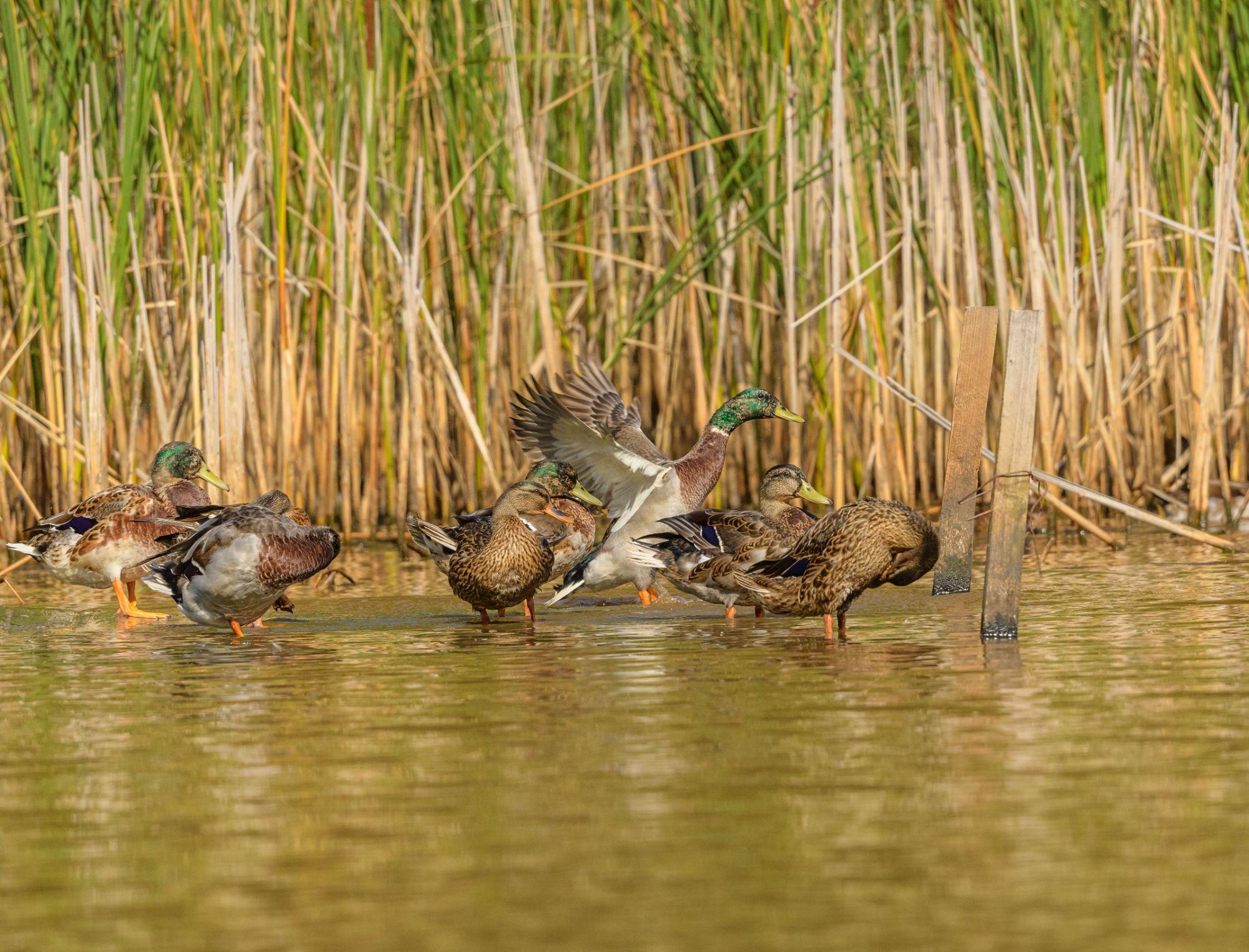
The ecosystem response is the stronger indicator. A permanent living space has formed for fish species native to the area, and the pond has become a stopping point on the Aksaray migratory bird route, with a marked increase in bird observations recorded during migration seasons. Improvement in water quality is therefore visible directly in ecosystem health rather than only in laboratory readings.
The recovered water also produces an ecosystem service inside the industrial site: more than 4,000 trees are irrigated with it, and the volume reused in production reduces pressure on the surrounding water resources.
The result goes beyond the legal requirement, which sets compliance limits for discharge quality but does not ask for habitat creation.
Social
Employees act as both operators and observers of the system. Their feedback is fed back into the monitoring routine, which has turned the pond into a continuously developing structure rather than a fixed installation, and gives staff a physical place on an industrial site where the link to nature is tangible.
The scientific partnership gives the local university's fisheries faculty a working field site, and the monitoring programme run there has continued without interruption since 2021.
The project has been carried into the value chain through the company's Green Dealer Programme, where it serves as a reference point for dealers starting their own sustainability transformation.
Business Impact
Benefits
The pond supplies 54,000 m³ of usable water a year that no longer has to be sourced elsewhere, split between irrigation of more than 4,000 trees on site and reuse in production processes. In a water-constrained location that is a security-of-supply gain as much as a cost saving.
The biological route removes the recurring cost and handling burden of chemical dosing, and a balanced population regulates itself, so the operating requirement after commissioning is monitoring rather than treatment.
The approach is described by the company as achievable with low investment, which is what makes it transferable to other sites and sectors.
Performance in water management feeds external disclosure: the A score in the Leadership band of the CDP Water Security 2023 assessment (1) is the investor-facing evidence that the site-level work is producing a governed result, and the project is reported in the CEO-approved sustainability report.
The recovered water and avoided treatment costs generate an estimated annual financial benefit of approximately USD 35,000–40,000.
Costs
The cost base is the hydraulic oxygenation system and its energy and maintenance requirement, the scientific design and species introduction work carried out with the university, and the periodic laboratory analyses and field observation that keep the monitoring record continuous.
Monitoring is a permanent operating cost rather than a project cost. The system is self-regulating biologically but not self-verifying, so the analytical programme has to be funded for as long as the pond is in service.
The main dependency is the oxygenation system: the biological balance rests on maintained dissolved oxygen, so power supply and equipment availability are the operational risks to plan for.
Costs are contained by avoiding chemical treatment entirely, by using an existing water body rather than building new infrastructure, and by carrying the scientific workload through a university research collaboration instead of a commercial monitoring contract.
Budget planning for the next phase has been completed and the phase has been taken onto the 2026 Sustainability Committee agenda and into the CEO approval process.
The oxygenation and monitoring system required a relatively low capital investment of approximately USD 10,000 and does not incur any additional annual operating costs. This makes the solution highly cost-effective, with long-term environmental and financial benefits achieved without recurring expenditure.
Impact Beyond Sustainability And Business
Co-benefits
The restored pond delivers habitat value that no permit required: a stop on a migratory bird route and a permanent population of locally native fish, created inside an industrial perimeter rather than on a conservation site.
The collaboration model has its own value. Working with a university faculty gives the results scientific credibility and gives the researchers a long-running field site, and the same structure can be reproduced anywhere a plant sits near a research institution.
After the second phase, joint applications to national and European research funding programmes are planned with the university, and a collaboration with the Ministry of Agriculture and Forestry is being sought so that the approach can be assessed as a model for national water policy. Both are intentions rather than results.
Within the value chain, the project reframes water for employees and dealers: from a waste stream or an input to be consumed, into a living asset to be protected and improved.
Potential side-effects
Stocking a water body with fish is only safe where the species are native to the area and matched to the local temperature range; the same intervention with introduced species would create an ecological risk rather than a benefit. Species selection is therefore the step that cannot be copied without local scientific input.
The biological balance depends on continuous oxygenation, which makes the result vulnerable to equipment or power failure in a way that a chemically dosed system is not.
A restored pond that attracts birds and fish also creates obligations on the industrial site around it, since the water body can no longer be treated as an ordinary process asset once it holds a protected biological community.
The planned bio-absorption phase, which is intended to capture heavy metals in aquatic plants, will require the plant biomass to be managed and disposed of as it accumulates pollutants; this has not yet been implemented.
Implementation
Typical Business Profile
The model suits manufacturing sites that already hold an industrial water body on their own land, such as a rainwater collection pond, a fire reserve or a process water reservoir, and that operate in regions where water availability constrains production.
It is most applicable where a site has an environmental function with monitoring capability and can reach a nearby university with aquatic sciences expertise, since the species design and the biological monitoring are the parts that cannot be improvised.
Delivery draws on environmental management, utilities and production water teams, site grounds maintenance, and sustainability reporting, with governance from a board-level sustainability body.
Approach
Survey the water body as an ecosystem, not as a tank: Commission a scientific assessment of the pond before designing any intervention, covering dissolved oxygen, microbiological load and the biological community already present, because the limiting factor determines which route is viable.
Fix the baseline and choose the measurement frameworks: Set the year of the survey as the baseline, in this case 2021, measure water quality against the national discharge regulation parameters and assess the biodiversity dimension against the TNFD framework, so that regulatory and nature-related reporting draw on one dataset.
Restore oxygen before attempting any biological work: Install a hydraulic oxygenation system and confirm that the water column holds oxygen, since introducing species into an anoxic pond will fail regardless of how well the species are chosen.
Decide against chemical treatment explicitly: Compare recurring dosing against a self-regulating biological system on whole-life cost and on the environmental result, and record the decision, because the two routes require different operating capabilities.
Select species with a local scientific partner: Work with a university fisheries faculty to identify fish native to the area that tolerate the site's temperature range, and balance the species against each other so the population is regulated by a controlled life cycle rather than by intervention.
Connect the recovered water to a defined use: Route the recovered volume to on-site irrigation and to process reuse, and meter it, so that the restoration produces a water balance improvement that procurement and operations can see.
Keep monitoring continuous and externally supported: Run periodic laboratory analyses alongside university field observation without interruption, track faecal coliform, oxygen and biological indicators against the baseline, and feed operator observations from site staff into the same record.
Govern the project above site level and fund the next phase: Take the project to a CEO-chaired sustainability committee, report it in the externally published sustainability report, and secure the budget and approvals for the following phase before the current one plateaus.
Stakeholders Involved
Project leads: The Sustainability Committee chaired by the CEO owns the project at management level, which is what moved it from a site utility measure to a corporate priority. Its inclusion in the CEO-approved sustainability report added external accountability to that ownership. Operational and technical delivery sits with the environmental management function at the plant, while strategic direction and decision rights sit with the committee, so field practice and corporate strategy advance together rather than in parallel.
Company functions: Environmental management runs the pond and the monitoring routine. Production and utilities teams take the recovered water into process reuse, and site grounds teams use it for the tree planting. Sustainability reporting consolidates the results for the sustainability report and for CDP disclosure. Plant employees act as observers whose feedback is treated as monitoring input.
Main providers: The faculty of fisheries at the state university in the same province designed the biological stage from the outset and carries out the periodic scientific monitoring under a research collaboration rather than a commercial service contract. Equipment suppliers provided the hydraulic oxygenation system, and accredited laboratories perform the periodic water analyses.
Other: Academic, public sector and civil society stakeholders are engaged alongside the company's dealer network. Dealers encounter the project through the Green Dealer Programme as a reference for their own transformation. Collaboration with the Ministry of Agriculture and Forestry is being pursued so the application can be assessed as a model for national water policy, and joint research applications to national and European funding programmes are planned with the university once the second phase is complete.
Key Parameters To Consider
The pond was created in 2021 and has been monitored without interruption since, so the results reported are from a system that has been through several full seasonal cycles rather than a trial.
The local climate range of -18°C to +40°C is the parameter that drove species selection; in another climate zone the same model would be rebuilt around different local species rather than transplanted.
The project is integrated with the company's sustainability report, its CDP biodiversity disclosure, the Science Based Targets Network approach and its biodiversity strategy, which is what keeps it funded between phases.
The next phase is on the 2026 Sustainability Committee agenda with budget planning completed and research collaboration secured.
Implementation And Operations Tips
Do not assume an industrial pond is inert. The initial survey found a living system that had failed for a single measurable reason, and that finding changed the entire solution from treatment to restoration.
Sequence matters more than technology: oxygen first, biology second. Introducing species into water that cannot support them wastes both the stock and the credibility of the approach.
Use two measurement frames rather than one. The discharge regulation shows compliance, but only a biodiversity framework shows whether the ecosystem is recovering, and it is the biological indicators, such as returning fish and migratory birds, that make the result legible to non-specialists.
Give the recovered water a named destination from the start. Water that is cleaned but not used produces no operating benefit and is hard to defend at budget time.
A university partnership carries the scientific load at research rather than consultancy cost, and the resulting data is publishable, which strengthens both sides.