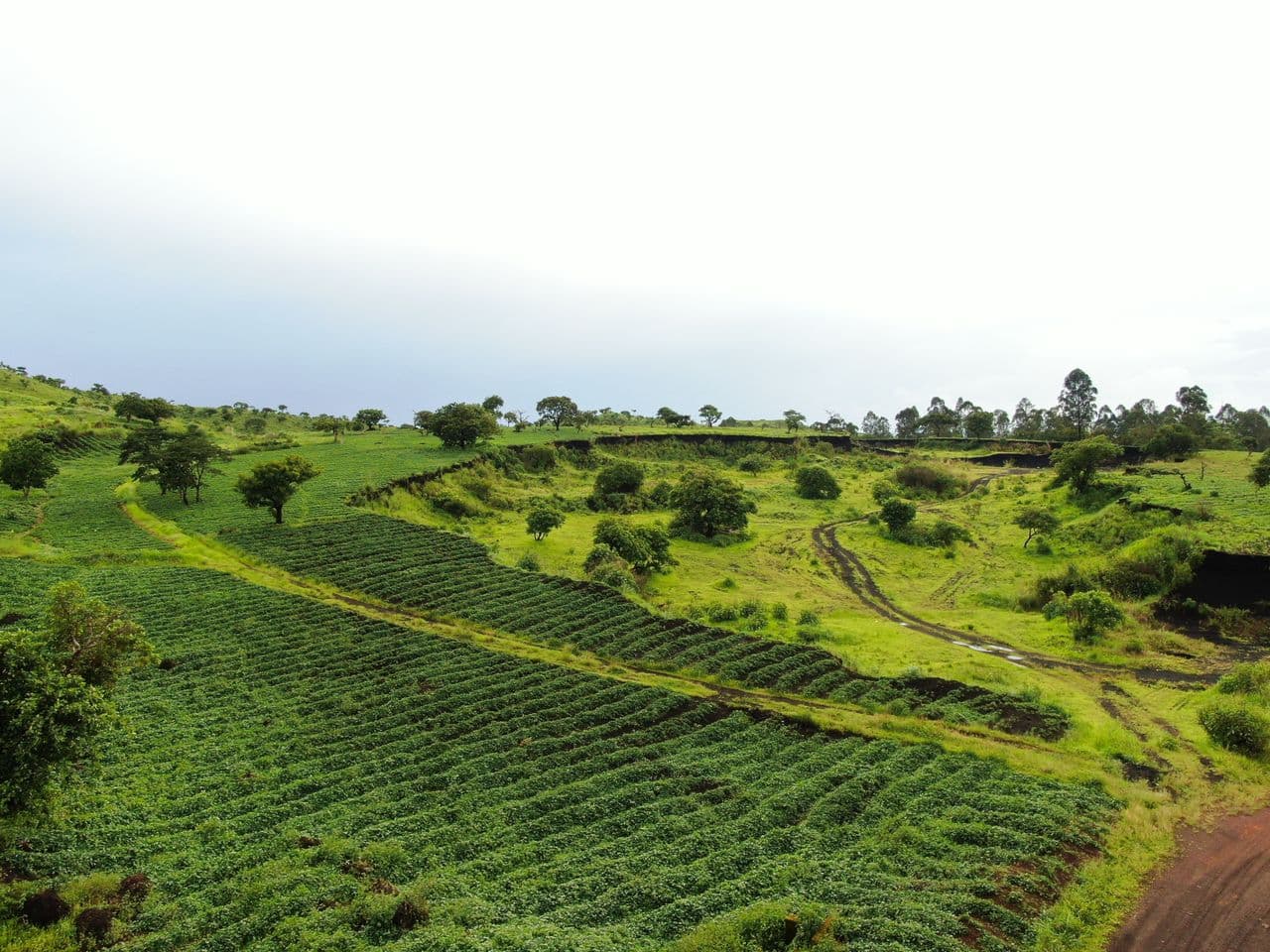
Embed biodiversity in agricultural supply chains
 Ülker Bisküvi San. A.Ş.
 SKD Türkiye
Summary
A food manufacturer assessed nature risk across 13 production facilities and 76 suppliers, then scaled regenerative agriculture, agroforestry and deforestation-free sourcing.
Context
Submitted through the COP31 Sustainable Transformation Awards · SKD Türkiye (WBCSD Global Network Partner)
Ülker Bisküvi San. A.Ş. is a food manufacturer with more than 1,000 employees, producing at 13 facilities across Türkiye, Egypt, Saudi Arabia and Kazakhstan.
Food production depends on agricultural raw materials that are directly exposed to nature loss. The risks identified for the business are biodiversity loss, deforestation, soil degradation, water stress and the decline of ecosystem services. An assessment carried out in 2025 across the 13 production facilities and priority raw materials from 76 suppliers ranked water stress, loss of soil health, pollination deficit, deforestation and habitat loss as the critical exposures.
These risks bear on supply security for wheat, hazelnut and cocoa, the priority raw materials. Before 2024 the relevant activities were managed in separate biodiversity, sustainable agriculture and responsible sourcing streams, which limited the ability to prioritise across supply chains. The company works to a 2030 sustainable supply chain target and a 2050 net zero target, and uses sustainability-linked financing instruments.
Location of the initiative: Production in Türkiye, Egypt, Saudi Arabia and Kazakhstan; sourcing programmes in wheat and hazelnut regions of Türkiye, including Giresun, and in the cocoa supply chain in West Africa
Solution
In 2024 the existing biodiversity, sustainable agriculture and responsible sourcing activities were consolidated into a single framework covering the priority agricultural raw materials. The framework begins with risk assessment rather than with field projects: biodiversity risks at the 13 production facilities and in the priority sourcing regions were screened with the WWF Biodiversity Risk Filter and the Taskforce on Nature-related Financial Disclosures—TNFD—LEAP methodology, and the prioritised risks were converted into commodity action plans built on the mitigation hierarchy.
Three commodity programmes deliver the field work:
wheat: a regenerative agriculture programme reached 101 farmers in the 2024/25 season, 18 on regenerative practices directly and 83 on carbon footprint reduction;
hazelnut: a network of 350 farmers in Giresun supported on good agricultural practices, with 30 farmers applying microbial fertiliser for three years, organic fertiliser support, and biological pest control through the release of 9,000 samurai wasps with the Hazelnut Research Institute; and
cocoa: 9,906 farmers reached, every farm mapped and 100% deforestation verification achieved, with training in agroforestry, good agricultural practice, pesticide management and climate change.
The approach was then anchored in policy. A No Deforestation and Biodiversity Protection—NDPE—policy published in 2025 added deforestation, habitat protection, traceability and human rights requirements to supply chain standards.
Results are tracked through the WWF Biodiversity Risk Filter, TNFD-aligned risk assessments, DNA-based soil analyses, field data and supply chain traceability systems, and are integrated into sustainability reporting (1).
Figure 1: Cocoa sourcing framework in Côte d'Ivoire: from facility and raw material risk assessment and priority region selection to farm mapping, field verification and agroforestry.

Cocoa sourcing framework in Côte d’Ivoire: from facility and raw material risk assessment and priority region selection to farm mapping, field verification and agroforestry.
Impact
Sustainability impact
Climate
This initiative targets Scope 3, Category 1: Purchased goods and services. Wheat, hazelnut and cocoa are bought from suppliers, so the emissions from their cultivation, from the fertiliser and other inputs used to grow them, and from any land-use change in the sourcing regions arise outside the company's own operations and fall into its purchased goods and services category.
The programme sits under a 2050 net zero target and Science Based Targets initiative (SBTi) approved targets, and is reported through CDP on climate, water and forests. No scope-specific reduction figure is reported for the framework itself against the 2024 baseline year over the 2024 to 2026 period, so at this stage it acts as an enabler.
The enabling impact runs through the commodity programmes. Within the wheat programme, 83 of the 101 farmers reached in the 2024/25 season worked specifically on reducing the carbon footprint of production. In cocoa, mapping every farm and verifying it as deforestation-free addresses the land-use change component of that supply chain, agroforestry contributes to restoring forest cover, and producers receive training on climate change alongside agronomy. According to the company's soil analyses, higher water holding capacity on regenerative plots also supports climate resilience in water-stressed sourcing regions.
Nature
Soil analyses in the wheat programme compared treated areas with control plots. Where vetch and hedge plantings were used, the treated areas showed higher microbial diversity, 19.9% higher water holding capacity and stronger ecosystem functions.
In the hazelnut programme, soil biodiversity analyses on plots using microbial fertiliser found the proportion of decomposer fungi 40% higher, balancing bacteria twice as abundant and pathogen pressure 70% lower than on comparison plots, indicating higher biological activity and greater disease resistance. Biological pest control through the release of 9,000 samurai wasps reduces reliance on chemical treatment.
In the cocoa supply chain, all 9,906 farms in the programme were mapped and 100% deforestation verification was achieved. By 2026 agroforestry covered 867 ha across three regions and 473 farmers, with 43,900 trees produced and introduced to the region. According to monitoring data, trees planted in the 2024–2025 period recorded a survival rate of 71%. Species were selected to be compatible with local ecosystems, cultivable alongside cocoa and capable of generating additional farmer income.
Agroforestry converts single-crop cocoa plots into multi-layer production systems, which increases habitat diversity, supports local flora and fauna, strengthens soil health and contributes to the restoration of forest cover.
Across the three commodities, regenerative practice reached 437.2 ha in wheat and 435.6 ha in hazelnut, and agroforestry reached 867 ha in cocoa. The wheat programme targets 1,000 ha under regenerative practices by 2030.
Social
The programmes reach farmers directly: 101 in wheat in the 2024/25 season, a 350-farmer network in hazelnut and 9,906 farmers in cocoa, of whom 150 producers joined the training programme in 2025. Farmers completing the six-month cocoa training programme are certified.
Support is delivered through digital tools, personalised roadmaps, field coaching, organic and microbial fertiliser supply and continuous contact by mobile channels, field visits, phone calls, training evaluations and surveys. Agroforestry species were selected partly for their capacity to provide additional income, and the programme design includes support for women producers.
Business impact
Benefits
The primary business benefit is supply security. Wheat, hazelnut and cocoa are exposed to water stress, soil degradation, pollination deficit and deforestation, and the framework makes those exposures visible before they affect volume or quality. Nature risk data now informs sourcing decisions and investment criteria rather than sitting in a separate reporting stream.
Farm-level mapping, 100% deforestation verification in cocoa and supply chain traceability systems provide auditable evidence of compliance with the company's own supply chain standards and with the requirements set out in its no-deforestation and biodiversity policy.
The agronomic results reported support yield stability: higher soil water holding capacity and microbial diversity in wheat, and greater disease resistance in hazelnut. Biological pest control reduces dependence on chemical inputs.
Credibility is supported by SBTi-approved targets, CDP reporting on climate, water and forests, disclosure aligned with ISSB (IFRS S1–S2) and TCFD, and independent third-party external assurance (1). Sustainability indicators have been embedded in the performance and reward system of all managers and employees, including the chief executive, since 2018.
Costs
The cost drivers are farmer training and field coaching across three commodities, digital agriculture tools and data collection systems, DNA-based soil analyses and control-plot testing, farm mapping and traceability systems, tree production and planting for agroforestry, organic and microbial fertiliser support, biological control agents, and the supplier engagement required to roll out the no-deforestation and biodiversity policy.
Costs are shared with partners. A group procurement company and a digital agriculture provider support the wheat programme, a hazelnut supplier works with a public research institute and provincial and district agriculture directorates, and a cocoa supplier works with an environmental NGO and a mapping and traceability provider.
Two structural cost factors apply. Trees planted in 2024–2025 recorded a survival rate of 71%, so planting programmes have to allow for losses and replacement. Soil biology and canopy benefits accrue over several seasons, so expenditure precedes the measurable return. Applying one common methodology across geographies, from wheat and hazelnut in Türkiye to cocoa in West Africa, avoids designing each programme separately.
Impact beyond sustainability and business
Co-benefits
Agroforestry species were selected so that they can generate additional income for farmers alongside cocoa, and biological pest control and microbial fertiliser reduce chemical input use. The common methodology transfers between geographies: the soil health and biodiversity work developed for wheat and hazelnut in Türkiye was adapted to the cocoa supply chain in West Africa. Through farmer training, field coaching, digital data collection, traceability and supplier requirements, biodiversity and natural capital criteria also become part of the decision-making of producers, cooperatives and suppliers.
Potential side-effects
Results depend on farmer adoption sustained over several seasons, and the 71% survival rate for trees planted in 2024–2025 indicates that a share of the planting effort has to be repeated. Soil and canopy benefits appear only over multiple seasons, so the programme requires a long time horizon from both the company and the producers taking part.
Implementation
Typical business profile
The model is most relevant to food and beverage manufacturers and other companies whose material nature exposure sits in agricultural supply chains, particularly those sourcing crops, tree crops and tropical commodities from large numbers of smallholders across several countries. The relevant functions are procurement, sustainability, R&D, quality and risk management. It suits companies moving from site-level projects to supply-chain-level nature management, and that already have or can build farm-level traceability.
Approach
Consolidate existing activity: Bring biodiversity, sustainable agriculture and responsible sourcing work into one framework with a defined baseline year.
Screen sites and sourcing regions: Apply a recognised biodiversity risk tool and a TNFD LEAP assessment to rank nature risks across production facilities and priority sourcing regions.
Translate risk into commodity action plans: Build the plans on the mitigation hierarchy and route them into sourcing and investment criteria.
Establish farm-level traceability: Map every farm in the highest-risk commodity and verify it as deforestation-free before scaling field practice into that supply chain.
Pilot field practice with a defined cohort: Introduce regenerative agriculture and agroforestry supported by digital tools, personalised roadmaps and field coaching.
Measure outcomes against controls: Use DNA-based soil analysis against control plots, and track tree survival and farm data through traceability systems.
Anchor requirements in policy: Publish a no-deforestation and biodiversity policy, share it with suppliers, make it a condition of doing business and require suppliers to cascade it.
Govern and incentivise delivery: Oversee the framework through a board-level committee and a cross-functional platform meeting quarterly, and tie sustainability indicators to management performance and reward.
Stakeholders involved
Project leads: Project leadership sits with the Board of Directors, which assesses environmental, social and governance risks and opportunities, approves policy, strategy and targets and monitors performance. A Sustainability Committee established in 2024 develops the strategy, tracks targets, develops policy and reports to the Board, so that commodity programme results are reviewed against corporate targets rather than managed locally.
Company functions: A Sustainability Platform reporting to the committee brings together R&D, procurement, production, quality, environment and energy, logistics, human resources, risk management and finance. It meets four times a year to review progress against targets and sustainable agriculture and supply chain performance, which is the route by which nature risk findings reach purchasing decisions.
Main providers: A group procurement company and a digital agriculture provider support wheat sourcing, supplying the digital tools farmers use and the data-driven monitoring and field analysis the programme measures against. A hazelnut supplier works alongside the Hazelnut Research Institute—Fındık Araştırma Enstitüsü—and the provincial and district directorates of agriculture, which deliver the training, application support and technical advice the farmer network receives. In cocoa, a supplier, the Earthworm Foundation and a mapping and traceability provider divide the work between deforestation verification, farmer training and agroforestry on one side and farm mapping and traceability on the other.
Other: Producers, cooperatives, academic institutions, public bodies and NGOs take part in the design, implementation and improvement of the programmes. Farmer feedback is collected continuously through mobile channels, regular field visits, phone calls, training evaluations and surveys, and used to revise application methods, training content and support mechanisms.
Key parameters to consider
The practices used are established: regenerative agriculture, agroforestry, biological pest control and microbial fertiliser. The assessment tools are the WWF Biodiversity Risk Filter and the TNFD LEAP methodology.
The baseline year is 2024 and reported data cover the period from 2024 to 2026, against a 2030 sustainable supply chain target, a 1,000 ha regenerative agriculture target for wheat by 2030 and a 2050 net zero target.
Key prerequisites include:
farm-level mapping and traceability data;
access to soil analysis capability, including DNA-based methods; and
agroforestry species that suit the local ecosystem, grow alongside cocoa and can generate additional income.
Farmer training runs on a six-month cycle before certification, and soil and canopy outcomes take several seasons to appear.
Reporting is aligned with SBTi-approved targets, CDP (climate, water and forests), ISSB (IFRS S1–S2) and TCFD, with independent third-party external assurance.
Implementation and operations tips
The practical difficulty is reaching and retaining large numbers of smallholders across three commodities and several countries, and generating field evidence that stands up to scrutiny.
Digital tools, personalised roadmaps, field coaching and certification after a six-month training programme sustain participation, while DNA-based soil analysis against control plots produces comparable evidence. Continuous feedback through mobile channels, field visits and surveys is used to revise training content and support mechanisms.
Adoption at scale is driven by embedding biodiversity, traceability and deforestation-free requirements in corporate policy and purchasing conditions, so that the requirement travels with the order rather than depending on a standalone field project.