Restore infrastructure in hours with low-carbon binders
 Çimsa Çimento Sanayi ve Ticaret AŞ
 SKD Türkiye
Summary
Low-carbon cements and a rapid-hardening repair concrete cut product emissions while returning damaged pavements to service in three hours instead of three days.
Context
Submitted through the COP31 Sustainable Transformation Awards · SKD Türkiye (WBCSD Global Network Partner)
The company is a cement and construction materials producer operating in Türkiye, with more than 1,000 employees and an export portfolio reaching more than 70 countries.
Construction materials carry two problems at once. Cement is an emissions-intensive product, and the infrastructure built from it — runways, taxiways, aprons, ports, industrial floors and urban roads — has to be taken out of service every time it is repaired. For the operator of a time-critical asset, the cost of that closure is frequently larger than the cost of the repair itself, so the material decision and the downtime decision are the same decision.
Climate risk sharpens both sides. More frequent extreme weather damages pavements and drainage, urban renewal and post-disaster reconstruction create sudden demand for durable structures at speed, and customers increasingly specify resource efficiency alongside strength. Conventional repair concretes do not answer this: depending on weather conditions the reopening time can exceed 36 hours, and traditional repair methods commonly impose a minimum three-day stoppage.
Regulation moved in the same direction. A green cement requirement entered into force for public procurement in January 2025, defining a minimum framework for the sector. The company had already restructured its portfolio ahead of that requirement.
The response, launched in 2022 and now scaled, is a programme that treats low-carbon product development and infrastructure resilience as a single agenda rather than as two separate workstreams. Rather than positioning sustainable products as a compliance category, the company rebuilt the portfolio around three tests applied together: measurable emission reduction, application performance in the field, and value to the customer.
Location of the initiative: Türkiye, with the product portfolio exported to more than 70 countries
Solution
The programme is an integrated product and application platform rather than a single product launch. Five components are managed together.
The first is the low-carbon cement and binder portfolio, developed so that emission reduction is quantified at product level and can be declared through environmental product declarations (EPDs). The portfolio includes the first EPD-certified products in the Turkish cement sector, which allows customers to carry a verified figure into their own reporting rather than a supplier claim.
The second is the integration of those binders into advanced concrete solutions, so that the carbon benefit survives the step from cement to placed concrete instead of being diluted in the mix design.
The third is the rapid-hardening repair concrete used for time-critical pavements. The material reaches 25 MPa early strength within three hours, which is what allows a repaired surface to be reopened to traffic in three hours rather than after the three-day stoppage that traditional methods require. The solution is protected by patents and is supplied together with technical service rather than as a bagged product.
The fourth is 3D printing. Printed structures are produced for fast, durable living space, including a dome-type solution that makes it possible to build a living unit within 48 hours — relevant for post-disaster settlement as well as for conventional construction.
The fifth is circular material use. Construction and demolition waste is recovered and used in aggregate production, and the alternative raw material use rate is tracked as a standing indicator alongside carbon.
A customer feedback loop runs across all five. Technical support requests, online platforms and chatbot channels are collected and fed back into product development, so that the portfolio is shaped by application experience rather than by laboratory specification alone.
What distinguishes the platform is that carbon and resilience are sold together. The customer buying a repair solution to avoid downtime also buys a lower-carbon binder, which converts a sustainability specification into an operational purchase decision.
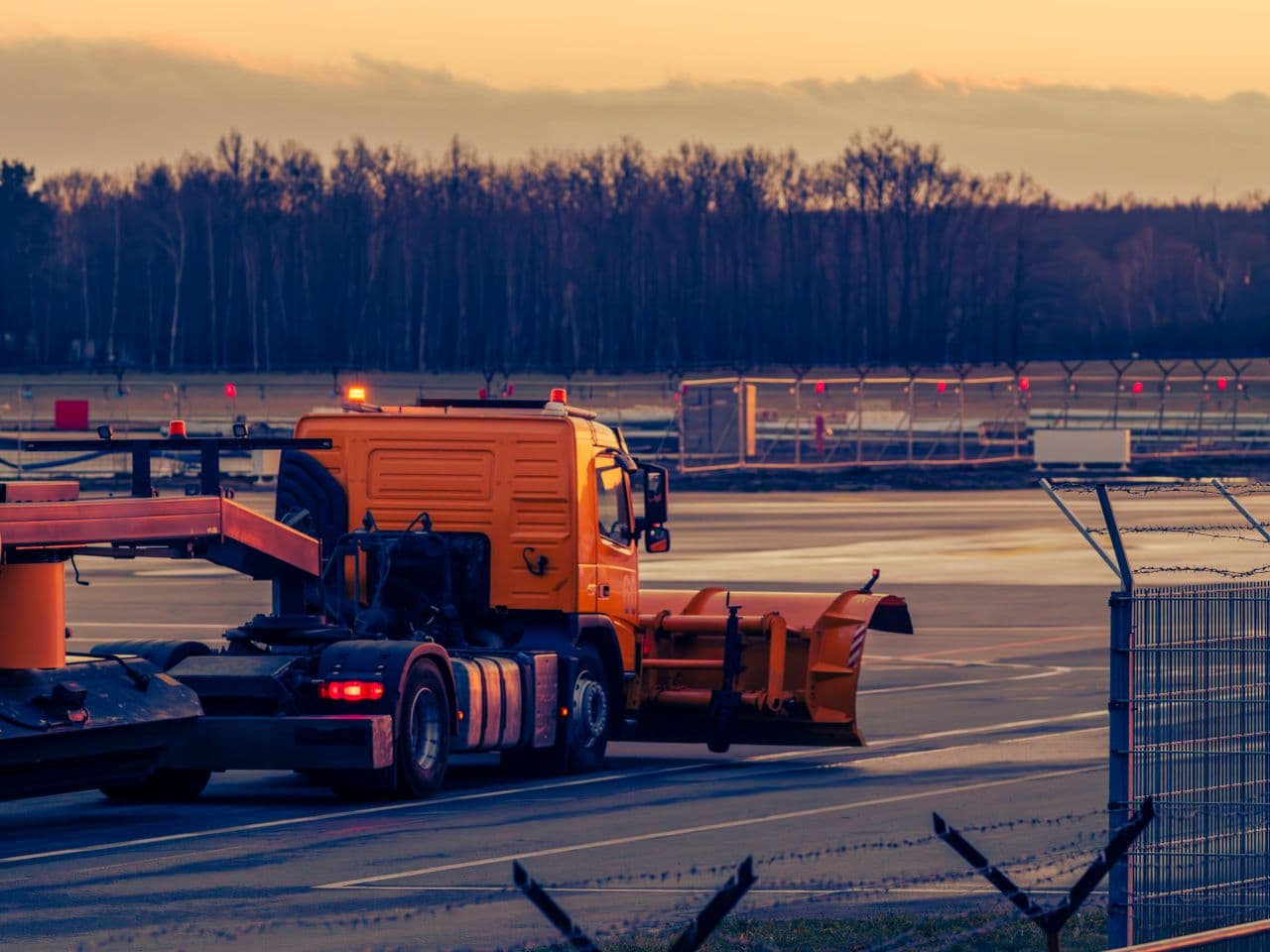
Figure 1: The rapid-hardening binder reaches 25 MPa strength within three hours, allowing airport runways and industrial floors to reopen in hours rather than days

Figure 2 and 3: Chart pairing the cumulative reduction of 716,000 tonnes of CO2 since 2022 with the share of sustainable products in revenue reaching 17.6 per cent in 2025


Impact
Sustainability impact
Climate
The carbon indicator is measured at product level rather than at plant level. Since 2022, the transformation of the portfolio towards low-carbon cements and binders has delivered a reduction of 716,000 tonnes of CO2. This reduction is attributable to the lower clinker content of the sustainable product portfolio and is accounted for within the company’s own production-related Scope 1 emissions.
Greenhouse gas accounting follows the GHG Protocol and the Global Cement and Concrete Association Cement CO2 Accounting and Reporting Standard. The baseline year for carbon indicators is 2021; for the application-level effects of the rapid-hardening solution the baseline is 2022, the year the product entered the market. Reported data covers 2022 to 2025.
Because the reduction is expressed per product and declared through EPDs, it can be carried by the buyer into a project-level assessment instead of remaining a producer-side claim. That matters for public infrastructure work, where the green cement requirement in force since January 2025 makes the declared value part of the procurement test.
Nature
Circular material use is the second environmental axis. Construction and demolition waste is recovered and used in aggregate production, which displaces primary extraction and keeps material in the value chain instead of sending it to disposal.
The alternative raw material use rate is one of the four standing indicators of the programme, so substitution is managed as a performance target rather than as an opportunistic practice.
Rapid repair also reduces the material footprint of maintenance in a less obvious way: a pavement section that can be repaired quickly and reopened is repaired rather than replaced, so the quantity of material consumed over the asset's life is lower than under a reconstruction cycle.
Social
The social value of the programme is measured in avoided disruption. Infrastructure that would have been closed for a minimum of three days under traditional repair methods, or for more than 36 hours with conventional concrete depending on weather, is returned to service in three hours. In the pilot application, approximately 100 m2 of runway area was reopened to traffic within three hours.
For an airport, a port or an urban artery, that difference is the difference between a disruption that reaches passengers, freight and residents and one that does not. The same capability supports recovery after a disaster, when the reopening of a damaged route is a public safety matter rather than an operational preference.
The 3D printing component adds a second social dimension. Printed dome structures make it possible to produce a durable living unit within 48 hours, which is directly relevant to shelter needs after an earthquake or flood.
Business impact
Benefits
The commercial result is visible in the revenue mix. The share of sustainable products and services in revenue reached 17.6 per cent in 2025, so the environmental transformation and the commercial one moved together rather than trading off against each other.
The strongest value for the customer is avoided downtime. Where traditional methods impose a minimum three-day stoppage, a single application of that length can produce losses at the level of millions of euros for the asset operator, which is why a repair solution that reopens the surface in three hours can be priced on the value of continuity rather than on the cost of the material.
Early alignment with the green cement requirement that entered into force for public procurement in January 2025 removed a compliance risk and placed the portfolio ahead of the minimum framework rather than behind it.
Market position reinforces the case: the company holds third position worldwide in calcium aluminate cement and second position for the rapid-hardening repair solution, and the expanding portfolio is exported to more than 70 countries. Net Promoter Score is tracked as one of the four programme indicators, so customer response is measured rather than assumed.
Costs
The cost base is research and development capacity, production and technology investment, the patent portfolio behind the rapid-hardening solution, and the technical service and field application capability that has to accompany it.
The last item is the one most often underestimated. The rapid repair result depends on correct placement under time pressure, so the product cannot be scaled through distribution alone; high-value products scale together with technical service and site application capability, which means the commercial model carries a service cost structure rather than a bulk material one.
Specialty binders sit at a higher unit price than ordinary cement, so the business case has to be argued on total cost of the intervention, including the operator's downtime, rather than on the price per tonne of material. Where a customer procures on price and strength alone, the case does not close.
Measurement adds its own cost: product-level carbon accounting under the GHG Protocol and the GCCA cement standard, EPD certification, performance tracking and reporting infrastructure all have to be funded and maintained. Costs are contained by keeping product development, production, technical marketing and customer solutions inside one programme, so the same product data serves certification, procurement compliance and customer reporting.
Impact beyond sustainability and business
Co-benefits
The programme changes what customers ask for. Demand in this market has traditionally been shaped by cost and strength; where the model is adopted, the specification widens to include application performance, carbon impact and infrastructure durability together. That shift outlasts any single product.
The modular architecture creates reuse beyond the original application. A repair solution validated on runways, taxiways and aprons transfers to ports, heavy industrial sites, building repair, disaster areas and roads under heavy traffic without redesign, so each new asset type is an adaptation rather than a new development programme.
Feedback collected through technical support requests, online platforms and chatbot channels improves the products for all users, not only for the customer who raised the issue.
Potential side-effects
Speed depends on skill. A material that reaches usable strength in three hours leaves little room for correction on site, so the result is only reliable where trained application capability is present. Scaling the product faster than the technical service capacity would put the performance claim at risk.
The evidence base is still building at scale. The pilot reopened approximately 100 m2 of runway area, which validates the mechanism but is small relative to a full pavement rehabilitation programme; an adopter should expect to run its own validation on a representative area before committing to a maintenance strategy.
Two-level measurement — portfolio carbon on one side, application performance on the other — produces a heavier reporting load than a single programme metric, and each product carries its own baseline. That is what makes the figures defensible, but it requires a data infrastructure that smaller producers may not have in place.
Implementation
Typical business profile
The model suits cement, binder, concrete and construction material producers that already run a research and development function and sell through technical specification rather than through price alone.
It is most relevant where the customer operates time-critical infrastructure — airports, ports, heavy industrial sites, urban road networks — because the value of the solution is created by the downtime it removes, not only by the carbon it avoids.
Delivery engages sustainable product development, research and development, production, technical marketing, customer solutions, ready-mixed concrete operations, innovation and risk management functions working to one roadmap.
Approach
Restructure the portfolio around measurable reduction: Re-examine every product against three tests applied together — quantified emission reduction, field application performance and customer value — and retire the framing that treats sustainable products as a compliance category.
Declare the product carbon figure externally: Certify products with environmental product declarations so that the reduction is verified and can be carried by the customer into project-level reporting, rather than remaining a supplier statement.
Set the repair product's target from the operator's downtime, not from the laboratory: Define the specification as reopening a pavement within three hours, then develop the binder to reach 25 MPa early strength in that window.
Validate under real operating conditions: Run field tests at a site with high operational intensity, such as a working airport, so that user requirements and technical development are confirmed at the same time; the pilot reopened approximately 100 m2 of runway area within three hours.
Build application capability alongside the product: Establish technical service and site application teams before scaling distribution, because rapid-hardening materials deliver the promised result only when placed correctly under time pressure.
Extend the same architecture to new asset types: Adapt the validated repair solution to ports, heavy industrial sites, building repair, disaster areas and roads under heavy traffic, and add 3D printed structures where durable living space is needed within 48 hours.
Close the material loop: Recover construction and demolition waste into aggregate production and track the alternative raw material use rate as a standing indicator, so circularity is managed with the same discipline as carbon.
Measure at two levels and feed the result back: Track product and portfolio carbon, resource efficiency and sustainable revenue share on one level and operational continuity, speed and application performance on the other; collect customer feedback through technical support platforms, online channels and chatbots, and route it into the product development cycle.
Stakeholders involved
Project leads: Direction and priorities are set under Board oversight, in line with the sustainability and business model transformation targets agreed there, while operational ownership sits with the Executive Committee and the relevant business units. Corporate coordination is provided by the Sustainability Management Committee, sponsored by the General Manager, under the leadership of the Deputy General Manager for Human Resources and Sustainability, with the Sustainability, Occupational Health and Safety and Environment Directorate acting as secretariat. This keeps the programme out of the category of a single team's project and inside the decision-making, investment planning and performance systems.
Company functions: Sustainable product development, research and development, production, technical marketing, customer solutions, innovation and risk management teams deliver the programme jointly, with ready-mixed concrete operations involved from the development stage. Continuity over the medium and long term is secured by tying the programme to research and development capacity, production and technology investment, performance tracking, reporting infrastructure and the integration of programme indicators into the KPIs of the teams involved.
Main providers: Field validation was carried out with the operator of an airport with high operational intensity, which hosted the tests on live pavements and supplied the operational constraints that the specification had to meet. Raw material and energy suppliers are positioned as active components of the transformation rather than as arm's-length vendors, because binder composition changes affect their inputs as well.
Other: Public authorities and local administrations set the procurement framework the products have to satisfy, including the green cement requirement applied to public tenders from January 2025. Non-governmental organisations, academic institutions, local communities, employees and customers are engaged as participants in the transformation. Customer engagement is continuous rather than transactional: expectations and use scenarios are collected through technical support, online platforms and chatbot systems, results are shared through quality systems and communication channels, and the feedback is used to revise the product roadmap.
Key parameters to consider
The programme started in 2022 and is now at scale. Carbon indicators use 2021 as the baseline year; application effects of the rapid-hardening solution use 2022, the product's first year. Reported data covers 2022 to 2025.
Four indicators carry the programme: product-based CO2 emission reduction, the share of sustainable products and services in revenue, Net Promoter Score, and the alternative raw material use rate. Monitoring runs through quality management systems, customer feedback channels, the integrated annual report and the sustainability reporting infrastructure.
Greenhouse gas accounting follows the GHG Protocol and the GCCA Cement CO2 Accounting and Reporting Standard. Corporate disclosure is aligned with ISSB (IFRS S1 and S2) and subject to independent third-party external assurance.
The rapid-hardening solution rests on patented technology and specialty cement know-how, which means a replicating company either develops equivalent formulations or licenses them; the transferable part of the model is the architecture — performance-defined specification, field validation and paired technical service — rather than the formulation itself.
Implementation and operations tips
Define the product specification from the customer's downtime clock. A binder developed to reach usable strength within the window the asset operator can afford to close will be adopted; the same binder described by its carbon figure alone will not.
Validate in the hardest environment available. Testing on a working runway rather than on a test slab produced requirements that a laboratory programme would not have surfaced and gave the result credibility with other asset owners.
Do not separate the carbon story from the performance story. Selling the two together is what moved the sustainable product share to 17.6 per cent of revenue; selling them separately turns the low-carbon product into a niche line.
Build the measurement before the marketing. Product-level accounting under the GHG Protocol and the GCCA cement standard, backed by EPDs, is what allows the figure to survive a customer's own audit and a public procurement test.
Expect the constraint to be application capacity, not production capacity. Growth is limited by how many trained crews can place a three-hour material correctly, so recruit and train ahead of demand.