Strengthen sociobiodiversity economies in protected areas
 Vale
ValeSummary
Promote the sustainable management of biodiversity in protected areas and foster the socioeconomic development of traditional communities.
Context
Vale has publicly committed to climate goal by targeting a 33% reduction in Scope 1 and 2 greenhouse gas emissions by 2030 (compared to 2017 levels) and aims to achieve net-zero emissions for Scopes 1 and 2 by 2050. For Scope 3, Vale is committed to a 15% reduction in net emissions by 2035. These targets are supported by a roadmap of technological innovation, energy transition (including 100% renewable electricity consumption in Brazil by 2025 and globally by 2030), and partnerships with clients and suppliers to decarbonize the value chain.
Vale’s decarbonization strategy is anchored in climate commitments, including the Vale 2030 Forestry Goal, which aims to restore 100,000 hectares and protect 400,000 hectares of forests beyond operational boundaries.
To support its forest and climate commitments, the company has also promoted initiatives that help preserve the forest and strengthen public policies on the issue. This is the context for Sustenta.Bio, a partnership with ICMBio (the federal agency that manages protected areas), which aims to boost socio-biodiversity economies and improve the lives of populations that have historically practiced sustainable forest management. Based on this experience, at the end of 2025, ICMbio launched a public policy for socio-biodiversity economies throughout the country, expanding the scope of the work carried out in the program.
Solution
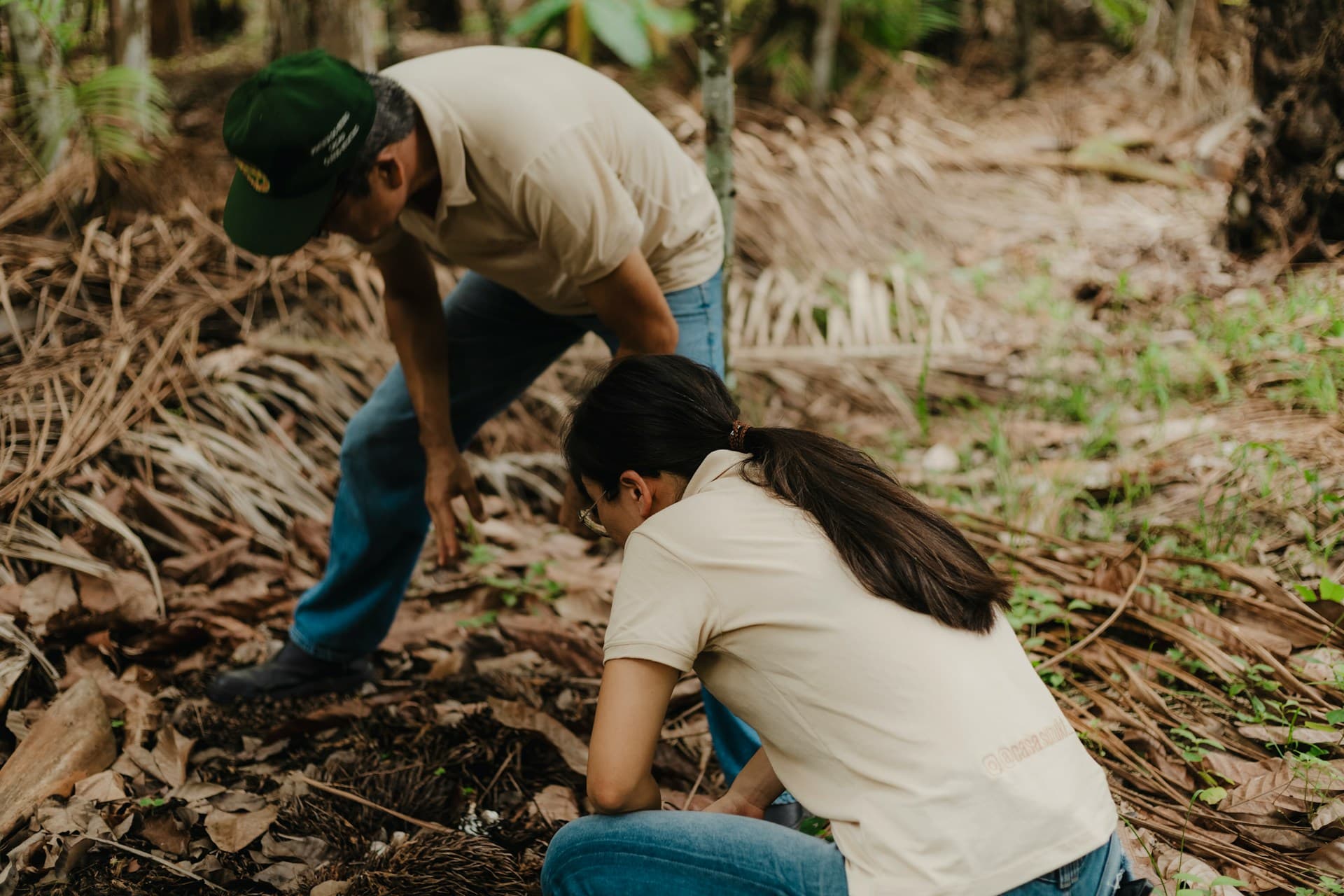
This initiative, supported by Fundo Vale, provides assistance to promote sustainable economic activities led by local communities, and to strengthen local socio-productive organizations for the development of extractive activities in protected areas. It aims to support traditional ways of life while contributing to the preservation of standing forests, water resources, and the overall health and diversity of natural ecosystems.
As part of this initiative, the promotion of socio-biodiversity products and services helps expand the supply of sustainably produced food.
The Sustenta Bio Project is a partnership between ICMBio and Fundo Vale that seeks to boost socio-biodiversity value chains in the Amazon. It contributes to the sustainable use of forest-based products and services and to the strengthening of artisanal fishing in sustainable-use Conservation Units (CUs) and Indigenous Territories.
The project focuses on empowering and supporting extractive organizations, collectives, movements, and associations, while developing market-based solutions for their products. An initial investment of R$ 24 million will be allocated to stimulate these value chains.

Impact
Sustainability impact
Climate
866,485 tCO2e avoided via REDD+; 32,380 tCO2e avoided via restoration/plantation. Methodologies follow IPCC and UNFCCC guidelines.
Nature
Aligning protection and sustainable use across 10 million hectares of forest promotes the well-being of traditional populations through an efficient community-based management model
Social
Approximately 10,000 families directly benefited, 15 protected areas with strengthened local economies, and 10 million hectares under protection.
Business impact
Benefits
It enables the strengthening of socio-biodiversity value chains and the equitable sharing of benefits derived from biodiversity, associated with activities that promote nature conservation
The initiative aims to strengthen the sustainable use of biodiversity in protected areas and support the socioproductive development of traditional peoples and communities. The partnership seeks to strengthen and structure productive arrangements that integrate the activities of traditional communities with the support of technical assistance institutions, government agencies, and the consumer market, addressing the main bottlenecks faced by extractive communities: production qualification, market access, and increased social, economic, and environmental benefits related to community enterprises in these territories. Approximately 10,000 families benefit from the initiative, and together these families contribute to the conservation of 10 million hectares.
Some results achieved:
Strengthening of associations and the bargaining power of Brazil nut and açaí collectives, with greater negotiating power and better conditions for selling their products.
Mobilization of 55 families in the Brazil nut and açaí production chains, which together produced 20 and 17 tons, respectively.
Course on administrative and financial management of social organizations in the territories.
Warehouse 95% complete, expected completion February 2026. Upon completion, the warehouse will have the capacity to process 8 tons of fish per day..
Two meetings of the Pirarucu Collective held.
Two courses on pirarucu counting methodology and certification of counters for 40 fishermen/managers in the two RESEX.
Construction of two floating platforms for receiving and pre-processing fish.
Construction of two community furniture workshops.
Approval of four community forest management plans.
Training in the operation and maintenance of portable sawmills.
Training in the production of furniture and small wooden objects.
Costs
A total of 24 million has been invested over four years of the program; currently, the Fund is the only investor, but we are making efforts to secure new investments and expand the program’s reach.
Impact beyond sustainability and business
Co-benefits
Promotes local development, knowledge sharing, and community empowerment.
Some aditional achievements:
Drafting of new internal regulations for associations, strengthening the social organization.
Study on the feasibility of a box factory.
Agroforestry studies and incentives for good family agroforestry production practices in productive backyards with a focus on food security.
Market study conducted.
Annual seminar to evaluate good practices in the project.
Workshop with young communicators.
Potential side-effects
No significant negative side-effects reported.
Implementation
Typical business profile
Relevant for companies in natural resources, agriculture, and sustainability sectors, especially those operating in biodiversity hotspots and seeking Net Zero/Nature Positive outcomes.
Approach
Identify protected areas and value chains - Area selection is conducted based on the presence of organized traditional populations within the protected areas and on the verified sustainable use of biodiversity resources in these territories.
Strengthen partnerships and formalize governance processes - Territories with collective local governance arrangements over common goods and production — including associative and cooperative structures — will be prioritized.
Improve product quality and production techniques - The initiative will support a set of measures aimed at overcoming technical bottlenecks and enhancing product quality to meet market requirements, as well as strengthening the necessary infrastructure and support mechanisms for the processing and commercialization of sociobiodiversity products.
Connect with markets - The connection with consumer markets will be established through the strengthening of organized networks and collectives of community-based enterprises, as well as through the development of commercial partnerships and institutional arrangements.
Promote access to government procurement markets - Support and facilitate the access of community-produced goods to government public procurement programs.
Stakeholders involved
Project Leads: Fundo Vale, ICMBio
Company functions: Sustainability, Operations
Main providers Asproc, Idesam, IFT, OPAN and AMORERI
Other: Public agencies, local communities
Key parameters to consider
Implementation: 2023–2027 (ongoing)
Technical constraints: Monitoring the increase in productivity of the value chains
Implementation and operations tips
Challenge: access a new markets, logostics
Solution: Partnerships, robust monitoring, adaptive management
Tip: Certifications and quality labels to strengthen product image and attract consumers