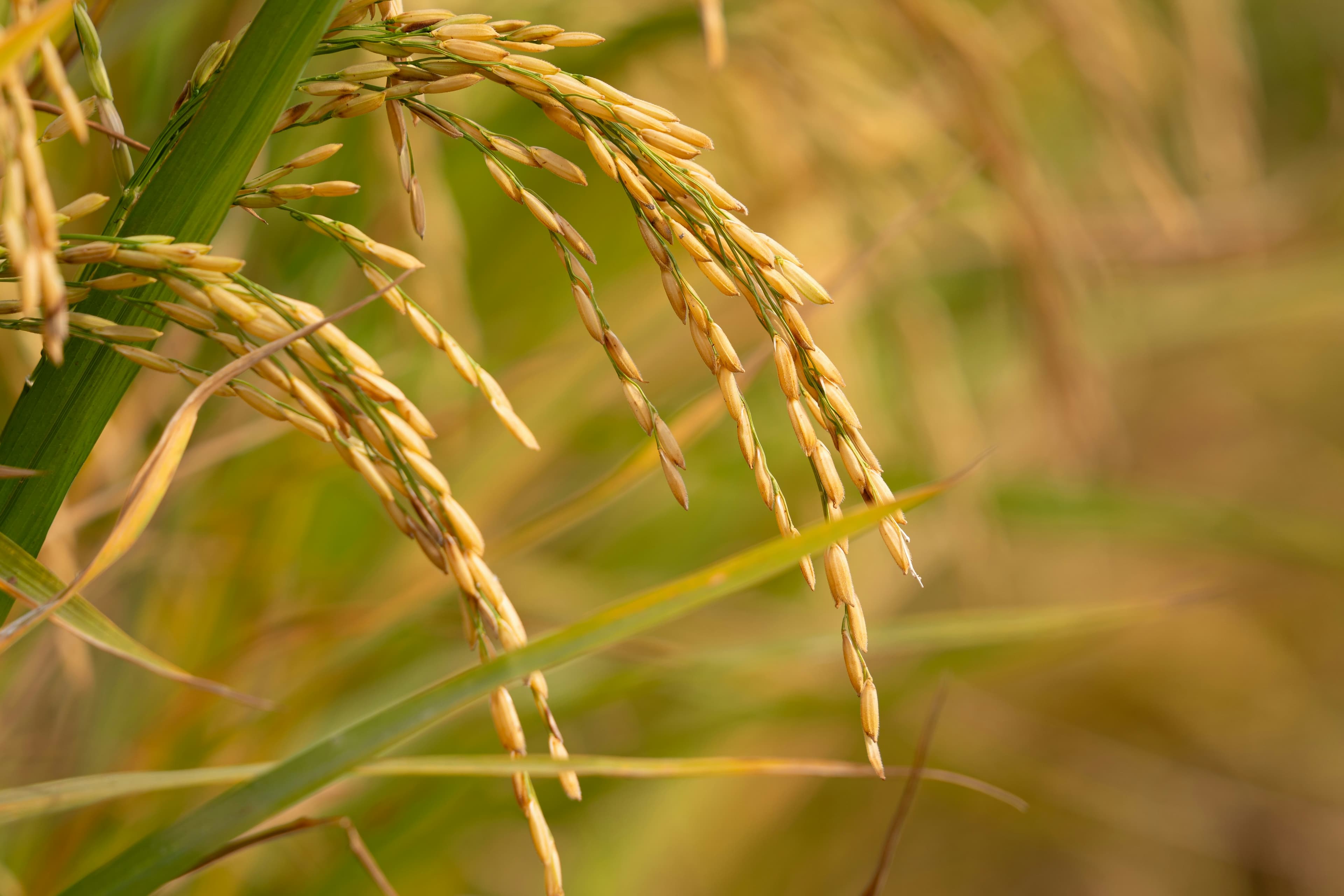
Support Indian farmers transition to direct-seeded rice
 Bayer
BayerSummary
DirectAcres supports farmers in India to switch from transplanted paddy rice to mechanized dry direct seeded rice (DSR), improving economic outcomes and reducing environmental impacts.
Context
Bayer AG is a global agricultural science company supporting farmers through digital, biological, and agronomic solutions. Rice is one of the world’s staple crops – accounting for over 20% of human calorie requirements. At the same time, rice is responsible for 2% of global greenhouse gas emissions, 12% of methane emissions and 40% of the world’s irrigation water use due to the common practice of field flooding. India is a key player in national and global food security: it has the largest area under rice cultivation and is the second largest producer and a key exporter of rice globally. However, its production is confronting the effects of climate change and water scarcity. Rice cultivation in India faces challenges including water scarcity, climate change, soil degradation, labor shortages and issues with stubble management. The water-intensive nature of paddy farming contributes to groundwater depletion. Climate change impacts yields through erratic weather patterns and increasing temperatures. DirectAcres aims to address these challenges by promoting the adoption of mechanized dry direct seeded rice (DSR) across eight states in India.
Location: 8 states (Punjab, Haryana, Uttar Pradesh, Madhya Pradesh, Jharkhand, Orissa, Chhattisgarh, Telangana) in India.

Solution
DirectAcres, launched by Bayer, supports farmers in transitioning from transplanted paddy rice to DSR. The initiative provides farmers with high-yielding hybrid seeds, weed management solutions, agronomic advice, and access to mechanization services. The program leverages public investments in agricultural modernization and collaborates with the Indian government and the International Rice Research Institute (IRRI) to generate proof points on the economic and environmental benefits of DSR. This practice improves economic outcomes, reduces farmers' physical burden and minimizes environmental impacts. DirectAcres aspires to support the adoption of direct seeding on 1 million hectares in India by 2032, benefitting up to 2 million farmers.
Farmers enroll in DirectAcres via Bayer’s FarmRise mobile application. As part of the program, they receive a tailored package of high-yielding hybrid seeds, a reliable weed management solution, agronomic advice and access to mechanization services such as sowing machines. In this way, DirectAcres guides farmers in the transition to DSR, addressing their key concerns and helping them succeed in the transition in their first attempt.
Direct seeded rice is a crop establishment system wherein farmers sow rice seeds directly into the field, as opposed to the traditional method of growing seedlings in a nursery, then transplanting them into flooded fields. Compared to the conventional transplanted puddled rice method prevalent in Asia, DSR drives faster planting, is more conducive to mechanization and less labor intensive, conserves water and reduces greenhouse gas (GHG) emissions. The rice crop matures early, enabling farmers to plant the following crop in time, helping avoid burning from crop residues. (1)
Farmers in rice field (Credits: Bayer AG)

Farmer using FarmRise application (Credits: Bayer AG)

Impact
Sustainability impact
Climate
DirectAcres targets Scope 1 and Scope 3 emissions, specifically focusing on reducing methane emissions from rice cultivation. The initiative is expected to achieve up to a 45% reduction in greenhouse gas emissions – based on scientific literature and corroborated by IRRI trials.
Bayer partners with IRRI – a globally recognized research partner – to generate scientifically sound proof-points on the economic and environmental benefits of DSR. IRRI and Bayer run field trials to measure the impact of shifting from transplanted paddy rice to direct seeded rice on water productivity, soil health, GHG reductions, yield and farmer economics. This study is ongoing, with Bayer and IRRI planning for a peer-reviewed research publication focusing on these regenerative agriculture outcomes from DSR.
Nature
The initiative reduces water use by up to 40%, contributing to improved water management and conservation in rice-producing landscapes.
19 soil parameters under monitoring.
Social
DirectAcres improves farmers' economic outcomes by reducing labor intensity and input costs, leading to increased productivity and income.
Up to 50% reduction in labor; significantly reduced overall cost of cultivation; initial results indicate additional income per hectare
Business impact
Benefits
The initiative contributes to Bayer’s overall target to increase water productivity by 25% by 2030 compared to baseline starting with India rice.
The initiative enhances farmers' productivity and income and reduces labor intensity. It also supports the Indian government's agricultural modernization efforts.
The initiative provides knowledge and expertise and creates strong partnership with local producers and governments.
Costs
DirectAcres, conceptualized and commercialized by Bayer, works in collaboration with the Indian government and leverages public investments to support agricultural modernization. The program uses the mechanization services and incentives provided under the Sub Mission on Agricultural Mechanization. This national scheme aims to increase the reach of agricultural mechanization among smallholder farmers through the provision of agricultural machinery at preferential prices. In the states of Punjab and Haryana, DirectAcres farmers also benefit from cash incentives provided by the state governments to accelerate the transition from transplanted paddy rice to direct seeded rice.
Mechanization services represent a critical lever in the wider adoption of direct seeded rice in India and are thus essential to further scaling up DirectAcres. While government incentives have motivated farmers in their journey towards DSR, further scaling DirectAcres will require an innovative financing mechanism to accelerate mechanization and continued capacity building efforts to ensure the widespread adoption of sowing and harvesting machinery across the country’s ricescapes.
Implementation
Typical business profile
The initiative is most relevant for companies willing to bridge between public investments and agricultural needs. The sector is agriculture and food, in particular, focusing on rice farmers in India.
Approach
Enroll farmers in the program through the FarmRise mobile application.
Provide tailored packages of high-yielding hybrid seeds, weed management solutions, agronomic advice, and mechanization services.
Conduct field demonstrations and training sessions to support the adoption of DSR.
Collaborate with the Indian government and IRRI to generate proof points on the benefits of DSR.
Stakeholders involved
Project Leads: Bayer
Company functions: Research and development, digital, commercial, and strategy teams
Main providers: Indian government, Indian Council of Agricultural Research (ICAR), International Rice Research Institute (IRRI)
Other: , 5500 farmers
Key parameters to consider
Initiative maturity: Well-established practice with ongoing research and development started with a pilot testing in 2022 and then scale up to 4500 hectares in 2023 with ambition to cover 1 million hectares by 2032
Technical constraints: Availability of mechanization services and high-yielding hybrid seeds
Subsidies: Government incentives and public investments support fundamental to the transition to DSR
Implementation and operations tips
Address farmers' key concerns and provide support during the transition to DSR.
Leverage public investments and government incentives to accelerate the transition
Conduct field demonstrations and training sessions to support the adoption of DSR, build capacity for farmers, and support scale-up.
Going further
External links
Source list