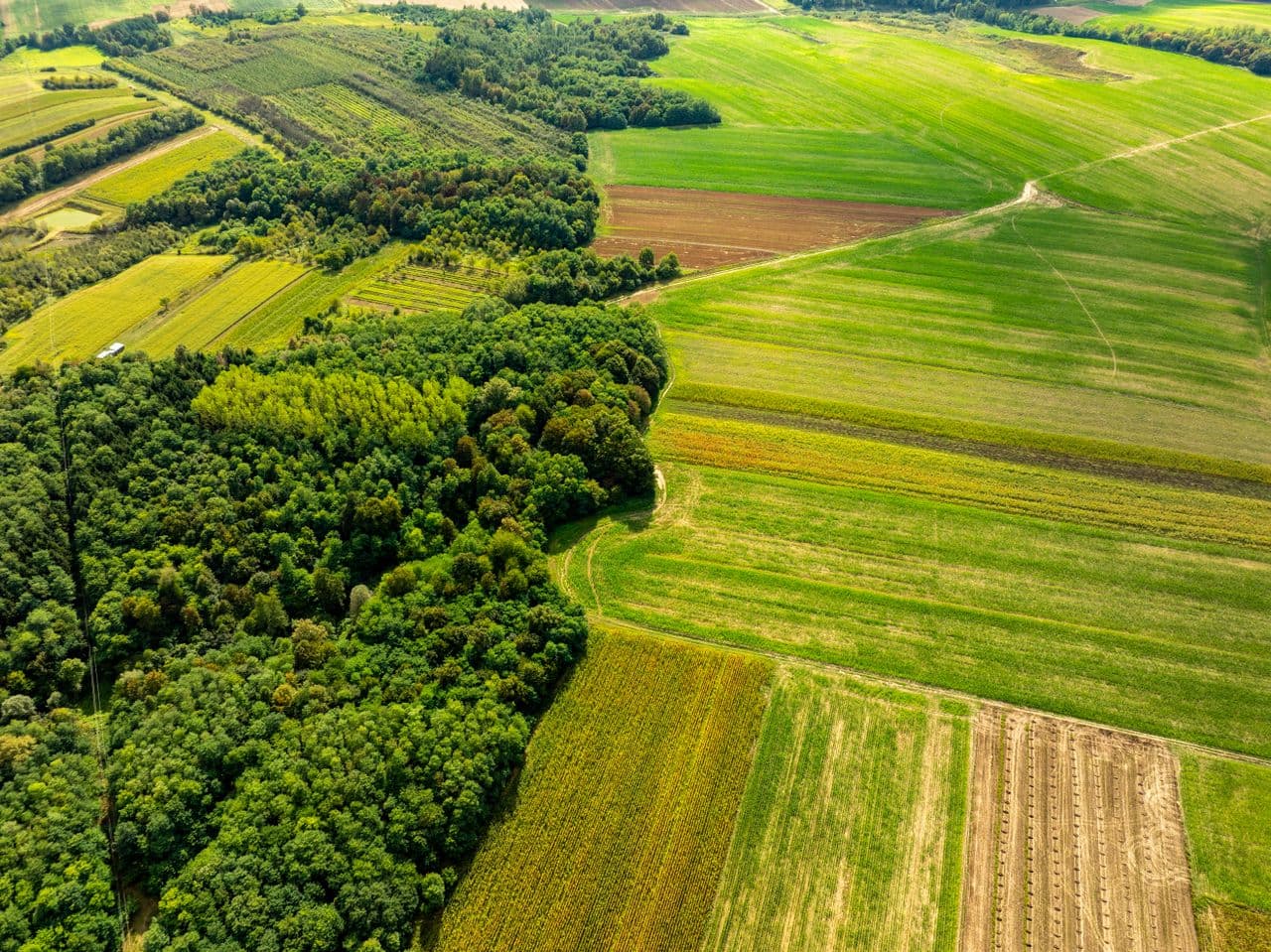
Adopt regenerative practices to rebuild farm soil carbon
 Agrokur Organic Medicinal and Aromatic Plants Production Inc.
 SKD Türkiye
Summary
Certified organic medicinal and aromatic plant fields are managed with compost, cover crops and agroforestry, raising soil organic carbon and lowering soil CO2 flux.
Context
Submitted through the COP31 Sustainable Transformation Awards · SKD Türkiye (WBCSD Global Network Partner)
The company is a manufacturing enterprise with fewer than 50 employees that produces certified organic medicinal and aromatic plants in Balıkesir Province, Western Türkiye (1).
Agricultural production in the semi-arid agroecosystems of Western Anatolia is subject to a range of constraints arising from extreme weather events, climate variability, and unsustainable agricultural management practices, all of which adversely affect soil health and ecosystem functioning. These constraints include low soil organic matter content, high susceptibility to soil erosion, limited water availability, and the progressive degradation of essential soil functions over time. Such conditions can negatively affect critical soil properties and processes, including soil degradation, water-holding capacity, infiltration, and nutrient cycling. Although organic certification provides an important environmental baseline by eliminating the use of synthetic fertilisers and pesticides from the production system, organic management alone has limited capacity to restore previously degraded soil functions and fully rehabilitate soil health. Similarly, organic agricultural production practices alone have a relatively limited direct effect on improving the resilience of agricultural soils to drought and water stress.
Within this framework, the company has treated legal requirements and organic production certification criteria not as the ultimate objective, but as a minimum compliance baseline. Accordingly, regenerative farming practices have been integrated into the certified organic production system with the aim of restoring degraded soil functions, using ecosystem services, improving overall soil health at the agroecosystem level, and enhancing biodiversity. Particular emphasis is placed on the enhancement and conservation of soil organic carbon (SOC) stocks, improvement of soil health, and increasing the soil water-holding capacity. In parallel, regenerative farming practices are being implemented to reduce soil carbon losses and enhance carbon sequestration, thereby increasing the capacity of the production system to retain atmospheric carbon in soil organic matter. The overall objective is therefore not only to enhance the resilience and adaptive capacity of the agricultural system to the adverse impacts of climate change, but also to contribute to climate change mitigation through increased soil carbon sequestration and reduced CO2 emissions. A second fundamental component of the initiative is the quantitative and scientifically verifiable assessment of outcomes, rather than relying solely on qualitative evaluations or claims. The project is being implemented in collaboration with the International Agricultural Research and Training Centre (UTAEM), operating under the General Directorate of Agricultural Research and Policies (TAGEM) of the Ministry of Agriculture and Forestry of the Republic of Türkiye. Through this collaboration, regenerative agricultural practices are evaluated from the outset using standardised soil sampling protocols, analytical measurements, and analyses conducted through an accredited laboratory system. This integrated monitoring approach enables the quantitative assessment of temporal changes in soil organic carbon concentrations and stocks, as well as other soil health indicators, and provides a scientifically robust basis for evaluating the effectiveness of the implemented soil management practices.
Launched in 2024, the initiative represents a recent field-scale application of regenerative farming practices within a certified organic production system. The data generated through the initiative including soil health indicators, soil organic carbon, and CO2 emission measurements are intended to contribute to Türkiye’s Nationally Determined Contribution (NDC) under the Paris Agreement. In addition, the resulting dataset is expected to provide a scientific evidence base for the future development of carbon farming policies, monitoring, reporting and verification (MRV) frameworks, and agricultural carbon management strategies in Türkiye.
Location of the initiative: İvrindi, Balıkesir, Türkiye
Solution
Denim Fikrim is a development programme rather than a design competition. Finalists are trained, mentored, supplied with materials and taken through manufacturing, and the outcome is assessed as a producible collection rather than as a drawing.
The call reaches students through two routes: the design departments of universities and the academics who teach in them. That is what gives the programme reach into cities where the company has no design presence, and it is the reason applications now arrive from 24 provinces.
Sustainability is set as an entry condition rather than as a judging criterion. Waste denim and sustainable materials are one of the starting requirements of the brief, so material choice and reuse shape the design from the first sketch instead of being reviewed at the end.
After pre-selection, finalists enter a development cycle spread over 54 days in total. Three strands run through it: classroom training on sustainable fashion, denim fabric, washing techniques, accessories, material selection and production processes; applied workshops; and a production phase in which each finalist builds a collection alongside the company's design and production teams.
Mentoring is deliberately mixed. Company denim design and production teams cover manufacturability, suppliers contribute technical knowledge on fabric, accessories and production, and Turkish and international fashion, denim and sustainability specialists assess the work for design quality, producibility and sustainability.
The effect is designed to extend past the shortlist. Every applicant has to develop a design against sustainability and reuse criteria in order to enter, so the teaching reaches the whole applicant pool rather than the finalists alone.
The cycle closes in the market. The winning collection is manufactured and sold in a limited number of the company's stores, and the revenue from those sales is donated to SUYADER, a sustainability association, which connects design, production and consumption to a social outcome.
Figure 1: The 2026 programme calendar, from the application period and pre-selection through the training week and competition process to the final jury presentation and results

Figure 2: Applications and finalists by edition: 78 applications and 16 finalists from İstanbul in 2022, then nationwide calls with 250, 300 and 200 applications from 24 to 25 provinces and 10 finalists in each of 2024, 2025 and 2026

Impact
Sustainability Impact
Climate
The initiative measures soil CO2 flux from land farmed directly by the company. The flux data is used here as project-level monitoring evidence of changes in soil carbon dynamics. Corporate Scope 1 consolidation has not been confirmed, so the measurements are not presented as part of the company's corporate greenhouse gas inventory.
The baseline year is 2024, representing pre-implementation conditions of low soil organic carbon and organic matter, limited infiltration capacity, moderate nutrient status, drought sensitivity and high erosion risk. Field and laboratory monitoring ran between June 2024 and June 2025, the first full implementation cycle.
Over that cycle soil CO2 flux fell from 3.97 to 2.70 g CO2 per square metre per hour, a reduction of 31.99 per cent, indicating lower soil carbon losses. Soil organic carbon rose from 1.13 per cent to 1.53 per cent, an increase of 35.4 per cent, and soil organic matter showed a similar increase.
Monitoring and measurement activities are conducted in accordance with the GHG Protocol Agricultural Guidance and the IPCC Guidelines for Agriculture, Forestry and Other Land Use (AFOLU). This provides a consistent framework for interpreting the resulting values in alignment with national greenhouse gas inventory practices and Nationally Determined Contributions (NDCs) under the Paris Agreement.
Although soil dynamics are known to change slowly and gradually, it is anticipated that increasing support for agroforestry, reduced tillage, and rainwater harvesting practices will progressively enhance the soil carbon sequestration potential of the system over time.
Nature
Over the same implementation cycle, a minor improvement in soil physical properties was observed. Soil bulk density decreased from 1.50 to 1.43 g cm-3, representing a 4.7 per cent reduction. Although this change is relatively modest, the decline in bulk density is considered a positive indicator of gradual soil structural improvement, suggesting an increasing potential for improved soil porosity and aggregation. These changes are expected to support greater root penetration and development, as well as enhanced water infiltration, over the coming years.
Total soil nitrogen increased from 0.08 per cent to 0.11 per cent, representing a 37.5 per cent increase. This improvement was supported not only by the application of certified organic compost, but also by reduced tillage, cover cropping, and the mulching effects of cover vegetation and weeds, which contribute to nutrient cycling, soil surface protection, moisture conservation, and other ecosystem services.
Water is retained within the soil profile rather than being lost through surface runoff. Infiltration, soil water retention capacity, and rainwater harvesting are monitored alongside the carbon indicators. This is particularly important in a catchment where water availability represents a key limiting factor for perennial crop production.
Approximately 200 trees and shrubs were established as hedgerows along field boundaries, providing permanent habitat and serving as physical barriers against soil erosion. Agroforestry practices were also implemented within the fields through the planting of various tree and shrub species. However, due to shallow soil, only a small proportion of these plantings survived. Therefore, the company plans to continue the agroforestry component in the following year using smaller-sized trees and shrubs that are better suited to the prevailing soil conditions.
The agroforestry component also introduces an additional structural and ecological layer into a production system previously characterised by open-field conditions. Biodiversity is considered one of the key indicator groups monitored alongside soil organic carbon and infiltration, thereby contributing to an integrated assessment of changes in soil health, ecosystem functioning, and agroecosystem resilience.
Social
The project aims to generate positive social impact through the implementation of regenerative agricultural practices that contribute to both climate change adaptation and mitigation. Capacity-building activities initially focused on presentations introducing the project objectives, implementation framework, and the agricultural practices being implemented. These were subsequently complemented by practical, field-based training activities, delivered through peer-to-peer learning and field days at the project sites. All training and capacity-building activities are conducted in collaboration with UTAEM, with technical and expert support provided throughout the process. Training sessions were conducted at different times and for different participant groups, each comprising approximately 30 participants, with a particular focus on women farmers, producers, and agricultural advisors. This approach provided local women farmers, producers, and agricultural advisors with opportunities to access technical agronomic knowledge and gain hands-on experience in regenerative agricultural practices under local soil and climatic conditions. The continuation of these training and knowledge-exchange activities throughout the project period is envisaged. Rural employment is generated through on-farm production, field implementation, and monitoring activities associated with the regenerative production system.
The company participates as a stakeholder in the ASPmed project, implemented under PRIMA Section II within the Living Lab framework, and is incorporating the concept and practical experience gained through this initiative into the current project model. Within this framework, farmers, cooperatives, local authorities, and private-sector actors are brought together not merely as recipients of advisory services, but as active stakeholders in a participatory co-creation process. The company also supports the project through the in-kind provision of medicinal and aromatic plants, contributing to the establishment and development of the regenerative agricultural production system.
Business Impact
Benefits
The commercial value proposition is based on a long-term production approach that prioritises ecosystem resilience within agricultural production rather than short-term yield increases. Increasing soil organic matter and soil organic carbon (SOC) content, reducing bulk density, and improving soil infiltration capacity can reduce the vulnerability of the production system to climate-related stressors such as drought and extreme precipitation, while supporting soil physical functioning, water-holding capacity, and overall soil health. This approach contributes to maintaining product quality, securing supply continuity, and enhancing long-term supply reliability in medicinal and aromatic plant markets, where environmental sustainability is becoming an increasingly important market criterion.
Results generated through an accredited laboratory system, together with traceable soil data, constitute a commercial asset in their own right. While every stage of agricultural production is documented and traceable under the organic certification process, the integration of regenerative agricultural practices enables the company to demonstrate not only the implementation of these practices but also their measurable outcomes through scientifically validated laboratory analyses conducted by a public research institution. The independent monitoring and evaluation of these results, together with their reporting through an official research institution, provides important evidence-based verification of environmental performance and helps substantiate that the regenerative claims are not merely greenwashing. This approach may shorten supplier qualification and due-diligence processes and support the value-added and premium positioning of the company’s products in medicinal and aromatic plant markets.
Through its collaboration with the International Agricultural Research and Training Centre (UTAEM), a public agricultural research institution operating under the Ministry of Agriculture and Forestry of the Republic of Türkiye, the company gains access to scientific methodologies, technical expertise, and research infrastructure that would be difficult for an enterprise of this scale to finance independently.
UTAEM has previously participated as a project partner in EOM4Soil, PRAC2LIV, CARBOSEQ, and ROAD4SCHEMES under the European Commission’s EJP SOIL programme. Through these projects, the institute has accumulated scientific evidence, methodological expertise, and practical experience related to soil health, soil organic carbon dynamics, climate-smart agriculture, and sustainable soil management. This knowledge and experience have been transferred to the current initiative and applied under the specific biophysical and agronomic conditions of the company’s experimental fields, enabling the design and implementation of up-to-date, site-specific agricultural management practices aligned with climate-smart and European research frameworks.
In addition, UTAEM is a project partner in ASPmed, implemented under the PRIMA II programme, where the company participates as a stakeholder within a Living Lab-based co-creation framework. Through this approach, the company is actively involved in the participatory development and evaluation of agricultural solutions together with researchers and other relevant stakeholders. The knowledge, methodological experience, and co-creation and multi-stakeholder governance mechanisms developed through the ASPmed project are being adapted and applied within the ongoing public–private sector collaboration between UTAEM and the company. The measurement series also positions the business for carbon farming policy and for future carbon market participation, which the company treats as an option rather than as revenue already earned.
Costs
The cost base is compost supply, cover crop seed, mulch, establishment and maintenance of roughly 200 hedgerow trees and shrubs, rainwater harvesting infrastructure and the agronomic labour of moving to reduced tillage. Agroforestry and hedgerows carry an establishment cost several seasons before they carry a benefit.
Measurement is the second cost line: monthly in-situ flux, temperature and moisture campaigns at three replicated locations, annual composite soil sampling and accredited laboratory analysis. Here a large part of that cost is carried by the public research partner, and field CO2 measurements are performed by partner personnel using standardised protocols. A company without such a partner would have to fund equipment of the LI-COR LI-8100A class and accredited analysis directly, which is the main barrier to replication.
Payback is slow by nature, because soil responds over years rather than seasons, and the first cycle produces indicators rather than a return. Financing is therefore blended, combining private investment, climate funds, research programmes and prospective carbon market revenue.
Costs are contained by staging: the pilot was 0.8 ha inside an existing 400 ha certified area, so the practices were tested at a size where failure was affordable, and only then extended to 3 ha of oregano and 4 ha of sage.
Impact Beyond Sustainability And Business
Co-benefits
The measurement framework generates both private and public benefits. Because the analyses are conducted within an accredited public laboratory system, the resulting evidence can be translated into advisory services, technical reports, and field demonstrations that also reach producers who are not directly involved in the initiative. This creates positive knowledge spillovers beyond the participating farms.
Training cohorts of approximately 30 participants, with a primary focus on women farmers, producers, and agricultural advisors, are delivered across different agricultural production periods. These activities contribute to building local knowledge and capacity for the adoption of agricultural measures needed to address the adverse impacts of climate change, thereby supporting the generation of long-term regional benefits that are not dependent on the performance or continued operation of any individual agricultural enterprise.
Hedgerows, agroforestry, and rainwater harvesting provide ecosystem services at the catchment scale, particularly through erosion control and enhanced water retention. These benefits extend beyond the managed fields, generating positive externalities for neighbouring landholders and surrounding agricultural production areas.
Potential side-effects
The main risk is over-reading the first cycle. A single year of improvement in soil organic carbon and flux can reflect weather as much as management, and the company explicitly frames the June 2024 to June 2025 results as early indicators inside a long-term perspective rather than as an annual sequestration rate.
Scaling from 0.8 ha to the full 400 ha multiplies the demand for compost and cover crops seed, and local availability of organic amendment is a practical constraint that has to be planned before the area expands, otherwise inputs are transported over distance and part of the benefit is lost.
The model depends on continued access to accredited measurement. If the research partnership ends, the practices survive but the evidence does not, and the commercial and policy value of the initiative rests on that evidence.
Implementation
Typical Business Profile
The model is particularly applicable to perennial and annual cropping systems in semi-arid regions where soil degradation, erosion, and water scarcity constitute major constraints to agricultural productivity. Its transferability is expected to be greatest in production systems where certified organic farming is already established, as the associated restrictions on external inputs constitute an existing baseline condition rather than an additional transition requirement.
The approach is applicable across smallholder, medium-scale, and large-scale agricultural enterprises, as the principal interventions are area-scalable rather than dependent on capital-intensive machinery or specialised equipment. Furthermore, the underlying principles are not limited to medicinal and aromatic plants and can be adapted to a broader range of perennial cropping systems and agroecological contexts.
Effective implementation requires an agronomic research and management capacity capable of designing and conducting field trials, systematic monitoring, and adaptive management; reliable access to accredited system soil testing and analytical facilities in the project provided through a public agricultural research institute; and institutional researchers and senior management commitment to support investments whose agronomic, environmental, and potentially economic returns are expected to materialise over multiple growing seasons.
Approach
Establish a documented baseline before implementing any changes in management practices: Collect soil samples from the fields and conduct soil chemical and physical analyses, including macro- and micronutrient concentrations, as well as soil carbon (C) and nitrogen (N), through laboratories operating within an accredited quality-assurance system. Establish baseline values for the selected parameters. In this project, 2024 was defined as the baseline year. This provides a measurable reference point against which subsequent changes can be assessed rather than assumed or claimed.
Select a concise set of indicators that are responsive to management practices: Select the parameters most sensitive to changes in management. Although the project monitors a broad range of soil properties, in the project, the present assessment focuses on the five indicators showing the most pronounced changes: soil organic carbon, soil organic matter, total nitrogen, bulk density, and soil CO2 flux. This approach enables a cost-effective and comparable monitoring framework rather than making annual monitoring unnecessarily extensive and costly.
Conduct analyses within an accredited laboratory system: Work with a public agricultural research institute or an equivalent accredited organisation to ensure the traceability and quality assurance of analytical results. Analytical methods should be defined in advance; for example, the Dumas dry-combustion method may be used for carbon and nitrogen determination, while the modified Walkley–Black method in accordance with ISO 14235:1998 may be applied for soil organic matter determination.
Start with a pilot plot within the existing certified area: Implement the practices initially on a small area. In this case, a 0.8-ha pilot area within a 400-ha certified organic production area was selected. This allows the combination of regenerative practices to be evaluated against baseline conditions at a scale where potential failures can be managed at an acceptable cost.
Implement the practices as an integrated management package rather than testing them individually: Apply cover cropping, mulching, reduced tillage, compost application, agroforestry, and rainwater harvesting as complementary practices. Soil functions generally respond not to a single intervention in isolation, but to their combined effects on soil structure, ground cover, organic matter inputs, nutrient cycling, and soil–water relationships.
Establish permanent landscape features at an early stage: Establish approximately 200 trees and shrubs as hedgerows along field boundaries during the first implementation season. This is important because the associated biodiversity, habitat, erosion-control, and landscape-level ecosystem benefits depend on the successful establishment of the woody vegetation component.
Measure soil CO2 flux at replicated locations on a monthly basis: Conduct monthly in-situ measurements of soil CO2 flux, soil temperature, and soil moisture at three replicated locations, together with annual composite soil sampling from representative plots. This monitoring design helps distinguish seasonal variability from longer-term trends in soil processes and carbon dynamics.
Scale up in defined phases and disseminate the methodology: Progress from pilot validation during 2024–2025, to farm-scale replication during 2025–2028, and subsequently to landscape-scale implementation beyond 2028. Provide training to producers in cohorts and disseminate the results through technical reports, advisory services, peer-to-peer learning, and field demonstrations. This enables the model to be replicated across different farms and production systems without requiring the full research and measurement costs to be incurred again at each site.
Stakeholders Involved
Project leads: The owner and the board hold the agro-ecological transition at the top of the company, and the sustainability and governance committee reports directly to senior management. The agricultural manager runs field operations and works with that committee, which coordinates precision mechanisation, soil health protocols and organic medicinal and aromatic plant production, and submits regular progress reports to the executive. Budgets for regenerative farming research project, agro-technological infrastructure and qualified staff are funded on an annual cycle so that the programme is not exposed to single-year pressures.
Company functions: Agronomy and field operations, quality, procurement and the sustainability and governance committee work to a shared planning and reporting cycle. Sustainability principles are written into the production model, the supply chain and risk management processes rather than run as a separate project.
Main providers: The scientific and technical partner is UTAEM (International Agricultural Research and Training Centre) operating under the national agricultural research directorate; it contributes to design, implementation, monitoring and decision-making, performs the accredited laboratory analyses and carries out the field CO2 measurements with its own personnel using standardised protocols. Equipment suppliers provide the automated soil CO2 flux system and the elemental analyser used for carbon and nitrogen determination. Advisory services support translation of results into field recommendations.
Other: Women farmer cooperatives take part in training and in co-creation sessions. The İvrindi District Directorate of Agriculture and Forestry is engaged as the local public authority.
Key Parameters To Consider
The baseline year is 2024 and the first full monitoring cycle ran from June 2024 to June 2025, with monthly flux campaigns and annual soil sampling.
The scaling pathway has three phases: pilot validation in 2024-2025, farm-level replication in 2025-2028, and landscape-scale implementation beyond 2028. Adoption is supported by alignment with Türkiye's 2024-2030 Climate Change Mitigation Strategy.
Finance is blended across private investment, climate funds, research programmes and prospective carbon markets, which matters because none of these sources alone covers a multi-season transition.
The binding technical constraint is access to accredited analysis. Soil carbon claims that are not analysed inside a quality-assured system cannot support disclosure or carbon market participation, whatever the field practice.
Implementation And Operations Tips
Read the first cycle as a direction, not a rate. The strongest single result here, a 31.99 per cent fall in soil CO2 flux, comes from one year of measurement, and treating it as an annual sequestration figure would misstate what the data supports.
Choose indicators for sensitivity, not for completeness. Five well-chosen measures analysed consistently in the same accredited laboratory are worth more than a wider panel measured inconsistently.
Secure the measurement partnership before changing the practice. If the baseline is not sampled first, the whole series loses its reference point and the investment cannot be evidenced.
Run training in cohorts that reflect who actually works the land. Cohorts of around 30 participants with a primary focus on women were used here to raise participation, and the training programme is what makes the practices survive staff turnover.
Use the existing certified area as the test bed. Piloting inside a 400 ha organic holding avoided new land, new certification and new supply arrangements, so the only variable under test was the practice combination itself.