Build financial resilience among young people
 Allianz Türkiye
 SKD Türkiye
Summary
Financial literacy is taught as risk management and long-term planning, in classrooms and online, so that young people can absorb economic, climate and technological shocks.
Context
Submitted through the COP31 Sustainable Transformation Awards · SKD Türkiye (WBCSD Global Network Partner)
Allianz Türkiye is an insurance company operating in Türkiye's financial services sector with more than 2,500 employees.
Young people are exposed to overlapping pressures - climate change, economic volatility, disasters and technological change - at the point in life when they have the fewest financial reserves and the least experience of managing risk. At the same time they are intensive users of digital platforms, which increases their exposure to financial manipulation.
The company's response starts from a redefinition. Financial literacy is treated not as money management but as the ability to understand risk, use resources efficiently and plan, which places it alongside climate adaptation rather than alongside consumer finance education.
The programme was launched at the beginning of 2026 with UNDP Türkiye and the Habitat Association, and 2026, the year the programme started, is the base year for impact measurement. It was designed from the outset as a scaled model with a three-year rollout plan rather than as a pilot.
It sits inside the company's sustainability and social impact strategy, is run with senior management support, and is represented at the most senior level of all three partner institutions in the project's governance meetings, with progress followed by the partners' executive and management boards. The company's reporting carries independent third-party external assurance.
Location of the initiative: Türkiye, delivered in 73 provinces to date with planned coverage of all 81 provinces
Solution
The programme is built from three components that move participants from information to application.
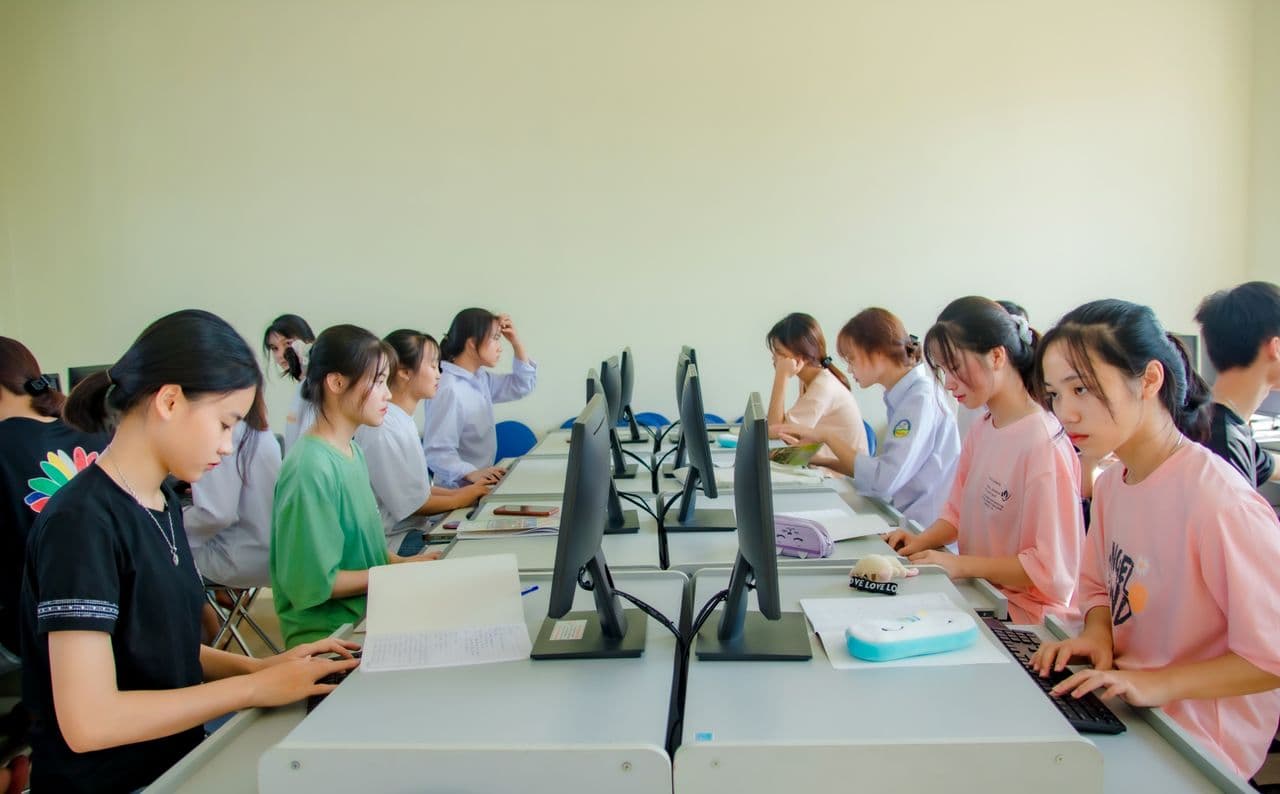
The first is financial literacy training, delivered face to face and online. Content covers budget management, saving, investment and risk management, and connects those skills to responsible consumption and sustainable living habits, so that financial decisions and environmental behaviour are taught as related rather than separate subjects. Delivery is mainly classroom-based and uses a youth-to-youth learning model, in which young trainers work with peers.
The second is an inter-school ideathon for secondary school students, FinHack, in which participants develop ideas in financial inclusion, economic resilience and sustainable living. The third is an entrepreneurship programme for young entrepreneurs. Together they change the participant's role: young people are not only recipients of information but developers of solutions, and their proposals feed into design and decision-making within the programme.
Distribution uses institutions where young people already are - universities, youth centres and state student dormitories (KYK) - alongside digital platforms. In the dormitories, sessions are scheduled to fit students' daily routines, which is what makes attendance possible for that group.
All digital content is available free of charge through the company's public video channel and the partner association's website, so that the material is not restricted to those who attend a session.
Capacity is built through a volunteer trainer model. Employees are put through a training-of-trainers course and then deliver financial literacy sessions themselves, which links the programme to the sponsor's own workforce rather than outsourcing it entirely.
Impact
Sustainability Impact
Climate
The initiative does not target Scope 1 or Scope 2 emissions from the company's own operations, and no greenhouse gas reduction is claimed for it. It is an enabler whose climate effect runs through the decisions of the people it trains.
That enabling route is built into the content rather than added to it. Financial literacy is defined as understanding risk, using resources efficiently and planning ahead, and the modules connect budget, saving and investment decisions to responsible consumption and sustainable living habits, so consumption behaviour is part of what participants take away. The training also prepares young people for the economic effects of climate change, disasters and technological disruption, which is an adaptation outcome rather than a mitigation one.
The scale of that enabling effect can so far be described only in reach: 8,131 young people trained across 73 provinces since the 2026 base year, against an initial target of 10,000 and a rollout plan covering all 81 provinces.
Social
The programme has provided financial literacy training to 8,131 young people in 73 different provinces through face-to-face and online channels. The initial target is to reach 10,000 young people, and training has been planned to cover all 81 provinces of Türkiye, distributed through universities, youth centres, state student dormitories and digital platforms.
Impact is measured against five indicators: the number of young people reached, the number of training sessions and events held, the increase in knowledge measured by pre-test and post-test results, the number of projects and business ideas developed, and the participation rate of volunteer trainers.
The measurement method combines pre-test and post-test application, focus group work and a Social Return on Investment (SROI) approach, so that behaviour change and long-term effect are tracked rather than training outputs alone. Participants complete surveys at the start and at the end of the programme.
Awareness is treated as part of the social result. The launch period produced 162 media items, 18 in print and 144 online, with a reach of approximately 3.2 million people. A field visit to Diyarbakır produced a further 18 media items and a reach of 55,786.
The substantive outcome reported is that participants raise their knowledge of budget management, saving, investment and risk management while also developing responsible consumption and sustainable living habits, which moves financial literacy from an individual competence towards a contribution to collective resilience.
Business Impact
Benefits
The programme gives the company a structured route for employee engagement. Staff are trained as volunteer trainers and deliver sessions themselves, which builds presentation and mentoring capability internally while making the sustainability strategy tangible for the workforce; the aim is to extend participation to approximately 300 employees as well as to the agency network.
For an insurer, a population that understands risk, saving and long-term planning is directly relevant to the business it underwrites, so the capability being built in participants is aligned with the company's core proposition rather than adjacent to it.
Working with the United Nations Development Programme and an established civil society organisation gives the programme credibility that a company-run financial education scheme would not have on its own, and produces relationships with universities, youth institutions and public bodies across the country.
The model and the field experience developed in Türkiye are being shared with other companies in the group as an example for their financial literacy work, which converts a national programme into transferable group knowledge.
Costs
The programme is funded from corporate resources and supported by strategic partnerships and a volunteering model. The main cost lines are content development, training of trainers, delivery in provinces across the country, the ideathon and entrepreneurship components, and the measurement system - pre-test and post-test instruments, focus groups and the SROI analysis.
Volunteer trainer time is a real cost even though it does not appear as an invoice, because employees deliver sessions during working time; scaling to approximately 300 employees and the agency network increases that commitment proportionally.
Reaching all 81 provinces implies travel and local coordination costs that grow faster than participant numbers, since the least-served locations are also the most expensive to reach.
Costs are contained by digital delivery of the same content, by publishing the material free of charge so that reach is not limited by session capacity, by using partner networks and public institutions rather than hired venues, and by the youth-to-youth model, which multiplies delivery capacity without multiplying paid trainers.
Impact Beyond Sustainability And Business
Co-benefits
The content links financial decisions to responsible consumption and sustainable living, so participants gain environmental awareness alongside financial capability rather than in a separate module.
The ideathon and entrepreneurship components produce ideas in financial inclusion and economic resilience that would not otherwise be developed, and give participants experience of designing solutions rather than receiving them.
Work is under way on partnerships to train teachers as financial literacy trainers, which would embed the capability in the education system rather than in one company's volunteering budget, and the next phase plans to extend the target group to women and older age groups.
Potential side-effects
Delivery capacity depends on volunteers. Employee availability fluctuates with business workload, so a programme built on volunteer trainers has to plan for variable capacity rather than assume it.
Free digital content reaches those who are already connected, which risks widening the gap it is intended to close; this is why the in-person channel through dormitories, youth centres and universities is retained even though it is the more expensive route.
Because the sponsor is an insurer, the material has to remain product-neutral to retain credibility. Delivery through a United Nations agency and a civil society partner, and free public access to the content, are what keep that separation visible.
Behaviour change measured through pre-test and post-test results is a short-term indicator. The SROI approach and focus groups are intended to capture longer-term effect, but that evidence takes years to accumulate and should not be claimed early.
Implementation
Typical Business Profile
The model suits companies in financial services, insurance and other regulated sectors that hold expertise their customers lack and that can release employees as volunteer trainers.
It is most relevant for organisations operating nationally, because the value of the model lies in reaching provinces where the relevant institutions - universities, youth centres and state dormitories - exist but the content does not.
Delivery engages sustainability, corporate communications, human resources and the agency or branch network, working with a development agency and a civil society organisation that hold the methodology and the field relationships.
Approach
Define the subject broadly enough to matter: Frame financial literacy as understanding risk, using resources efficiently and planning for the future, so that the content connects to climate, disaster and technological disruption rather than to product knowledge.
Assemble the delivery coalition before writing content: Bring in a development agency and a civil society organisation as designers rather than as endorsers, so that methodology, field access and impact management are shared from the start and the material is credible to schools and public institutions.
Build every module for two delivery modes: Produce content that works in a classroom and as free digital material, so that the same investment serves scheduled sessions and open access without a second production cycle.
Deliver where the audience already is: Use universities, youth centres and state student dormitories, and schedule sessions around students' daily routines rather than around institutional convenience, which is what makes attendance possible for residential students.
Turn employees into trainers: Run a training-of-trainers course so staff deliver sessions themselves, and plan the expansion of the volunteer pool - here towards approximately 300 employees plus the agency network - as a capacity decision.
Move participants from learning to producing: Add an ideathon for secondary school students and an entrepreneurship programme for young entrepreneurs, so that participants develop ideas in financial inclusion and economic resilience and feed them back into the programme design.
Measure knowledge and behaviour, not attendance: Apply pre-test and post-test instruments, run focus groups and use a Social Return on Investment approach, and set the base year at the start of the programme so later results remain comparable.
Plan the extension before the first phase closes: Hold a multi-year rollout plan covering the remaining provinces and the next target groups, and share the model and field experience with sister organisations so the method is reused rather than rebuilt.
Stakeholders Involved
Project leads: The programme is run with senior management support as a component of the company's sustainability and social impact strategy. Project meetings carry representation from the most senior level of all three partner institutions, and progress is followed by the executive and management boards of the partner organisations, so decisions are taken jointly rather than by the sponsor alone.
Company functions: Sustainability, corporate communications and human resources functions run the programme internally, while employees across the business are trained as volunteer trainers and deliver sessions. The agency network is planned as the next group of delivery volunteers, which extends the model from staff to the distribution network.
Main providers: The company, UNDP Türkiye and the Habitat Association hold strategic roles in the design, delivery and impact management of the programme. The development agency contributes the sustainable development methodology and international policy alignment; the civil society partner contributes field delivery capability and hosts the free digital content on its website.
Other: Universities, youth centres and state student dormitories (KYK) provide the channels through which training is distributed. Young participants are involved as contributors rather than only as an audience: through the ideathon they develop ideas on financial inclusion and economic resilience and take part in design and decision-making. A volunteer celebrity ambassador of UNDP Türkiye, a public figure known to the target group, raises interest in financial literacy and extends the reach of the programme. Participant feedback, training evaluations, pre-test and post-test results and focus group work are collected regularly and used to improve the content.
Key Parameters To Consider
The base year is 2026, the year the programme started, so all reported results describe the first operating period rather than a mature programme.
The rollout plan runs over three years, with the target group extended to women and older age groups in the following phase. Reach to date is 8,131 young people in 73 provinces against an initial target of 10,000 and a planned footprint of all 81 provinces.
The capacity constraint is trainer availability rather than content: the volunteer model is designed to grow towards approximately 300 employees and then the agency network, and teacher training partnerships are being developed to extend it further.
Implementation And Operations Tips
Do not measure a financial education programme by attendance. Pre-test and post-test results, focus groups and an SROI approach are what distinguish a delivered session from a change in capability, and they have to be designed before the first session, not retrofitted.
Schedule around the participants. In state dormitories the determining factor for attendance was holding sessions at times that fit students' daily lives, which is an operational detail that decides whether the content reaches anyone.
Publish the material openly. Free digital access means the reach of the programme is not capped by the number of trainers available, and it removes the impression that the content is a member benefit.
Give participants something to build. The ideathon and entrepreneurship components produce a different order of engagement from a lecture, and the ideas generated become an input to the programme rather than an output of it.