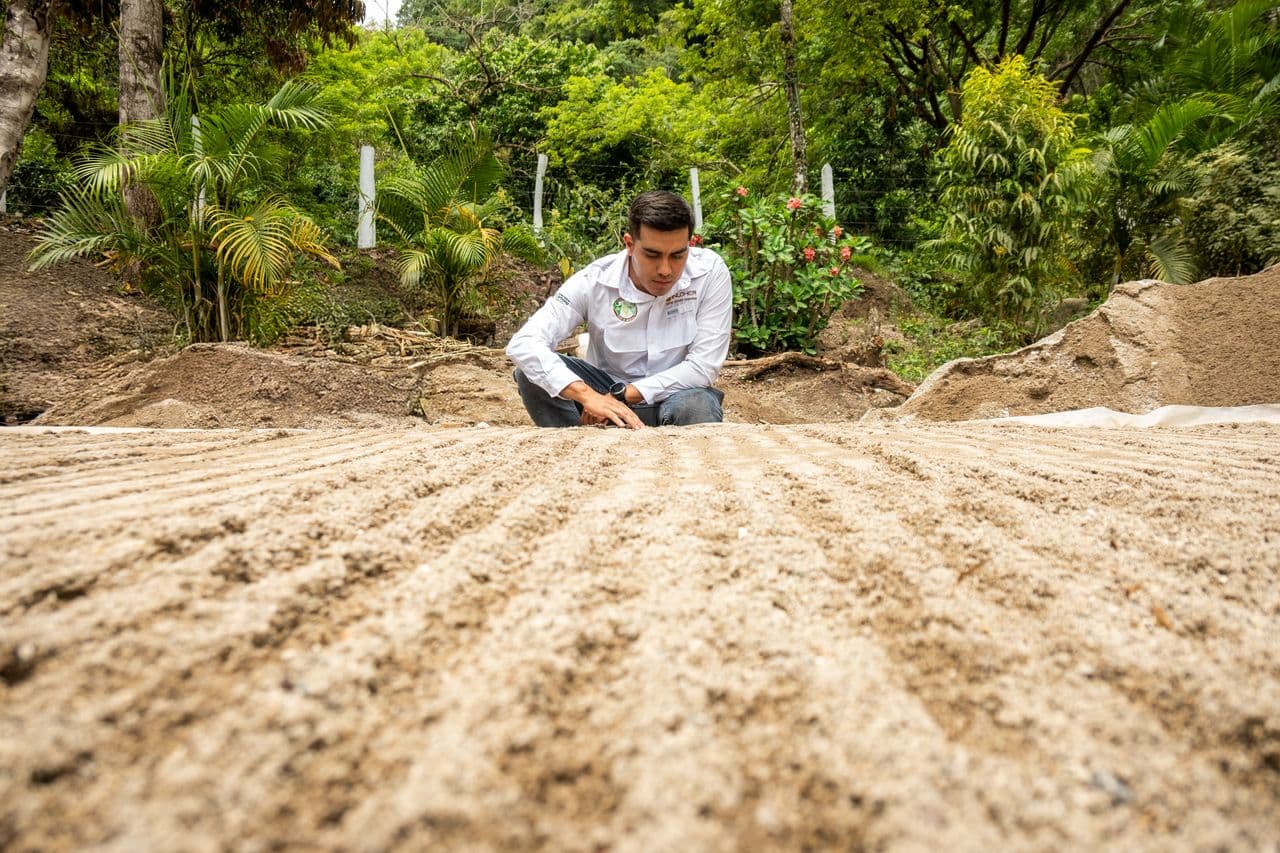
Propagate endemic plants to reverse biodiversity loss
 Assan Alüminyum
 SKD Türkiye
Summary
Rare and endemic plant species are propagated in tissue culture with a university partner and returned to protected areas under the conservation authority.
Context
Submitted through the COP31 Sustainable Transformation Awards · SKD Türkiye (WBCSD Global Network Partner)
Assan Alüminyum is an aluminium producer in the manufacturing sector, based in Tuzla, İstanbul with production facilities in Dilovasi, Kocaeli, Türkiye, with more than 1,600 employees.
Biodiversity sits outside the regulatory perimeter that governs most industrial environmental performance. Emissions, waste and water are permitted, measured and inspected; the survival of a rare plant species in a nearby nature park is attached to no licence condition, so nothing in the compliance system prompts a company to act on it.
Türkiye holds a large number of rare and endemic plant species, several of them under threat, and for most of them no propagation protocol exists at all. Without a laboratory route to multiply a species, conservation is limited to protecting whatever remains in the wild, which offers no way of increasing it.
The company treated this as a corporate responsibility question rather than a compliance one. The Biodiversity Conservation Project was started in 2020 with no legal obligation behind it, in collaboration with the Department of Biology at Kocaeli University, and has since become an established part of the company's sustainability programme.
The work also has an external reference point. Biodiversity is one of the core principles of the Aluminium Stewardship Initiative standard, a sustainability certification applied in the aluminium sector, so the activities carried out and the performance results are assessed within independently audited certification processes (2).
Location of the initiative: Protected areas in Kocaeli province, Türkiye, with the company based in Tuzla, İstanbul
Solution
The model brings together an academic laboratory, a company sustainability programme and the public authority responsible for protected areas, so that a species can be selected, multiplied, planted and monitored inside one continuing arrangement rather than through a one-off donation.
Species selection rests on scientific grounds. The university biology department identifies rare or endemic species under threat, and the conservation methods and implementation processes are determined by academic expertise rather than by the company, which takes on project coordination, resource management and communication.
Propagation is biotechnological. Tissue culture protocols are developed for each species, which is what makes multiplication possible at a scale that collecting from the wild could never support, and which removes the collection pressure that such an effort would place on the remaining population.
Reintroduction is carried out with the public authority rather than around it. Plants produced in the laboratory are transferred to conservation areas with the knowledge or in the company of officials of the Kocaeli Directorate of Nature Conservation and National Parks, principally Uzunkum Nature Park, Ballıkayalar Nature Park and Ormanya Natural Life Park.
The method is published rather than retained. The tissue culture propagation protocols developed for these plants are shared globally through international scientific publications, so the capability becomes available to any other group working on the same or a comparable species.
The programme advances in phases, one species at a time. That sequencing is what turned an initiative focused on a single species into a long-term conservation programme covering several rare and endemic species with concrete outputs.
A parallel line of work examines the pharmaceutical bioactive compounds these plants contain, in order to establish whether they can be used sustainably without being collected from nature.
Figure 1: The five rare and endemic species covered by the project: blue star, Centaurea kilaea, sea daffodil, Riva mullein and Cirsium byzantinum.

Figure 2: Blue star in flower after propagation in tissue culture and return to a protected area in Kocaeli province.

Impact
Sustainability Impact
Climate
The project does not target Scope 1 or Scope 2 emissions from aluminium production, which are managed within the company's separate climate and energy work, and no greenhouse gas reduction is claimed for the conservation activity itself.
Its climate relevance sits on the adaptation and resilience side. Protecting ecosystems and native species is treated as an inseparable part of the response to climate change rather than as a separate subject, and returning between 200 and 700 individual plants of each of five threatened rare or endemic species to Uzunkum Nature Park, Ballıkayalar Nature Park and Ormanya Natural Life Park over the 2020 to 2025 period strengthens the integrity of habitats whose resilience depends on the diversity they hold.
The carbon effect of the reintroduced plants is not measured and no figure is claimed for it. The assessment measures applied to the project are the number of species brought under protection, the number of phases run, the species for which propagation and return to nature are complete, and the awareness activities carried out.
Nature
The base year is 2020. Over the 2020 to 2025 period the project reached five phases and brought five threatened rare or endemic species into the conservation programme.
Conservation work has been completed for Amsonia orientalis (blue star), Pancratium maritimum (sea daffodil), Verbascum bugulifolium (Riva mullein) and Centaurea kilaea (Kilyos knapweed), and work on Cirsium byzantinum has been started.
Between 200 and 700 individual plants of each species have been placed into the soil. The plants produced in the laboratory were transferred to conservation areas including Uzunkum Nature Park, Ballıkayalar Nature Park and Ormanya Natural Life Park, with the knowledge or in the company of officials of the Kocaeli Directorate of Nature Conservation and National Parks.
The gap the work fills is documented rather than asserted. Before the project began, no production protocol and no comparable conservation work existed in the literature for any of these species other than blue star. For blue star, the pharmaceutical properties of the plant were determined and a method was developed for its sustainable use in further studies.
Impact is assessed through the number of species brought under protection, the number of project phases run, the species for which propagation and return to nature have been completed, and the awareness activities carried out. Results are published each year in the GRI-compliant sustainability report (1), monitored regularly, and examined within the sector certification audit process (2).
The plants are monitored 30 days after being planted to make sure that they are surviving in nature.
Social
Raising public awareness of biodiversity is an explicit objective alongside the propagation work, and the awareness activities carried out are one of the four measures used to assess the project.
The collaboration transfers value in both directions. Academic expertise determines species selection and conservation method, while corporate resources fund the work and the company is named in the acknowledgements of the international scientific articles published from the project, which the company treats as the clearest evidence that the collaboration produces scientific output rather than publicity alone.
Sharing the propagation protocols through international publication extends the benefit beyond the company and beyond Türkiye, because the method becomes available to conservation groups working on comparable species elsewhere.
Results are reported publicly every year in the GRI-compliant sustainability report, so the performance is open to outside scrutiny rather than described only in internal review.
Business Impact
Benefits
The direct commercial return sits in certification rather than in cost saving. Biodiversity is one of the core principles of the Aluminium Stewardship Initiative standard, and the work carried out and the performance results are assessed during independently audited certification processes (2), so the project supports a certification that customers in the aluminium value chain increasingly require.
The programme gives the company an evidenced position on nature at a point when nature-related disclosure is moving from voluntary narrative towards structured reporting. Because results are published annually in the GRI-compliant sustainability report and examined in external audit, that position rests on verified activity rather than on statements of intent.
Access to biotechnology capability is a further benefit. Through the university collaboration the company obtains propagation protocols, species knowledge and laboratory capacity that it would otherwise have to build internally or purchase.
Research into the pharmaceutical bioactive compounds contained in these species opens a potential future use of the plants that does not depend on collecting them from nature, which is a commercial option created by the conservation work rather than a cost of it.
Reputational value is concrete and attributable, because the company is credited by name in the acknowledgements of the international scientific publications produced from the project.
Costs
The project is funded from corporate resources with no legal obligation behind it and no revenue attached to it, so it competes for budget against activities that produce a return, and its continuation depends on sustained senior sponsorship rather than on a financial case.
The cost structure is a long-term research commitment: laboratory work, protocol development and propagation for each species across five phases, the planting and transfer work, and the coordination with the protected-area authority. The model is delivered through business partnership and the provision of scientific financing, and is updated on an annual basis.
Time is the principal constraint. Developing a tissue culture protocol for a species with no prior protocol in the literature is research rather than procurement, and the interval between opening a phase and returning plants to a conservation area is measured in years.
Dependence on a single academic partner concentrates the capability. Species selection, conservation methods and implementation processes are determined by the university's expertise, so the pace of the programme is set by the partner's research capacity.
Costs are contained by running one phase at a time rather than several species in parallel, by using an existing university laboratory instead of building an internal facility, and by folding monitoring and reporting into the sustainability report and the certification audit cycle the company already operates.
Impact Beyond Sustainability And Business
Co-benefits
Publishing the tissue culture protocols makes the principal output reusable. A conservation group, a public authority or another company working on the same or a related species does not have to repeat the protocol development, which is the expensive part of the work.
The pharmaceutical research line offers a route by which these species could be used economically without being collected from their habitats, which would convert a pressure on the wild population into a reason to cultivate it.
Demonstrating that a manufacturer can take an active role in biodiversity conservation raises stakeholder awareness and supports the spread of nature-positive approaches beyond the company, which is the systemic contribution claimed for the model.
The framework is not tied to one species or one region. Combining scientific research, biotechnological propagation and return to natural habitat in a single arrangement produces a structure that can be applied in other geographies and sectors, and extended through collaboration with academic institutions, public bodies, non-governmental organisations and other private companies, in a way that is consistent with existing nature conservation and biodiversity policy.
Potential side-effects
Plants propagated in tissue culture from a limited number of parent individuals can carry a narrower genetic base than the wild population they are returned to, so a reintroduction has to be planned with that in mind rather than treated as a straightforward increase in numbers.
Returning plants to a conservation area is the start of the conservation outcome, not the end of it. Survival after planting depends on site conditions and on continued protection, which is why the transfers are made with the knowledge or in the company of the protected-area authority rather than independently.
Establishing that a rare species contains valuable pharmaceutical compounds can itself increase the incentive to collect it from the wild. The project addresses this by researching sustainable use that does not depend on wild collection, but the risk is created by the finding.
A voluntary programme with no regulatory driver is exposed to shifts in corporate priority. The company manages this by structuring the work as a long-term programme integrated into its environmental sustainability approach, with corporate resources and partner collaboration securing continuity, but the exposure is inherent to the model.
Implementation
Typical Business Profile
The model suits manufacturers and other industrial operators with sites close to conservation areas or to habitats holding rare or endemic species, and with a corporate sustainability function able to run a multi-year programme that produces no financial return.
It is most relevant to companies operating under a sector certification scheme that treats biodiversity as a principle, as the aluminium sector standard applied here does, because the certification audit provides an external review point for work that would otherwise be assessed only internally.
It requires access to an academic partner with plant tissue culture capability, since the propagation protocol rather than the planting is the technical core of the work.
Delivery engages corporate communications, sustainability and senior management on the company side, working with a university biology department and with the public authority responsible for the conservation areas.
Approach
Secure senior sponsorship for a programme with no regulatory driver: Obtain the general manager's support and ownership before starting, because a conservation project produces no compliance benefit and no revenue and will otherwise lose budget to activities that do.
Partner with a university department rather than commissioning a supplier: Establish a continuing collaboration with a biology department that holds plant tissue culture capability, and let academic expertise determine species selection, conservation methods and implementation processes while the company handles coordination, resources and communication.
Select species where the scientific gap is widest: Prioritise rare or endemic species under threat for which no production protocol exists in the literature, since these are the cases where laboratory work creates capability that did not previously exist.
Develop the propagation protocol before planning any planting: Build and test a tissue culture protocol for each species, because multiplication in the laboratory is what allows plants to be produced in numbers without collecting them from nature.
Run the programme in phases, one species at a time: Complete propagation and return to nature for a species before opening the next phase, so that method and monitoring are proven at small scale before the programme widens.
Involve the conservation authority in the transfer itself: Carry out the return to natural habitat with the knowledge or in the company of the officials responsible for the sites, so that the reintroduction is recorded and monitored inside the existing conservation framework rather than alongside it.
Publish the protocol instead of retaining it: Submit the propagation methods to international scientific journals so that the method becomes available to other groups, and have the corporate contribution recorded in the acknowledgements.
Fold the results into existing reporting and audit cycles: Report the number of species conserved, the phases run, the species returned to nature and the awareness activities in the annual GRI-compliant sustainability report, and present the same evidence in the sector certification audit.
Stakeholders Involved
Project leads: The project is carried out with the support and ownership of the general manager, in line with the company's sustainability vision. Coordination is led by the marketing and corporate communications team within the strategy and marketing directorate, while the sustainability team contributes to project development, monitoring and reporting. The programme is structured as a long-term element of the company's environmental sustainability approach rather than as a campaign, and its continuity is secured through corporate resources and partner collaboration.
Company functions: Marketing and corporate communications, sustainability and senior management work to a shared annual cycle. The communications function coordinates the programme and its public reporting, the sustainability function handles development, monitoring and reporting, and the results feed both the annual GRI-compliant sustainability report and the sector certification audit, so one evidence set serves internal management and external assessment.
Main providers: The academic work is carried out with the Department of Biology in the Faculty of Arts and Sciences at Kocaeli University. Species selection, conservation methods and implementation processes are determined by academic expertise, while the company takes on project coordination, resource management and communication. Project outputs are followed regularly through academic assessment and field observation, and the findings are used to plan subsequent phases. No commercial solution provider is involved.
Other: The Kocaeli Directorate of Nature Conservation and National Parks takes part in the reintroduction itself: plants are transferred to conservation areas with the knowledge or in the company of its officials, principally Uzunkum Nature Park, Ballıkayalar Nature Park and Ormanya Natural Life Park. The international scientific community receives the propagation protocols through published articles that credit the company's support. Independent auditors assess the biodiversity work within the certification processes of the aluminium sector sustainability standard, and independent third-party assurance is obtained over the reported performance (3).
Key Parameters To Consider
The base year is 2020 and the reported period runs to 2025, over which the project completed five phases.
Five threatened rare or endemic species are covered: Amsonia orientalis, Pancratium maritimum, Verbascum bugulifolium and Centaurea kilaea, for which conservation work is complete, and Cirsium byzantinum, for which work has been started.
Between 200 and 700 individual plants of each species have been placed into the soil, in conservation areas including Uzunkum Nature Park, Ballıkayalar Nature Park and Ormanya Natural Life Park.
The model is delivered through business partnership and the provision of scientific financing, and is updated on an annual basis.
The assessment measures are the number of species brought under protection, the number of phases run, the species for which propagation and return to nature are complete, and the awareness activities carried out. Results are reported annually in the GRI-compliant sustainability report and examined in the sector certification audit process.
Widening the number of species under protection and moving the model into other regions is a stated target rather than a completed result.
Implementation And Operations Tips
Choose species by scientific gap rather than by visibility. Working on species for which no propagation protocol exists produces a durable output, because the protocol outlives the project and can be used by anyone.
Expect the protocol, not the planting, to set the timetable. Developing a tissue culture route for a species that has never been propagated is research, and a phase cannot be compressed by adding budget to the planting stage.
Bring the conservation authority in before the plants are ready. Transferring produced plants into a nature park is a regulated act, and doing it with the authority's officials makes the reintroduction part of the conservation system rather than an unrecorded addition to it.
Publish the method. An acknowledgement in a scientific article is a more credible record of a company's contribution than any internal report, and publication is what turns a local conservation effort into a method available globally.
Attach the programme to an audit cycle that already exists. Because biodiversity is a principle of the sector certification standard the company already holds, the work is reviewed externally without a separate assurance process having to be created for it.