Recover graphite forging oil to close a production loop
 SKD Türkiye
Summary
Used graphite-based hot forging oil is collected, settled, filtered and returned to the process, reducing consumption per valve by 57% and preventing hazardous waste at source.
Context
Submitted through the COP31 Sustainable Transformation Awards · SKD Türkiye (WBCSD Global Network Partner)
The company manufactures engine valves and related automotive components at a hot forging and machining plant, and employs between 51 and 250 people.
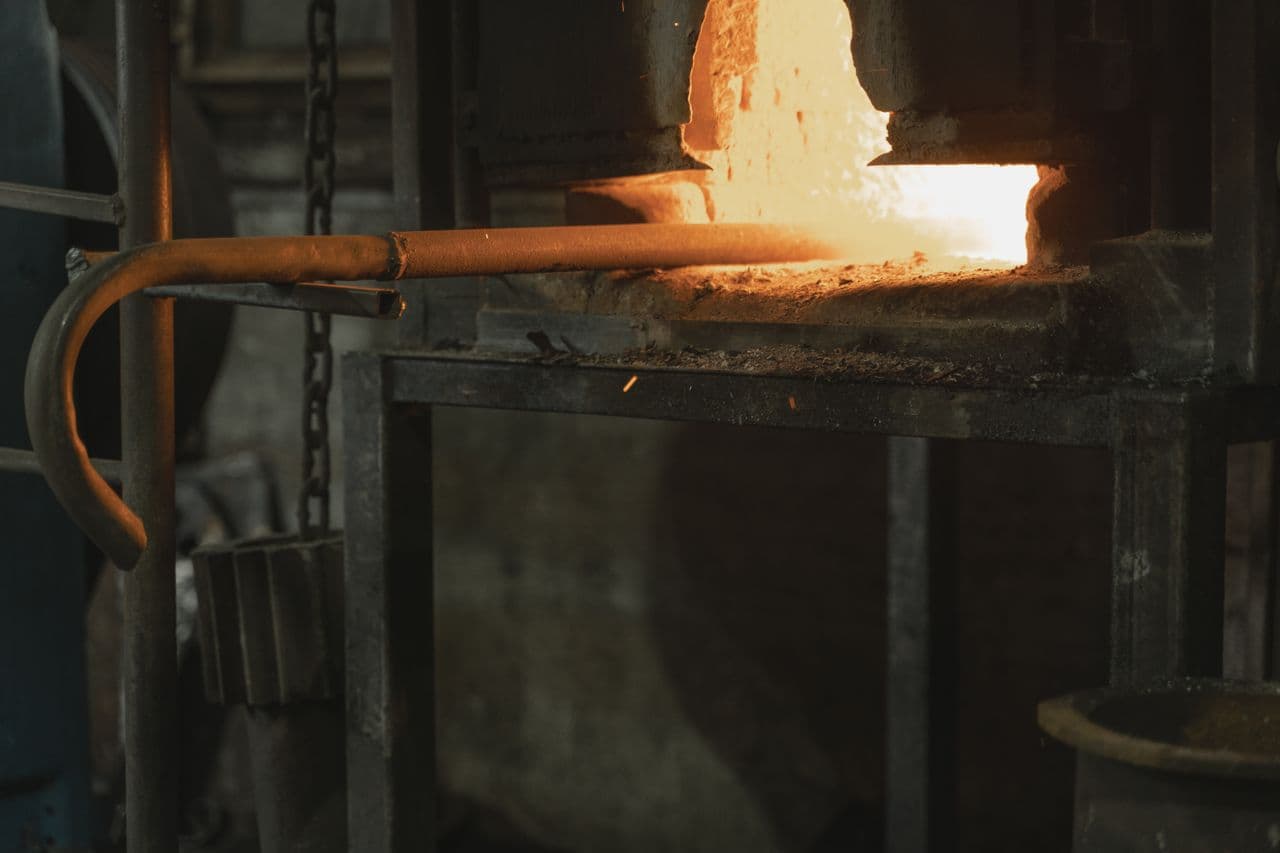
Hot forging depends on a graphite-based lubricating oil applied to the die at each stroke. The material is approximately 70% petroleum-based, it is imported and moved by road from Milan to Istanbul, and under the conventional model it is a single-use consumable: once it has passed through the press it accumulates in the sub-chambers beneath the equipment and is sent for disposal as hazardous waste.
That model creates three exposures at the same time. It ties a core operating process to a petroleum-derived input whose price moves with energy markets and with geopolitical disruption, it generates a hazardous waste stream that has to be stored, transported and treated, and it carries an upstream carbon burden from both the manufacture of the product and its international transport.
The company's sustainability committee assessed resource efficiency, waste reduction and operating material consumption as priority opportunities, and identified the graphite forging oil as the auxiliary material with the largest combined consumption and cost effect. The objective set was to reduce the waste at source rather than to manage it after it had been created, and to convert a process output into a production input.
Work started in 2025 and the recovery system entered production use in the middle of that year, so 2024 is used as the baseline year for all comparisons.
Location of the initiative: Istanbul, Türkiye
Solution
The initiative replaces a linear buy-use-dispose model with a controlled collect-improve-reuse loop for the same fluid.
The loop has four stages. Used graphite oil is collected in a controlled way from the sub-chambers of the presses. It is then held in intermediate bulk container tanks for approximately one month so that solid particles settle out under gravity. The settled fluid is filtered and blended back to specification, and a quality verification step releases it for use before it re-enters the forging process.
No additional capital equipment was required. The loop runs on containers, filtration and mixing capacity that the plant's utilities function already operated, which is what allowed the change to be made as a process improvement rather than as an investment project, and which is also what makes it accessible to smaller manufacturers.
Quality assurance is the element that makes the loop safe to run in series production. Recovered and new oil are held in separate, labelled tanks so that batches cannot be mixed by accident, filtration parameters are standardised so that batches behave predictably, and pilot production runs confirm surface quality, dimensional conformity, lubrication performance and process stability before a batch is approved for routine use.
Performance is expressed per unit of output rather than in absolute volume alone, so that changes in production levels neither mask nor exaggerate the result. Consumption in kilogrammes per valve is the primary indicator, supported by total purchases of new oil, the volume recovered and reused, the hazardous waste avoided and the calculated carbon footprint.
The application was recognised in the parent group's internal sustainability awards, in the waste management and circular economy category, which raised its visibility inside the group as a practice that other operations can adopt.
Figure 1: The recovery loop: waste oil is collected at the presses, settled in IBC tanks, filtered in-house, homogenised and returned to the forging process.

Figure 2: Consumption per valve fell from 3 g in 2024 to 1.8 g in 2025 and 1.3 g in January 2026, avoiding 3.6 tonnes of oil purchase and waste and 16.4 tCO2e in 2025.

Impact
Sustainability impact
Climate
The carbon effect sits in the value chain rather than in the plant's own combustion, so it is accounted for under the GHG Protocol Corporate Value Chain (Scope 3) Standard, within a framework aligned with the corporate greenhouse gas inventory principles of ISO 14064-1 and its requirements for transparency, consistency, comparability and traceability.
Three value chain categories are affected: Scope 3, Category 1: purchased goods and services, covering the manufacture of the oil; Scope 3, Category 4: upstream transportation and distribution, covering its movement from Italy; and Scope 3, Category 5: waste generated in operations, covering the disposal of the used fluid.
For the product itself, a supplier-provided content breakdown of 70% petroleum-based material gives an emission factor range of 3.22 to 4.32 kgCO2e per kilogramme of product. For logistics, road transport between Milan and Istanbul is calculated on a tonne-kilometre basis using a factor of 0.12522 kgCO2e per tonne-kilometre.
On that basis the 2024 baseline year carried 43.2 to 58.0 tCO2e from the product, 3.25 tCO2e from the Italy-to-Istanbul logistics leg, and a total calculable footprint of 46.5 to 61.2 tCO2e. Applying the same method to the 2.5 tonnes of consumption planned for 2026 gives 8.05 to 10.80 tCO2e from the product, 0.62 tCO2e from international logistics and a total of 8.67 to 11.42 tCO2e. That corresponds to a reduction potential of approximately 37.8 to 49.8 tCO2e against the 2024 baseline.
The internal logistics leg between the Istanbul warehouse and the plant depends on a variable distance and is tracked separately on the same tonne-kilometre basis.
Nature
Hazardous waste is prevented rather than treated. In the November to December 2025 period alone, approximately 750 kg of hazardous waste was not generated, which also removes the storage, transport and treatment burden that would have followed it.
Demand for primary material falls at the same time. Consumption of graphite forging oil fell from approximately 0.003 kg per valve before the change to 0.0013 kg per valve afterwards, a reduction of approximately 57% per unit of output. In absolute terms, purchases of new oil fell from 61 barrels, or 13.42 tonnes, in 2024 to 5.5 tonnes in 2025, with 2.5 tonnes planned for 2026.
Because the fluid is approximately 80% petroleum-based, every avoided kilogramme reduces demand on a fossil-derived feedstock as well as reducing the waste stream at the other end of the process.
Social
Handling of used hazardous oil inside the plant is reduced, and the separate collection, labelling and settling routines replace ad hoc drainage and disposal with a defined procedure for the teams working at the presses.
Consumption per valve is reported as an operational indicator alongside output and quality measures, which has raised awareness of resource efficiency across production, utilities and quality teams and given operators a direct line of sight between their own handling of the fluid and the plant's environmental performance.
Business impact
Benefits
The direct material effect is a reduction in purchases of new graphite forging oil from 13.42 tonnes in 2024 to 5.5 tonnes in 2025, with 2.5 tonnes planned for 2026, which lowers the purchasing line for one of the plant's higher-cost operating materials by a similar proportion.
Hazardous waste disposal costs and the associated administrative and transport burden fall with the volume avoided, and the approximately 750 kg not generated in the November to December 2025 period alone gives an indication of the rate at which that saving accrues.
Because the oil is imported and petroleum-based, needing less of it also reduces exposure to price volatility and to supply disruption. The benefit is resource security as much as cost, which is what made the case attractive to management in a period of currency and commodity instability.
No capital investment was required, so the payback is effectively immediate and the result is not dependent on a financing decision.
Building on the knowledge and operational experience gained from the graphite-based hot forging oil recovery initiative, the company has subsequently focused on reducing consumption in cutting oil applications, another process with substantial petroleum-based resource use. These efforts contribute to lower natural resource consumption, reduced waste generation, improved environmental performance, and the advancement of the company’s long-term sustainability and circular economy objectives.
Costs
The initiative required no new capital equipment, so the cost base is operational. It consists of intermediate bulk containers and the floor space needed to hold oil through approximately one month of settling, filtration and blending capacity within the utilities function, labelling and segregated storage, and the laboratory and pilot-run time required to approve each recovered batch.
Working capital is tied up while the fluid settles, and the plant carries two grades of oil rather than one, which adds storage and stock control effort.
The main dependency is quality. If recovered oil does not meet viscosity, particle load and lubrication requirements, the cost appears as scrap, as reduced equipment reliability or as press downtime rather than in the material budget, so the verification step cannot be shortened to accelerate the saving.
Costs are contained by using equipment the plant already owns, by standardising filtration parameters so that batches behave predictably, and by reusing the consumption records, tank tracking data and waste records that are already maintained for purchasing and environmental reporting rather than building a separate measurement system.
Impact beyond sustainability and business
Co-benefits
Reducing the volume of imported fluid required opened an assessment of local supplier alternatives, which shortens the supply chain and reduces the logistics emissions that sit in Category 4 of the inventory.
The project has also inspired similar resource-efficiency initiatives for cutting oil applications. Although the technical methods and process requirements differ significantly from hot forging operations, the same objective of reducing resource consumption, minimising waste generation and extending material use has guided these efforts.
The consumption, waste and footprint data generated by the loop feeds the wider corporate reporting cycle, including climate disclosure, sustainability reporting aligned with the IFRS Sustainability Disclosure Standards issued by the ISSB and Turkish Sustainability Reporting Standards, and independent third-party assurance, so a shop-floor change strengthens disclosure quality without a separate data exercise.
Potential side-effects
Recovered fluid is not identical to new fluid. Viscosity, particle density and lubrication performance vary between batches, and an unverified batch can affect equipment reliability and product quality. The risk is managed through segregated tanks and labelling, standardised filtration parameters, periodic checks, pilot production trials and formal quality approval, but it does not disappear and the controls have to be maintained.
The settling period means a quantity of oil is always held in the loop rather than in use, so a plant with constrained floor space or tank capacity will need to plan for that stock before starting.
Reporting in absolute tonnes alone can be misleading. If production volume rises, absolute consumption can increase even while consumption per valve continues to fall, which is why the per-unit indicator is the primary measure.
Recovery rates depend on how cleanly the fluid can be captured. Presses without suitable sub-chamber drainage will return a smaller and dirtier volume, so the result achieved here should be treated as an upper reference rather than a guaranteed outcome.
Implementation
Typical business profile
The model is directly applicable to hot forging operations where graphite-based forging oils represent a significant consumption item. Through the recovery and reuse of this petroleum-intensive process fluid, the model contributes to reduced fresh oil consumption, lower waste generation, improved resource efficiency and a reduced environmental footprint.
The approach can be adopted by organisations of any size, as it relies on existing equipment and straightforward operational controls rather than scale-dependent infrastructure. Its success is driven primarily by disciplined collection, verification and reuse practices rather than significant capital investment.
Delivery engages production, utilities, quality, procurement and sustainability functions, and works best where a sustainability committee with senior management sponsorship can authorise a change that crosses those boundaries.
Approach
Rank auxiliary materials by consumption and cost together: Review the operating materials used across the plant and select the fluid with the largest combined consumption, cost and hazardous waste effect, so that a single change moves the environmental and the financial indicator at the same time.
Fix a baseline before changing anything: Record consumption both per unit of output and in absolute terms for a full year, as here with 0.003 kg per valve and 61 barrels, or 13.42 tonnes, in 2024, so that the result can be reported per unit and cannot be distorted by production volume.
Capture the used fluid where it accumulates: Collect the spent oil in a controlled way from the sub-chambers beneath the presses instead of allowing it to drain to waste, and transfer it to dedicated containers at the point of generation.
Settle before treating: Hold the collected fluid in intermediate bulk container tanks for approximately one month so that solid particles drop out under gravity, which reduces the filtration load and improves the consistency of the recovered oil.
Filter and blend back to specification: Apply standardised filtration parameters and blend the settled fluid so that viscosity and particle load return to the range the forging process requires.
Segregate and label every tank: Keep recovered and new oil in separate, clearly marked tanks with periodic checks, so that batches cannot be mixed accidentally and each batch can be traced to the production it supported.
Approve each batch through pilot production: Run the recovered fluid on a trial basis and confirm surface quality, dimensional conformity, lubrication performance and process stability before releasing it for routine use.
Report five indicators and the carbon effect together: Track consumption per unit of output, total purchases of new fluid, the volume recovered and reused, hazardous waste avoided and the calculated footprint, drawing on production consumption records, tank tracking, waste records, purchasing data, logistics assumptions and quality control results.
Standardise the routine, then move to the next fluid: Convert the practice into a written process standard so that it survives staff changes, and apply the same collect-improve-reuse logic to the next high-consumption operating material, which here was cutting oil.
Stakeholders involved
Project leads: The sustainability committee placed resource efficiency, waste reduction and operating material consumption on its agenda as priority opportunities and selected the graphite forging oil as the first target, on the expectation that an improvement there would reduce environmental impact and create financial benefit at the same time. Senior management reviews the committee's work periodically and provides direction and sponsorship for the projects with the largest expected effect. That sponsorship is what moved the work beyond a technical improvement on the production floor and integrated it into the company's circular economy approach, and it is also what authorised the transfer of the method to cutting oil applications.
Company functions: Production teams are responsible for the separate collection of the used fluid at the presses and for reintroducing the recovered oil to the process. The utilities function owns the settling, filtration and blending infrastructure and the shop-floor layout that supports it. It also monitors consumption performance in kilogrammes per valve, evaluates recovery data and analyses where the practice can be extended to other processes. The quality function verifies surface quality, dimensional conformity, lubrication performance and process continuity after each change and operates the feedback loop back to production, so that approval of a batch is a documented decision rather than an informal judgement. Procurement links the reduced purchase volume to supplier planning, and research and development contributed to the process design. The three operating functions work to a shared review cycle in which production trials, quality checks, consumption records, waste tracking data and operational observations from the shop floor are assessed together.
Main providers: The supplier of the graphite-based forging oil provided the content breakdown of approximately 80% petroleum-based material and 20% graphite that underpins the emission factor used in the footprint calculation, which is what made a value chain carbon estimate possible at all. Reducing the volume required also changed the relationship with the supply base: the company began evaluating local supplier alternatives to the imported product, so the initiative supports a shift towards lower-impact solutions in the supply chain rather than only reducing purchase volume.
Other: The parent group recognised the application in its internal sustainability awards, in the waste management and circular economy category. That recognition increased visibility and ownership at group level and positioned the practice as one that other group companies can replicate. Independent third-party assurance providers and the company's climate and sustainability disclosure processes draw on the same consumption, waste and footprint data, which subjects the results to external review.
Key parameters to consider
The baseline year is 2024. The system entered production use in the middle of 2025, and results are reported for the 2024 baseline, the 2025 outcome and the 2026 plan.
Settling time is approximately one month. That figure sets the minimum quantity of fluid held in the loop and therefore the tank capacity and floor space a plant needs before it starts.
The measurement unit is kilogrammes per valve. Reporting per unit of output is what keeps the result readable when production volume changes, and it is the indicator against which the 57% reduction is stated.
Data sources are production consumption records, intermediate bulk container tank tracking, waste records, purchasing and consumption data, logistics assumptions and quality control results. The carbon calculation is based on the GHG Protocol Corporate Value Chain (Scope 3) Standard and is structured in line with the organisational greenhouse gas inventory principles of ISO 14064-1, including transparency, consistency, comparability and traceability.
The technical constraints that determine feasibility are the viscosity and particle load of the recovered fluid, its lubrication performance, the reliability of the equipment it passes through and the effect on finished product quality.
Implementation and operations tips
Choose the target material by consumption and cost together, not by waste volume alone. The fluid that generates the largest hazardous waste stream is frequently also the largest purchasing line, which is what makes the environmental and financial cases point in the same direction and secures management sponsorship.
Do not shorten the settling step to speed up the loop. Gravity performs most of the separation at no cost; filtration applied to unsettled fluid consumes consumables faster and produces a less consistent result.
Treat quality approval as a permanent part of the process rather than a gate passed once. Recovered fluid varies between batches, so periodic checks and occasional pilot runs remain necessary long after the routine is established.
Report per unit of output from the first day. A result reported only in absolute tonnes will look like a failure in any year in which production grows, and the credibility of the whole exercise depends on the indicator surviving a volume increase.
Leverage the success of one initiative to identify the next opportunity for improvement. Alongside the graphite-based hot forging oil recovery project, the company recognised cutting oil consumption as another area with significant potential for resource-efficiency gains. Although the technical solutions are distinct, both initiatives support the reduction of petroleum-based resource consumption, improved environmental performance, and the achievement of long-term sustainability and circular economy objectives.