Relocate turbines to optimise renewable output on site
 Aydem Holding
 SKD Türkiye
Summary
Five 1.5 MW Sinovel turbines were relocated within the Uşak site's 102 MW extension, adding about 20,000 MWh of annual generation without retiring any turbine.
Context
Submitted through the COP31 Sustainable Transformation Awards · SKD Türkiye (WBCSD Global Network Partner)
The company is a Turkish energy group with a renewable electricity generation business operating hydroelectric, wind, solar and hybrid power plants across Türkiye.
The Uşak wind farm was already being expanded through a planned 102 MW addition comprising 17 Goldwind turbines rated at 6 MW. Eleven had been installed when the company reassessed the micrositing of the final six units.
The updated feasibility work showed that five existing 1.5 MW Sinovel turbines occupied some of the site's most productive wind positions. Placing 6 MW Goldwind turbines at those points would capture more of the available resource.
Rather than retire the Sinovel units, the company changed the layout: five planned Goldwind turbines were assigned to the Sinovel positions, and the dismantled Sinovel turbines were reinstalled at positions originally planned for Goldwind turbines. The other extension works continued under the existing plan.
The relocation became feasible as turbine technology and sector practice evolved, enabling newer machines to use the wind resource more efficiently. The five Sinovel units were dismantled for relocation in 2024 and the optimised layout was commissioned in 2025. The initiative supports the company's net-zero targets validated by the Science Based Targets initiative.
Location of the initiative: Uşak province, Türkiye
Solution
The 17 Goldwind turbines totalling 102 MW were already part of the wind-farm extension plan. The optimisation changed where five of those planned 6 MW units would be installed and relocated five operating 1.5 MW Sinovel turbines, while keeping all five Sinovel units in service.
Before the final six Goldwind units were installed, the company carried out an updated feasibility study using site wind data and turbine-level production information. The assessment identified five existing Sinovel positions where the larger Goldwind machines could use the wind resource more efficiently.
Five Sinovel turbines were dismantled from those high-yield positions and reinstalled at positions originally planned for Goldwind turbines. Five Goldwind units were then installed at the vacated Sinovel positions. The 102 MW capacity increase belongs to the extension; the relocation itself did not increase installed capacity, but it improved the expected annual energy production of the combined layout.
The updated feasibility study, completed before the remaining installations, estimated that the optimised arrangement would add approximately 20,000 MWh of generation per year relative to the original layout, equivalent to the annual electricity consumption of approximately 6,000 households.
The blades of the Goldwind turbines were painted purple, continuing the biodiversity measure already applied across the company's fleet under its purple turbine blades programme, which contributes to the protection of insect and bird populations.
The result combines the planned extension with a more productive turbine layout. It increases expected annual generation without scrapping the five Sinovel units, while recognising that the overall extension and relocation required additional land, new access roads and a changed site footprint.
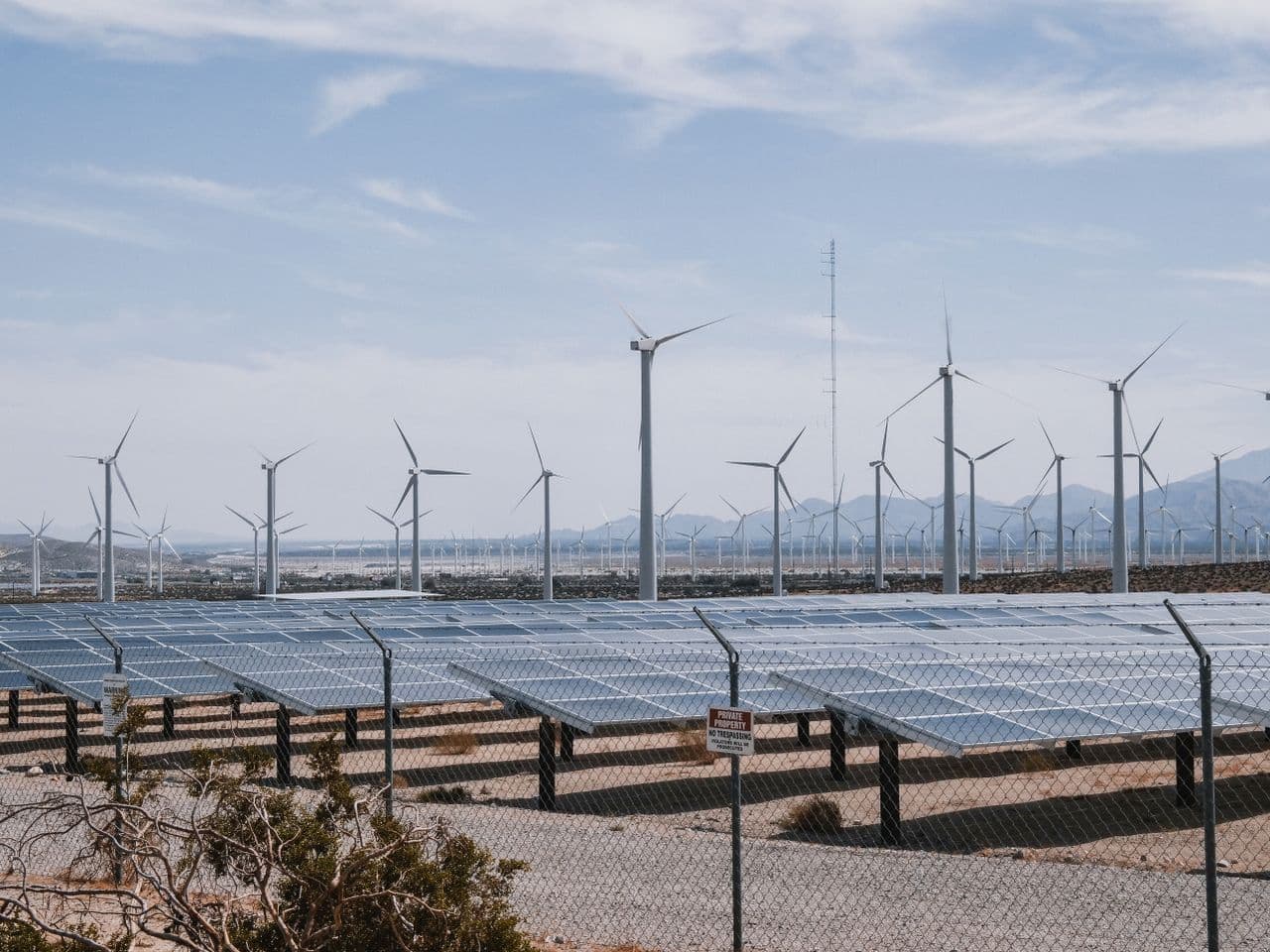
Figure 1: Relocated turbines in operation at the Uşak wind power plant

Figure 2: The Uşak site, where wind turbines operate alongside the solar plant within the same footprint

Impact
Sustainability impact
Climate
The additional generation displaces electricity that would otherwise have been drawn from the national grid, so the primary climate effect is an avoided-emissions contribution to the electricity system rather than a reduction inside the company's own combustion sources.
Calculated using a national grid emission factor of 0.6242 tCO2/MWh, the approximately 20,000 MWh of additional generation expected from the optimised layout corresponds to approximately 12,484 tonnes of CO2 avoided each year. The generation uplift was estimated in the feasibility study completed before the relocation was commissioned.
Within the company's own inventory the initiative supports targets validated by the Science Based Targets initiative: a 51 per cent reduction in Scope 1 and Scope 2 greenhouse gas emissions by 2032 against a 2022 base year, and a 90 per cent absolute reduction across Scope 1, Scope 2 and Scope 3 by 2040.
The 17 Goldwind turbines were already included in the approved 102 MW extension plan. The relocation therefore sought an additional generation benefit without procuring extra turbines solely for the layout optimisation, while the emissions associated with the extension, relocation works and civil infrastructure remain part of the project's value-chain footprint, reported under Scope 3 Category 2 (Capital goods).
Nature
By increasing AEP through a more productive turbine layout, the project increased the wind farm's effective energy yield per unit area and therefore its average output density (W/m²). The wider 102 MW extension and relocation nevertheless used additional land and required new access roads, which were addressed through the applicable siting, permitting and environmental-management processes.
The nature-related value of the relocation therefore lies in resource efficiency: matching turbine capacity more closely to the site's wind distribution increases renewable energy output from the available site area and installed turbine fleet. This efficiency gain is distinct from, and does not eliminate, the land-use impacts of the wider extension.
Accordingly, its contribution to the Kunming-Montreal Global Biodiversity Framework depends on impact avoidance, mitigation and monitoring at the extended site, rather than on a claim of zero additional land conversion.
The blades of the Goldwind turbines carry the purple colouring applied under the company's existing blade programme, which contributes to the protection of insect and bird populations at the site. The measure was incorporated into the new equipment alongside the relocation and extension works.
Social
The additional annual generation of approximately 20,000 MWh expected from the optimised layout is equivalent to the annual electricity consumption of approximately 6,000 households.
Engagement with public authorities, the local administration and relevant local stakeholders formed part of the standard permitting and implementation processes for the wider extension and relocation.
The wider 102 MW extension and the project were communicated through public disclosure platform filings, investor presentations, sustainability reports and national press releases. The company separately identifies the approximately 20,000 MWh annual generation uplift attributable to the optimised layout and the associated avoided-emissions estimate.
Business impact
Benefits
The commercial case rests on obtaining more generation from equipment that was already part of the site plan. The 17 Goldwind turbines were included in the planned 102 MW extension, while the five Sinovel units remained in service after relocation.
By matching the 6 MW Goldwind turbines to the site's strongest wind positions and moving the 1.5 MW Sinovel turbines to feasible extension positions, the company expects an annual generation uplift of approximately 20,000 MWh compared with the original layout. The benefit is therefore an AEP uplift from micrositing rather than an installed-capacity increase attributable to relocation.
The decision was taken before the last six Goldwind turbines were installed, allowing the layout to be changed while the extension was still under construction. Existing turbine-level production and site wind data reduced uncertainty, and the updated feasibility study quantified the expected gain.
The technical knowledge generated is reusable. The analytics-based relocation and layout-optimisation method can be applied at other sites where existing turbines occupy high-value wind positions and feasible alternative locations are available.
Revenue, EBITDA and internal rate of return attributable to the generation uplift are treated as internal company information and are not published.
Costs
The Goldwind turbine investment was already planned as part of the 102 MW extension. The incremental cost attributable to the optimisation is therefore the feasibility work, dismantling, transport, civil works, reinstallation and recommissioning of five Sinovel turbines, together with any additional roads, foundations, cabling and permitting required by the revised layout. The incremental capital expenditure and the expected payback period are treated as internal company information and are not published.
Relocation also creates temporary generation losses while operating units are dismantled, moved and recommissioned. The sequence therefore has to be aligned with the extension programme and planned around the wind season so forgone output is treated as a project cost.
The model has preconditions. It works only where production data shows a material wind-resource differential between positions, alternative sites are technically and environmentally feasible, land and access can be secured, and the grid and permits accommodate the overall development. Where relocation cost exceeds the AEP uplift, the original layout should be retained.
Costs were contained by integrating the relocation with the ongoing extension and keeping the site assessment, dismantling, reinstallation and commissioning within the company's technical teams. Reusing the five Sinovel turbines also avoided treating functional equipment as end-of-life assets.
Impact beyond sustainability and business
Co-benefits
The initiative links climate mitigation and resource efficiency: the layout optimisation increases renewable generation from the planned equipment while keeping five functional Sinovel turbines in service. Because the wider extension required additional land and access roads, the project's biodiversity contribution is based on mitigation measures and transparent impact management, not on avoided land-conversion claims.
The additional clean generation contributes to the electrification objective on the COP31 agenda, which seeks to raise the electrification rate to 35 per cent by 2035.
The initiative is reported against Sustainable Development Goal 7, target 7.2 on the share of renewables in the energy mix, Goal 9, target 9.4 on resource efficiency and clean technology in infrastructure, and Goal 13, target 13.2 on integrating climate measures into strategy and planning.
The method is transferable. Other wind-farm owners can reassess turbine placement before completing an extension and relocate existing machines where the expected AEP gain justifies the civil, environmental and operational costs. Replication must remain site-specific because it can require new land and access infrastructure.
Potential side-effects
Relocation keeps functional equipment in service, but it transfers impacts rather than eliminating them. Dismantling, heavy transport, new foundations, access roads and recommissioning create construction impacts, temporary outages and additional land disturbance that must be assessed and managed.
Installing 6 MW Goldwind turbines at the strongest positions changes the visual profile and swept area at those points, while moving Sinovel units changes the footprint elsewhere. The purple-blade measure was therefore carried onto the Goldwind units as part of the environmental mitigation package.
Concentrating the higher-capacity turbines at the best-exposed positions increases the output lost when one of those units is unavailable. The relocated Sinovel units also require post-commissioning performance and reliability monitoring.
The model is not universal. Sites without meaningful resource differences between turbine positions, feasible relocation points, sufficient land, suitable access or permitting headroom will not achieve the same result, so each case must be tested independently.
Implementation
Typical business profile
The approach suits owners and operators that are expanding or reconfiguring a wind farm and find that existing lower-capacity turbines occupy positions better suited to newer, higher-capacity machines. It is most relevant when the existing turbines can be moved to technically feasible alternative positions and remain in service.
It requires several years of turbine-level production and wind data, an updated micrositing feasibility study, internal or contracted capability to dismantle and reinstall operating turbines, and permits covering the revised layout, additional land, access roads and grid arrangements.
Delivery draws on engineering, operations and maintenance, sustainability, procurement, investor relations and corporate communications working to a single project timetable.
Approach
Analysed the current and planned layout: Turbine-level production history and site wind data were used to identify where the existing and planned machines could make better use of the available wind resource.
Matched turbine capacity to position: Locations were ranked by expected yield, higher-capacity turbines were assigned to the strongest positions, and technically feasible alternative positions were identified for the turbines to be relocated.
Updated the feasibility study before completing the extension: The original and optimised layouts were compared, the AEP difference was quantified, and the expected gain was assessed against relocation costs and construction impacts.
Confirmed the revised layout was buildable: Foundations, ground conditions, internal cabling, crane access, new roads, land rights, permitting and grid constraints were checked for both the Goldwind and relocated Sinovel positions.
Integrated relocation with the construction sequence: Dismantling, transport, foundation works, reinstallation and commissioning were coordinated with the extension programme to control temporary generation losses and interface risks.
Retained engineering knowledge inside the company: Internal technical teams led the site assessment and relocation, while equipment-specific requirements were coordinated with the turbine suppliers.
Applied habitat measures during installation: The new Goldwind blades were painted in the pattern already used across the fleet while still on the ground, before the blades were lifted into position.
Published results with clear attribution: The 102 MW capacity extension was distinguished from the approximately 20,000 MWh annual generation uplift attributed to the optimised layout, with associated land, road and environmental impacts disclosed alongside the avoided-emissions estimate.
Stakeholders involved
Project leads: Sustainability is treated as part of business strategy and decision-making rather than as a reporting exercise, so senior management considered the relocation within the company's sustainable growth targets. The company's specialist engineering team developed and implemented the revised layout and remained accountable for the technical decisions.
Company functions: Engineering, operations and maintenance, sustainability, procurement, investor relations and corporate communications worked to a shared timetable. Engineering ran the feasibility assessment and relocation sequence, sustainability managed the emissions calculation and environmental claims, and investor relations and communications handled disclosure of the results.
Main providers: The 6 MW Goldwind turbines were supplied under the existing extension programme. The revised site assessment, dismantling and reinstallation of the five Sinovel turbines, installation of the Goldwind units and commissioning sequence were managed end to end by the company's technical teams and internal resources, with suppliers supporting equipment-specific requirements.
Other: Public authorities and the local administration were engaged through the revised permitting, land and grid processes. Relevant local stakeholders were engaged through the standard implementation and communications processes. Information on the wider extension and project was shared with investors, the press and wider public through public disclosure filings, investor presentations, sustainability reports and national press releases.
Key parameters to consider
The site extension comprised 17 Goldwind turbines rated at 6 MW, totalling 102 MW. Eleven had been installed when an updated feasibility study was carried out before the remaining six units were placed.
The optimised layout installed five of the planned Goldwind turbines at positions previously occupied by five 1.5 MW Sinovel turbines. Those Sinovel turbines were dismantled and reinstalled at positions in the extension layout that had originally been allocated to Goldwind units; no turbine was retired or removed from the fleet.
The 102 MW capacity increase arose from the extension, not from the relocation. The relocation changed turbine placement and is expected to add approximately 20,000 MWh of annual generation, corresponding to approximately 12,484 tonnes of CO2 avoided each year using a grid emission factor of 0.6242 tCO2/MWh.
The economics depend on whether the AEP gain from matching turbine type to wind position exceeds relocation, civil-work and outage costs. The method can be repeated only where feasible alternative positions, land, access and permits are available.
Implementation and operations tips
Let production data guide turbine placement. The key question is not which turbines are oldest, but which turbine type can convert the wind resource at each position most effectively.
Refresh the feasibility study before the final layout is locked. Compare the original and optimised configurations, quantify the AEP uplift and test the result against relocation cost, construction risk and environmental impacts.
Separate extension impacts from relocation benefits in reporting. Attribute the 102 MW capacity increase to the extension, the approximately 20,000 MWh annual generation uplift to the optimised layout, and disclose additional land and access-road requirements rather than presenting the project as land-neutral.
Carry existing environmental measures onto the new equipment. The blade colouring applied across the fleet was easiest to apply to the Goldwind blades during installation, before they entered service.
Keep engineering knowledge inside the organisation where the capability exists. Managing feasibility, dismantling, transport, reinstallation and commissioning internally builds the capability to assess future site-optimisation opportunities.