Restore water to nature across plants and farmland
 PepsiCo
 SKD Türkiye
Summary
A food and beverage producer combined plant water recovery with drip irrigation on supplier farms, reporting 1.8 billion litres saved and 50% less field water use.
Context
Submitted through the COP31 Sustainable Transformation Awards · SKD Türkiye (WBCSD Global Network Partner)
PepsiCo Türkiye is a food and beverage manufacturer with more than 3,000 employees, operating production plants at Tarsus, Manisa, İzmir and Adana.
Drought, climate change and increasing pressure on water resources affect both the plants and the farmland that supplies them. Irrigation in the surrounding farming areas was largely conventional, and agricultural water use was not managed alongside plant water use.
Water represents a material commercial risk. Production continuity depends on water availability at sites located in water-stressed regions, and crop supply depends on farmers being able to irrigate through drier seasons. The company had committed to becoming net water positive, which required returning operational water to the local water system rather than only reducing consumption.
Location of the initiative: Tarsus (Mersin province), Adana, Manisa and İzmir, Türkiye
Solution
The programme manages plant water recovery and on-farm water efficiency as a single basin-based model rather than as two separate efficiency programmes. It began in Tarsus in 2023, extended to Manisa and İzmir in 2024, and added Adana and the Seyhan basin in 2025. It is delivered with Doğa Koruma Merkezi (Nature Conservation Centre), a conservation non-governmental organisation (NGO).
Within the plants, water recovery infrastructure was strengthened so that operational water is treated and returned to nature rather than only reduced. In the surrounding farmland, the company supports supplier farms converting from conventional to drip and pressurised irrigation, with farmer training that matches irrigation timing and technique to local crop and soil conditions.
Savings are tracked cumulatively from the 2023 base year using the partner NGO's data, with external verification. Based on this measurement, they reached 736 million litres by the end of 2024 and 1.8 billion litres by the end of 2025. The stated targets are 3.2 billion litres by the end of 2026, equivalent to 1,306 Olympic pools, and 12 billion litres by the end of 2030, equivalent to 4,864 Olympic pools.
Figure 1: Land use across the Gediz basin around the Manisa plant: plant water recovery and on-farm drip irrigation are managed together within the basin rather than as separate programmes

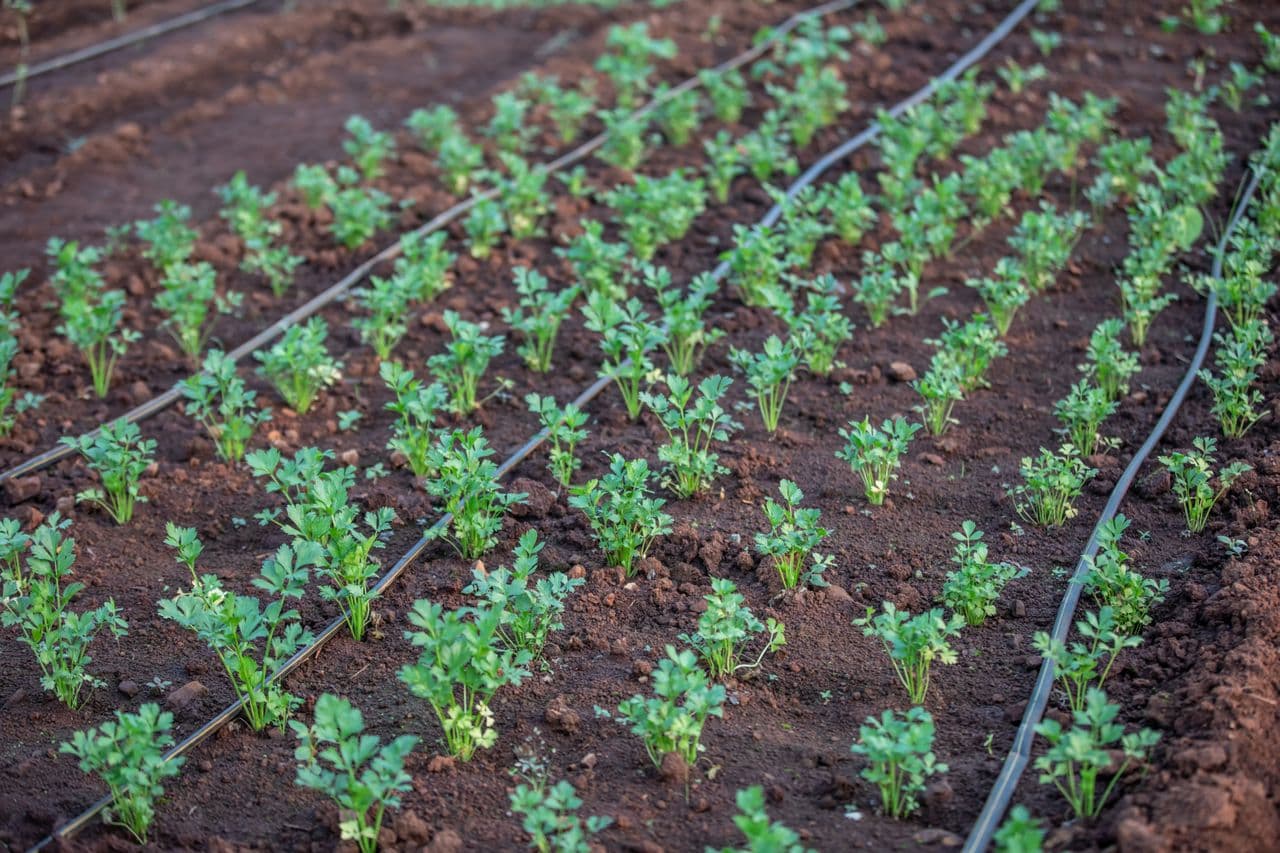
Figure 2: Cotton on supplier farmland converted to drip irrigation, where agricultural water use fell by 50 per cent in 2025

Impact
Sustainability impact
Climate
This initiative targets Scope 1 and Scope 2 within the company's own plants, where water abstraction, treatment and recovery form part of site operations, and Scope 3, Category 1: Purchased goods and services, on the supplier farms that grow the crops the business buys. The scopes are classified from where each activity sits (own operations and purchased agricultural inputs), rather than stated as such in the underlying reporting.
The programme is an enabler: it is measured in water volumes rather than in greenhouse gas emissions, and no greenhouse gas reduction figure is reported for it. Its enabling effect is to hold production and crop supply steady under drought. Against the 2023 base year, cumulative water savings reached 1.8 billion litres by the end of 2025, and field irrigation demand on the converted land was reduced by 50% in 2025, lowering exposure to drought in four production basins.
Farmer training covers climate change and drought response, efficient water use, soil protection and increasing organic matter in soil, which supports production continuity through drier seasons. The programme therefore contributes to climate adaptation rather than to emissions mitigation.
Nature
Cumulative water savings reached 736 million litres by the end of 2024 and 1.8 billion litres by the end of 2025, which the company reports as equivalent to 750 Olympic pools. The data are produced by the partner NGO, and the 2024 figure was verified by an independent technical verification firm.
Operational water returned to nature reached 100% at Tarsus and İzmir, 98% at Manisa and 52% at Adana as at 2024. Drip irrigation across close to 3,000 decares (300 ha) reduced agricultural water use on that land by 50% in 2025, which is expected to ease abstraction pressure in the basins concerned. Soil protection and organic matter practices form part of the same field programme.
Social
Farmers in Adana, Mersin, Manisa and İzmir received training on climate change and drought response, efficient water use, soil protection, water-saving irrigation methods, pressurised irrigation systems, irrigation timing, irrigation techniques matched to crop and soil characteristics, and increasing soil organic matter.
Results were communicated publicly to build wider awareness of irrigation efficiency. Three press releases produced 40 print and 360 online items with a reported reach value of 14,318,978, and 56 social media items published around a 2025 event reached approximately 5,460,561 people.
Business impact
Benefits
The programme reduces water risk at plants located in water-stressed regions, which supports production continuity. Extending drip irrigation across supplier farmland lowers the water demand of the crops the business purchases, supporting supply security through dry years and the resilience of local growers.
Managing plant water and agricultural water within one model provides a single view of water use across the value chain and makes basin-level performance visible for each site.
Savings are measured annually against a 2023 base year using partner data, with independent third-party external assurance in place, which supports the credibility of the reported figures. The programme is owned at senior management level as part of the company's water strategy.
Costs
The programme has been implemented with a budget of more than TRY 60 million. The main cost drivers are capital expenditure on plant water recovery infrastructure at four sites, support for farmers converting to drip and pressurised irrigation, field delivery and training, and annual measurement and verification.
Costs vary by site and basin. Recovery rates differ between plants, with Adana at 52% while Tarsus and İzmir reached 100%, so later sites carry further investment.
Costs are partially contained by phasing the rollout one basin at a time from 2023, and by working with a conservation NGO that supplies the technical expertise for basin analysis, farmer training and field implementation rather than building that capability in-house.
Impact beyond sustainability and business
Co-benefits
Farmer capability in water-efficient irrigation was developed across four provinces, and soil protection and organic matter practices were introduced alongside the change in irrigation. Public communication of the measured results extended awareness of irrigation efficiency beyond the participating farms.
Implementation
Typical business profile
The model is most relevant to food and beverage manufacturers with water-intensive plants and an agricultural supply base in water-stressed regions. It suits companies that purchase crops through direct or contracted grower relationships, and applies to plant operations, agricultural sourcing and sustainability functions. It operates at single-plant scale and is designed to be repeated basin by basin, so nationwide rollout is not required at the outset.
Approach
Set the water target: Establish a company-level goal that requires operational water to be returned to nature, not only reduced, so that plant and field actions are measured against one objective.
Select a starting basin: Begin around one production plant and establish a base year, as was done in Tarsus in 2023.
Secure technical capability: Partner with a conservation organisation able to provide basin expertise, farmer training and field delivery capacity.
Upgrade plant infrastructure: Strengthen water recovery capacity and track the share of operational water returned, site by site.
Convert on-farm irrigation: Support supplier farms in adopting drip and pressurised irrigation and record the treated area in decares or hectares.
Train the growers: Cover irrigation timing, water-saving methods, soil protection and soil organic matter, matched to local crop and soil conditions.
Measure and verify: Assess water savings annually against the base year and obtain independent verification of the figures before publication.
Extend basin by basin: Apply the model to further plants and grower groups at approximately one new basin per year, carrying the same measurement framework across regions.
Stakeholders involved
Project leads: Senior management set water as a strategic priority and positioned the programme within the company's water strategy, approving the basin-by-basin rollout and the budget behind it. The sustainability function coordinates delivery, holding the plant and field workstreams to one objective and one measurement framework.
Company functions: Plant operations, agricultural production and sourcing, farmer training and field teams, and corporate communications operate under one governance structure: plant teams deliver the recovery infrastructure site by site, agricultural and field teams deliver the irrigation conversion and training, and communications publishes the verified results.
Main providers: Doğa Koruma Merkezi (Nature Conservation Centre) provided water efficiency, basin approach, farmer training and field implementation expertise, and produces the annual water saving data the company reports, so the technical capability sits with the partner rather than being built in-house. An independent verification firm checked the 2024 water saving data before publication.
Other: Farmers in Adana, Mersin, Manisa and İzmir applied the irrigation techniques on their own land and form the main field stakeholder group; their crop and soil conditions determined how the training and irrigation methods were adapted locally. Local authorities were also engaged in the basins where the plants operate.
Key parameters to consider
The technologies are mature: drip and pressurised irrigation on farms, and water treatment and recovery within plants. Implementation has run since 2023 at approximately one new basin per year, with a budget of more than TRY 60 million to date.
Results depend on basin hydrology, the crops grown and farmer willingness to convert irrigation systems, so recovery rates differ by site, and each plant requires its own recovery infrastructure. Reporting is covered by independent third-party external assurance, and savings figures are produced from partner field data with external verification.
Implementation and operations tips
Two challenges shaped delivery. Plants reach different recovery levels at different rates, so targets are set per site rather than as a single company average; Adana stood at 52% while two earlier sites reached 100%. Farmers also had to be persuaded to change established irrigation practice, which was addressed through training and field demonstration under their own conditions.
Wider adoption is supported by measured and externally verified savings that both farmers and the business can see, and by treating plant water and field water as one system rather than as two separate efficiency programmes.