Embed home-based women's craft in the core collection
 Koton Mağazacılık Tekstil Sanayi ve Ticaret A.Ş.
 SKD Türkiye
Summary
Traditional beadwork, embroidery and knitting made by home-based women are sold inside the main apparel collection, so the income comes from sales rather than donations.
Context
Submitted through the COP31 Sustainable Transformation Awards · SKD Türkiye (WBCSD Global Network Partner)
Koton Mağazacılık Tekstil Sanayi ve Ticaret A.Ş. is an apparel retailer operating through an extensive network of stores in Türkiye and international markets, as well as a growing e-commerce channel. The company employs more than 7,800 people.
Across South-eastern Anatolia, many women possess valuable craft skills—including beadwork, embellishment and knitting—but have limited opportunities to translate these skills into a sustainable source of income. Many remain outside the formal workforce, are unable to work away from home and face a significant risk that their home-based labour will remain informal and therefore largely invisible, inadequately compensated and undocumented.
Conventional corporate responses often take the form of one-off donations or separately branded charity collections. However, such approaches rarely address the underlying structural challenge: income typically ends when the campaign concludes, while women’s craftsmanship is positioned as a social cause rather than recognised as valuable production.
The company adopted a different approach. In 2016, it established a model that directly integrates women’s craftsmanship into its commercial value chain. Products created through the initiative are included in and sold as part of the company’s main collections, rather than being presented as a separate corporate social responsibility line. This was a voluntary initiative, developed in the absence of any legal requirement or established industry standard.
The El Emeği (“Handcraft”) Collection was launched in 2016 in collaboration with the Multi-Purpose Community Centres (ÇATOM), a joint initiative of the United Nations Development Programme (UNDP) and the GAP Regional Development Administration. The programme has continued uninterrupted for more than ten years.
Location of the initiative: South-eastern Anatolia, later extended to other regions of Türkiye
Solution
The model is built on three elements: commercial integration, a division of roles with local partners, and self-financing.
Commercial integration lies at the heart of the model. Garments featuring the women’s craftsmanship are not marketed as part of a separate social responsibility collection; instead, they are incorporated into the company’s main collections and sold through its retail network. Customers therefore purchase the products primarily for their design and craftsmanship, rather than solely to support a social cause. This approach creates a more sustainable source of income, as it is generated through the collection’s own commercial performance rather than relying on a donation budget that must be renewed each year.
The division of responsibilities is structured around the respective strengths of each party. The company oversees design, quality standards, market access and sales, while local partners coordinate production, support the conditions under which women participate and provide insight into local needs. The initiative was originally launched in collaboration with the Multi-Purpose Community Centres (ÇATOM), an organisation operating under the Southeast Anatolia Project Regional Development Administration (GAP Administration). Through this partnership, ÇATOM provided initial access to participating women, as well as the organisational framework and production facilities during the programme’s establishment. Although this collaboration is no longer ongoing, ÇATOM played an important role in laying the foundations of the model. Today, the company continues the initiative through its current local partnerships and commercial operations.
The project operates without any intermediaries or commission-based arrangements. Participating women are compensated directly on a piece-rate basis, receiving payment according to the volume of work they personally complete.
The partner network has widened over time from community centres to associations and cooperatives.
Feedback runs through the field. The company's supply chain team visits the production centres regularly, and suggestions from the women and the local partners are collected during those visits and through the cooperatives.
The intent goes beyond income. The design of the model aims at the women gaining a producer identity, participating in economic decisions and strengthening their position in social life, while traditional craft techniques are kept alive through contemporary design.
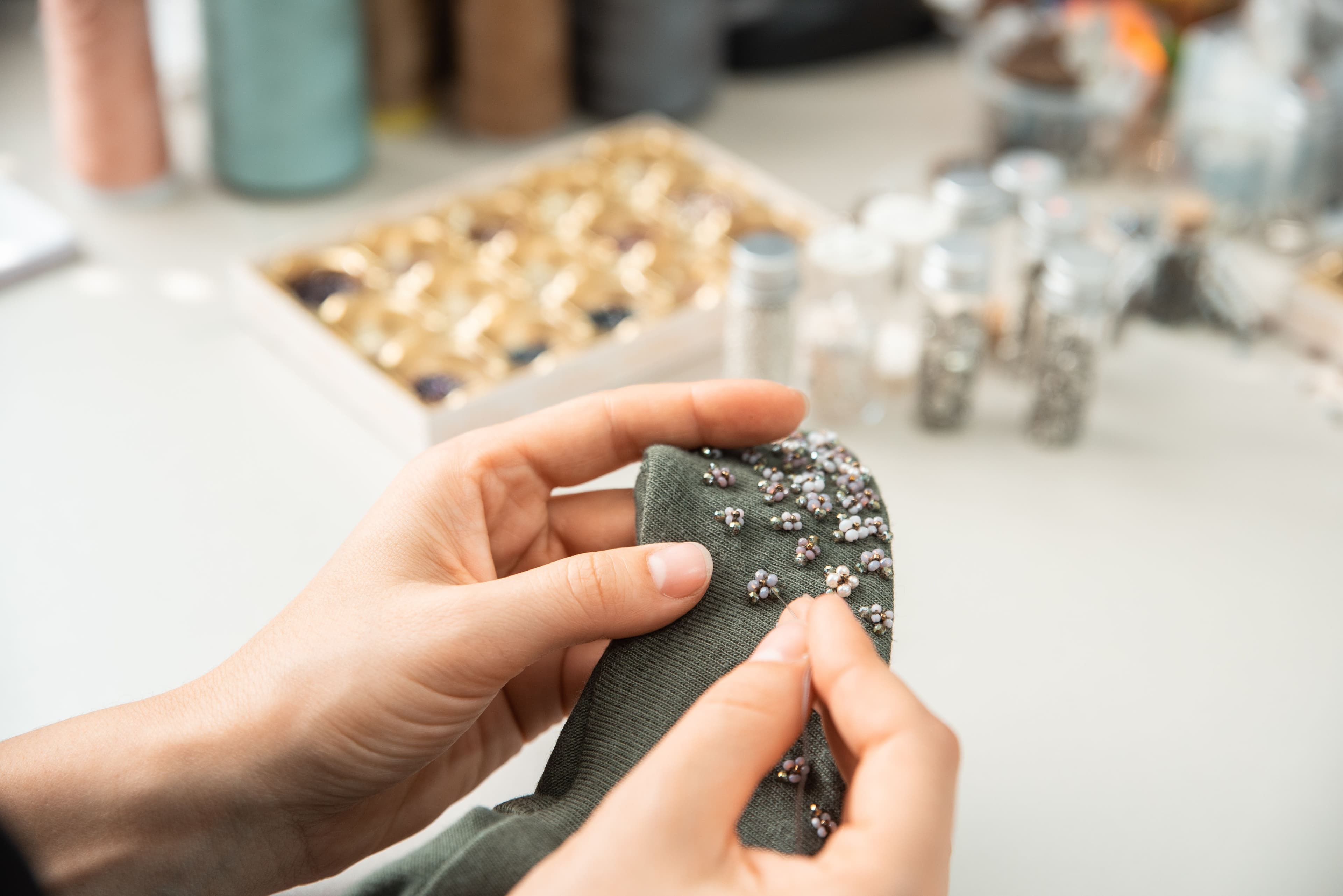
Figure 1: Women carrying out hand embroidery and embellishment for the El Emeği (Handcraft) Collection

Figure 2: Women carrying out hand embroidery and embellishment for the El Emeği (Handcraft) Collection

Figure 3: El Emeği (Handcraft) Collection: cumulative pieces produced and cumulative amount paid to the women, 2016–2025

Impact
Sustainability Impact
Climate
The handwork is applied to base garments already produced through the company's normal supply chain, and it is carried out by hand in community centres, associations and cooperatives that were already operating, so across the 2016 to 2025 period it changes neither the Scope 1 and Scope 2 footprint of the company's own sites nor the production volume behind the garments.
The enabling effect that a craft-based range could carry — hand-finished pieces designed to be kept rather than replaced, and traditional techniques sustained commercially rather than industrially — has not been assessed, measured or included in any reporting here, so it is not asserted. The sustainability impact reported for this initiative is social and economic, and it is set out under social impact.
Social
Between 2016 and 2025 more than 6,000 women were brought into the production and income chain, most of them experiencing regular income for the first time.
Cumulative direct income transferred to the women rose from TRY 8.68 million at the end of 2023 to more than TRY 11.5 million at the end of 2024 and to more than TRY 14.5 million at the end of 2025. In 2025 alone 680 women took part in production and received TRY 2,820,502 in direct income, approximately TRY 2.8 million.
The change is measured against a clear starting position. In the 2016 base year, the target group consisted of women living in south-eastern Anatolia with no means of earning income other than working from home, and outside the labour market entirely.
The results are disclosed publicly in sustainability and annual reports prepared with reference to GRI 203 on indirect economic impacts and GRI 413 on local communities.
The project contributes directly to four Sustainable Development Goals — gender equality, decent work and economic growth, reduced inequalities and no poverty — and it aligns with the Women's Empowerment Principles and with regional development objectives for the GAP area.
What distinguishes the social outcome is the nature of the income rather than only its size: home-based women's labour that was at risk of remaining informal has been made visible and economically productive, and the women have gained a first experience of formal work.
Business Impact
Benefits
The collection generates its own revenue. Because the handwork is part of the main product range and is sold through domestic stores, international stores and e-commerce, the payments to the women come out of a commercial margin rather than out of a donation budget, which is why the model has survived ten years and several changes of business conditions, transferring more than TRY 14.5 million to over 6,000 women in the process.
Product differentiation is the direct commercial benefit. Hand-embellished pieces produced by craftswomen give the range design content that industrial production cannot replicate, and each piece keeps a traditional craft technique alive in a contemporary design.
Production volume demonstrates that the commercial case works: output grew from 17,585 pieces in the first season to 337,262 pieces in 2019, and by 2025 total production had exceeded 761,487 items.
The model also builds a distinctive supply capability in the company's own value chain, with local partners whose capacity has been developed over a decade, and it gives the company verified social impact data for GRI-referenced reporting rather than narrative claims.
Independent recognition has followed, including a first prize in the women's empowerment category of a national sustainable business awards scheme in 2024 and a social benefit award from a national business newspaper.
Costs
The cost structure is that of a more complex supply arrangement rather than of a grant. Hand production is slower and less predictable than machine production, quality assurance takes more effort across dispersed centres, and the design team has to work within the techniques and capacity available in each location.
The company carries the coordination cost of working with community centres, associations and cooperatives instead of with a single contract manufacturer, including regular field visits by the supply chain team to every production centre.
Because the model is financed from product sales rather than from donations or grants, it carries no separate funding line — and equally, it has to earn its place in the range on commercial terms each season.
Impact Beyond Sustainability And Business
Co-benefits
Every partner gains something distinct, which is why the arrangement has lasted: the women gain continuing income and a first formal work experience, local partners gain institutional capacity, public partners gain measurable progress against regional development objectives, and the company gains a distinctive collection and verified social impact.
Traditional craft techniques — beadwork, embellishment, knitting — are sustained commercially rather than preserved as heritage, because they are produced for a current collection and sold at scale.
Reaching international markets through overseas stores and e-commerce connects home-based producers in south-eastern Anatolia to demand well beyond their region.
Potential side-effects
Income tied to a commercial collection is exposed to demand. If the collection underperforms in a season, the production volume available to the women falls, and the same commercial integration that makes the model self-financing also transmits market risk to the producers. Keeping the collection inside the main product range rather than in a seasonal capsule is the mechanism used to reduce that volatility.
Home-based piece-rate work also has limits as a form of employment. It provides income and a first formal work experience, but it does not by itself provide the wider protections of a permanent job, and its value depends on the piece rate and the volume offered.
Implementation
Typical Business Profile
The model suits consumer-facing companies with an owned retail channel and an in-house design function, in categories where hand finishing adds recognisable product value — apparel, home textiles, accessories and similar.
It requires a supply chain organisation willing to work with community organisations and cooperatives rather than only with contract manufacturers, and a design team able to work within the techniques available locally.
It is most applicable where a public or international development structure already exists that can reach the target group and host production, because that is what removes the recruitment and premises problem from the company.
Approach
Find the existing structure that already reaches the group: Partner with public and international development bodies that operate community centres in the target region, so that access to the women, their organisation and the production space come with the partnership rather than having to be built.
Put the products in the main collection, not in a charity line: Design the pieces so that they compete on their own merits in the core range, because commercial sales are what fund continuing payments and remove dependence on a donation budget.
Divide roles explicitly with local partners: Keep design, quality standards and market access with the company, and give production coordination, participation conditions and local needs assessment to the community centres, associations and cooperatives.
Start with a pilot and expand on evidence: Begin in a small number of provinces — five in this case — and extend to further centres and provinces only once quality, coordination and demand have been proved.
Visit the production centres regularly and design with what you hear: Have the supply chain team collect suggestions from the women and the local partners during field visits.
Widen the partner types as the model matures: Move beyond the original community centres to associations and cooperatives, which is what allows the model to reach new regions such as a disaster area.
Report the income transferred against a recognised standard: Consolidate payment records with participant data from partners and publish the results with reference to GRI 203 and GRI 413 in the annual and sustainability reports.
Stakeholders Involved
Project leads: Corporate ownership sits at Board level. The project was designed in 2016 by a member of the company's design leadership together with the ÇATOM structure, and it was made a permanent part of company strategy by the founder and board member whose commitment to women's empowerment gave it standing beyond a periodic corporate responsibility activity. Performance and the income provided to the women are disclosed in the annual report and in the GRI-referenced sustainability report, which places accountability at senior management level. The financing model is the basis of continuity: because the collection is part of the main product range and generates its own sales revenue, payments rest on a commercial cycle rather than on donations, which has made the project independent of changes in management over ten years.
Company functions: The design team develops the collection, the supply chain function manages production coordination and quality, and the retail and e-commerce teams bring the products to the customer. The supply chain team is also the field interface: its regular visits to production centres are the channel through which the women's and partners' suggestions enter collection planning.
Main providers: Production is carried out by the women themselves through the partner organisations rather than through a contract manufacturer. Standard apparel manufacturing suppliers handle the base garments onto which the handwork is applied.
Other: The GAP Regional Development Administration on the public side and UNDP on the international side jointly operate the Multi-Purpose Community Centres (ÇATOM), with which the project was designed in 2016 and which provided access to the women, their organisation and the production premises. Local partners hold decision-making power over production capacity, the conditions under which women participate and local needs. The women themselves are participants in the model rather than beneficiaries of it: their capacity and preferences shape collection planning through the feedback channel, and they receive payment for their own work directly.
Key Parameters To Consider
The project began in 2016, which is the base year, and has run for more than ten years without interruption. Data covers the period from 2016 to 2025.
The model rests on three structural conditions: self-financing from product sales rather than donations or grants; a division of roles in which the company manages design, quality and market access while local partners manage production coordination; and an expanding partnership network that carries the model into new regions.
The principal risks are seasonal fluctuation in demand and differences in local partner capacity.
Implementation And Operations Tips
Put the products in the main collection. A separately branded charity line signals to the customer that the purchase is an act of generosity, and sales — and therefore the income to the producers — behave accordingly.
Let the financing come from sales. A donation-funded version of the same project would have had to be re-approved every year; a collection that earns its margin does not.
Work through structures that already exist. Community centres run by public and international development bodies solved the access, organisation and premises problems that would otherwise have taken years to solve.
Diversify partner types before you need to. Moving from community centres to associations and cooperatives is what allowed the model to reach the earthquake region quickly, and it reduces dependence on any single local structure.