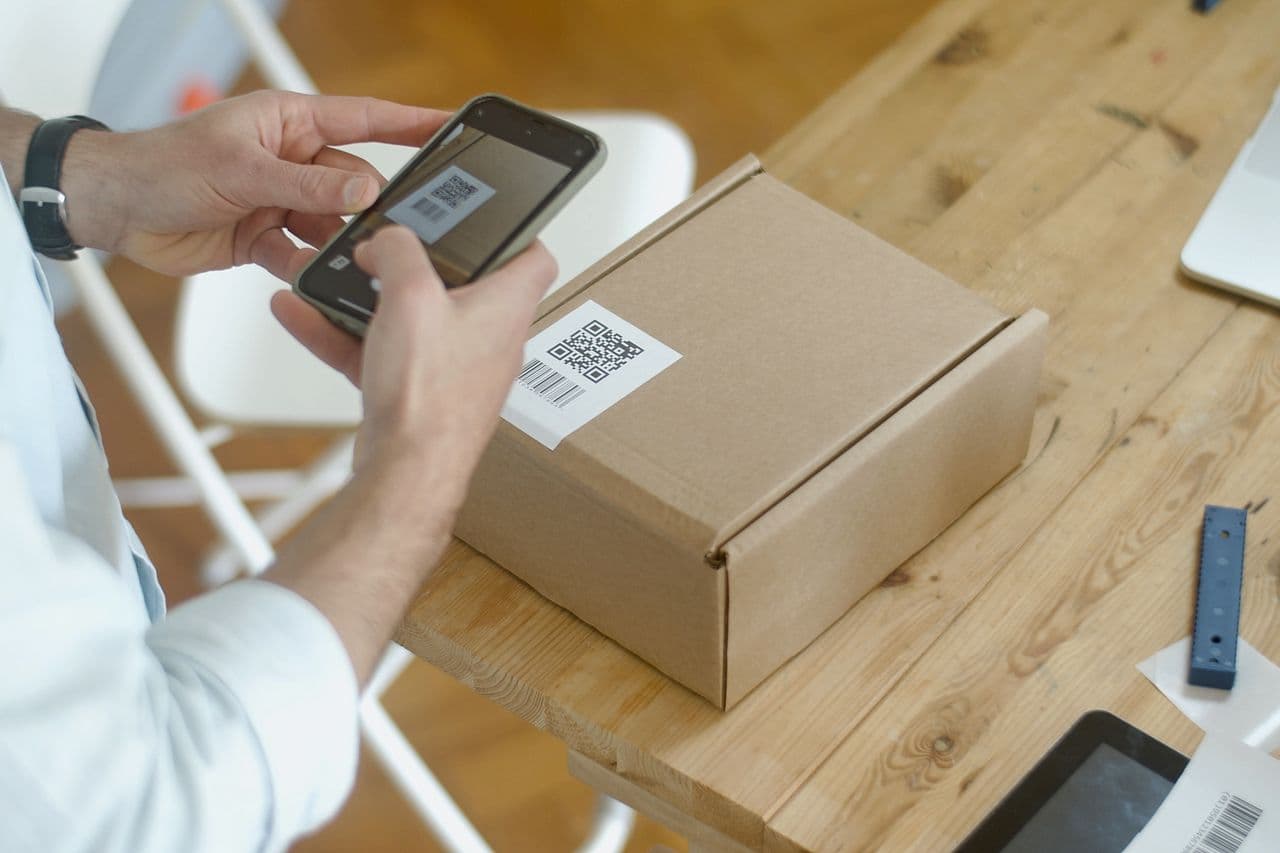
Digitise medicine leaflets to cut paper and emissions
 Abdi İbrahim
 SKD Türkiye
Summary
Printed patient information leaflets are removed from medicine boxes and delivered through a QR code instead, cutting paper consumption and the emissions attached to it.
Context
Submitted through the COP31 Sustainable Transformation Awards · SKD Türkiye (WBCSD Global Network Partner)
The company is a pharmaceutical manufacturer with nearly 5,800 employees in Türkiye, and its portfolio covers nearly 250 brands and more than 500 products, developed in house as well as under agreements with 30 licensors.
Every box of medicine that leaves a pharmaceutical plant carries a printed patient information leaflet. Across a sector that ships billions of boxes a year, that is a permanent demand for paper, printing, folding and insertion, and an emissions load that sits in the pack before the medicine itself is counted.
The leaflet is also the part of the pack a company cannot change on its own. Its content and its presence are set by the medicines regulator, so no manufacturer can remove it unilaterally however strong the environmental case.
The company's response, therefore, began outside its own operations. From 2020 it prepared a proposal to move the leaflet into a digital channel and raised it with the public authorities responsible, setting out the paper consumption involved, the benefit of giving patients the current version of the text rather than the version printed at manufacture, and the accessibility gain for people who cannot read printed text.
The Turkish Medicines and Medical Devices Agency, part of the Ministry of Health, then opened the route in two steps: first permitting the leaflet to be provided digitally through a QR code on the box, and subsequently permitting the printed leaflet to be removed altogether for products the regulation does not exempt. That removal becomes mandatory on 1 January 2027.
The initiative is one of the company's twin transition projects, combining digitalisation with emission reduction, and sits inside a climate pathway whose targets are validated by the Science Based Targets initiative and disclosed through CDP.
Location of the initiative: Türkiye
Solution
The solution moves the patient information leaflet from the inside of the box to a digital channel reached by scanning a QR code printed on the pack. Users scan the code with a mobile device and read the current approved text.
The transition was designed in two stages rather than as a single switch. In the first stage the QR code was added while the printed leaflet was still supplied, so a working digital route existed and was familiar before anything was taken away. In the second stage the printed leaflet was removed for products the regulation permits.
The second stage began in June 2026 with the first boxes produced without a printed leaflet. The printed leaflet has been removed from 66 products, covering 14 million boxes produced to date, and a phased transition across the remainder of the portfolio is planned through to the end of 2026, excluding the products the regulation keeps out of scope. That places the company among the first organisations in its market to complete the change ahead of the mandatory date.
Accessibility shaped the design rather than following it. Discussions with an association representing visually impaired people established that once the leaflet is available electronically, the screen-reading applications those users already have can read it aloud, which a folded paper insert cannot offer.
The environmental result is calculated from the recorded weights of the leaflets used across the product portfolio, using the GHG Protocol approach with DEFRA emission factors, and compared against a reference scenario in which printed leaflets continue to be supplied. On that basis the change has saved 51 tonnes of paper and avoided 129 tonnes CO2e so far, and extending it across the whole portfolio carries a further potential reduction of approximately 2,500 tonnes CO2e a year.
Figure 1: Timeline of the electronic leaflet transition, from the 2020 proposal and the 2026 regulation to the first boxes without a printed leaflet and the mandatory date of 1 January 2027

Figure 2: Achieved results across 66 products and 14 million boxes, with the full-rollout potential shown separately as an estimate rather than an achieved figure

Impact
Sustainability impact
Climate
The reduction sits in Scope 3, because the leaflet paper is bought in as a packaging material rather than produced on the company's own sites; in GHG Protocol terms it falls under Category 1: Purchased goods and services. What is removed is the emissions embedded in the paper that is bought, printed, folded and inserted into each box.
Emissions were calculated in line with the GHG Protocol using DEFRA emission factors, applied to the recorded weights of the patient information leaflets used across the product portfolio. The measurement compares the situation before and after the change against a reference scenario in which printed leaflets continue to be supplied, with 2026, the year of implementation, as the base year.
The change has been applied to 14 million boxes to date. Measured against that volume, the recorded result is 51 tonnes of paper saved and 129 tonnes CO2e of emissions avoided. These are achieved reductions rather than projections, and they cover the 66 products from which the printed leaflet has so far been removed.
Extending the electronic leaflet across the whole portfolio, and with it the removal of the associated paper consumption, carries a further potential reduction of approximately 2,500 tonnes CO2e a year. That portfolio figure is a full-rollout projection tied to the completion of the transition, not a delivered result, and the achieved reduction rises as each presentation converts and as box volumes accumulate.
Progress is tracked through two indicators, the number of products moved to the electronic leaflet and the reduction in tonnes CO2e, and is reported as the transition advances.
Nature
The pressure removed is demand for paper. Each leaflet withdrawn removes the pulp, water and energy embedded in producing, printing and finishing that sheet, and the measurement is built directly on leaflet weights rather than on an assumed average.
Across the 14 million boxes produced without a printed leaflet so far, 51 tonnes of paper has been avoided.
Because the effect is upstream of the company, no forestry, land or water outcome has been quantified for the initiative. The reported indicators are the weight of paper avoided and the emissions equivalent calculated from it.
Social
The clearest social outcome is accessibility. Discussions with an association representing visually impaired people established that when the leaflet is available electronically, the screen-reading applications those users already rely on can read the text aloud. A printed insert offers no equivalent route, so for that group the digital leaflet is an improvement in access to medicine information rather than a substitution of one format for another.
Patients, pharmacists and health professionals also reach the current approved text. A printed leaflet reflects the version approved when the box was packed; a digital leaflet reflects the version approved now, which matters when safety information is updated.
Internally, the change removes part of the administrative burden created by managing printed documents across a large product portfolio, work that falls on regulatory, artwork, planning and production teams.
Business impact
Benefits
The direct benefit is the removal of a component from the bill of materials for every converted presentation: the paper, the printing and the insertion step all disappear from the pack. Across the 14 million boxes produced without a leaflet so far, that is 51 tonnes of paper no longer bought, printed and handled.
The second benefit is administrative. Managing printed patient information across a large portfolio means artwork versions, print runs, stock of printed inserts and the coordination of updates; moving the text to a digital channel reduces that operational burden and shortens the path between an approved information change and the version a patient actually sees.
The third benefit is timing and early readiness. The project was initiated in 2020, with the company engaging with public authorities to support the transition to electronic patient information leaflets. Following the regulatory changes, implementation began in June 2026, allowing the company to manage the transition gradually ahead of the mandatory date of 1 January 2027.
The monetary saving from removing printed leaflets is not published; the achieved reductions are reported in tonnes of paper and CO2e.
Costs
The first is the conversion work itself. Each presentation needs pack artwork changes, regulatory file updates, material specification and planning changes, and coordination between procurement, packaging, production and information technology, with the digital channel that serves the leaflet built and maintained alongside.
The second is a dual process. Products the regulation exempts continue to carry printed leaflets, so the printed route cannot be retired; the company runs both until and unless the exemptions change.
The third is adoption. User habits are the stated risk: the change only delivers if patients, pharmacists and health professionals reliably reach the digital text, which depends on the QR route being visible on the pack and on the digital channel remaining available and current.
The capital and operating cost of the digital leaflet infrastructure and the per-presentation changeover cost are treated as confidential company information and are not published.
Impact beyond sustainability and business
Co-benefits
Accessibility is an important co-benefit of the initiative. Discussions with an association representing visually impaired people indicated that, when patient information is made available electronically, the text can be accessed through the text-to-speech functionality of applications already used by visually impaired users. This provides the potential to improve access to medicine information compared with the printed format.
The model is also unusually replicable, because it rests on a regulatory permission that applies to the whole market. Any manufacturer of human medicinal products in the same market can now follow the same route for non-exempt products, so the sector-level effect is far larger than one company's portfolio.
More broadly, the initiative modernises how medicine information reaches patients, replacing a static insert printed at manufacture with a channel that can carry the current approved text.
Potential side-effects
Digital delivery introduces a device and connectivity dependency. A patient without a smartphone, without data at the moment of need, or unfamiliar with scanning a code, is further from the information than they were with a printed insert. The regulation retains exemptions, which limits but does not remove this exposure, and it is why the company treats user habits as the principal risk of the transition.
The digital channel also becomes safety-critical. Once the paper is gone, availability and accuracy of the electronic leaflet is not a convenience issue but a patient safety issue, which places a permanent operating obligation on the information technology and regulatory functions.
During the transition both formats exist in the market at the same time, since converted and unconverted products sit on the same pharmacy shelf, which can confuse users until the changeover is complete.
Finally, the emissions benefit is bounded by the leaflet alone. The box, blister and other pack components are unaffected, so this initiative addresses one component rather than the packaging footprint as a whole.
Implementation
Typical business profile
The model suits pharmaceutical manufacturers operating in markets where the content and presence of patient information is set by a medicines regulator, and where a digital leaflet route is either permitted or open to being proposed.
It requires regulatory affairs capability able to engage a competent authority on rule-making, artwork and packaging change capacity across many presentations, and an information technology function able to host and maintain a public-facing content channel to a safety-critical standard.
Delivery engages sustainability, regulatory affairs, medical, quality, production, packaging, material planning, procurement, technical operations, information technology, artwork, graphics, finance and marketing functions, working to a shared changeover plan.
Approach
Quantify the paper baseline before proposing anything: Record the weight and specification of the printed leaflet for every presentation in the portfolio and convert it into emissions using published factors, so the case rests on measured material rather than on a general argument for digitalisation.
Take the proposal to the medicines regulator: Where the leaflet is mandated by law the change cannot be made unilaterally, so present the environmental, information-currency and accessibility case to the competent authority and stay engaged through the whole rule-making period.
Digitise before removing: Add the QR code to the box while the printed leaflet is still supplied, so that a working digital route exists and is familiar to users before the paper version is withdrawn.
Segment the portfolio against the exemption rules: Identify which products the regulation excludes, which can convert immediately and which need further work, then sequence the rest by production run and printed-stock position so existing inserts are used rather than scrapped.
Rebuild the artwork and change-control chain: Update pack artwork, regulatory files and material specifications presentation by presentation, and align material planning and procurement so the leaflet is removed from the bill of materials at the right production cycle.
Test the accessibility assumption with the users concerned: Consult organisations representing visually impaired people directly; here that consultation established that electronic leaflets can be read aloud by the applications those users already have, which turned an assumed risk into a demonstrated benefit.
Convert ahead of the mandatory date: Begin removing the printed leaflet from a first group of products well before the deadline, so the operational load is spread across normal cycles and problems surface while the affected volume is small.
Track converted products, production volume and emissions together: Report the number of presentations moved to the electronic leaflet and the number of boxes produced without a printed leaflet alongside the paper weight and tonnes CO2e avoided, keep the full-portfolio projection labelled as a target until rollout completes, and update the achieved figure as each presentation converts.
Stakeholders involved
Project leads: The sustainability function originated the proposal in 2020 and carried the external engagement, presenting the case for removing printed leaflets to the public authorities responsible and following sector dynamics and user needs through the rule-making period. Internally the initiative was run as a twin transition project, digital and environmental at once, which is why it was governed across functions rather than as a packaging change owned by a single department.
Company functions: Sustainability, regulatory affairs, medical, quality, production, packaging, material planning, procurement, technical operations, information technology, artwork, graphics, finance and marketing teams delivered the change together. The reason for that breadth is that the four requirements in play cannot be met sequentially. Product safety, regulatory compliance, user experience and environmental impact were assessed at the same time and against each other, since a decision that satisfies the regulator but leaves a patient unable to find the leaflet fails, and so does the reverse. In practice regulatory affairs and medical defined what could change, artwork, graphics and packaging rebuilt the box and its files, material planning and procurement managed the removal of the printed component from supply, information technology built and maintained the digital route, and production sequenced the changeover against manufacturing runs.
Main providers: Suppliers of printed packaging materials are directly affected, since the change removes an item from the pack, and specifications and supply volumes were revised with them through the transition rather than terminated at short notice. The digital channel that serves the leaflet content is maintained as an operational system, which places a continuing obligation on the information technology function and its providers rather than a one-off delivery.
Other: The Turkish Medicines and Medical Devices Agency, under the Ministry of Health, is the decisive external stakeholder: its regulations first permitted digital provision through a QR code and then permitted removal of the printed leaflet for non-exempt products. An association representing visually impaired people was consulted on accessibility, and that discussion established the screen-reading benefit that the digital format makes possible.
Key parameters to consider
The elapsed timeline is the defining parameter. The proposal was developed in 2020, the enabling regulations followed, implementation started in June 2026, and removal of the printed leaflet becomes mandatory on 1 January 2027.
Status at reporting: the printed leaflet has been removed from 66 products and from 14 million boxes produced to date, with a phased transition planned across the remainder of the portfolio by the end of 2026, excluding products the regulation exempts.
The base year is 2026 and the greenhouse gas result is calculated against a reference scenario of continued printing, using GHG Protocol methodology with DEFRA emission factors applied to leaflet weights. On that basis 51 tonnes of paper and 129 tonnes CO2e have been avoided so far, while the portfolio figure of approximately 2,500 tonnes CO2e a year is a full-rollout potential rather than an achieved reduction.
Scalability rests on the regulation rather than on proprietary technology, which means any manufacturer in the same market can follow, and the constraint on pace is the number of presentations requiring artwork and regulatory change rather than the digital build.
Implementation and operations tips
Engage the regulator years before the operational work. The technical change is straightforward; the permission is not. Most of the period between proposal and implementation was spent on the rule-making process, and starting the operational programme before the rules exist wastes effort.
Split the change into two regulatory steps. Adding the QR code while retaining the printed leaflet builds user familiarity and proves the digital channel works before removal, which reduces the adoption risk that the change otherwise carries.
Test accessibility with the people affected rather than assuming a disbenefit. The consultation with visually impaired users turned what could have been treated as a drawback into one of the strongest arguments for the change.
Measure in leaflet weight and production volume, not product count. Presentations differ in leaflet size and in how many boxes they ship, so a count of converted products overstates or understates the environmental result depending on which products convert first; the achieved figures of 51 tonnes of paper and 129 tonnes CO2e come from production volume multiplied by recorded leaflet weight.
Convert early. Moving ahead of the mandatory date spreads artwork, planning and production work across normal cycles and leaves room to correct problems while volumes are low.