Turn student placements into an inclusive talent pipeline
 Rönesans Holding
 SKD Türkiye
Summary
Vocational school students train four days a week inside a working hospital under shared public, private and international governance, with progress tracked digitally.
Context
Submitted through the COP31 Sustainable Transformation Awards · SKD Türkiye (WBCSD Global Network Partner)
Rönesans Holding is a diversified group whose construction, infrastructure and healthcare investments include city hospital campuses delivered and operated under public-private partnership, with more than 40,000 employees.
Vocational and technical high school students in Türkiye frequently complete their studies without sufficient practical experience in a genuine working environment. Placements tend to be short, loosely supervised and detached from the technical functions that employers actually staff, while sectors such as healthcare continue to report a shortage of qualified technical labour. Young women are additionally under-represented in the technical and service occupations where those vacancies sit.
The company set 2025 as the baseline year. Before that point there was no vocational training model at Gaziantep City Hospital that was structured under the group together with UNICEF, the Ministry of National Education and the EBRD, monitored digitally and governed across several institutions at the same time.
The response was to treat vocational training as a corporate talent development instrument with measurable social outcomes rather than as a statutory internship obligation. The stated objectives are to build occupational skills on site, widen the participation of young women and young people generally in employment, raise the capability of teachers and master trainers, and establish a durable school, public sector and private sector partnership.
Impact data covers the opening process in April 2025 through to February 2026 and the 2025–2026 academic year. Group sustainability performance is reported through CDP and in line with ISSB IFRS S1 and S2 and TCFD, with independent third-party external assurance.
Location of the initiative: Gaziantep, Türkiye
Solution
The model places vocational and technical high school students from seven partner schools inside an operating hospital for four days a week, working alongside the staff who run its technical and support functions, and registers that time as part of their formal education rather than as an optional extra.
Students are distributed across the units where the hospital's technical and service work actually happens: technical services, sterilisation, imaging, administrative units, patient support services, information technology, food and beverage, air conditioning and installation, and maintenance and repair. Matching is by occupational field, so a student trained in industrial automation works on automation tasks rather than being absorbed into a general administrative pool. Five occupational fields are covered in total: information technology, food and beverage, industrial automation, air conditioning and installation, and maintenance and repair.
Supervision is layered rather than delegated to a single person. Master trainers inside the hospital units carry day-to-day responsibility for the student on the floor, coordinator teachers from the schools hold the link back to the curriculum, and a project coordination team keeps placement, safety and scheduling aligned across departments.
Training records, site placement, attendance and performance development are held on the group's academy and digital monitoring platform, so a student's progress is visible to the school, the hospital unit and the group simultaneously instead of being reconstructed at the end of term.
What separates the model from a conventional internship is the combination of four elements that are usually absent: digital traceability of every placement, governance shared between a company, a ministry, a children's rights agency and a development bank, learning integrated into live operations rather than delivered in a training room, and social outcomes that are defined and measured in advance.
Figure 1: The seven stages of the placement model, from school partnerships and field-specific training planning through hospital orientation and supervised practical training to evaluation and continuous development

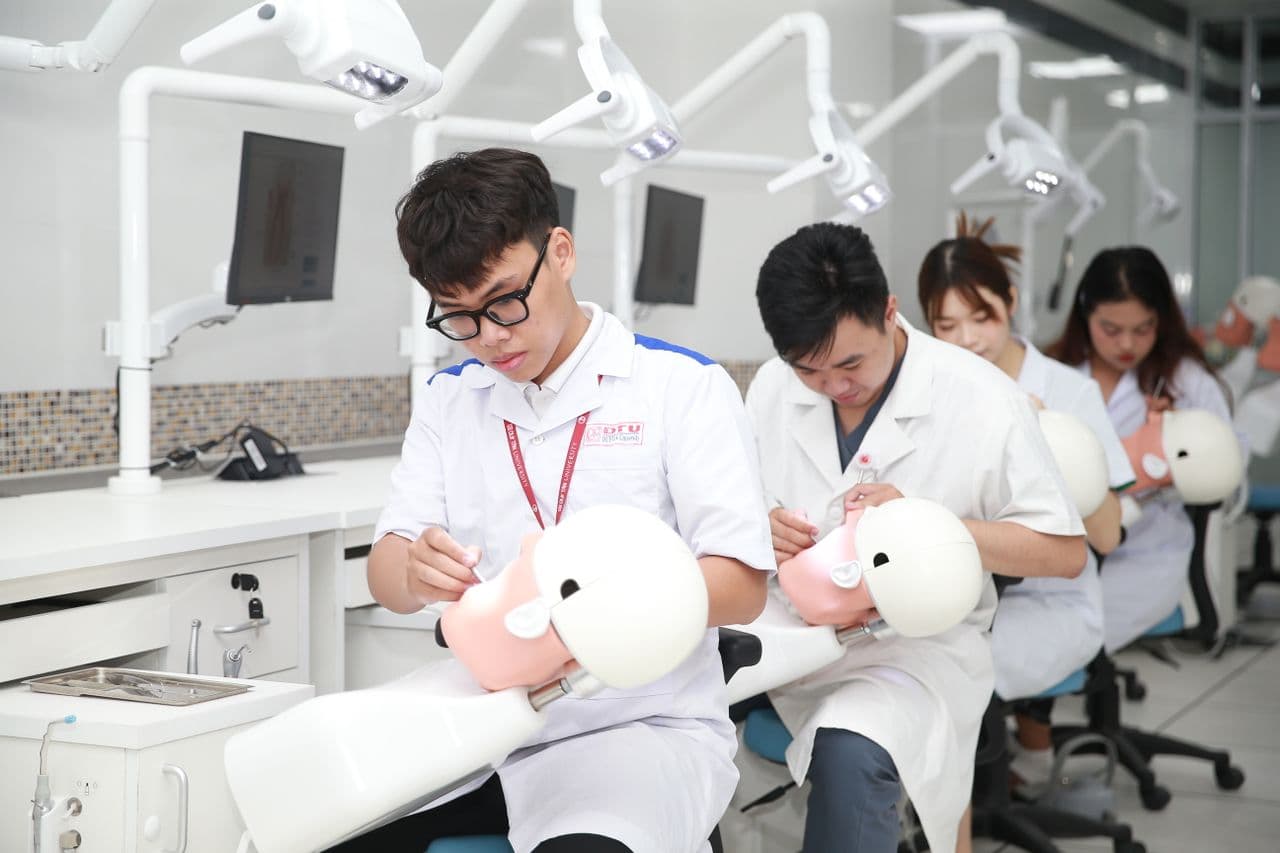
Figure 2: The 2025–2026 cohort of vocational and technical high school students at Gaziantep City Hospital, where the practical training takes place

Impact
Sustainability Impact
Climate
The programme does not abate emissions directly and no greenhouse gas figure is reported for it against Scope 1, Scope 2 or Scope 3. Its climate relevance is as an enabler, and it sits in the technical skills base rather than in the emissions inventory.
Three of the five occupational fields covered — industrial automation, air conditioning and installation, and maintenance and repair — are the trades that determine how efficiently a large building's energy systems are commissioned, operated and maintained over their working life. Placing 120 students in those fields inside an operating hospital during the 2025–2026 academic year, with 50 per cent of graduating students moving into employment, supplies technical labour into occupations that the healthcare sector reports as short of qualified people, and the quality of that labour is one of the determinants of a building's operational energy use.
The wider reporting frame is the group's rather than the programme's. Group sustainability performance is reported through CDP and in line with ISSB IFRS S1 and S2 and TCFD with independent third-party external assurance, and the multi-stakeholder structure connects the programme to the group's sustainability-linked financing relationship with the EBRD.
The programme is not designed to develop green skills, and no assessment of an enabling emissions effect has been carried out.
Social
The 2025–2026 intake drew 131 applications. By the end of November 2025, 117 students had been accepted, and the full quota of 120 students was reached in December 2025. The programme allows up to 17 master trainers, 12 principal and 5 reserve; the training is delivered by the 12 principal trainers, an average of 10 students per trainer.
40 of the 120 students are female, a share of 33 per cent. The distribution across occupational fields is uneven and the company reports it as such: no female student enrolled in industrial automation, air conditioning and installation, or maintenance and repair, which the company attributes to the gender composition of the vocational school pipeline rather than to the design of the programme, while female participation reached 48 per cent in information technology and 60 per cent in food and beverage.
50 per cent of graduating students moved into employment, which is the outcome the programme is designed around: employability rather than completed placement hours.
Capacity building runs in parallel for the adults in the system. Teachers and master trainers receive development so that the supervision quality does not depend on individual goodwill, and the hospital units gain a structured way of working with young people on site.
Measurement follows a social impact and project monitoring approach. The digital monitoring platform, monthly master trainer assessments, attendance tracking, performance feedback, coordination meetings and site observation are the instruments in use. From April 2025 to February 2026 the indicators tracked were the number of students admitted, the share of female students, attendance, the number of students per department and per trainer, and employment after graduation. Monthly progress reports, digital platform records, master trainer assessments, coordinator teacher feedback and stakeholder meetings form the reporting cycle.
Business Impact
Benefits
The hospital gains a qualified talent pool that has already been trained inside its own units, which shortens recruitment and induction time compared with hiring from the open market. 50 per cent of graduating students moved into employment, so the pipeline converts rather than dissipating.
Operating units gain additional trained hands under supervision, and the departments that host students develop a working practice for integrating young technical staff, which is a capability the hospital keeps after the cohort leaves.
For the group, the programme builds a long-term human resources channel into scarce technical occupations and gives its social impact reporting outcome data rather than activity data. The multi-stakeholder structure also connects the programme to the group's sustainability-linked financing relationships.
Schools obtain current field experience that feeds back into teaching, and the public education authority obtains a working model that can be applied elsewhere without new legislation.
Costs
The cost base is operational rather than capital. It consists of capacity planning and unit-by-unit placement design, master trainer time released from productive work, coordinator teacher time, occupational health and safety induction and protective equipment for minors on an operating hospital site, the digital monitoring platform, monthly progress reporting, and the coordination meetings that hold four institutions in step.
No separate physical infrastructure is required, because training takes place inside operating hospital units. That is the main reason the model is affordable, and also the main constraint: intake size is limited by how many students each unit can supervise safely at once, not by how many want to join.
Costs are contained by working inside the public vocational training centre framework, so accreditation, curriculum alignment and student status follow existing public mechanisms rather than a parallel private scheme, and by developing the training content and monitoring platform in-house through the group's own academy.
The total programme budget, the cost per student and the split of costs between the company and the public education system are not disclosed, for reasons of commercial confidentiality.
Impact Beyond Sustainability And Business
Co-benefits
Schools receive current field experience from the units their students work in, which updates teaching content that would otherwise drift away from practice.
The hospital develops a working culture for hosting young technical staff, and the departments involved gain supervision experience that transfers to apprentices and new recruits generally.
The public education authority obtains a tested workplace learning model that other employers can adopt within the existing vocational training centre framework, which extends the benefit well beyond one hospital and one group.
Potential side-effects
Student attendance is the most persistent risk. Practical training four days a week competes with school, family circumstances and travel, and a placement that a student cannot sustain produces neither skills nor employment. Attendance is therefore tracked directly on the digital platform rather than reported at the end of term.
Site safety is the second. An operating hospital contains sterilisation, imaging and maintenance environments with real hazards, and hosting minors in them requires induction, supervision ratios and equipment that a classroom does not.
Coordination between departments, master trainer capacity and holding the same quality standard across locations are the constraints on scaling. They are managed through training, the master trainer system, coordinator teachers, regular stakeholder meetings and the digital monitoring platform, but they set a practical ceiling on how quickly the model can be rolled out.
There is also a dependency risk in the governance itself. The model works because a ministry, a children's rights agency, a development bank and a company hold it together; a version assembled without the public education authority would lose the accreditation that makes the placement count towards the student's qualification.
Implementation
Typical Business Profile
The model suits companies operating large multi-function sites — hospital campuses, energy facilities, technical maintenance depots, industrial automation environments and large service operations — where the occupations taught in vocational schools exist as live functions with qualified staff already present.
It is most relevant in countries with a formal vocational education framework that allows workplace-based training to count towards a student's qualification, because the public education authority has to be a partner rather than an observer for the placement to carry accreditation.
Delivery engages site operations, human resources development, sustainability and social impact, occupational health and safety, and documentation functions working to a shared placement and reporting cycle. The maturity required is moderate: an employer that already runs structured on-the-job induction has most of the ingredients.
Approach
Select a site with genuine technical depth: Choose an operating facility where the occupational fields taught in vocational schools exist as live functions — here technical services, sterilisation, imaging, information technology, food and beverage, air conditioning and installation, and maintenance and repair — so that students work on the tasks their curriculum describes.
Bring the education authority in before design, not after: Agree the vocational training centre framework, regulatory compliance, official approvals and school coordination with the Ministry of National Education and the Provincial Directorate of National Education, so the placement counts towards the students' formal qualification rather than sitting outside it.
Fix the inclusion criteria at the selection stage: Build the school and department lists together with a child rights and social inclusion partner and set an explicit expectation for the participation of female students, because occupational segregation is determined at intake and cannot be corrected later in the cycle.
Size the intake to supervised capacity, not to demand: Map how many students each operating unit can supervise safely at one time before opening applications — 131 applications were narrowed to 117 acceptances by the end of November 2025 and to the full quota of 120 in December 2025.
Appoint named supervisors on both sides: Assign a master trainer in each operating unit and a coordinator teacher in each school, so that every student has one person accountable for the workplace experience and one for the curriculum link.
Put the placement on a digital platform from the first day: Record training, site placement, attendance and performance development in a single monitoring system that the school, the operating unit and the group all read, so problems surface within the month rather than at the end of the year.
Run a fixed feedback cycle during the year: Hold monthly master trainer assessments, department-level student interviews, coordinator teacher evaluations, site visits and stakeholder coordination meetings, and use the output to adjust placements and content while the cohort is still in place.
Report employability, not attendance alone: Track students admitted, the share of female students, attendance, students per department and per trainer, and employment after graduation, and feed the results into corporate sustainability and social impact reporting so the programme is judged on outcomes.
Stakeholders Involved
Project leads: Senior management sponsors the programme and holds it inside the group's sustainability, social impact, human resource development and inclusive growth priorities rather than inside a single site budget, which is what keeps it running between academic years.
A project coordination team carries the standing work: student placement, site integration, training follow-up, performance assessment, documentation and stakeholder coordination. Regular coordination between the group, the hospital management and the institutional partners keeps the initiative on a corporate and strategic footing rather than an operational one.
Company functions: Sustainability and social impact, human resources development, hospital management and the operating units — technical services, sterilisation, imaging, administrative units, patient support services, information technology, food and beverage, air conditioning and installation, and maintenance and repair — work to a shared placement and reporting cycle.
Master trainers inside the units supervise students on the floor and submit monthly assessments. The group's academy holds the training content and the digital monitoring platform that carries placement, attendance and performance records for every participant.
Main providers: Training content, occupational health and safety induction and the digital monitoring platform are provided in-house through the group's own academy rather than bought as a service, which keeps the material aligned with the units where students are actually placed and avoids a dependency on an external platform for the programme's core record.
Other: UNICEF contributed to the design of the programme, to building the school and department lists, to strengthening the social impact approach and to holding the inclusion focus in place as the intake was assembled.
The Ministry of National Education and the Provincial Directorate of National Education took on the vocational training centre processes, regulatory compliance, official approvals and school coordination. The EBRD brings the sustainability-linked finance perspective that connects the programme to the group's wider funding relationships.
Schools, coordinator teachers, master trainers, students and the local community in Gaziantep complete the group of participants. Feedback runs through regular coordination meetings, department-level student interviews, coordinator teacher evaluations, master trainer reports, site visits and the digital monitoring platform, and is used to adjust student continuity, performance development, site integration and training quality.
Key Parameters To Consider
The baseline year is 2025 and the reported period runs from the opening process in April 2025 to February 2026, covering the 2025–2026 academic year. The programme is therefore in its first full cycle, and results beyond the first cohort are stated as intentions rather than achievements.
Intake capacity is set by supervised places in operating units, not by applications received. That relationship is the single most useful planning parameter for anyone copying the model.
The stated development path is to strengthen the quality and monitoring infrastructure of the current application in the short term, to bring other group companies into the programme in the medium term, and for the model to become a reference application in the vocational education ecosystem in the longer term. These are targets, not results.
The transferable settings are healthcare campuses, energy facilities, technical maintenance units, industrial automation environments and service sector operations, provided a public education authority can accredit the placement.
Implementation And Operations Tips
Designing the intake for inclusion is more effective than correcting it afterwards. The share of female students was addressed at the school and department selection stage, with a social inclusion partner in the room, which is why participation held up in the two fields where the vocational school pipeline made it possible at all.
Digital monitoring is what separates this from an internship. Without a shared record, attendance and performance are reported by whoever has the least incentive to report them accurately, and the programme cannot be evaluated until the year is over.
Named accountability on both sides is a small design choice with a large effect. One master trainer in the unit and one coordinator teacher in the school removes the ambiguity that causes placements to lapse quietly.
Employment after graduation should be an indicator from the beginning. Counting placements is easy and tells nobody whether the model works; counting the students who moved into jobs is the measure that justifies the supervision cost to the operating units.