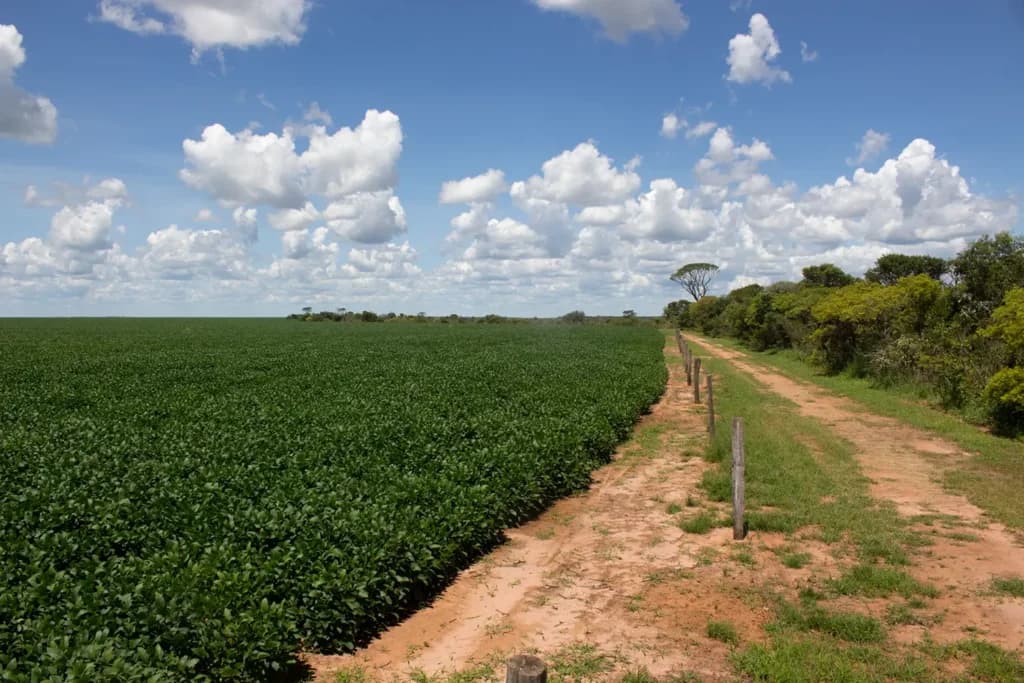
Accelerate DCF soy production in the Brazilian Cerrado
 WBCSD
WBCSD总结
The Farmer First Clusters (FFC) initiative supports Brazilian soy farmers in adopting deforestation- and conversion-free practices, enhancing sustainability and productivity
Context
The Brazilian Cerrado is both a globally significant biome – recognized as the world’s most biodiverse savanna – and a major soy-producing region. It faces intense pressure from agricultural expansion, with deforestation rates that exceed those of the Amazon. Although Brazil’s Forest Code requires the preservation of 20% to 35% of rural properties in the Cerrado as legal reserves, most deforestation occurs legally on the remaining portions of land not designated for conservation. Agricultural activities are the primary drivers of this deforestation. At the same time, the Cerrado contains an estimated 22.57 million hectares of degraded lands and pastures that could be repurposed for agricultural production, particularly integrated farming, reducing the need to clear native vegetation (1). Given the Cerrado’s ecological vulnerability and its critical role in global food systems, it represents a key opportunity for regenerative transformation.
Through the FFC, agribusinesses fund local implementing partners to work with producers to advance sustainable farming outcomes in soy sourcing regions at-risk of deforestation. The FFC identified four priority landscapes - Western Mato Grosso, Southern Maranhão, Tocantins and Western Bahia - through assessments of the soy area over deforested and converted land after 31 December 2020.

Solution
The Farmer First Clusters (FFC) initiative, founded by five major agri-business companies as part of WBCSD’s Soft Commodities Forum (SCF) landscapes transformation efforts, aims to accelerate the adoption of sustainable deforestation- and conversion-free (DCF) soy production in Brazil’s Cerrado biome. The design of the landscape interventions from this initiative aims to be scalable and replicable, with a target of reaching over 2 million hectares of farmland and 400,000 hectares of native vegetation conserved by 2027.
The FFC’s five solutions aim to provide the right mix of incentives, technical assistance and alternatives to agricultural expansion to support sustainable production while balancing the opportunity cost of producers to legally convert native vegetation for soy production:
IPAM, through its CONSERV program in Mato Grosso and Maranhão, provides direct payments to producers in exchange for commitments to conserve areas of surplus legal reserves, beyond the requirements of the Brazil Forest Code, as a form of payment for ecosystem services.
Parque Vida Cerrado helps producers in Bahia monitor biodiversity and restore native vegetation in degraded areas through its Conecta Cerrado project.
Produzindo Certo provides technical assistance in all FFC regions. It assesses each farm’s compliance with local regulations and supports farmers in producing more sustainably through carbon accounting and Roundtable on Responsible Soy (RTRS) certification.
Solidaridad supports producers in Tocantins with the implementation of integrated crop–livestock–forest systems in degraded pastureland through its Integra Campo project.
Rede ILPF supports farmers in Mato Grosso in the implementation of integrated crop–livestock systems that increase productivity, reduce input costs, enhance soil and water health, and improve climate resilience. The project includes ESG monitoring, facilitates access to sustainable finance and provides training to technicians, producers and students.
Figure 1 : The Farmer First Clusters initiative works in collaboration with five diverse on-the-ground implementing partners that help advance our sustainable soy production goals in the Cerrado.

Impact
Sustainability impact
Climate
The FFC targets Scope 3 emissions, focusing on maintaining carbon stocks and avoiding emissions. As of September 2025 the farms enrolled have maintained 613,036tons of CO2eq in protected forests and potentially avoided 2.2 million tons of CO2eq emissions.
Nature
The initiative has 310,848 ha of native vegetation areas enrolled, with 47,670 hectares of surplus legal reserve (SLR) enrolled and over R$5 million to be paid to farmers for protecting SLR areas between 2024-2026 and 220 hectares of degraded pastures under native vegetation restoration.
Starting from 2025, carbon, water quality analysis and soil health analysis is being implemented.
Social
The FFC aims to improve farmers' economic outcomes by providing financial support and technical assistance, leading to increased productivity and income. The initiative also promotes social inclusion by engaging local communities and ensuring compliance with labor laws.
Starting from 2026, the initiative will also measure producers' levels of satisfaction and perceptions of changes in quality of life.
Business impact
Benefits
The FFC supports farmers' in creating alternative business models to enhance their productivity and income, reduce input costs, and improve market access. It also supports the resilience of soy supply chains and helps businesses meet their sustainability goals.
Costs
SCF members have committed up to USD $7.2 million for a 3-year pilot of the FFC. As of July 2025, USD $11.9 million has been deployed in FFC priority landscapes through co-funding between the SCF, the Consumer Goods Forum Forest Positive Coalition, the Land Innovation Fund and other value chain actors.
Implementation
Typical business profile
The initiative is most relevant for soy farmers in the Brazilian Cerrado, particularly those in regions at-risk of deforestation and conversion.
The initiative is relevant to ag&food companies who aiming to mitigate deforestation and conversion with sustainable landscapes transformation in their value-chains.
Medium maturity on the net zero journey
Approach
Engage producers through the commercial teams of the businesses and tailored outreach.
Participating farms must comply with Brazil’s Forest Code and commit to DCF and sustainable land-use practices. Additionally, the farms must comply with anti-slavery work laws and not be blacklisted for working conditions. Each of the four distint intervention areas has additional eligibility and compliance criteria.
Provide financial compensation for surplus legal reserves, technical assistance, native vegetation restoration, and support for integrated crop-livestock-forest systems.
Monitor progress and ensure compliance with environmental and labor regulations.
Stakeholders involved
Project Leads: Soft Commodities Forum, WBCSD, Member Companies (
Archer Daniels Midland (ADM), Bunge, Cargill, COFCO International, Louis Dreyfus Company (LDC))
Company functions: Agribusinesses, financial institutions
Main providers: Amazon Environmental Research Institute (IPAM), Parque Vida Cerrado, Produzindo Certo, Rede ILPF, Solidaridad,
Other: Brazilian Association of Vegetable Oil Industries (ABIOVE), Consumer Goods Forum Forest Positive Coalition (CGF FPC), Tropical Forest Alliance (TFA).
Key parameters to consider
Initiative maturity: early stage project started in 2023 with a first pilot phase between 2023-2027
Technical constraints: engagement of farmers, and finding financial intermediary (in this case ABIOVE)
Implementation and operations tips
In addition to challenges with producer engagement, the initiative faces other key challenges. These include accurately measuring carbon additionality and ensuring long-term adherence to DCF commitments. The shorter-term producer contracts and DCF pledges used in the initial pilot program and the technical complexity of carbon accounting may present barriers in achieving lasting impact.
Farmer engagement for sustainable and regenerative initiatives, especially in at-risk areas, is challenging. By leveraging the commercial networks of engaged companies and providing a strong, multi-layered set of incentives and solutions to producers, the FFC has demonstrated an effective model for engaging farmers on the ground.
Going further
External links
Source list