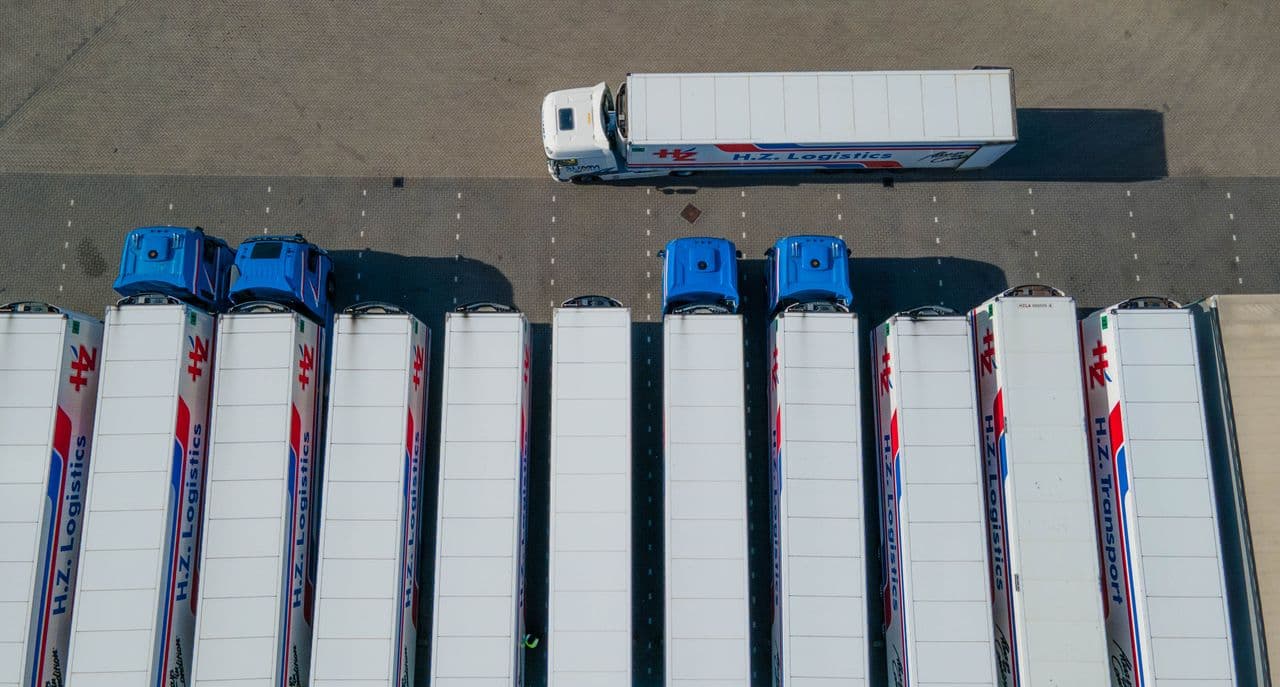
Convert fleet vehicles to LPG to cut transport emissions
 SKD Türkiye
总结
A corporate vehicle fleet is converted from diesel and petrol to LPG, cutting fuel consumption, running costs and emissions at a low cost per vehicle.
Context
Submitted through the COP31 Sustainable Transformation Awards · SKD Türkiye (WBCSD Global Network Partner)
The company is an energy business distributing liquefied petroleum gas (LPG) in Türkiye, employing between 251 and 1,000 people.
LPG occupies an unusual position in the energy transition. It is a fossil fuel, but it is affordable, physically available through an existing retail network and usable without replacing the equipment that burns it, which makes it a transition option in markets where electrification is slow or costly. The 2025 G20 summit declaration described LPG explicitly as a clean cooking fuel and acknowledged the role it can play as a transition fuel, particularly in Africa (1).
That argument is easy to make and harder to demonstrate. A distributor that promotes autogas as a lower-emission alternative to petrol and diesel is exposed to the obvious question of what it burns in its own vehicles.
The company's own fleet ran on diesel and petrol. In 2025 it began converting that fleet to the fuel it sells, treating its own vehicles as the proof case for the product rather than as a separate procurement matter. The fleet numbers 258 vehicles.
The stated aim reaches beyond the company's own fuel bill: to build a documented corporate example that other fleets in the group and in the wider market can copy, and so raise the rate at which existing vehicles are converted rather than replaced.
Fleet data feeds the company's climate disclosure through its CDP reporting.
Location of the initiative: Türkiye — corporate vehicle fleet operating nationwide
Solution
The approach is retrofit rather than renewal. Instead of waiting for the fleet replacement cycle and buying different vehicles, conversion kits are fitted to the diesel and petrol vehicles already in service, so the emission reduction is available immediately and the existing asset keeps its remaining life.
Conversion is carried out with an established international LPG conversion kit manufacturer and its national distributor, an engineering company specialising in autogas installation. The partnership is built around the manufacturer's quality and safety standards for the installation itself, which is the part of the model most likely to fail if it is treated as a commodity purchase.
Refuelling needs no new infrastructure. Converted vehicles use the public autogas station network that already exists for private motorists, so the model carries none of the depot construction, grid connection or charger investment that other low-carbon fleet options require.
Roll-out is phased. The programme began in 2025. At the time the initiative was submitted, 70 of the 258 vehicles, covering both diesel and petrol models, had been converted; by the time the emission results were compiled, 85 diesel-gasoline vehicles had been completed. The company targets conversion of the entire fleet by the end of 2027.
The investment is small and granular. Conversion costs on average about TRY 60,000 per vehicle, which means the programme can be approved and funded in increments rather than as a single capital decision.
The emission result is calculated as a net difference rather than as avoided diesel alone, so the fuel that replaces the diesel is charged against the saving.
Figure 1: Progress towards converting the 258-vehicle fleet: 85 diesel and petrol vehicles converted so far, giving approximately 40 tonnes of CO2e a year, with full fleet conversion targeted for 2027 and expected to deliver approximately 126 tonnes of CO2e a year.

Figure 2: The five steps of the emission calculation: baseline diesel consumption, the CO2 emissions from that diesel, conversion and monitoring of LPG use, the CO2 emissions of the LPG consumed, and the net reduction that remains after the two are compared.

Impact
Sustainability impact
Climate
The initiative targets Scope 1 emissions from the company's own vehicle fleet, which is the fuel burned in vehicles it owns and operates.
The conversions completed so far cover 85 diesel vehicles and have removed approximately 142,000 litres of diesel from fleet consumption. The associated reduction is approximately 40 tonnes of CO2e.
The calculation is a displacement comparison in three steps. The tonnes of CO2e associated with the volume of diesel no longer consumed are calculated; the tonnes of CO2e arising from the LPG that the converted vehicles now consume are calculated; and the difference between the two is recorded as the reduction. The reported figure is therefore net of the substitute fuel, not gross avoided diesel, which is the conservative way to state a fuel-switching result.
When the full 258-vehicle fleet has been converted, which the company targets for the end of 2027, approximately 126 tonnes of CO2e is expected to be avoided. That figure is a target attached to a future state of the fleet, not a result achieved to date.
Emissions performance from the fleet is reported through the company's CDP climate disclosure.
Social
The same fuel carries a social argument outside the transport application. In many geographies LPG in cylinder form replaces traditional cooking fuels, which reduces household exposure to combustion smoke and lowers the fuel-gathering burden that falls disproportionately on women. The 2025 G20 summit declaration recognised that role at international level for the first time.
Inside the transport application, the social contribution is demonstration rather than direct benefit. The company's stated purpose is to make the conversion route visible and credible to other corporate fleet operators, starting with the group of companies it belongs to, so that a low-cost emission reduction becomes normal practice rather than a specialist choice.
Set against a national parc of 5.4 million petrol cars, the company argues that widespread conversion would also carry a material national economic benefit through reduced fuel expenditure, on the Turkish Statistical Institute's figure for the national petrol car parc.
Business impact
Benefits
Fuel expenditure falls significantly. Turkish LPG market data shows that LPG-powered vehicles travelled approximately 58 billion kilometres in 2025, generating an estimated USD 3.3 billion fuel market. Covering the same distance with petrol vehicles would have required approximately 4.7 billion litres of petrol, corresponding to a fuel expenditure of nearly USD 4.9 billion. This indicates an annual economic advantage of roughly USD 1.6 billion, with LPG providing around 34% lower fuel costs compared to petrol.
Maintenance expenditure remains low and predictable. A typical driver travelling 15,000 km per year requires LPG system maintenance approximately every 10,000 km, with servicing costs ranging between TRY 3,000 and 3,500.
The capital requirement is unusually low for a fleet decarbonisation measure. LPG conversion costs are approximately TRY 60,000 per vehicle, while avoiding the need for premature vehicle replacement and associated write-offs.
The economic case is supported by a clear payback period. An LPG vehicle consuming 10 litres per 100 km incurs annual fuel costs of approximately TRY 40,000, compared with around TRY 60,000 for an equivalent petrol vehicle. Based on these savings, the conversion investment can be recovered in approximately 38 months.
There is also a strong commercial dimension. Fleet operators adopting LPG create tangible references for other customers considering conversion. For example, 40 vehicles operating within a ride-hailing platform's commercial taxi fleet have become fuel card customers, generating approximately 84,000 litres of additional monthly LPG sales. Similar fleet adoption opportunities are expected to support future customer growth while demonstrating the practical and economic benefits of LPG use.
Costs
The direct cost is the conversion itself, on average about TRY 60,000 per vehicle, covering the kit and its installation to the manufacturer's standards.
The saving is not automatic. It depends on the relative pump price of LPG and petrol, which the company does not control, and on the annual distance each vehicle covers — a lightly used vehicle recovers the conversion cost far more slowly than an intensively used one.
There are technical dependencies. Not every vehicle in a mixed fleet is a sensible candidate, and installation quality determines both safety and the fuel consumption actually achieved, which is why the model is built around an established kit manufacturer and a specialist installer rather than the lowest-cost fitter.
Operationally, converted vehicles depend on the public autogas station network being available on the routes the fleet drives. Where that network is thin, the model does not work without depot refuelling investment that would change the cost case.
Costs are contained by converting in phases across budget years, by starting with the vehicles that consume the most fuel, and by retaining existing vehicles instead of replacing them.
Impact beyond sustainability and business
Co-benefits
The model is portable. It needs no proprietary technology, no site works and no fleet renewal budget, so any organisation with an internal combustion fleet in a market with autogas retail coverage can copy it. The company's declared intention is to transfer the experience to the wider group of companies it belongs to and to other corporate fleets in the country.
Converted vehicles retain their petrol system, so the fleet keeps operational flexibility where autogas coverage is thin.
Because the vehicles are kept rather than scrapped, the measure avoids the embodied emissions of manufacturing replacement vehicles — a benefit that a switch to new low-emission vehicles does not deliver.
Potential side-effects
LPG remains a fossil fuel. The measure reduces combustion emissions relative to diesel and petrol; it does not remove them, and the case rests on it being a transition step rather than an end state. An organisation that converts its fleet still has a combustion fleet, and the risk is that a cheap partial reduction is allowed to displace planning for a deeper one.
The reduction is smaller than a gross avoided-diesel figure would suggest, because the LPG burned by the converted vehicles is subtracted from it. Any organisation copying the model should calculate the same way, or the reported saving will be overstated.
Conversion introduces a pressurised fuel system into vehicles that were not designed with one, which places weight on installation quality, periodic inspection and driver awareness. This is managed through the kit manufacturer's approval standards and a specialist installer, but it is a real ongoing obligation rather than a one-off check.
Finally, the commercial case moves with fuel prices. If the price gap between LPG and petrol narrows, the financial argument weakens even though the emission argument does not.
Implementation
Typical business profile
The model suits organisations that operate their own light vehicle fleets — sales, service, distribution and field operations — in countries with an established public autogas refuelling network.
It is most relevant where vehicles cover high annual distances, because the saving per vehicle scales with fuel consumed, and where the fleet is mid-life, since retrofit competes directly with early replacement.
Delivery engages fleet and administrative services, sustainability, commercial management and finance, and requires an external conversion partner rather than an internal technical capability.
Approach
Put ownership above the fleet function: Assign the decision jointly to a commercial director and the sustainability function under the general manager, so the conversion is governed as a strategy commitment with a completion date rather than as a routine vehicle procurement item.
Build the fleet baseline first: Record every vehicle by fuel type, annual distance and role together with its fuel consumption before conversion, because the reduction is measured as a difference against that record and the priority order depends on it.
Select the conversion partner on installation standards, not price: Work with an established conversion kit manufacturer and its national distributor, and require that every installation meets the manufacturer's quality and safety requirements, since installation quality determines both safety and the consumption actually achieved.
Convert in phases, highest consumption first: Schedule conversions across budget years starting with the vehicles that burn the most fuel, which delivers the largest share of the saving early and keeps enough of the fleet available for operations at any one time.
Budget per vehicle rather than per programme: Plan on a conversion cost of the order of TRY 60,000 per vehicle so that the investment can be approved incrementally and does not require a single capital decision covering the whole fleet.
Verify refuelling coverage on the routes actually driven: Check autogas station availability along the fleet's real operating pattern before converting a vehicle group, because the model's advantage is that it needs no depot infrastructure and that advantage disappears where retail coverage is thin.
Calculate the reduction as a net difference: Convert the volume of displaced diesel into tonnes of CO2e, calculate the tonnes of CO2e from the LPG the converted vehicles now consume, and record the difference, so the reported saving is net of the substitute fuel.
Publish the result and hand the method on: Report the fleet data through the company's climate disclosure and share the operating experience, conversion cost and measured consumption with other fleets in the group and in the market, so the model spreads beyond one organisation.
Stakeholders involved
Project leads: The project runs with the general manager informed and with joint ownership held by the deputy general manager responsible for sales and the sustainability director. Pairing the commercial and sustainability functions is deliberate: the fleet is simultaneously an emission source and a demonstration of the company's own product, and neither function could have carried the decision alone.
Company functions: Fleet and administrative services identify candidate vehicles and manage the conversion schedule against operational availability. The sustainability function sets the measurement method and consolidates the fuel and emission data into the company's climate disclosure. Commercial management uses the converted fleet as a working reference with customers. Finance approves the conversion budget in increments across the roll-out period.
Main providers: Conversion kits are supplied by an established international manufacturer of LPG conversion equipment, and installation is carried out by its national distributor, an engineering company specialising in autogas conversion. The provider has no influence over project design or the decision-making mechanism; its contribution is execution experience and technical knowledge, with the company retaining the schedule, the vehicle selection and the measurement method.
Other: The wider group of companies to which the adopting company belongs is the intended first audience for replication, followed by other corporate fleet operators in the national market. The company's climate disclosure process brings external reporting requirements into the measurement design.
Key parameters to consider
The measure is a retrofit, so it is independent of the fleet replacement cycle and can be applied to vehicles at any point in their life. That is what makes it fast: the programme started in 2025 and targets the full 258-vehicle fleet by the end of 2027.
Unit economics dominate. Conversion costs about TRY 60,000 per vehicle and delivers up to 25 per cent lower fuel cost against petrol operation, so the return on each vehicle is a function of its annual distance.
Two external conditions decide whether the model transfers: a public autogas refuelling network on the fleet's operating routes, and a regulatory framework that permits and inspects vehicle conversion. Neither is within the adopting company's control.
The measurement boundary is Scope 1 fleet fuel only. Upstream fuel production emissions are not part of the reported figure.
Implementation and operations tips
Report the reduction net of the replacement fuel. Subtracting the LPG burned from the diesel displaced produces a smaller number than a gross avoided-fuel figure, but it is the number that survives scrutiny.
Sequence by fuel consumption, not by vehicle age. The vehicles that deliver most of the saving are the ones that drive the most, and they are not necessarily the oldest.
Treat installation as the technical risk. The kit is a commodity; the installation is not. Tying the programme to the manufacturer's approved standards and a specialist installer removes the failure mode that would otherwise end the programme after a single incident.
Use the fleet as evidence, not as an argument. A distributor converting its own vehicles answers a credibility question that no amount of external communication can address.
Be explicit that this is a transition measure. Publishing the conversion result alongside a longer-term plan prevents a cheap partial reduction from being read as a completed answer.