Decarbonise billet production with recycled aluminium
 ASAŞ ALÜMİNYUM SAN. TİC. A.Ş.
 SKD Türkiye
总结
Billet cast from post-consumer scrap and renewable-powered primary metal cuts the product carbon footprint by about 60 per cent with no loss of mechanical strength.
Context
Submitted through the COP31 Sustainable Transformation Awards · SKD Türkiye (WBCSD Global Network Partner)
ASAŞ Alüminyum Sanayi ve Ticaret A.Ş is an aluminium manufacturer in Türkiye employing more than 1,000 people and supplying extrusion products to the automotive, rail systems, construction and industrial sectors.
Producing aluminium from ore is one of the most energy-intensive routes in metals manufacturing and carries a correspondingly high carbon burden. Billet, the input to the extrusion process, therefore arrives at the press with most of its footprint already fixed, and any reduction made downstream is marginal by comparison.
Regulation and market demand moved at the same time. The European Green Deal and the Carbon Border Adjustment Mechanism, together with Türkiye's 2053 net zero emission target and the demand from European customers for products with a low carbon footprint, obliged producers to develop sustainable solutions. The Green Industry Roadmap increased demand for low-carbon products in the automotive, rail systems, industrial and construction sectors.
The company has integrated sustainability into its corporate strategy since 2019 through a prioritisation matrix and double materiality analyses. Emission management and the climate crisis, energy management, circularity, and research and development were identified among the highest priority topics, and the low-carbon billet was positioned as a strategic project on that basis.
Research and development work began in 2022. The product was presented to sector professionals at ALUEXPO in October 2023, with the launch taking place at the 11th International Aluminium Symposium held at the same time in collaboration with TALSAD, TÜBİTAK MAM and METEM. The product was registered in 2024. At the Strategic Management Workshop held in January 2025 for the 2025-2029 period, reduction of the carbon footprint was again assessed among the Board of Directors' core priorities and the project was confirmed as strategic.
Location of the initiative: Türkiye, with the product supplied into European markets.
Solution
NexAl is an aluminium billet produced to the same alloy specifications as conventional billet but from a substantially different input mix, so that the carbon footprint falls without the downstream process changing.
Three input changes produce the result. Post-consumer scrap use was raised to 54-55 per cent; primary aluminium produced with renewable energy is used for the remainder; and internal scrap generated in the company’s own processes is recovered back into the melt.
The product was developed first for the 6XXX alloy series, with EN AW-6082 as the reference alloy, because that series covers the majority of extrusion applications in automotive, rail systems, construction and industrial use.
Verification was built in rather than claimed. The carbon footprint was calculated with a life-cycle approach based on internationally accepted methodologies, and the environmental performance of the product was verified with an Environmental Product Declaration. Chemical composition is tested to TS EN ISO 573-3 and mechanical performance to TS EN ISO 755-2.
The output is a billet rather than a finished part, which is what makes it scalable: every extrusion profile drawn from that billet inherits the lower footprint, so the change applies across the product range instead of to a single item.
The product has been registered as a trademark in Türkiye and Europe, the Environmental Product Declaration has been completed and the approach has been integrated into corporate production processes, moving from research and development into series production.
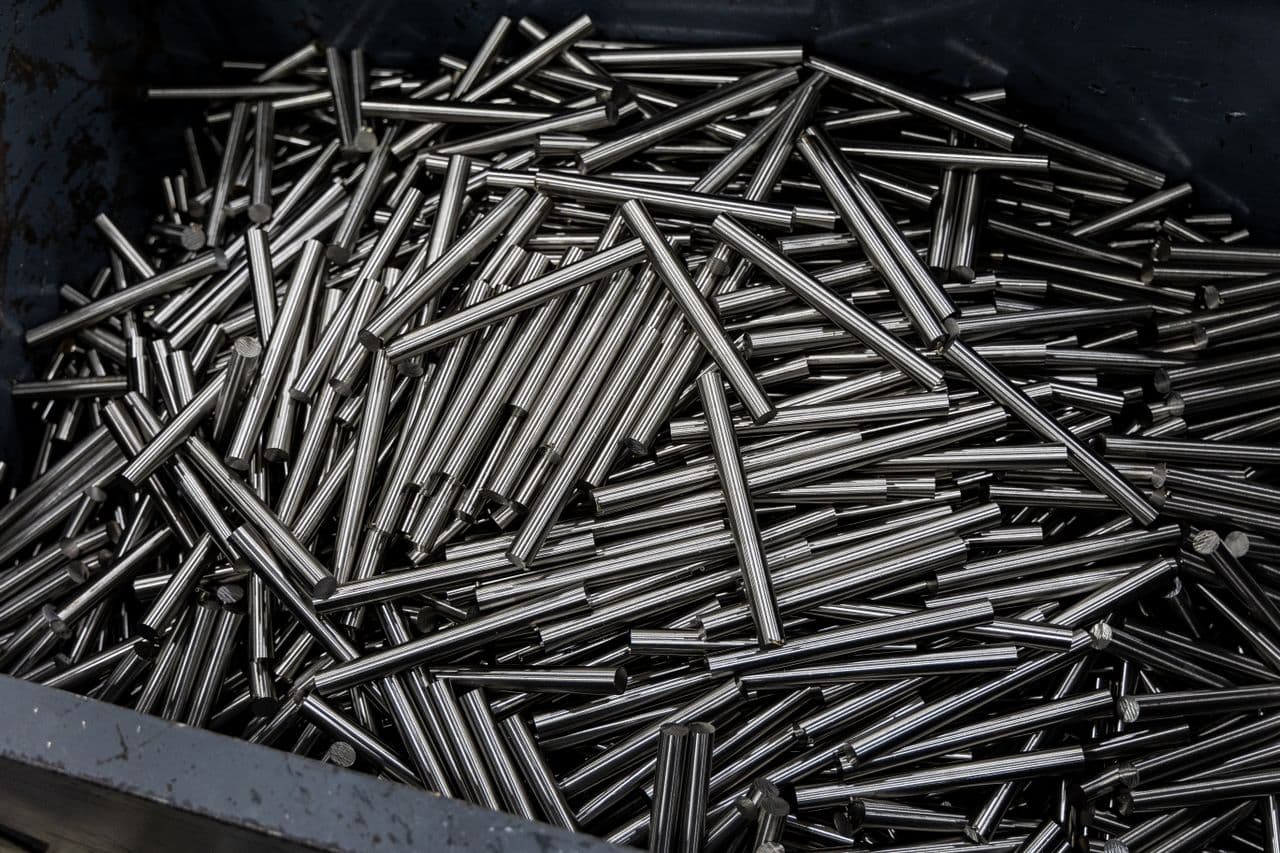
Figure 1: nexAL, the low-carbon aluminium billet developed under the programme.

Impact
Sustainability Impact
Climate
The reduction is measured at product level using a life-cycle approach and verified through an Environmental Product Declaration, rather than being allocated to a single emissions scope in the company's own inventory.
Before the project, aluminium billet carried a carbon footprint of 9-10 kgCO2e/kgAl. After the change the value was brought below 4 kgCO2e/kgAl, a reduction of approximately 60 per cent against the sector average of 10 kgCO2e/kgAl.
Figure 2: nexAL low-carbon billet, supplied with an Environmental Product Declaration and a carbon footprint of 4 tCO2e per tonne of aluminium or less.

Most of that reduction sits in purchased raw material, which is a Scope 3 matter for the company, and the billet in turn lowers the Scope 3 footprint of the customers who extrude it.
The company states that this is the first time in Türkiye that 6XXX series aluminium alloys have been developed with a carbon footprint below 4 kgCO2e/kgAl.
Impact data has been monitored regularly from pilot production onwards across the 2023-2026 period, through process data, laboratory tests, quality control records and the Environmental Product Declaration verification process.
Nature
Producing billet from post-consumer scrap rather than from ore reduces demand for ore extraction and for the refining and smelting stages that follow it, which is where the land disturbance, residue and water impact of aluminium production are concentrated.
Recovering internal scrap back into the melt closes the material loop inside the plant, so process losses re-enter production instead of leaving as waste.
A recycled feedstock share of 54-55 per cent, combined with the Environmental Product Declaration and a traceable production model, is how the circular economy claim is made verifiable rather than descriptive.
Social
Lower production emissions contribute to better air quality and to reduced environmental health risk around production, which the company records alongside the climate result.
Knowledge was distributed rather than held. Training was organised for the relevant teams inside the company through ASAŞ Akademi, and customers, suppliers and business partners were briefed on the low-carbon billet approach.
The application was published as an example in Eko Yapı Dergisi and presented at national and international exhibitions, which supports awareness of low-carbon material options among the specifiers and buyers whose decisions determine demand.
Business Impact
Benefits
Market access is the primary benefit. With the European Green Deal and the Carbon Border Adjustment Mechanism tightening the conditions for supply into Europe, a verified low-carbon billet keeps European customers reachable, and collaborations on sustainable supply are being run with many customers in Europe.
Mechanical performance improved rather than being traded away. Against the TS EN ISO 755-2 minima for the EN AW-6082 alloy of 260 MPa yield strength, 310 MPa tensile strength, 10 per cent elongation and 95 HBW hardness, the project delivered 280 MPa yield strength, 330 MPa tensile strength, 12 per cent elongation and hardness above 97 HBW.
Because the change is made in the billet, it applies to every extrusion profile drawn from it, so one development effort serves the automotive, rail systems, construction and industrial ranges at once.
The Environmental Product Declaration and the trademark registration in Türkiye and Europe turn the work into transferable commercial assets: the declaration allows the footprint to be stated in customer tenders, and the registration protects the market position built around it.
Demonstrating a product that meets the standard while carrying a footprint below 4 kgCO2e/kgAl also strengthens the company's position in markets where low-carbon material is a qualifying requirement rather than a preference.
Costs
The cost base spans research and development from 2022 onwards, purchasing, process analysis, casting, quality testing, standardisation, the Environmental Product Declaration, intellectual and industrial property rights and marketing, run as one integrated model rather than as separate projects.
Feedstock is the structural cost and the structural risk. Reaching 54-55 per cent post-consumer scrap depends on the availability and quality of that scrap, and suppliers had to be worked with directly on improving recycled raw material quality and on building the sustainable supply model.
Primary aluminium produced with renewable energy carries a price premium over conventional primary metal, and the volume available is limited by the generation capacity behind it.
Quality assurance costs rise with recycled content. Chemical composition testing to TS EN ISO 573-3 and mechanical testing to TS EN ISO 755-2 have to be run consistently, because higher scrap fractions increase compositional variability.
Regulation keeps the cost open-ended. Environmental regulations tightening in Europe require the application to be developed continuously, so research and development on further alloy groups continues in 2026 rather than closing at first success.
Costs are contained by recovering internal scrap back into the melt, by integrating the work into existing production, quality and purchasing processes, and by extending the same qualification method to further alloy groups instead of restarting development for each.
Impact Beyond Sustainability And Business
Co-benefits
Supplier development is a durable co-benefit. Suppliers took part in improving recycled raw material quality and in building the sustainable supply model, which raises the quality of secondary aluminium available to the wider market rather than to one buyer alone.
Customers gain a lower embodied carbon input without changing their own process, which passes the reduction down the value chain to sectors under their own decarbonisation pressure.
Publishing the application in the sector press and presenting it at national and international exhibitions accelerates adoption by other producers, which matters more for a commodity material than protecting a temporary advantage.
Potential side-effects
Recycled content is limited by what scrap can deliver metallurgically. Post-consumer scrap carries alloying elements that remelting does not remove, so the achievable share varies between alloy groups and the 54-55 per cent reached for the 6XXX series is not automatically transferable.
Competition for high-quality scrap increases as more producers pursue the same route, which puts upward pressure on the input price and makes long-term supply agreements part of the technical solution rather than a purely commercial matter.
Primary aluminium produced with renewable energy is a constrained supply. As demand for low-carbon billet grows, the availability of that metal becomes the limiting factor, and it sits outside the company's control.
Implementation
Typical Business Profile
The approach suits metals producers that cast their own feedstock and supply into regulated export markets, particularly aluminium extruders and casthouses serving automotive, rail systems, construction and industrial customers under carbon border requirements.
It is most relevant for producers with an in-house research and development capability, laboratory testing to recognised standards, and a purchasing function able to develop scrap suppliers, because the result depends on feedstock quality as much as on process control.
Delivery engages research and development, purchasing, process analysis, casting, quality, standardisation, intellectual property and marketing functions working to a single plan, with board-level follow-up through the strategic plan and the objectives and key results system.
Approach
Put the product on the strategy list rather than the project list: Use the prioritisation matrix and double materiality analysis to establish emission management, energy, circularity and research and development as top priorities, and position the low-carbon billet as a strategic project confirmed at Board level.
Set the footprint target against the sector baseline: Start from the 9-10 kgCO₂e/kgAl that conventional billet carries and define the target below 4 kgCO₂e/kgAl, so that the development has a numerical pass mark rather than a direction of travel.
Raise post-consumer scrap content through supplier development: Work directly with suppliers on the quality of recycled raw material and build the sustainable supply model, because 54-55 per cent scrap content cannot be reached by purchasing alone.
Secure renewable-powered primary metal for the balance: Source the primary aluminium that must remain in the charge from producers using renewable energy, and recover internal scrap from the company's own processes back into the melt.
Qualify against the product standards, not against the footprint alone: Test chemical composition to TS EN ISO 573-3 and mechanical performance to TS EN ISO 755-2, and confirm that yield strength, tensile strength, elongation and hardness exceed the minima set for the alloy.
Verify the footprint externally: Calculate the product carbon footprint with a life-cycle approach using internationally accepted methodologies and have it verified through an Environmental Product Declaration, so that the claim survives customer scrutiny.
Protect and register the result: Register the product as a trademark in the home and export markets and complete the intellectual and industrial property work, so that the market position built on the declaration is defensible.
Extend to the next alloy group and bring the value chain along: Move from the first series to further alloy groups, train internal teams through the corporate academy, and brief customers, suppliers and business partners so that demand develops alongside capability.
Stakeholders Involved
Project leads: The Board of Directors follows the process regularly through the strategic plan, the objectives and key results system and corporate performance mechanisms, and reconfirmed the project as strategic at the Strategic Management Workshop held in January 2025 for the 2025-2029 period. Coordination is carried out by the Research and Development Centre and the Energy and Sustainability unit together with the production, quality and purchasing teams.
Company functions: Research and development ran the alloy development and testing, purchasing developed the scrap supply base, casting and production absorbed the new charge mix, quality ran composition and mechanical testing against the applicable standards, standardisation and the intellectual property function handled the declaration and trademark work, and marketing positioned the product in existing and new markets. Continuity is secured through the strategic budget, accumulated research and development knowledge, target management based on objectives and key results, and a continuous improvement approach.
Main providers: Scrap suppliers and producers of primary aluminium made with renewable energy provide the feedstock. Suppliers took part in the design process by improving recycled raw material quality and helping to build the sustainable supply model, so feedstock development ran alongside alloy development rather than after it. An independent verification process produced the Environmental Product Declaration.
Other: TALSAD, TÜBİTAK MAM and METEM collaborated on the launch, which took place at the 11th International Aluminium Symposium held at the same time as ALUEXPO. Customers supplied technical and environmental expectations that were reflected directly in product development, and customer and supplier feedback drives continuous process improvement. Academic and sector stakeholders contributed through knowledge sharing and exhibition activity, and employees received sustainability training through ASAŞ Akademi.
Key Parameters To Consider
Timeline: research and development started in 2022, the product was presented at ALUEXPO in October 2023, registration followed in 2024, and work continues in 2026 on further alloy groups.
Reference alloy EN AW-6082 in the 6XXX series. Standards applied: TS EN ISO 573-3 for chemical composition and TS EN ISO 755-2 for mechanical performance.
Measured results against the TS EN ISO 755-2 minima of 260 MPa yield strength, 310 MPa tensile strength, 10 per cent elongation and 95 HBW hardness: 280 MPa yield strength, 330 MPa tensile strength, 12 per cent elongation and hardness above 97 HBW.
Input mix: 54-55 per cent post-consumer scrap, primary aluminium produced with renewable energy for the balance, and recovery of internal scrap.
Five indicators are tracked: product carbon footprint in kgCO₂e/kgAl, recycled raw material use rate as a percentage, tensile and yield strength in MPa, elongation as a percentage, and conformity to TS EN ISO 755-2 and TS EN ISO 573-3.
Impact data covers the 2023-2026 period, monitored from pilot production onwards through process records, laboratory analyses, quality control results and the Environmental Product Declaration process.
Implementation And Operations Tips
Fix the target as a number before starting. A defined threshold below 4 kgCO₂e/kgAl gave the development a pass mark that a general commitment to reduce emissions would not have provided.
Treat scrap supply as an engineering problem. Recycled raw material quality determines which alloy specification can be met, so supplier development belongs to the technical programme rather than to procurement alone.
Prove the mechanical properties first and publish the footprint second. Customers replace a qualified material only when the qualification holds, and exceeding the standard minima is what allowed the environmental claim to be heard.
Verify externally. An Environmental Product Declaration converts an internal calculation into something a customer can use in their own reporting, which is what makes the product commercially different rather than merely better.
Change the input, not the customer's process. Because the reduction is delivered in the billet, downstream users gain the benefit without altering their extrusion practice, which removes the main barrier to adoption.