House families near hospitals so treatment is not missed
 Abdi İbrahim
 SKD Türkiye
总结
Children who travel for cancer treatment stay free of charge with their families in a guest house near the hospitals, with schooling and psychosocial support on site.
Context
Submitted through the COP31 Sustainable Transformation Awards · SKD Türkiye (WBCSD Global Network Partner)
The organisation is a corporate foundation employing fewer than 50 people, funded by the pharmaceutical group that established it and working in health access and social support.
The House of Kindness is a social investment project established under the foundation to support access to healthcare services and provide social support to children undergoing treatment and their families.
Paediatric oncology in Türkiye is concentrated in a small number of specialist hospitals, most of them in İstanbul. A child diagnosed in another province is treated there, which means the family travels, and treatment is not a single visit but a sequence of admissions, chemotherapy cycles and follow-up checks spread over months or years.
The barrier that decides whether that sequence is completed is rarely clinical. It is accommodation. A family that cannot afford to stay near the hospital either pays for lodging it cannot sustain, sleeps in conditions unsuitable for an immunosuppressed child, or misses appointments. The cost accumulates precisely when household income is falling, because at least one parent has stopped working to accompany the child.
This barrier is largely invisible in health policy because it sits outside the hospital. Support available in Türkiye has tended to be short-term assistance or treatment-focused aid, neither of which covers the long stretches between clinical appointments when a family is in the city with nowhere to be.
The foundation opened the guest house in December 2022 to remove that barrier for the whole length of a treatment journey rather than for a single admission.
Location of the initiative: Vefa, İstanbul, Türkiye, serving children and families travelling in from provinces across the country
Solution
The initiative is a guest house that provides free accommodation, education and psychosocial support to children receiving cancer treatment or attending check-ups in İstanbul, together with the families accompanying them (1).
It is located in the Vefa district, close to the health institutions where the children are treated, which is the parameter that determines whether the accommodation is used at all. A bed twenty minutes further away is a bed a family cannot reach at short notice.
The building holds 18 rooms with capacity for 45 people, which allows several families to be accommodated at the same time and allows a family to stay together rather than be split between a hospital ward and a distant room.
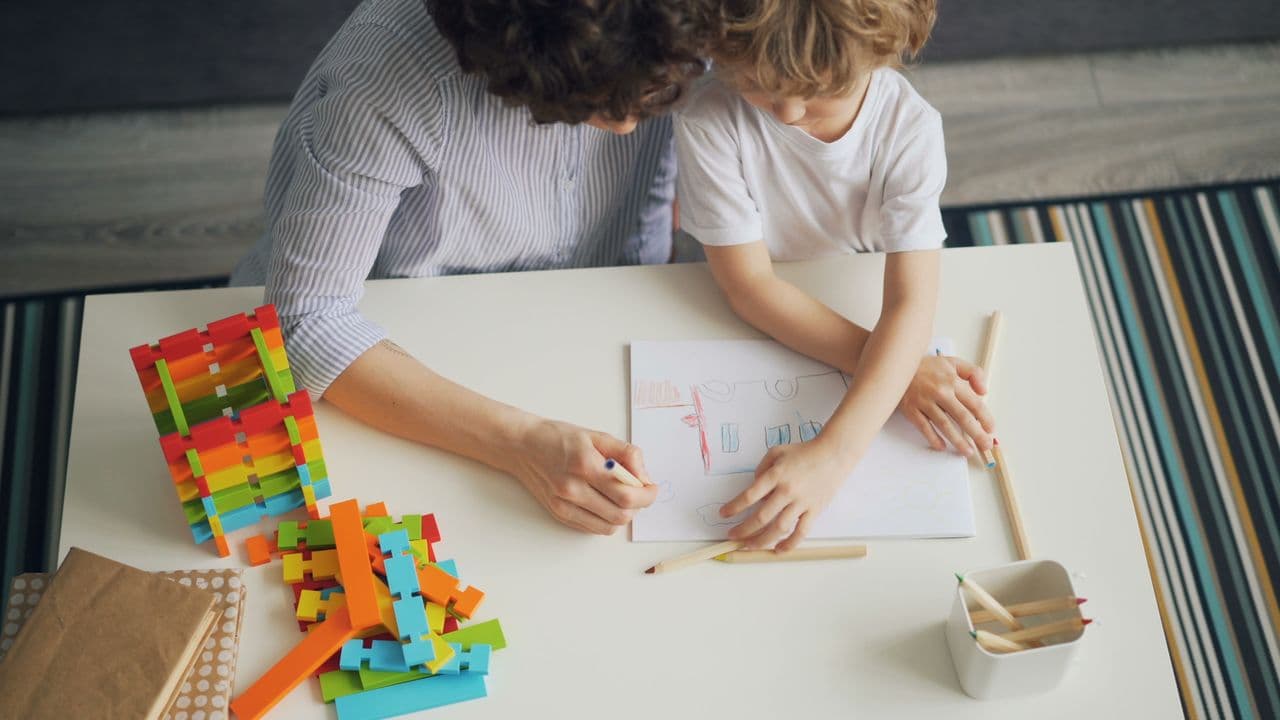
The support offered goes beyond a bed. Education, play, art and learning activities are run for the children, in numbers that have been increased since opening, so that the long hours outside hospital become developmental rather than empty. Public institution protocols keep children connected to their schooling while treatment continues.
For parents the house functions as a solidarity network. Families going through the same diagnosis live alongside each other, which turns an isolating experience into a shared one and creates a peer support structure that no professional service can substitute.
The model is deliberately long-term and high-contact rather than a one-off donation. Health need, accommodation and psychosocial support are brought together under one roof, and that combination, rather than any single element, is what distinguishes it from short-term aid.
Figure 1: The guest house in the Vefa district of İstanbul, within reach of the hospitals where the children are treated: 18 rooms with capacity for 45 people.

Impact
Sustainability Impact
Climate
The initiative does not target Scope 1 or Scope 2 emissions, no value chain emissions category is claimed for it, and no greenhouse gas figure is measured. The five indicators tracked monthly since the house opened in December 2022 are occupancy, beneficiary and activity measures, drawn from beneficiary records, feedback forms and periodic internal evaluation reports rather than from carbon accounting.
One enabling effect can be described. Treatment is not a single visit but a sequence of admissions, chemotherapy cycles and follow-up checks spread over months or years, and the families come to İstanbul from provinces across Türkiye. Housing a family within reach of the treating hospitals for the length of that sequence removes repeated long-distance return journeys between the home province and the city, and 18 rooms hold several families at once instead of each family arranging separate travel and lodging. The effect is real but it has not been counted.
The potential impact of The House of Kindness on greenhouse gas emissions has not been quantitatively measured to date. No reportable data is therefore available on emission reductions from avoided travel, and none is claimed under any GHG Protocol value chain category.
Social
The house opened in December 2022 and came into operation in January 2023. Since then more than 200 children travelling to İstanbul from provinces across Türkiye have been hosted, and with their accompanying families more than 500 people in total have received free accommodation, education and psychosocial support.
The direct effect is on treatment access. Removing the accommodation cost removes the reason a family interrupts or abandons a treatment schedule, and removes an economic burden falling on households at the point where their income is already reduced.
Before-and-after assessment records two further effects. Stress levels in families attributable to accommodation fell. Children showed higher levels of social interaction and motivation during the time spent outside hospital, which is the majority of the time a treatment course occupies.
The second area of impact is the educational and psychosocial support component. Since its opening, an inclusive living environment has been created to support the time children spend outside the hospital through educational, recreational, artistic, and learning activities. Through the educator working at The House of Kindness, the aim is to help children maintain their connection with education throughout their treatment and support their ongoing development.
Data on the number of children and families hosted, the use of accommodation capacity, and the educational, workshop and social support activities delivered at The House of Kindness are regularly monitored. Insights from beneficiary records, feedback and periodic evaluations are used to support the continuous development of the service model.
The utilisation rate of The House of Kindness is monitored on a monthly basis. Since it came into operation in January 2023, an average of 12 of its 18 rooms have been actively occupied each month. To date, more than 500 people, including approximately 200 children, have stayed at The House of Kindness. Guests may stay for a maximum of three consecutive months. At the end of this period, they are required to check out in order to provide more families with equal access to accommodation. If the need continues and space is available, they may reapply for a new three-month stay. Consolidated quantitative data on guest satisfaction and reapplication rates is not yet available.
Business Impact
Benefits
Collaborations with various stakeholders contribute to diversifying the services offered at The House of Kindness and reaching a greater number of beneficiaries. Civil society organisations, healthcare professionals, public institutions, and volunteers are key stakeholders in this ecosystem.
The model has proved repeatable, which is the practical benefit that matters most: the same design is now being assessed for a second city, so the investment in defining the service is amortised across more than one building.
The structure of The House of Kindness, which supports access to healthcare services, is directly aligned with the founding group's field of activity and its “Healing Life” motto. This strong alignment supports the project’s positioning as a long-term and sustainable social investment model.
To date, more than 3,000 hours of educational activities, workshops, and psychosocial support programmes have been delivered, supporting children’s emotional, social, and cognitive development while also helping families acquire new skills and strengthen their social well-being.
Costs
The investment and operating costs of The House of Kindness are primarily funded by the founding group. In addition, collaborations developed with various stakeholders and solution partners contribute to diversifying the educational activities, workshops, and psychosocial support programmes offered.
All services provided at The House of Kindness are free of charge for beneficiaries, and the project does not generate any revenue. The sustainability of the project is supported through regular assessments of the operating budget, service standards, and human resource requirements.
The existing House of Kindness has 18 rooms and can accommodate up to 45 people at a time. Reaching more children and their families would mean extending the model to other cities, and the building infrastructure, operational requirements, staffing structure and long-term operating model that such an extension needs are the cost questions it raises.
The investment and operating costs of The House of Kindness are regularly monitored. However, detailed financial data, including the annual operating budget, cost per overnight stay, and capital investment cost of the building, are considered internal information and are therefore not disclosed. If the model is replicated in other locations, the associated costs would need to be assessed separately based on factors such as the building, capacity, human resources, and local operational requirements.
Impact Beyond Sustainability And Business
Co-benefits
The house creates a solidarity network among families facing the same diagnosis, which produces peer support that continues after a family returns home and which no funded service line generates on its own.
The instructor working at The House of Kindness supports children in maintaining their connection with education throughout their treatment. In this way, the aim is to minimise the potential impact of long-term treatment on their education and to support their continued development without interruption.
The House of Kindness considers the accommodation challenges faced by families traveling from other cities for treatment as an important aspect of access to healthcare. The project addresses this need, which families are often expected to manage on their own, through a structured, sustainable, and measurable social support model.
Potential side-effects
Due to the limited accommodation capacity of The House of Kindness, with 18 rooms and space for 45 people, it may not always be possible to accommodate all applications at the same time. Applications are therefore evaluated in line with the established admission criteria and available room capacity, with particular care taken to ensure that accommodation is provided fairly to families in need.
The presence of families going through similar treatment processes creates a strong sense of solidarity, while at times it may also lead to the sharing of emotionally challenging experiences. For this reason, psychosocial support for children and their families is an important element of The House of Kindness model. Within this scope, psychotherapy support is provided by specialists who contribute on a voluntary basis.
Ensuring that all services at The House of Kindness remain free of charge and uninterrupted requires a long-term financing structure. While the main funding for the project’s investment and operating costs is provided by Abdi İbrahim, collaborations with various stakeholders and solution partners also contribute to diversifying the services offered.
Long-term stays and close interaction can also lead to strong bonds between The House of Kindness staff and families. Therefore, the sustainability of the service model takes into account not only the needs of children and their families, but also the well-being of employees.
Implementation
Typical Business Profile
The model suits corporate foundations and social investment arms with an established, long-term funding commitment rather than an annual grants budget, particularly those attached to companies operating in health, where the cause and the business share a field.
It requires a capital commitment to property in a specific location determined by clinical geography, and an operating commitment of indefinite duration, which makes it a fit for organisations able to plan over several years rather than campaign cycles.
Delivery engages foundation management, social support and psychosocial staff, facilities and catering partners, and a partner network of clinicians and non-governmental organisations. It is not a fit for organisations seeking short-duration, low-fixed-cost interventions.
Approach
Locate the building by clinical geography rather than by property cost: Identify where the treating hospitals are and take premises within practical reach of them, since proximity is what determines whether the accommodation is used. Here that meant the Vefa district of İstanbul, close to the health institutions treating the children.
Size the building against referral volumes, not against ambition: Establish how many families arrive from other provinces and build to that. In this case 18 rooms with capacity for 45 people, which allows several families to be hosted at once and keeps each family together.
Route admission through clinicians: Hold regular meetings with paediatric haematology specialists and academic partners, and run patient referral and admission according to their advice, so places go to the children whose treatment schedule most depends on proximity.
Fund the operation from committed corporate resources rather than campaigns: Secure the operating budget from the founding organisation so that a family can plan a months-long treatment course without the service depending on a fundraising cycle, and review budget, service standards and staffing regularly.
Add education and psychosocial support to the accommodation offer: Staff and programme education, play, art and learning activity for the children and psychosocial support for parents, because the majority of a treatment course is spent outside the hospital and that is where the second barrier sits.
Sign protocols with public institutions to protect schooling: Agree arrangements that keep children connected to their education during treatment, so that a treatment year does not also become a lost school year.
Build a partner ecosystem around the house: Hold regular meetings and joint work with organisations pursuing the same aim, in this case LÖSEV and KAÇUV, and run volunteering, social events, aid campaigns and support activity with partners including Bir Dilek Tut Derneği, Leyla'dan Sonra Derneği and Gülümseyen Maskeler Platformu, so the house becomes a hub rather than a service provider.
Track five indicators monthly and feed them back into the service: Record room occupancy, children and families hosted, total accommodation days, education and social activities held, and beneficiary satisfaction with the repeat application rate, drawing on beneficiary records, feedback forms and periodic internal evaluation reports, and use the results to adjust the service model.
Stakeholders Involved
Project leads: Strategic governance sits with the foundation management, and the initiative is owned by the senior management of the founding organisation as a long-term social responsibility commitment rather than as a periodic donation. Operational processes, social support services and stakeholder relations are tracked regularly by the responsible teams, and financial sustainability is secured through corporate resources provided by the founding group.
Company functions: Foundation operations run the house day to day, covering admissions, residence management and the activity programme. Social support and psychosocial staff deliver the support services, stakeholder relations manage the partner network, and budget planning, service standards and human resource management are reviewed on a regular cycle so that the service model develops with the needs of the children and families rather than remaining fixed at its opening design.
Main providers: Catering and facilities partners deliver kitchen services and the daily supplies of the residence, and staffing partners support recruitment for the house. These are coordinated as continuing solution partners on an operational cycle rather than engaged transaction by transaction, because a residence for up to 45 people cannot be supplied on an ad hoc basis.
Other: Non-governmental organisations pursuing the same aim, LÖSEV and KAÇUV, work with the foundation through regular meetings and joint activity. Bir Dilek Tut Derneği, Leyla'dan Sonra Derneği and Gülümseyen Maskeler Platformu take part in volunteering work, aid campaigns and support activity. Public institutions are partners in protocols that support the children's education during treatment. Academic partners and paediatric haematology specialists advise on patient referral and admission. Suppliers, local communities and volunteers complete the ecosystem, and feedback is collected from stakeholders regularly and used to improve the service.
Key Parameters To Consider
The house opened in December 2022, came into operation in January 2023 and has run continuously since.
Physical parameters: Vefa district, İstanbul, close to the treating health institutions; 18 rooms; capacity for 45 people.
Beneficiaries to date: more than 200 children, and more than 500 people in total including accompanying family members.
Measurement: five indicators, monthly reporting, sourced from beneficiary records, feedback forms and periodic internal evaluation reports.
Funding: corporate resources from the founding group, with no charge to beneficiaries.
Implementation And Operations Tips
Proximity to the hospital, not the quality of the building, decides whether a bed is used. Any replication should fix the location constraint before the specification.
Route admission through clinicians. It removes the foundation from an impossible rationing decision and puts places where the treatment schedule most requires them.
Measure accommodation days, not only headcount. A count of children hosted says nothing about intensity of use, and accommodation days is the figure that tells a funder whether the building is working.
Budget the psychosocial staffing as core rather than as an enhancement. Concentrating families with the same diagnosis is what creates the peer support, and it is also what makes professional support necessary.
Treat a second location as a demand question before a property question. The feasibility route used here, starting from consultations with regional specialists on patient potential and only then moving to budget and staffing, is the sequence that avoids building capacity in the wrong city.