Phasing Out F-Gases to Decarbonize Cooling Systems
 Iberostar
  Forética
总结
Strategy to eliminate fugitive emissions by digitizing maintenance tracking and modernizing cooling infrastructure using zero-GWP natural refrigerants.
Key resources
Context
Iberostar Hotels & Resorts seeks to drive positive change through positive tourism, advancing a comprehensive sustainability agenda under the Iberostar Wave of Change movement. Operating over 33,500 rooms across 100 four- and five-star beachfront hotels in 14 countries, primarily beachfront locations, the company takes science-based action to address climate change through both mitigation and adaptation strategies.
Iberostar's ambitious decarbonization roadmap targets an 85% reduction in scope 1 & 2 emissions and a 50% reduction in Scope 3 emissions by 2030, validated by the Science-Based Targets Initiative (SBTi). In the company's decarbonization journey, direct Scope 1 emissions, particularly from fugitive refrigerant gases (F-gases), represent a significant greenhouse gas challenge. In 2019, nearly half of Iberostar's direct Scope 1 emissions (minus Cuba) were caused by the release of approximately 29,000 tons of high-impact hydrofluorocarbons (HFCs). To address this, the company launched an ambitious strategy to reduce its F-gas emissions by 92% by 2030, pioneering natural cooling solutions, digital optimization, leak prevention and equipment modernization across its operations.
Location of the initiative: global
Solution
Iberostar's two-pronged strategy:
1. Digitizing maintenance and leak detection
To eliminate fugitive emissions at the source, the group digitized its refrigeration systems across its portfolio. In the Europe, Middle East and Africa (EMEA) region, it rolled out a specialized F-Gas digital tracking platform to closely monitor refrigerant gas inventories, track recharge rates, and execute real-time leak detection.
Alongside this platform, the company integrated Fracttal for AME hotels, a predictive maintenance management system. This digital combination empowers on-site engineering teams to perform targeted, preventative controls on high-risk cooling equipment, including central chiller plants, industrial cold chambers, and domestic hot water systems, stopping leaks before they can impact the atmosphere.
2. Modernizing hardware
Where digital monitoring ends, hardware transformation begins. In the Americas, Iberostar launched a major campaign to modernize its cold-generating infrastructure across Mexico, the Dominican Republic, Jamaica, and Brazil. A crucial part of this transition has been the systematic phase-out of R404A refrigerant gas, which historically represented nearly 60% of refrigerant emissions in the Americas, replacing it with R449A, a modern alternative that reduces Global Warming Potential (GWP) by 65% with zero ozone depletion potential.
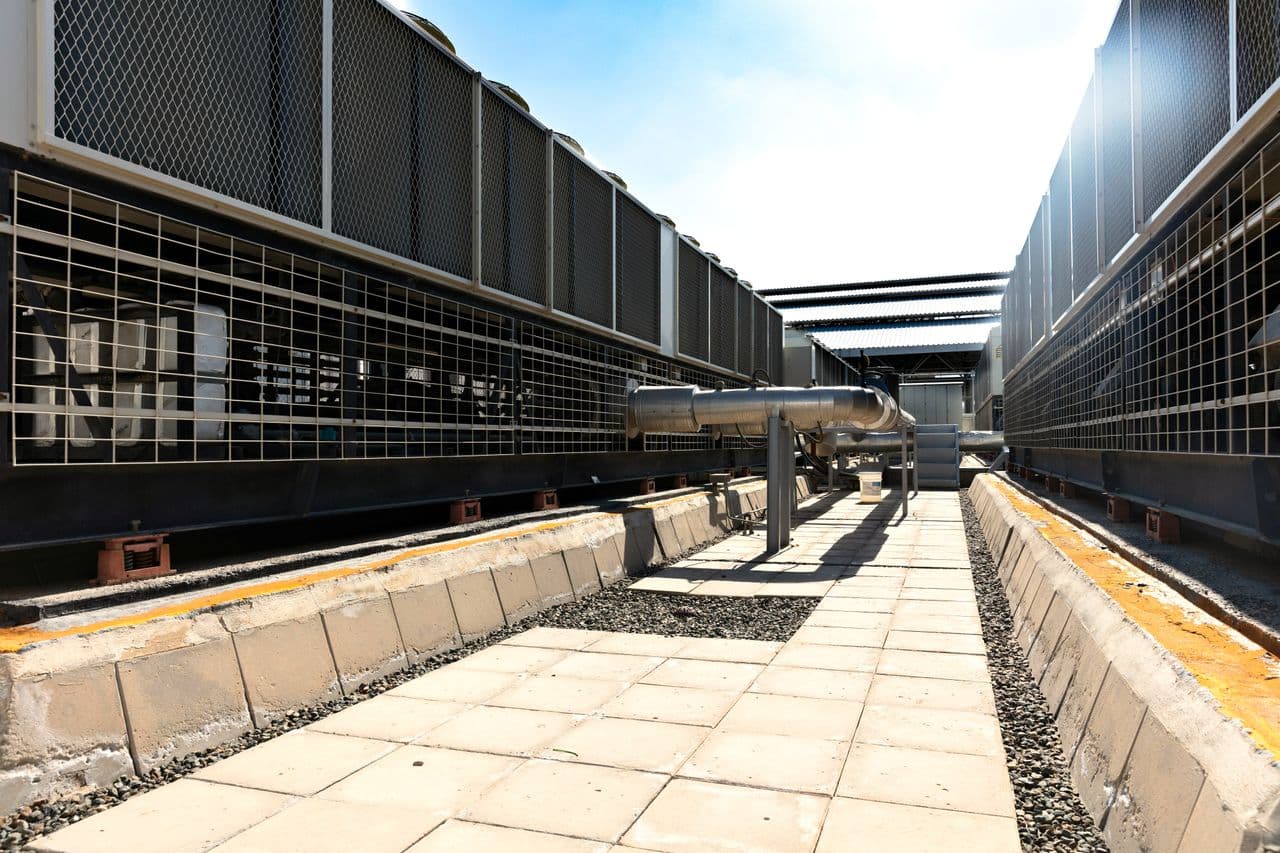
Taking this a step further, Iberostar is modernizing its cooling infrastructure to incorporate refrigerants with an effective global warming potential of zero through the use of propane refrigerant (R290). In Europe, at Iberostar Selection Andalucía Playa in Spain, the traditional installation of individual outdoor units was consolidated into two central plants, reducing both the total refrigerant charge and the Global Warming Potential (GWP) of the system. This same successful approach was replicated across several other key properties, including Iberostar Selection Fuerteventura Park, Iberostar Waves Saïdia, Iberostar Waves Founty Beach, Iberostar Selection Playa de Palma, and Iberostar Waves Cala Barca.
Refrigerant gas | Global Warming Potential (GWP) | Ozone Depletion Potential (ODP) | Implementation & status |
R404A (Synthetic) | ~3,922 | High | Iberostar's historic baseline; now successfully phased out across the Americas portfolio. |
R449A (Synthetic) | ~1,397 | Zero | Active transition refrigerant, cutting GWP by 65% without requiring full system replacements. |
R290 (Natural) | 0.02 | Zero | The gold standard; implemented in Spain to deliver natural cooling. |
Impact
Sustainability Impact
Climate
Scope 1 fugitive refrigerant emissions from commercial cooling systems, which historically represented nearly 50% of the company's direct carbon footprint.
Decarbonization
In 2025, the company achieved a 20% absolute reduction in year-on-year global fugitive F-gas emissions compared to 2024. This directly drove a 20% absolute reduction in the group's global Scope 1 emissions within the same year, demonstrating the substantial decarbonization impact of proactive refrigerant management.
Business Impact
Benefits
The transition has brought extensive operational and financial benefits. Integrating newly electrified systems into a centralized Building Management System (BMS) reduced overall energy loss by up to 7% at properties like Selection Playa de Palma. The shift to simultaneous heating/cooling and instant hot water systems has also eliminated localized water accumulation, reducing ongoing chemical treatment costs and enhancing regulatory compliance. Aligning these sustainability goals with leadership performance targets has fostered deep operational ownership and accountability across hotel operations.
Costs
This large-scale transition requires strategic capital allocation in advanced F-gas management and HVAC modernization. The group directed targeted investments across 4 properties in the EMEA region, with active plans to expand to 6 more, and 10 hotels in the Americas.
Impact beyond sustainability and business
Potential side effects
Transitioning to natural refrigerants like R290 (propane) introduces technical and safety constraints due to the gas's flammability. The company addresses these potential side-effects by partnering with certified engineering specialists, providing rigorous safety and operational training for its maintenance teams, and automating monitoring through Building Management Systems (BMS) to identify potential issues.
Implementation
Typical business profile
This project is highly relevant for large-scale commercial real estate, tourism, and hospitality organizations with multi-facility operations, high heating and cooling demands, and intermediate-to-advanced net-zero maturity. It is especially applicable in geographies with tightening F-gas regulations, such as the European Union and the Americas.
Approach
For other businesses seeking to eliminate their F-gas footprint, Iberostar's journey suggests a clear, scalable roadmap:
Begin with an exhaustive audit of all on-site cooling equipment to map refrigerant types, equipment age, and baseline leak rates.
Automate monitoring through Building Management Systems (BMS) to identify pressure drops and potential leaks in real-time, preventing high-cost refrigerant recharge fees and optimizing energy efficiency
Implement specialized platforms to transition maintenance from reactive to predictive.
Use low-GWP transition refrigerants like R449A to achieve immediate, low-cost emissions cuts.
Centralize cold-generating machinery to reduce the physical footprint of cooling, simplify maintenance, and minimize leak risks.
Stakeholders involved
Corporate sustainability & finance leads: Collaborated to align strategic decarbonization goals with leadership performance targets and allocate capital.
On-site facility managers & engineers: Monitored F-gas tracking platforms, managed predictive maintenance tools, and performed preventive controls on cooling equipment.
Third-party HVAC & engineering specialists: Partnered with on-site teams to install centralized systems and navigate safety constraints.
Operational staff: Completed rigorous training on handling flammable natural refrigerants and operating Building Management Systems.
Key parameters to consider
Solution maturity: Digital tracking systems and transition refrigerants are mature and widely available, whereas large-scale natural refrigerant (R290) centralization is an emerging gold standard in commercial hospitality requiring specialized handling.
Technical constraints: Flammability hazards of natural refrigerants like propane (R290) require strict technical safety zones, specialized training, and automated alarms.
Additional specificities: Partnerships with certified engineering specialists and recognized R&D bodies ensure scientific basis and safety compliance.
Eventual subsidies available: Leverage local and regional green equipment subsidies or tax incentives where available to offset the capital installation costs of centralized plants and HVAC upgrades.
Conclusion
By sharing successes, challenges, and open-source methodologies, Iberostar aims to inspire suppliers, other hospitality companies, and partners across the global travel and tourism sector to join in driving the transition toward a resilient future.