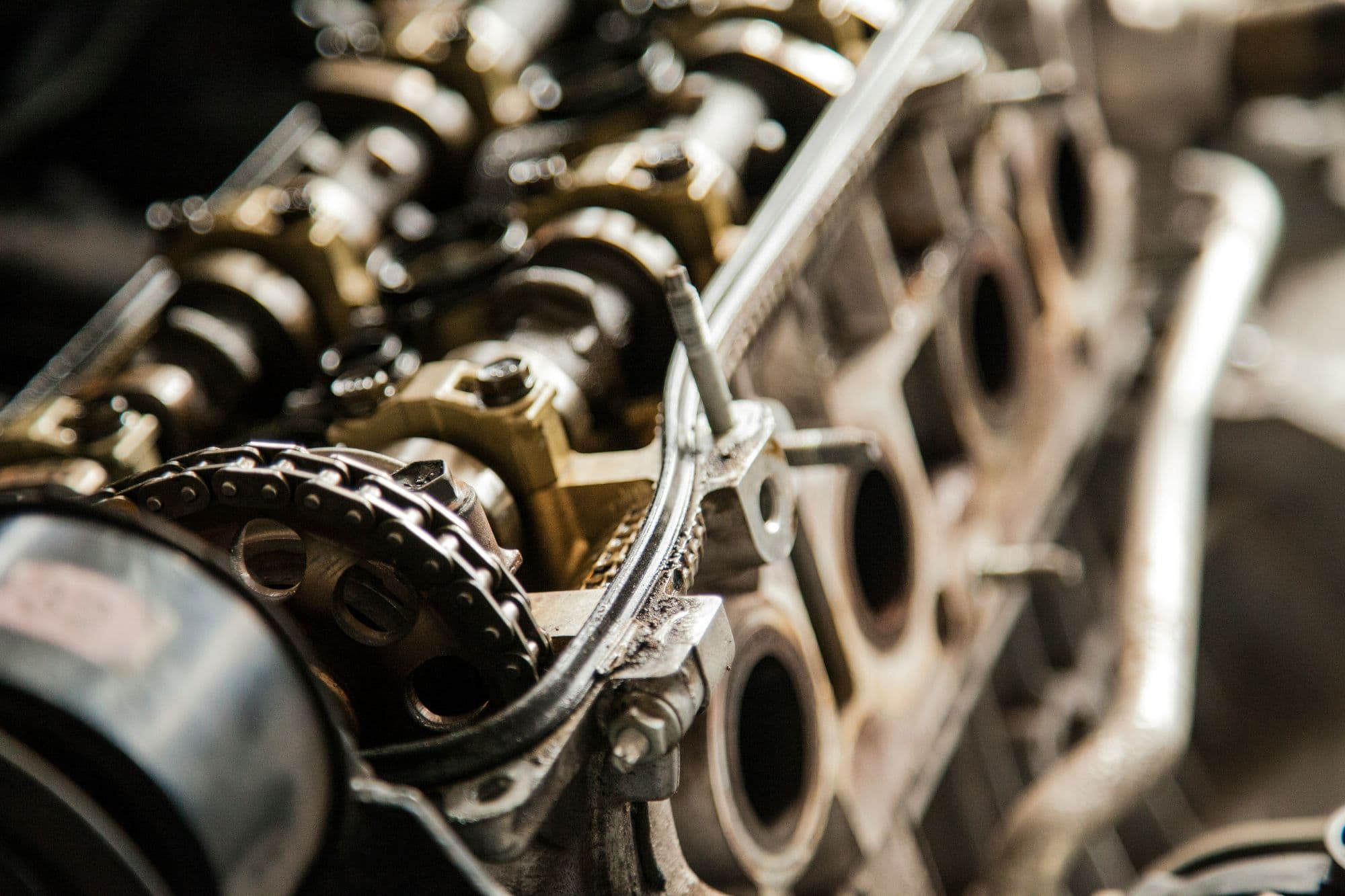
Rebuild components to keep heavy machines in circular use
 Borusan Makina ve Güç Sistemleri (Borusan Cat)
 SKD Türkiye
总结
Worn components are remanufactured and machine life extended, with acoustic and IoT diagnostics deciding when to repair, rebuild or reuse instead of replace.
Context
Submitted through the COP31 Sustainable Transformation Awards · SKD Türkiye (WBCSD Global Network Partner)
Borusan Makina ve Güç Sistemleri, trading as Borusan Cat, distributes and services heavy construction machinery and power systems equipment, with more than 1,000 employees and operations in Türkiye, Azerbaijan, Georgia, Kazakhstan and Kyrgyzstan.
The heavy equipment sector runs on a linear pattern: make, use, replace. A component that reaches the end of its economic life is scrapped and a new one is manufactured, which consumes raw material and energy in production and generates waste at disposal. The commercial model of a dealership reinforces that pattern, because replacement parts are the conventional revenue line.
The service model compounds the effect. Faults are found after they occur, which means an unplanned stoppage for the customer and a vehicle journey to site for the dealer, and a part is often replaced when inspection would have shown it still had life in it.
The company's response was to place circular economy principles at the centre of the business model rather than alongside it. The 'Bir Daha' approach — written B'Daha — brings component remanufacturing, certified rebuild machines, used equipment solutions, core management and life-cycle management under one structure, and adds a layer of predictive digital tools whose purpose is to decide when a component should be repaired, rebuilt or reused rather than replaced.
The distinction the company draws is deliberate: B'Daha is the circular economy itself, the predictive platforms are the accelerators that make it possible, and remote troubleshooting is a decarbonisation and operational efficiency story in its own right.
Location of the initiative: Türkiye & Kazakhstan, with the model applicable across the company's Azerbaijan, Georgia, and Kyrgyzstan operations
Solution
The circular core is delivered through Component Rebuild Centres, where components that have completed their economic life are remanufactured and returned to service. Around them sit certified rebuild machines, which extend the life of equipment already in the field, used equipment solutions, and core management, the reverse logistics process that recovers worn components from customers so they can re-enter the loop. Facilities hold zero waste certification, which integrates the circular approach into day-to-day operational processes rather than confining it to the rebuild line.
The differentiator is that these decisions are taken from data rather than from a maintenance calendar. Müneccim analyses IoT data from field equipment, predicts faults before they occur, and identifies where maintenance, renewal or a second life cycle is the right answer. Sound Diagnostic extends the same capability to machines that have no internet connection or IoT hardware by analysing equipment sound alone, so early intervention is not limited to the connected part of the fleet. Commodore and Remote Troubleshooting complete the set, supporting remote diagnosis and reducing unnecessary part replacement.
Insight is only useful if it reaches the customer, and that is the role of Boom360. Data production, analysis and customer action are managed end to end in one system: the customer sees equipment data, receives early fault warnings and raises service requests through the same application.
A digital customer coverage model runs alongside. Remote customer meetings and inside sales replace a large share of physical visits, which changes both the cost and the emissions profile of customer coverage while increasing the number of customers a team can serve.
Taken together, the model shifts the sector's reactive way of working towards a predictive one, and shifts the commercial logic from selling replacement parts towards keeping existing assets productive.
Figure 1: The B'Daha component loop, from field diagnosis and core recovery through rebuild to reinstallation

Figure 2: Component loop and 2025 annual impact, with the assumptions behind the estimated figures

Impact
Sustainability impact
Climate
The measured climate effect comes from journeys that no longer happen. The relevant emissions are the fuel burned by the company's own service and customer-facing vehicles, which sits in Scope 1 where those vehicles are company-operated.
In 2023 the digital customer management model delivered 58,834 remote customer meetings against only 1,011 face-to-face meetings. Serving the same customer base physically would have required 64 additional field teams. The calculation produced 9,204 tonnes of CO2 avoided, rising to 9,267 tonnes of CO2 once secondary effects are included.
Remote diagnosis produces a separate saving on the service side: 41,640 km of service journeys were avoided, equivalent to 10.8 tCO2e.
The circular activity itself avoids a significant share of the emissions embodied in manufacturing new components, as approximately 2,500 components per year (2025) are returned to service through the B'DAHA remanufacturing programme instead of being replaced by newly manufactured equivalents. These benefits occur upstream in the value chain and are conceptually aligned with impacts typically associated with GHG Protocol Scope 3 Category 1 (Purchased Goods and Services). However, as the reduction results from avoided production outside Borusan Cat's operational boundary, the impact is considered an avoided-emissions benefit rather than a reported GHG inventory reduction. Based on indicative industry remanufacturing benchmarks and high-level assumptions, the embodied-carbon benefit is estimated at approximately 0.5-1.0 tCO₂e per remanufactured component, corresponding to a potential annual avoided-emissions impact of roughly 1,250-2,500 tCO₂e. These figures are intended as an approximation to illustrate the potential climate benefit of extending component life through remanufacturing and do not represent a GHG Protocol-compliant emissions calculation.
Nature
Resource consumption and waste are the primary nature outcomes. Remanufacturing returns approximately 2,500 components a year to economic use, more than 150 used parts a year are returned to the economy, and 36 machines have been dismantled so that usable parts enter a second life cycle.
Preventing unnecessary part replacement is the quieter effect: predictive diagnosis avoids the replacement of components that still hold usable life, so the waste is never created rather than being managed afterwards.
Zero waste certified facilities extend the same logic to the operational processes around the rebuild activity.
Taken together, the programme returns approximately 2,500 components a year to productive use instead of replacing them with newly manufactured equivalents. On the company's own indicative assumptions, set out in the visual above, that corresponds to roughly 1,250 to 2,500 tCO2e of avoided emissions, about 2,500 tonnes of material retained in use and a similar volume of waste avoided. These are approximations based on an assumed average component weight of about one tonne and on industry remanufacturing benchmarks, not measured results.
Social
Customers gain operational continuity. Equipment supported by the programme shows a rise in uptime of up to 87 per cent, and predictive warning reduces unplanned stoppages that would otherwise halt a construction or mining site.
Access widens as well as deepens. Digital channels brought 4,433 customers into the support process and reached 18,670 customers through inside sales teams, including smaller operators that a field-visit model would reach infrequently. Acoustic diagnosis has supported 150 customers in keeping equipment under control before a failure occurs, with a fault prediction returned in an average of 3.5 seconds.
For the company's own teams, replacing routine site visits with remote coverage reduces time spent driving and the road exposure that comes with it, and moves field roles towards diagnosis and repair rather than travel.
Business impact
Benefits
The programme is run across multiple countries and generates annual economic value in the double-digit millions of USD.
Individual components of the digital ecosystem carry their own results. Commodore has created EUR 14 million of value. Sound Diagnostic has generated EUR 1.5 million of service and spare part opportunity potential while supporting 150 customers.
Circular penetration is commercially material: approximately one third, reported as 35 per cent, of revisions in the construction industry are carried out with the B'Daha solution, and in power systems applications the majority of cylinder head revisions use B'Daha components.
The customer platform shows the shift in service behaviour. Since its launch in 2022, Boom360 has passed 60,000 downloads, around 60 per cent of the active customer base uses it, 30 per cent of service requests raised in the Türkiye and Azerbaijan operations are now managed digitally through it, more than 3,000 service requests have been created and managed on the platform, and average daily user interaction across three countries stands at 1,000.
The coverage model changes sales productivity directly. A traditional field model supports approximately 5 visits a day, while the inside sales model supports approximately 20 customer contacts per person per day, roughly 4 times the contact capacity, and digital channels generate approximately 6,000 new customer requests a year.
For customers, the benefits are lower operating costs, better equipment availability and a rise in uptime of up to 87 per cent.
Costs
The cost base is the rebuild capability and the digital layer that steers it. Component Rebuild Centres require facilities, tooling, test capability and skilled technicians, and remanufacturing to a warrantable standard is more demanding than replacement.
Core management carries its own logistics cost. Worn components have to be collected from customer sites, transported, assessed and stored, and the loop only pays if enough cores come back, which makes customer participation a dependency rather than a preference.
The predictive layer requires IoT connectivity on machines, acoustic capture for those without it, platform development and maintenance, data science capability and continuous model improvement. Boom360 adds application development, support and user adoption effort on top.
There is also a commercial trade-off inside the model. Predicting faults early and avoiding unnecessary part replacement reduces the replacement parts revenue that a conventional dealership treats as its core line, so the business case depends on capturing value through rebuild, service contracts and equipment availability instead.
Costs are contained by running the circular and digital activity as one system rather than as separate programmes, and by using the same field data for maintenance planning, sales coverage and sustainability reporting.
The capital investment in the rebuild centres and the digital platforms, and the payback period achieved, are not available for publication.
Impact beyond sustainability and business
Co-benefits
Extending equipment life improves access for smaller contractors, because a rebuilt component or a certified rebuild machine is available at a cost point that a newly manufactured alternative is not.
Predictive diagnosis reduces the risk of catastrophic failure on site, which is a safety gain as well as an availability gain.
The acoustic route matters for equity across the fleet: older machines without IoT hardware are usually excluded from predictive maintenance, and analysing equipment sound brings them inside the same early-warning system.
Potential side-effects
The model depends on customers returning cores. If worn components are scrapped locally rather than sent back, the rebuild line runs short of input and the loop weakens, so commercial terms and collection logistics have to make return the easy option.
Predictive systems create dependence on connectivity, data quality and the models themselves. A false negative means a failure that was expected to be caught is not, and confidence in the system can erode faster than it was built.
Shifting from replacement parts to rebuild changes the revenue mix, and the internal incentives of a sales organisation have to be adjusted to match, or the field will keep selling the replacement.
Remote coverage reduces face-to-face contact. The company retained 1,011 physical meetings alongside 58,834 remote ones, which suggests physical presence is reserved rather than eliminated, and the balance needs active management for customers who prefer it.
Implementation
Typical business profile
The model suits equipment distributors, dealers and service organisations that maintain a large installed base of high-value machines over long service lives, where the cost of a replacement component is significant and the cost of unplanned downtime falls on the customer.
It transfers beyond construction machinery to sectors with heavy equipment intensity — energy, mining, transport and manufacturing — where the same combination of rebuild capability and condition monitoring applies.
Delivery engages strategy and sustainability, product support, aftersales, digital solutions, operations and finance functions working to a shared plan, and requires a rebuild facility or access to one, plus a data capability able to run predictive models in production.
Approach
Map the installed base and its failure history: Record which components fail, at what age and at what cost, and separate the failures that could have been predicted from those that could not, so that the rebuild and monitoring investment is aimed at the largest recoverable value.
Build rebuild capability to a warrantable standard: Establish Component Rebuild Centres with the tooling, inspection and test capability needed to return a remanufactured component to service with the same assurance as a new one, because customer acceptance depends on that equivalence.
Create a core return loop with customers: Set commercial terms and collection logistics so that returning a worn component is the default option for the customer, and manage the recovered cores as an inventory class with its own planning.
Instrument the connected fleet: Stream IoT data from field equipment into a predictive platform that forecasts faults before they occur and flags whether maintenance, renewal or a second life cycle is the appropriate response.
Cover the unconnected fleet with acoustic diagnosis: Deploy sound-based fault prediction for machines with no internet access or IoT hardware, so that early intervention extends across the whole equipment park rather than only its newest part.
Deliver the insight through a single customer application: Push predictions, equipment status and service request handling into one platform the customer already uses, so that analysis converts into action instead of stopping at a report.
Replace routine site visits with remote coverage: Move customer meetings, diagnosis and inside sales onto digital channels, reserve physical visits for the cases that require presence, and measure the visits avoided as well as the contacts made.
Report circularity and avoided emissions as programme indicators: Track remanufactured components, parts returned to use, machines dismantled, uptime gained, service kilometres avoided and the resulting emissions, and place the results inside the corporate sustainability reporting cycle.
Stakeholders involved
Project leads: The programme runs under senior management sponsorship as an integrated business model change rather than as a sustainability side project. It is developed jointly by the strategy and sustainability, product support, aftersales services, digital solutions, operations and finance teams, which is what allows a circular decision to be evaluated commercially and environmentally at the same time. Placing the approach inside the business model rather than in a project structure is what has kept it running beyond a fixed project period.
Company functions: The Component Rebuild Centres, the digital platforms and the customer contact points form the operational infrastructure of the programme. Service and field engineering teams carry out remanufacturing and remote diagnosis, inside sales teams run the digital coverage model, and data teams maintain the predictive models. Sustainability reporting draws on the same operational data rather than on a separate collection exercise.
Main providers: The global equipment manufacturer whose dealer network the company belongs to supplies the technical standards, component specifications and remanufacturing framework that make rebuilt parts acceptable in warranty terms. Suppliers and operations teams support the sustainable execution of the rebuild processes, digital solution partners contribute to the platform layer, service organisations deliver the field work, and academic partners are engaged through the wider stakeholder set.
Other: Customers are the decisive external stakeholder and hold two roles. They return components that have completed their service life, without which the rebuild loop has no input, and they generate the operating data that the predictive platforms analyse. Through the customer platform and the diagnostic applications, customers move from being recipients of a service to active participants who supply data and receive insight, which strengthens the feedback loop and drives continuous improvement of the applications. This collaboration model is what carries the circular approach beyond the company's own boundary into the wider value chain.
Key parameters to consider
The approach is designed as an integrated business model rather than a single project, which is why it can be extended across the company's operating geographies rather than replicated project by project.
Results are reported per application. The rebuild activity, the predictive platforms, the customer application and the digital coverage model each carry their own indicators, which keeps the circular result separate from the digital efficiency result.
The digital layer depends on data availability, and the acoustic route exists precisely because connectivity cannot be assumed across an installed base that spans machine generations.
Benefits scale with the size of the installed base and with the distances involved in serving it, so the case is strongest for dealers covering large territories with dispersed customers.
Implementation and operations tips
Separating the circular activity from its digital enablers keeps the story honest. Remanufacturing is what closes the loop; the predictive platforms decide when to do it and are best reported as accelerators rather than as circular results in themselves.
Counting avoided journeys, not just fuel, makes the digital coverage case visible. The calculation here rests on the field teams that would otherwise have been needed, which is a defensible counterfactual because it is based on visit capacity per person per day.
Extending prediction to unconnected machines is where the coverage gain sits. Most installed bases are only partly instrumented, and acoustic analysis reaches the part that IoT retrofits cannot justify.
The commercial conflict has to be faced early. A model that avoids unnecessary part replacement reduces a conventional revenue line, and unless rebuild and service value replace it explicitly, field incentives will pull against the programme.