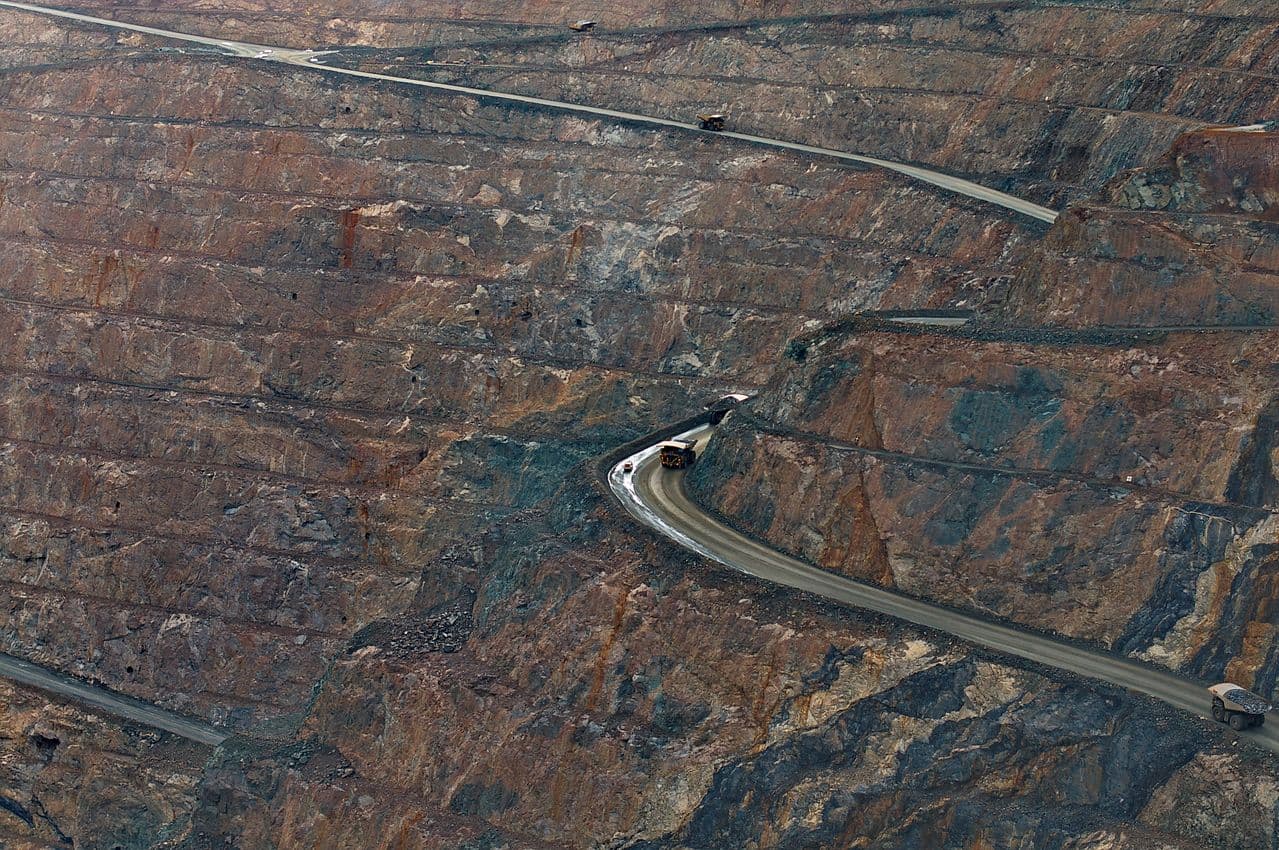
Recover critical minerals from mine waste
 SKD Türkiye
总结
Pyrite from copper mining is processed as a secondary raw material into metals, acid, steam and power, using approximately 500,000 tonnes a year in place of primary ore.
Context
Submitted through the COP31 Sustainable Transformation Awards · SKD Türkiye (WBCSD Global Network Partner)
Eti Bakır A.Ş. is a company operating in the mining and metals sector, employing over 6,000 people, and is an example of industrial symbiosis across its operations: copper mines in Küre, Siirt, Adıyaman, Elazığ and Artvin; an antimony mine in İzmir; cathode copper and fertiliser production in Samsun; and a metal recycling and integrated fertiliser plant in Mazıdağı, Mardin, in south-eastern Türkiye, together with precious metals, energy and fertiliser production facilities.
Copper mining operations at Küre generate a pyrite-rich waste stream. Under applicable regulations and conventional mining practices, this material must be safely stored and managed, creating recurring costs and a long-term environmental liability. Transporting pyrite by road to Mazıdağı also contributed to logistics-related emissions.
At the same time, global demand for critical minerals is rising, increasing pressure on primary resource extraction. According to the company's primary-production baseline, producing one tonne of cathode copper requires the processing of 55 tonnes of ore, the consumption of 85.3 litres of diesel in mobile equipment and generates 21 tonnes of pyrite waste.
Location of the initiative: Küre, Mazıdağı (Mardin province) and Samsun, Türkiye
Solution
Commissioned in 2018, the Mazıdağı Metal Recovery and Integrated Fertiliser Plant converts pyrite, a waste product of the Küre copper mine, into a secondary raw material.
Through an integrated industrial symbiosis model, the exothermic roasting of pyrite produces sulphuric acid, steam and calcine. The calcine obtained from the roasting stage replaces the primary ore inputs, and secondary metals such as copper, cobalt and zinc are recovered, while the acid is used in fertiliser production and the steam is used to generate electricity via turbines. This retains material value within the company's operations and reduces reliance on selected primary-production inputs.
Processing 285 tonnes of pyrite produces:
203 tonnes of calcine required for the production of one tonne of cathode copper;
357 tonnes of sulphuric acid for fertiliser production; and
475 tonnes of steam, generating between 67,300 and 118,000 kWh of electricity.
Each 21 tonnes of pyrite processed also yields approximately 77 kg of cobalt, 53 kg of zinc and 67 kg of copper.
Inbound logistics were redesigned in parallel, moving the long-haul leg from road to rail following a rail infrastructure upgrade financed by the company.
The same circular approach has since been extended to other operations. The Samsun plant produces ammonium sulphate fertiliser from sulphur-bearing off-gas generated during cathode copper production. A phosphoric acid plant added in 2025 also enables the production of diammonium phosphate—DAP—and nitrogen-phosphorus—NP—compound fertilisers.
Figure 1: Concentrated copper ore obtained from the Kastamonu Küre mine is sent to the Samsun smelting plant; pyrite, a flotation waste, is sent to the Mardin Mazıdağı plant. Sulphuric acid gas is released from the ore smelted at the Samsun plant, and ammonium sulphate fertiliser is produced from this waste gas. At the Mardin Mazıdağı plant, sulphuric acid is produced from roasted pyrite, while steam is generated through an exothermic reaction, and calcine is obtained as a by-product. The sulphuric acid is sent to a phosphoric acid plant to produce compound fertiliser, electricity is generated from the steam via a turbine cycle, and cobalt, copper and zinc are obtained from the calcine at a metal recovery plant.

Figure 2: Eti Bakır's operating sites across Türkiye and the transport corridors connecting them, including the Kurşunlu–Mazıdağı rail line that replaced the previous road route.

Impact
Sustainability impact
Climate
This initiative targets Scope 1 and Scope 2 emissions from the company's own processing and energy use, and Scope 3, Category 4: Upstream transportation and distribution, from the haulage of pyrite between sites.
Greenhouse gas emissions are calculated in accordance with the GHG Protocol, using 2018 as the baseline year, and reported data covers the period from 2018 to 2025. Performance is monitored through plant distributed control systems, weighbridge automation and corporate emissions modules using ISO 14064-aligned methodologies.
The shift from road to rail reduced Scope 3 emissions associated with pyrite logistics by 81.4% compared with the baseline year.
Processing 500,000 tonnes of pyrite annually also produces approximately 900,000 tonnes of steam. Using heat released by the roasting reaction, this steam generates approximately 171 million kWh of electricity per year through a turbine, displacing purchased electricity and the associated Scope 2 emissions.
The model additionally acts as an enabler outside the company's own inventory. Recovering metals from a secondary feedstock reduces demand for the equivalent primary mining, concentration and processing stages represented in the company's baseline scenario, so this share of the benefit is realised in the wider value chain rather than in the company's reported total.
Nature
The model processes approximately 500,000 tonnes of secondary raw material annually.
Based on the company's counterfactual analysis, substituting this secondary input for primary material is estimated to avoid approximately 544,000 m2, or 54.4 hectares, of land disturbance each year — an area of about 76 football pitches — together with the associated soil degradation and habitat pressure. The baseline for that comparison is the primary route, where producing one tonne of cathode copper requires 22,500 m2 of land to be disturbed.
The company also reports nature-related information in line with the recommendations of the Taskforce on Nature-related Financial Disclosures—TNFD (1). According to the company, it is the first business in the Turkish mining sector to complete and report TNFD-aligned risk and opportunity analyses and to begin the TNFD membership process.
Social
Moving pyrite transport from road to rail reduced community exposure to heavy vehicle traffic, accident risks and dust emissions along the route.
The Mazıdağı plant also supports skilled industrial employment in Mardin province. Sulphuric acid produced as a co-product provides a domestic feedstock for fertiliser production, with capacity designed in consideration of the agriculture sector's long-term supply-security needs.
Business impact
Benefits
The project transformed pyrite from a waste-management liability into a value-generating secondary feedstock.
Material that previously required long-term storage now supports the production of cathode copper feedstock, cobalt, zinc, copper, sulphuric acid, steam, electricity and fertiliser products, connecting the mining, chemicals, energy and agriculture value chains.
Generating approximately 171 million kWh of electricity annually from recovered process heat reduces reliance on purchased energy.
Using a secondary feedstock available within the company's existing operations also reduces exposure to exploration risk, new mining licences, land acquisition and selected primary ore extraction and processing costs.
Rail transport lowers logistics costs and road-transport risks, while enabling logistics partners to adopt lower-emission operations.
The model also creates multiple revenue streams across metals, chemicals, energy and agriculture, reducing dependence on a single commodity.
Costs
The main cost driver is the capital expenditure required for the integrated facilities, including roasting furnaces, steam turbines and metal recovery units. The company identifies this high initial investment as the principal barrier to replication.
The rail infrastructure upgrade between Kurşunlu and Mazıdağı was financed by the company and created an operational dependency on the availability and reliability of the rail network.
On operating costs, the model removes the recurring cost of storing and managing pyrite as a waste stream, while adding the cost of running roasting, recovery and acid production units. Project economics depend on securing a predictable long-term pyrite supply and reliable demand for the resulting co-products.
Costs are contained by generating steam and electricity from the roasting reaction, which offsets purchased energy, and by producing several co-products for different sectors so that returns do not rest on a single market.
Impact beyond sustainability and business
Co-benefits
The shift to rail created a positive spillover effect in the logistics value chain by encouraging transport providers to adopt lower-emission operations.
The model provides the agriculture sector with a domestic source of fertiliser feedstock and creates a secondary source of cobalt for value chains including battery production and e-mobility.
It also demonstrates how collaboration between mining, chemicals, energy, agriculture and logistics stakeholders can retain material value across industrial systems.
Potential side-effects
Operations depend on the continued availability of rail services and a stable pyrite flow between Küre, Kurşunlu and Mazıdağı.
Other key dependencies include consistent feedstock composition, sustained demand for co-products and effective process and emissions controls.
Local environmental and community concerns are addressed through environmental impact assessment public-participation meetings, consultations with local authorities, 24-hour contact lines and stakeholder surveys.
Feedback has resulted in operational changes, including adjusted operating hours at the Kurşunlu transfer station and strengthened local emissions-control measures.
Implementation
Typical business profile
The model is most relevant to mining and metals companies generating predictable volumes of sulphide-rich waste, and to chemicals, fertiliser and energy companies able to use or commercialise the resulting co-products.
Implementation engages mining and production, metal recovery, energy, logistics, environment and sustainability, procurement and finance functions. It suits companies operating at commercial scale that are moving beyond waste-management compliance towards circular business models, and that already run process and emissions monitoring capable of supporting a counterfactual assessment.
Replication potential is strongest where mining, energy and agricultural industries are geographically clustered or connected through suitable rail infrastructure. It requires a predictable waste stream, markets for the co-products and sufficient balance-sheet capacity to invest in integrated processing assets.
Approach
Characterise the waste stream: Establish its annual volume, composition and recoverable metal content, and confirm that the composition is stable enough to feed a continuous process.
Establish a baseline: Model the equivalent primary-production scenario, including ore processed, fuel consumed, land disturbed and waste generated, so that avoided impacts can be assessed against a defined counterfactual.
Develop the business case: Assess capital and operating costs, avoided waste-management costs, energy savings, potential revenue streams and infrastructure risks, and secure Board and executive sponsorship so that material recovery is treated as part of the core business model rather than solely as an environmental compliance project.
Build an integrated production system: Design roasting, metal recovery, acid production and steam-to-power generation as one interconnected process, sizing the turbine against the heat released by the roasting reaction so that the energy output is captured rather than vented.
Secure offtake for each co-product: Identify internal users or external offtakers for metals, acid, steam and power before commissioning, and align production capacity with long-term market demand.
Optimise logistics: Shift the high-volume transport leg from road to rail where suitable infrastructure exists, coordinating with railway operators, logistics providers and local stakeholders. In this case pyrite has moved by road from Küre to Kurşunlu and by rail from Kurşunlu to Mazıdağı since 18 August 2021.
Establish integrated monitoring: Track process, shipment, material, energy and emissions data through central control systems and weighbridge automation, and report it under recognised methodologies against a fixed baseline year.
Extend the model: Screen other waste streams, by-products and off-gases across the company's operations for conversion into secondary inputs, and add downstream capacity where a co-product can be upgraded further.
Stakeholders involved
Project leads: The Board of Directors approved the investment and set its strategic direction, then delegated delivery to executive management, which holds accountability within the operating model for the recovery plant and for the transition from road to rail.
Company functions: Production, mining, metal recovery, logistics, energy, environment, sustainability, finance, procurement and management systems teams work to a shared planning and reporting cycle. Production and recovery teams set the material flows, logistics and energy teams align transport and utilities against them, and environment, sustainability and finance teams verify performance and investment returns.
Main providers: Equipment suppliers supplied and commissioned the roasting, recovery and steam-generation units, working alongside the company's engineering teams through design and start-up. Logistics providers adapted their fleets and schedules to serve the rail corridor in place of the previous road route.
Other: The Turkish State Railways—TCDD—and local cooperatives worked with the company on infrastructure planning for the modal shift. Public institutions, local authorities, farmers, agricultural representatives and local communities are engaged through environmental impact assessment processes, consultations, contact lines and stakeholder surveys, and the feedback received is fed back into operating decisions.
Key parameters to consider
The integrated plant has operated since 2018, and the rail-based logistics model has been in place since 18 August 2021. Reported performance data covers the period from 2018 to 2025, demonstrating that both the technology and operating model have been implemented at commercial scale.
Key prerequisites include:
a sulphide-rich waste stream with predictable volume and composition;
roasting and metal recovery capacity;
reliable markets or internal users for metals, sulphuric acid and energy;
suitable logistics and rail infrastructure;
long-term offtake arrangements; and
access to capital for integrated processing assets.
The main constraints are high initial capital expenditure, operational complexity and dependency on rail infrastructure.
Monitoring is carried out through distributed control systems, weighbridge automation and ISO 14064-aligned corporate emissions modules, supported by periodic environmental and sustainability reporting.
Implementation and operations tips
The largest barrier is capital intensity. Integrated roasting furnaces, turbines and recovery units require substantial upfront investment. The project economics therefore depend on securing both a reliable long-term feedstock supply and sustained demand for the resulting co-products.
The second challenge is logistics. Before the rail corridor became operational, road transport between the mine and the recovery facility represented a significant part of the initiative's emissions profile. Logistics should therefore be designed as part of the circular solution from the outset.
Implementation also requires close coordination across mining, chemicals, energy, agriculture, logistics, technology providers, railway operators, public authorities and local communities.
Adoption is supported by rising demand for critical minerals and fertiliser feedstocks, as well as the availability of a predictable secondary material stream within the company's existing operations, with no exploration risk.