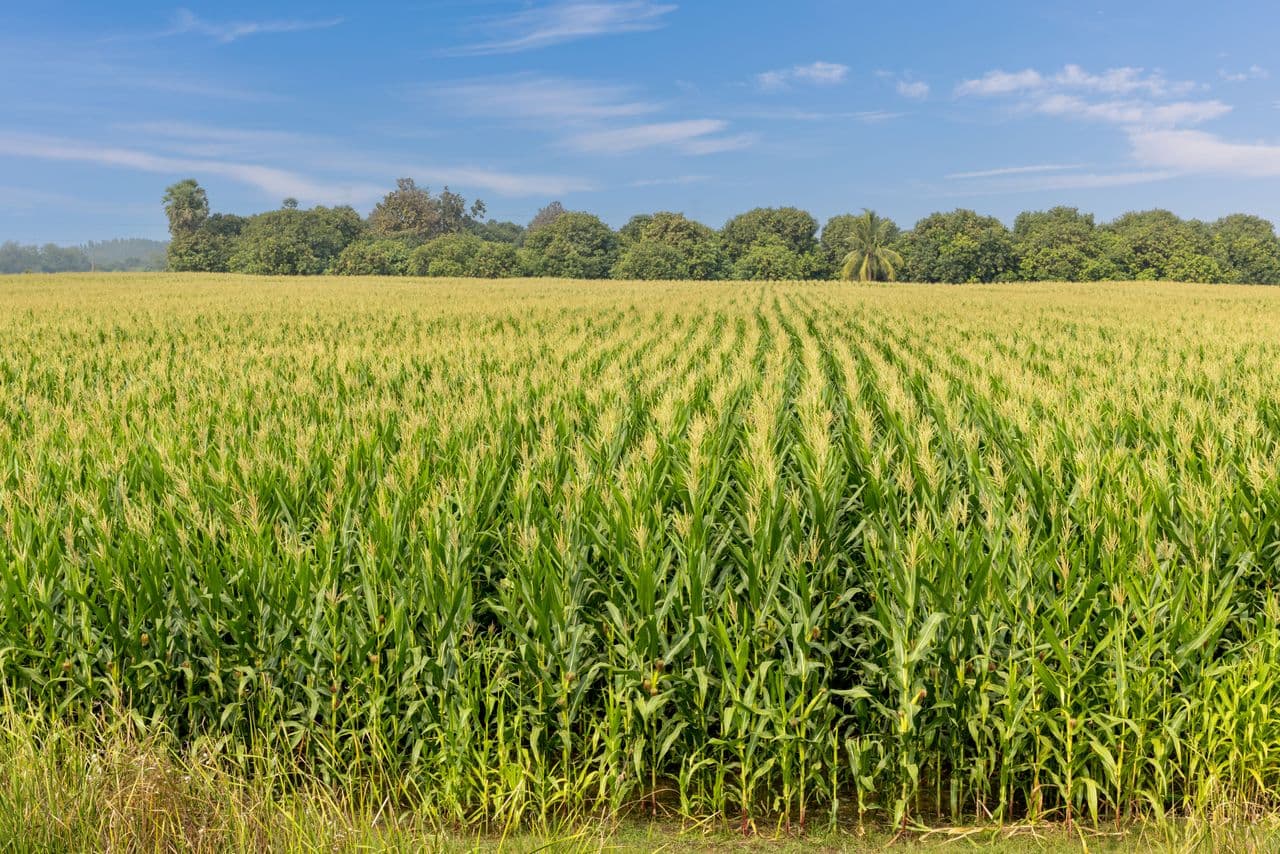
Replace fossil plastics with compostable maize resin
 Sunar NP Kimyevi Maddeler Plastik Ambalaj San. Tic. Ltd. Şti.
 SKD Türkiye
总结
A biodegradable polymer made from maize starch runs on existing plastic processing machinery, letting converters replace fossil-based resin without new equipment.
Context
Submitted through the COP31 Sustainable Transformation Awards, SKD Türkiye (WBCSD Global Network Partner)
The company manufactures chemicals, plastics and packaging materials and is the youngest company of an agricultural processing group whose core raw materials are maize, sunflower and wheat; it has fewer than 50 employees (1).
The problem it was set up to address is the persistence of conventional plastics. Approximately 8 million tonnes of plastic waste reach the seas each year, microplastics are detected in marine organisms and pass through various routes into the human body, and the world population is expected to exceed 9 billion by 2050, which means more waste rather than less. In the waste hierarchy, material that cannot be reduced or reused has to be substituted with an alternative that does not damage biodiversity at end of life.
There was also an industrial dimension. Biodegradable polymers were previously imported into Türkiye, so converters wanting to offer compostable products depended on foreign supply, and a sector already contributing to the current account deficit had no domestic certified alternative.
The group's position is that a by-product or finished product of one company should be the raw material of another, and starch chemistry sits at the centre of that logic. Research and development is run through a group research centre that received formal research centre status in May 2018 and employs chemistry and food engineers and researchers from the basic sciences, which is the capability the biopolymer work was built on (1).
Location of the initiative: Adana, Türkiye
Solution
The product is a biodegradable, compostable polymer raw material produced by plasticising maize starch, supplied to plastics converters in Türkiye and abroad as a substitute for fossil-based resin.
The range has three layers: polymers produced by plasticising maize starch, polymers formed by combining those polymers, and ready-to-use compounds formed by combining polymers optimised for a specific application. The compounds can be used as raw material in the same applications as fossil-based products without loss of product performance.
The decisive design choice is drop-in compatibility. The material runs on existing plastic processing machinery with no additional investment and no equipment change; converters move to it by working at lower temperatures. That removes the capital barrier that normally decides whether a converter adopts a bio-based material, and it is the reason the switch can happen at the pace of a purchasing decision rather than an investment cycle.
End-of-life behaviour is certified rather than asserted. The material and the products made from it hold internationally recognised compostability certification: OK Compost HOME from TÜV Austria, which shows the product biodegrades in home composting conditions at low temperatures without additional industrial processing, and OK Compost INDUSTRIAL, which confirms complete biodegradation into compost in industrial composting plants under controlled temperature, moisture and microbial conditions. These certificates are held under references TP 101 and CP 101 (1). The material is fully renewable in origin, contains no genetically modified organisms and converts within 180 days into water, carbon dioxide and nutrient-bearing compost.
Application breadth follows from the compound approach: carrier and waste bags, food packaging, straws, single-use cutlery and kitchenware, toys containing no petroleum-based substances, cotton buds and agricultural mulch film. The first application area in the market was flexible packaging.
The development took four years of research before certified production was achieved, and the initiative was implemented in 2023 and is now in a scaling phase.
Figure 1: The material cycle: maize starch is compounded into bioplastic resin, converted into flexible packaging and returned to soil through composting

Figure 2: The compounding line used to produce the biopolymer: dosing units, twin-screw extruder, cooling conveyor, pelletiser and big-bag filling

Impact
Sustainability Impact
Climate
The material is a raw material rather than an emissions reduction measure inside the company's own boundary, so its climate effect is realised downstream, in the products of the converters that adopt it. Under the GHG Protocol Corporate Value Chain (Scope 3) framework the relevant downstream category is Category 10, processing of sold products: the biopolymer is supplied as an intermediate raw material and is then processed by converters into films, bags, straws, injection-moulded articles and other applications.
The feedstock is fully renewable and derived from maize starch rather than from petroleum, and the material converts within 180 days into water, carbon dioxide and nutrient-bearing compost under appropriate composting conditions.
No cradle-to-gate greenhouse gas figures have been reported for the material. The company states that a product-level cradle-to-gate carbon footprint has not yet been calculated, so a verified emissions comparison against the fossil-based resins the material replaces is not available at this stage.
Nature
The environmental case is built on end-of-life behaviour rather than on production efficiency. Conventional plastics persist in nature for hundreds of years, and the certified compostable material returns to the natural cycle without leaving a toxic residue, which reduces the long-term waste pressure on marine and terrestrial ecosystems.
Certification is what separates this from a general biodegradability claim: OK Compost HOME and OK Compost INDUSTRIAL are issued by an independent body and demonstrate not only that the product degrades but that it does so safely within defined standards, in home composting conditions and in industrial organic waste management systems respectively.
Agricultural mulch film is a specific case where the benefit is direct, since film that degrades in place removes the recovery problem from the field rather than moving it downstream. The material contains no genetically modified organisms, which matters for feedstock traceability in the group's non-GMO supply system.
Social
Domestic production of a previously imported material reduces dependence on foreign supply for converters that need certified compostable resin, and supports national capability in sustainable materials.
Consumer-facing applications include toys containing no petroleum-based substances and single-use items in contact with food, where the substitution of fossil-based polymers has a direct bearing on what households handle daily.
Customers, distributors and sector representatives are engaged as the channel through which the material reaches end users, and the local community around the production site is identified by the company as a stakeholder group in its own right.
Business Impact
Benefits
The commercial proposition for the customer is that switching costs almost nothing in capital terms. Converters can move to an environmentally preferable raw material with no additional investment and no equipment change, working only at lower processing temperatures, which is why adoption can be decided at purchasing level rather than at board level.
For the company, the initiative created a domestic and certified alternative to imported biodegradable raw material, opening both the Turkish market and export markets where demand for sustainable products is high, and extending the sustainable product portfolio that the business is built on.
Certification carries commercial weight beyond compliance: independent confirmation of compostability lets customers make substantiated environmental claims about their own products, which shortens their own qualification work.
The product line has been recognised in international business awards, and the research programme behind it has generated a wider pipeline: three research projects submitted through the company in 2021 were accepted in January 2022, covering powder maltitol, mannitol production and a new-generation dishwasher capsule detergent (1).
Costs
The principal cost was four years of intensive research and development before certified production was achieved, followed by certification, product development and market development activity. The company puts the research and development investment at approximately EUR 260,000, with a further EUR 50,000 spent on the certification and conformity assessment work needed to reach certified commercial production.
Certification is a recurring cost: OK Compost HOME and OK Compost INDUSTRIAL are maintained rather than obtained once, and each new compound formulation raises the question of certification coverage.
Cost competitiveness against fossil-based resin is identified by the company as one of the two main risks to wider adoption, together with customer adaptation. Bio-based compounds carry a raw material cost that petrochemical resin does not, and the customer's saving is regulatory and reputational rather than immediate.
The factors working the other way are increasing sustainability regulation and consumer expectation, which the company treats as the main opportunity for scaling. Costs are contained by using existing group starch processing capability as the feedstock route, by designing compounds for existing converting equipment so no customer investment is required, and by developing distributor networks rather than direct sales in export markets.
Processing at lower temperatures changes the energy profile of the extrusion step for the converter. A direct energy consumption comparison between the biopolymer compound and conventional polymer on the same extrusion equipment has not been measured, but the lower processing temperature reduces the thermal energy demand of extrusion.
As an indicative comparison, both materials enter the process at approximately 50 °C, a conventional polymer processed at around 240 °C requires a temperature increase of approximately 190 °C, whereas the biopolymer compound processed at around 160 °C requires an increase of approximately 110 °C. Based solely on sensible heating requirements and assuming comparable specific heat capacities, this corresponds to an estimated reduction of approximately 42% in the thermal energy required to bring the material to processing temperature.
Impact Beyond Sustainability And Business
Co-benefits
Because the material is compatible with installed equipment, it changes producer behaviour as well as product composition: plastic manufacturers can adopt an environmentally preferable raw material without new investment, which speeds up the diffusion of sustainable production practices across a fragmented converting sector.
The development also builds national capability in a material category that was previously imported, which the company presents as a model for other developing economies seeking a domestic route into low-carbon and circular production.
The compound approach means one certified base material serves several sectors at once: packaging, food service, agriculture and consumer products, so the certification investment is amortised across applications rather than repeated for each.
Potential side-effects
Compostability depends on the disposal route. The certificates confirm degradation in home and industrial composting conditions; where separate organic waste collection does not exist, the product may end up in landfill or the environment, where the certified conditions do not apply. The benefit therefore depends on waste infrastructure that the producer does not control.
Certified compostable products can also be confused with conventional plastics in mixed recycling streams, so labelling and consumer communication are part of the environmental outcome rather than a marketing exercise.
The feedstock is an agricultural crop, which links material demand to the same supply chain that produces food and animal feed. The group sources maize domestically within an established supply system, but the trade-off between material and food use is real and grows with volume.
Cost competitiveness against fossil resin remains the practical constraint on substitution, and this is sensitive to petrochemical prices as much as to the company's own production cost.
Implementation
Typical Business Profile
The model suits starch, sugar or other agricultural processors with an existing research capability and access to renewable feedstock, that are looking to move up the value chain from commodity ingredients into certified materials.
On the adoption side, the target is plastics converters producing single-use and packaging products on installed injection, extrusion and film equipment, that face regulatory or customer pressure to substitute fossil-based resin but cannot justify new plant.
Delivery engages research and development, production, quality, sales and business development functions working to a single product development and certification plan, with senior management holding the resource allocation over several years.
Approach
Anchor the material in an existing feedstock position: Build the polymer from a raw material the business already processes at scale (maize starch here) so that feedstock supply, traceability and non-GMO controls are inherited from the existing system rather than created from scratch.
Design for installed equipment from the first formulation: Set the requirement that the compound must run on existing plastic processing machinery without equipment change, accepting a lower processing temperature as the only adjustment, because customer capital investment is the main barrier to substitution.
Build a compound range rather than a single polymer: Develop plasticised starch polymers, combinations of those polymers, and ready-to-use compounds optimised per application, so that one certified base material can serve packaging, food service, agriculture and consumer products.
Certify end-of-life behaviour independently: Obtain internationally recognised compostability certification for both home and industrial conditions (OK Compost HOME and OK Compost INDUSTRIAL in this case) so that claims rest on third-party testing rather than on internal data.
Run pilot production with converter partners before market entry: Trial the compound on customer machinery, in this case starting with flexible packaging, to establish the processing window and product performance under real production conditions rather than in the laboratory.
Set a base year and monitor a defined indicator set: Fix the base year at implementation (2023 here) and track production volume of biodegradable raw material, number of customers using it, number of application areas, certification and conformity indicators, and the quantity of biodegradable product used in place of conventional plastic, through internal sales, production and customer tracking systems.
Extend the range through structured research funding: Use national research funding schemes to develop adjacent products from the same feedstock chemistry, keeping the research centre working on a pipeline rather than a single product.
Grow through converters and distributors rather than end users: Expand by completing certification processes, increasing collaborations with manufacturing firms, developing distributor networks and entering international markets where demand for sustainable products is highest.
Stakeholders Involved
Project leads: Senior management owns the initiative as a core component of the company's sustainability and innovation strategy, and holds the long-term resource allocation: four years of research investment followed by certification, product development and market development activity. Project outputs are managed as part of the company's sustainable growth objectives and are updated regularly in line with product development work, customer feedback and market requirements. Group-level sustainability governance runs through a sustainability committee with sub-committees covering research and development, minimum waste, energy efficiency, sustainable raw material supply, stakeholder participation and community contribution (1).
Company functions: Research and development, production, quality, sales and business development work in coordination on a single plan. The group research centre, which received formal research centre status in May 2018, provides the laboratory and technical infrastructure and staffs the work with chemistry and food engineers and researchers from the basic sciences.
Main providers: An international certification body issues and maintains the compostability certificates for home and industrial composting conditions. Feedstock comes through the group's own starch processing operations, which run non-GMO controls including supplier declarations of seed origin and periodic analysis of representative samples at accredited laboratories. Universities, public institutions and research institutes are project partners in the research programme, and national research funding supports the product pipeline.
Other: Plastics converters act as pilot partners and as the primary customers, since they are the point at which substitution actually occurs. Distributors carry the material into export markets, and sector representatives and industry associations provide the channel through which the material category becomes familiar to the wider market. The local community around the production site is treated as a stakeholder group, and customer feedback is collected systematically and fed back into product development.
Key Parameters To Consider
The base year is 2023 and the initiative is in a scaling phase. Production volume of biodegradable raw material rose from 580 tonnes in the base year to 2,000 tonnes, alongside certification and market entry outcomes.
Monitoring covers application areas, customer feedback, production performance, product certification processes and market diffusion, tracked through internal sales, production, certification and customer records. Five indicators are defined: production volume of biodegradable raw material, number of customers using biodegradable products, number of application areas, certification and conformity indicators, and quantity of biodegradable product used in place of conventional plastic.
The number of application areas expanded from 2 in the base year to 8, covering shopping bags, produce bags, refuse bags, mulch films, straws, cutlery, injection-moulded products, thermoformed trays and 3D printing applications.
Certification performance has also progressed significantly. The number of product certifications increased from 5 in 2023 to 12 at present, reflecting the expansion of the certified product portfolio and continued progress in conformity and market-readiness activities.
Finally, the replacement of conventional plastics by bioplastics has continued to expand across a growing range of applications. According to European Bioplastics (2), bioplastic alternatives are now available for almost every conventional plastic material and corresponding application. In particular, their increasing use in packaging, agriculture, consumer goods and other sectors demonstrates their growing potential to replace fossil-based conventional plastics.
The technical parameter that determines adoption is the processing window: the compound must run on installed machinery, with lower temperature as the only required change.
The end-of-life parameter is 180 days to conversion into water, carbon dioxide and nutrient-bearing compost under appropriate composting conditions, certified for both home and industrial systems.
Implementation And Operations Tips
Compatibility beats performance marketing. The single feature that moves converters is that the material runs on the machines they already own; every other argument is secondary to avoided capital expenditure.
Certify both home and industrial composting if the product will reach consumers. Industrial certification alone leaves the end user without a disposal route in most municipalities.
Expect the cost gap against fossil resin to be the deciding factor, and plan the commercial approach around segments where regulation or customer commitments already price that gap in, rather than trying to win on cost.
Start in one application area and widen from there. Flexible packaging established the processing window and product performance before the range was extended to other single-use categories.
Publish the measured indicators, not only the certificates. The material's environmental case will be judged on displaced conventional plastic tonnage, and that number has to be collected from the first year of production rather than reconstructed later.