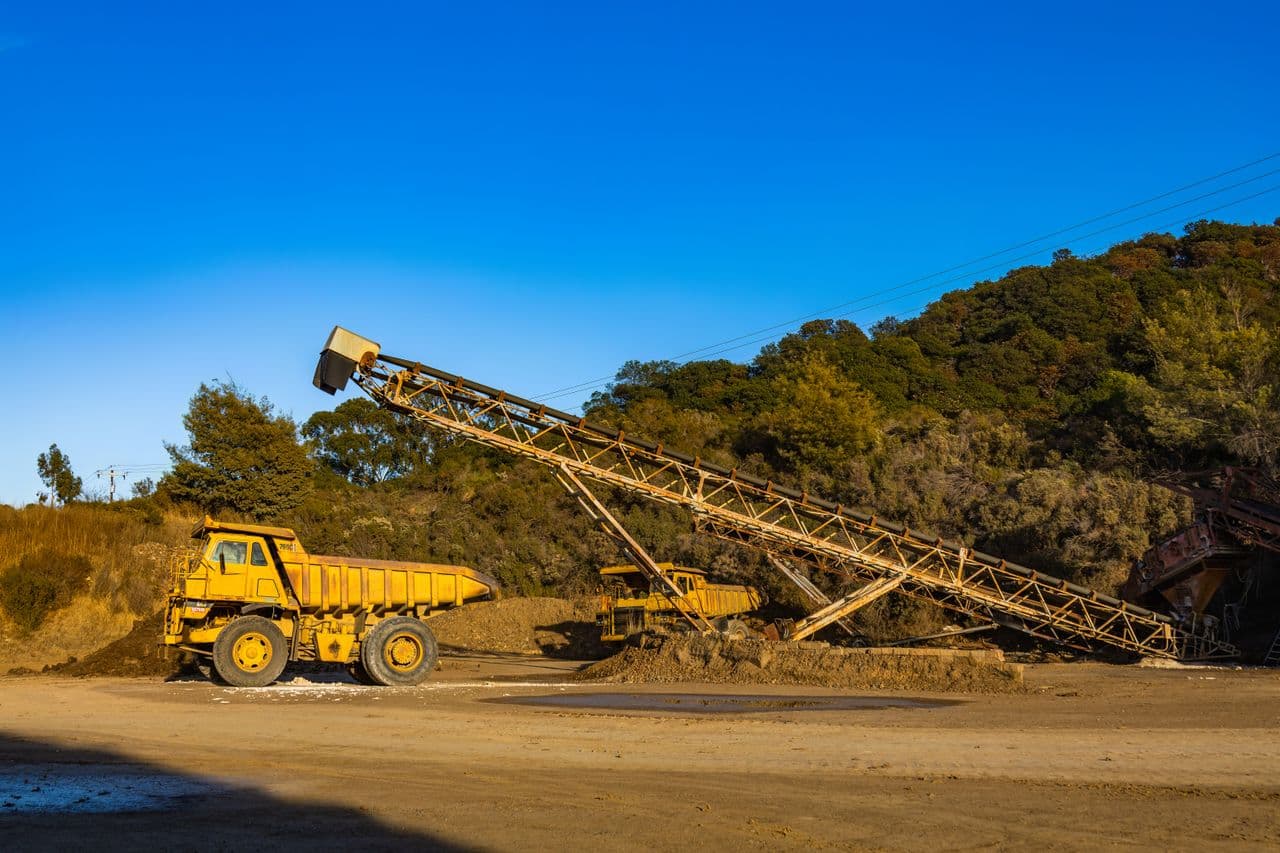
Retrofit diesel haul trucks into battery electric machines
 Nuh Çimento
 SKD Türkiye
总结
Diesel rock trucks nearing the end of their working life are rebuilt as battery electric machines, removing haulage fuel use without buying replacement vehicles.
Context
Submitted through the COP31 Sustainable Transformation Awards · SKD Türkiye (WBCSD Global Network Partner)
The company is a Turkish cement producer whose operations include the extraction and haulage of raw material from its own quarries, and it employs several hundred people.
Rock trucks are the largest single fuel consumers in a quarry. As a fleet ages, fuel consumption per tonne hauled rises, engine and transmission maintenance costs climb, and the emissions attached to moving raw material grow with them. The conventional answer is to replace the vehicles, which means new capital, new steel and a new machine built for every old one retired.
The company set a different objective: to eliminate the carbon emissions arising from the mobile transport of raw material by 2030, without waiting for the fleet to be replaced. That objective sits under a 2050 net-zero carbon target for the company as a whole and a 2030 net-zero target for its mine sites.
The application was designed in 2020. A contract was signed in 2022 with the head office of a global electrification and automation technology provider, engineering work was completed in the same year, and implementation followed.
The base year for measurement is 2022, using that year's fuel consumption, maintenance cost and operational performance data for the diesel rock truck fleet. Effects have been monitored on operational data across the 2023 to 2025 period.
Location of the initiative: Quarry and cement plant operations, Türkiye
Solution
The solution converts an existing diesel rock truck into a battery electric machine rather than replacing it.
The diesel engine and the transmission are removed. In their place the vehicle receives an electric motor, a battery pack, regenerative braking and an intelligent control and safety system, integrated so that the machine's hauling performance is preserved. What changes is the energy source and the drivetrain; the chassis, body and running gear continue in service.
The targets for conversion are machines approaching the end of their diesel working life, which is what turns the retrofit into a circular economy measure: assets that would have been written off are given a second life, and the material embodied in them is retained.
Regenerative braking is central to the operating economics. A loaded truck descending from a quarry bench returns energy to the battery, which extends the interval between charges to between one and three months in this application.
The first prototype was commissioned in 2023 under the name Mission Zero and was operated in normal production so that energy use, availability, maintenance need and safety could be measured against the diesel baseline rather than modelled.
The programme has since been extended in three directions: 12 excavators and shovels and 5 rigid mining dump trucks have been converted, and 19 factory-built electric vehicles have been purchased under a 100 per cent electrification approach for duties the retrofit does not cover. The wider electrification programme now runs 36 electric heavy machines, made up of 12 excavators and shovels, 11 wheel loaders and 13 heavy trucks, supporting continuous 24/7 quarry operations.
Figure 1: Before and after: a diesel Euclid haul truck and the same machine rebuilt as a battery electric unit

Impact
Sustainability impact
Climate
The initiative targets Scope 1 emissions, which are the diesel litres burned in the company's own mining fleet. Those emissions are not offset but removed at the vehicle, and the residual energy demand moves into Scope 2 as purchased electricity.
Carbon emissions are assessed from fuel consumption data in line with greenhouse gas emission calculation principles, comparing the diesel fleet's fuel use with the converted vehicle's energy consumption, maintenance need and operational performance.
The prototype electric rigid mining dump truck alone had run 5,535 hours by the end of December 2025 and prevented the consumption of 243,540 litres of diesel. Across the fleet, 6 million litres of diesel were avoided between 2019 and 2025, equivalent to 15,960 tonnes of Scope 1 CO2e avoided using DEFRA 2026 emission factors. Across the broader electrification programme, the latest cumulative data provided indicate more than 100,000 working hours and approximately 6.0 million litres of diesel displaced to date. Electric loading equipment has loaded approximately 25 million tonnes of material, while electric haulage equipment has transported approximately 3.2 million tonnes.
The purchased electric vehicles add to the effect: had those machines been specified as diesel, a further 904,233 litres of fuel would have been consumed during 2025 alone.
If all electric mining dump trucks are converted in line with the 2030 target, annual fuel savings of approximately 1,500,000 litres are projected from the dump truck fleet alone.
Nature
Removing combustion from the haulage fleet removes the exhaust emissions, particulates and fumes generated inside the quarry, where machines work in confined benches and haul roads and where the air quality effect is felt directly by the people working there.
Electric drivetrains are also markedly quieter than diesel engines under load, which lowers the noise footprint of the operation on the surrounding area.
Extending the working life of heavy machinery reduces demand for newly manufactured equipment and for the steel, castings and components that go into it, so the resource saving reaches back up the supply chain rather than stopping at the quarry gate.
Social
The conversion work has built domestic engineering capability. Design, integration and commissioning of an electric drivetrain into an existing heavy machine is specialist work and carrying it out locally has developed technical competence that would otherwise have been imported with the equipment.
Operators, maintenance staff and site teams gained skills in a technology that is new to the sector, supported by the systematic collection of their feedback on vehicle performance, energy consumption, safety criteria and maintenance needs.
Working conditions improve for the crews themselves: no exhaust in the working area, less noise and less vibration during shifts that often run for eight hours or more in a confined pit environment.
The project has also created collaboration between engineering firms, academic institutions and industrial operators, which spreads the technical knowledge beyond the company that developed it.
Business impact
Benefits
The commercial case has three components: fuel, maintenance and avoided capital.
Fuel disappears from the converted machines entirely. Diesel consumption of 6 million litres was avoided between 2019 and 2025, and full conversion of the dump trucks and loading vehicles is projected to save approximately 2.5 million litres a year.
Maintenance falls because the components that fail are no longer there. The diesel engine, transmission and associated mechanical equipment generated the majority of the maintenance burden, and the oil and mechanical servicing previously required every 400 operating hours is no longer needed. Downtime falls with it.
Capital savings are the single largest item. Converting a machine instead of buying a new one has resulted in investment savings of approximately US$500,000 per vehicle. Against an assumption of an engine overhaul life of approximately 20,000 hours, the projected savings are approximately US$250,000 over five years. For automatic transmissions, a saving of $150,000 USD in overhaul costs is achieved within five years.
Operationally, regenerative braking reduces net charging demand on downhill-loaded duty cycles, helping extend charging intervals and limit the impact of charging on the haul cycle.
Costs
The investment is the conversion itself: the electric motor, battery pack, regenerative braking system, intelligent control and safety systems, the engineering design and the workshop labour to strip and rebuild each machine.
Each retrofit conversion incurs an investment cost of $750,000.
The first conversion carried a development cost that later ones do not. The application was designed from 2020, contracted in 2022 and only commissioned as a running prototype in 2023, so a first mover in this area should expect a multi-year engineering timeline before the first vehicle earns anything.
Operating costs shift rather than vanish. Diesel expenditure is replaced by electricity purchase, charging infrastructure has to be installed and connected at quarry sites where grid capacity may be limited, and battery condition becomes a maintenance and eventual replacement item.
The charging station installation cost for different vehicles is calculated at approximately $60,000 based on current exchange rates.
Electricity consumption is monitored under existing terrain conditions and varies by duty cycle. The current dataset records about 20 kWh per hour per vehicle, and the projected annual energy cost is approximately TRY 200,000, about USD 4,200 at the stated exchange rate.
Because business models with steep gradients that make heavy use of regenerative braking significantly reduce charging demands, this cost item is highly variable.
The workforce cost is real but recoverable: operators and maintenance staff have to be retrained, and the workshop needs high-voltage competence it did not previously require.
Costs are contained by selecting machines whose engines are close to overhaul, so the conversion displaces expenditure that would have been incurred in any case, and by feeding operational findings from each vehicle into the specification of the next.
Impact beyond sustainability and business
Co-benefits
The retrofit is a circular economy measure as much as a climate one. Machines that were approaching the end of their working life are returned to service instead of being scrapped, which retains the embodied material and defers the manufacture of a replacement.
Because the conversion is carried out domestically, it reduces dependence on imported equipment and develops national engineering capacity in an area where heavy machinery is normally bought complete.
The model transfers directly to quarries, mines and site haulage operations in other sectors, and its alignment with the European Green Deal and the Paris Agreement improves its access to national and international support mechanisms.
The central message is that climate action in heavy industry does not have to wait for new capital assets: existing assets can be converted, which shortens the timeline and lowers the capital barrier for operators that cannot replace a fleet at once.
Potential side-effects
Electrification moves emissions rather than eliminating them entirely. The diesel burned on site is removed, but the electricity that replaces it carries the carbon intensity of the grid supplying it, so the net result depends on how that grid decarbonises over the life of the machines.
Batteries introduce a supply chain and an end-of-life question that diesel engines do not. The environmental case is weakened if the packs are not managed properly once their traction life ends.
Additionally, regarding battery lifespan, no replacements have taken place yet, as the project has only been active for 3 years. When the battery capacity drops to the 70–80% range, it may become insufficient for operations. However, it can still be repurposed for stationary energy storage systems as a second-life application. Once it reaches the complete end of its service life, valuable metals inside, such as lithium, nickel, cobalt, manganese, and copper, can be recovered.
Charging infrastructure has to reach the working faces. Quarries are often remote, and connection capacity, cable routing and charger placement can become the limiting factor rather than the vehicle itself.
A converted machine sits outside the original manufacturer's warranty and support arrangements, which transfers responsibility for reliability to the operator and its technology partner, and makes in-house maintenance capability a prerequisite rather than an option.
The duty cycle matters. Regenerative braking delivers its value where loaded trucks descend; an operation with flat or uphill loaded hauls would require a different battery and charging specification and should be assessed separately.
Implementation
Typical business profile
The approach suits quarry, mining and heavy industry operators running rock trucks or comparable heavy machinery on fixed, repetitive haul cycles, particularly where loaded vehicles descend and regenerative braking can recover energy.
It requires a maintenance workshop capable of a major rebuild, an engineering function able to work with an electrification technology partner, and a fleet with machines approaching the end of their diesel service life so that the conversion displaces expenditure rather than adding to it.
Delivery engages mining operations, the maintenance workshop, electrical and automation engineering, health and safety, sustainability, procurement and finance, with senior management sponsorship because the first conversion is a development project rather than a maintenance job.
Approach
Baseline the diesel fleet before touching it: Record fuel consumption, maintenance cost and operational performance for each rock truck over a full year and fix that year as the reference against which every later claim is measured.
Select machines close to the end of their diesel life: Target vehicles whose engines are approaching overhaul, so the conversion replaces spend that would have been committed anyway and the circular economy gain is real rather than notional.
Contract the electrification technology and complete the engineering first: Agree the drivetrain, battery and control specification with a specialist provider and finish the engineering design before any vehicle is taken out of production.
Strip and rebuild a single prototype: Remove the diesel engine and transmission and integrate the electric motor, battery pack, regenerative braking and intelligent control and safety systems on one machine before committing the fleet.
Run the prototype on real haul cycles: Operate the converted machine in normal production for thousands of hours and record energy consumption, charging interval, availability, maintenance need and safety performance against the diesel baseline.
Route site feedback back into the specification: Collect structured feedback from site teams, operators, maintenance personnel and the technology provider, evaluate it systematically and revise the design before the next conversions are authorised.
Scale the conversion and buy electric where conversion cannot reach: Extend the retrofit across the fleet and purchase factory-built electric vehicles for the duties the retrofit does not cover, so the electrification target is not limited by what can be converted.
Report monthly and disclose annually: Convert litres of diesel avoided into CO2e using published emission factors, evaluate the impact data monthly, and present the result to all stakeholders in the integrated annual report.
Stakeholders involved
Project leads: Senior management owns the project as a strategic priority rather than as an operational improvement, positioning it as a component of the company's sustainability, climate action and efficiency objectives under the 2050 net-zero carbon target and the 2030 net-zero target for mine sites. Management provided the financial and organisational support required at the planning, development and implementation stages and followed every phase closely. Day-to-day oversight is shared between the cement company's management and the management of the group's mining and haulage operation.
Company functions: Mining operations, the maintenance workshop, electrical and automation engineering, health and safety, sustainability and environment, procurement and finance worked together across the conversion. The workshop carried out the strip and rebuild, engineering managed the integration with the technology provider, and sustainability converted the operating data into the emissions figures published each year.
Main providers: The electric drivetrain, battery and control technology was contracted in 2022 with the head office of a global electrification and automation technology provider, with the engineering work completed in the same year. The provider supplied the technology and the engineering support; the vehicles, the workshop capability and the operating knowledge came from the company.
Other: Site teams, operators and maintenance personnel supplied feedback that was evaluated systematically, so vehicle performance, energy consumption, safety criteria, maintenance needs and operational data all fed improvements back into successive conversions. The project has additionally created a working relationship between engineering firms, academic institutions and industrial operators, which is how the technical knowledge is spreading beyond a single quarry.
Key parameters to consider
Figures quoted for the wider electrification programme cover cumulative results that extend beyond the 2019 to 2025 period reported here.
Five indicators are tracked: 1. diesel fuel consumption avoided; 2. energy efficiency, measured as the extension of the charging interval through regenerative braking; 3. greenhouse gas emissions avoided; 4. maintenance need and downtime; 5. economic saving over the life of the engine.
Scale to date is 17 converted vehicles and 19 purchased electric vehicles. The prototype has run 5,535 hours; oil and mechanical servicing formerly required every 400 hours is no longer needed; the assumed diesel engine overhaul life across the fleet is approximately 20,000 hours, which underpins the projected saving of approximately 250,000 USD over five years. Across the wider electrification programme, more than 100,000 working hours have been accumulated on 36 electric heavy machines, made up of 12 excavators and shovels, 11 wheel loaders and 13 electric mining trucks, supporting continuous 24/7 quarry operations.
The conversion is a first-of-a-kind engineering exercise in heavy machinery, so the experience and performance data from the prototype form the reference for the remaining conversions planned to 2030 rather than a finished specification.
Long-term continuity is secured through the company's sustainability strategy, its carbon reduction roadmap and its investment plans, which is what keeps the conversion programme funded between prototype and fleet.
Implementation and operations tips
Convert machines that were about to cost money anyway. Selecting vehicles close to engine overhaul is what makes the investment saving of approximately 500,000 USD per vehicle real, because the alternative was expenditure, not zero.
Prove one machine properly before authorising the rest. Thousands of operating hours on a single prototype produced the energy, maintenance and safety data that made the fleet decision defensible.
Check the duty cycle before the battery specification. Regenerative braking on descending loaded hauls can materially reduce net energy demand and charging frequency; the same battery on a different profile may not deliver the same operating result.
Build the feedback loop into the programme, not around it. Structured input from operators and maintenance staff turned a technical conversion into a continuous development programme, and it is why later conversions differ from the first.
Measure in litres before converting to tonnes of CO2e. Fuel volume is the figure the operation already records accurately, and it is the figure that survives a change of emission factor.