Scale regenerative agriculture across sourcing regions
 Ülker Bisküvi San. A.Ş.
 SKD Türkiye
总结
Wheat, hazelnut and cocoa growers adopt regenerative practices with satellite, sensor and agronomy support, raising yields and soil moisture while cutting input emissions.
Context
Submitted through the COP31 Sustainable Transformation Awards · SKD Türkiye (WBCSD Global Network Partner)
Ülker Bisküvi San. A.Ş. is a food manufacturer producing biscuits, chocolate, and cakes with an annual production capacity of approximately 1 million tonnes and a workforce of more than 10,000 employees. The company utilises over 400,000 tonnes of agricultural raw material annually, more than 80% of it domestically.
Wheat, hazelnut and cocoa are the three raw materials on which that volume depends, and each is exposed to the same set of agronomic pressures: soil degradation, rising emissions, inefficient water use, deforestation, biodiversity loss and incorrect input use, alongside pest management, productivity and farmer welfare.
The response was a regenerative agriculture programme that treats the field, rather than the contract, as the unit of change. It began in cocoa in 2020 and was extended to wheat, oat and hazelnut in 2023, then moved into a scaling phase over the 2025 and 2026 periods.
The programme is written into corporate targets. It supports the sourcing of main raw materials from sustainable sources and a target of 10,000 decares of wheat under regenerative practice by 2030, secures wheat, cocoa and hazelnut supply, and contributes to the 2050 net zero target through Scope 3 emission reduction. Area is recorded throughout in decares, the local unit equal to one tenth of a hectare.
Location of the initiative: Seven provinces of Central Anatolia for wheat and oat and Giresun in the Black Sea region for hazelnut, Türkiye, and eight cocoa growing regions of Côte d'Ivoire
Solution
One model is applied across three commodities, with the practice set adapted to each crop and combined with farmer support and field data.
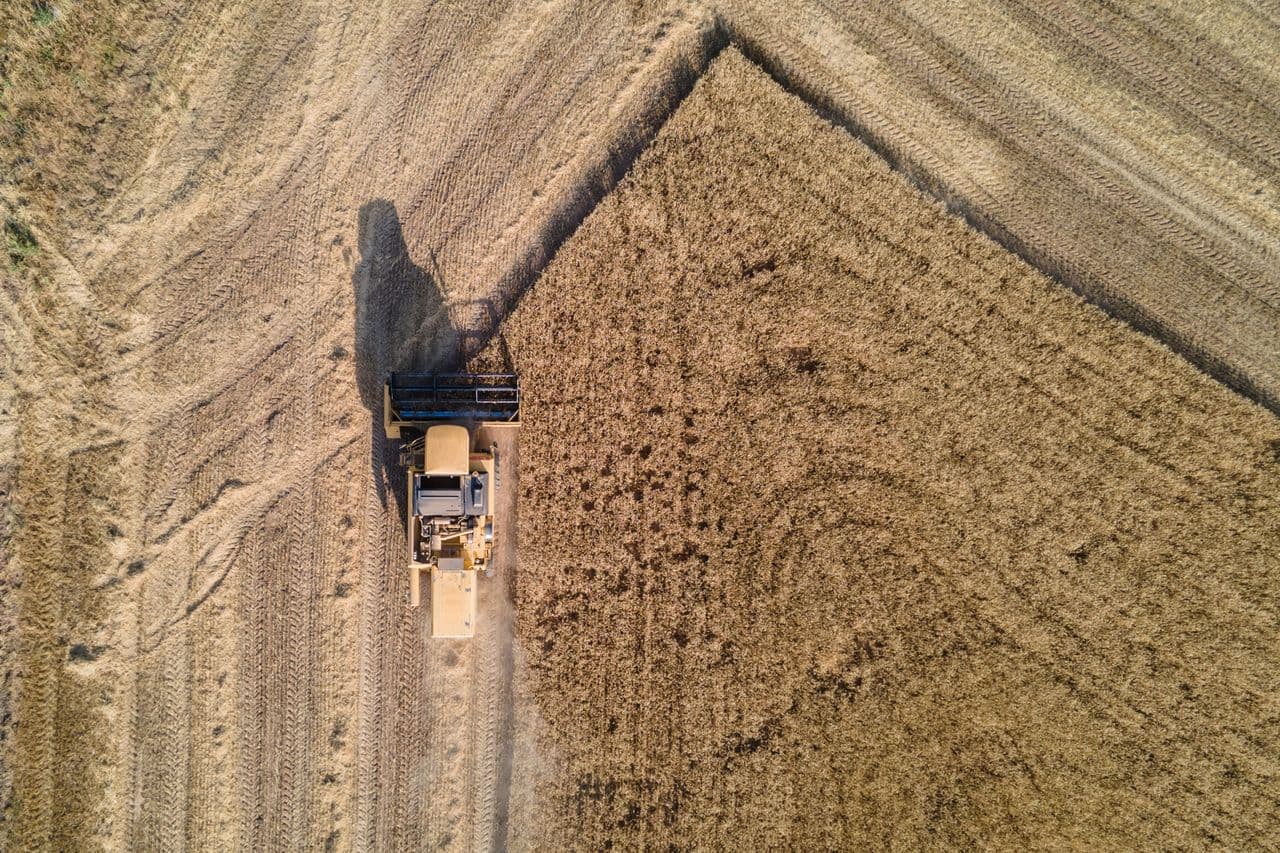
In wheat and oat, the practices are cover crops and hedge plants, conservation tillage, integrated pest management, efficient irrigation and nutrient management. Fallow land is brought back into use by sowing vetch, which supports soil health and gives farmers an additional harvest.
In hazelnut, the practices are microbial fertiliser and organic fertiliser produced from hazelnut shells, pheromone traps, the release of samurai wasps against the brown marmorated stink bug, weed management and pruning technique.
In cocoa, the practices are agroforestry together with efficient fertiliser and agrochemical use, applied alongside satellite-verified confirmation that the land is free of deforestation.
Farmers are enrolled at three levels of adoption, leading, advanced and engaging, so that the area under the full practice set can grow without excluding producers who are beginning.
Technical support, financial support and training accompany the practice change, and data-driven management is provided through satellite monitoring, moisture and temperature sensors and digital soil analyses.
Field observations, satellite verification systems, digital monitoring tools, farmer records, training records and seasonal performance measurements are analysed against standard indicators and reported regularly (1).
Figure 1: Use of cover crops and sensor technologies on fallow land within wheat production systems.

Figure 2: Actions taken against the pest in hazelnut production.

Figure 3: Farmer training and field visit in Côte d'Ivoire

Figure 4: 2026 programme scope

Impact
Sustainability impact
Climate
The initiative targets Scope 3 emissions (Category 1: Purchased goods and services) from purchased agricultural raw materials, which arise in the cultivation of wheat, oat, hazelnut and cocoa outside the company's own operations.
In wheat, fertiliser optimisation reduced carbon emissions by 10% in dry farming and by 6% in irrigated farming, and irrigation optimisation reduced them by a further 4% and 32% respectively.
In cocoa, sourcing from land verified as free of deforestation produced a further 10% emission reduction.
These reductions contribute directly to the 2050 net zero target. Cover crops, conservation tillage and higher soil organic matter also raise carbon retention in the soil itself, which is followed through the soil measurements taken each season.
Nature
Soil health improved measurably. Across the wheat project area, nutrient management was applied on 100% of the area, cover crops or conservation tillage on 22%, hedge plants on 12% and irrigation efficiency measures on 34%, raising soil organic matter, reducing erosion and supporting soil microbiota. In hazelnut, 200 farmers received organic fertiliser and 40 farmers microbial fertiliser, which reduced chemical inputs.
Soil moisture in the wheat areas rose from 16% in 2024 to 19% in 2025 under cover crops, reduced tillage and fertiliser management, strengthening soil structure and water holding capacity.
Pest control moved from chemical to biological methods in hazelnut. 9,000 samurai wasps were released against the brown marmorated stink bug, 200 pheromone traps were distributed, and three artificial intelligence supported smart cameras were installed to monitor pest populations in real time.
Deforestation was addressed at farm level in cocoa. A satellite-verified no-deforestation process was applied to 100% of the 11,180 cocoa farms in eight regions of Côte d'Ivoire, and with confirmation from the Earthworm Foundation and a satellite imagery provider the share of cocoa sourced from land free of deforestation reached 100%.
Biodiversity was supported through planting. 42 fruit saplings were distributed as hedge plants in the wheat areas to provide additional income and ecosystem resilience; 1,500 certified Giresun hazelnut saplings were distributed to 30 producers, protecting yield and genetic heritage; and 16,175 forest and fruit trees were planted on cocoa land in Côte d'Ivoire to raise water holding capacity and biodiversity. The total number of saplings distributed by the programme is 17,717.
Of the biomass obtained from the vetch sown on fallow land, 84% was used as seed, 13% as animal feed and 3% as hay.
Social
By 2026 the programme covered 1,448 farmers and 35,056 decares across three main raw materials, an area equivalent to about 4,900 football pitches and to the annual food requirement of roughly 13,000 people.
Wheat began in 2025 with 101 farmers in seven provinces of Central Anatolia, on 1,060 decares at the advanced level and 5,800 decares at the starter level, and was extended in 2026 to 625 farmers in wheat and oat, on 2,410 decares at the advanced level and 19,620 decares at the starter level.
Hazelnut in Giresun grew from 200 farmers on 2,675 decares to 350 women farmers on 4,356 decares, and the number of women farmers is rising by 40% to 50% a year.
Cocoa in Côte d'Ivoire grew from 124 farmers on 2,570 decares to 473 farmers on 8,670 decares.
Training is delivered on a fixed rhythm. Wheat farmers receive six remote support sessions and six field training sessions each season, amounting to approximately 1,500 person-hours; women hazelnut farmers received more than 2,000 hours of training; and in Côte d'Ivoire 150 farmers were trained for six months in forest schools on good agricultural practice, agroforestry and agrochemical management.
Additional income reaches farmers through the vetch harvest taken from land that would otherwise lie fallow and through the fruit saplings distributed as hedge plants, alongside the yield gains recorded.
Business impact
Benefits
Yield is the direct commercial result. Compared with the 2024 season, wheat yield rose by 21% in both dry and irrigated areas, and hazelnut yield by 35%.
Input optimisation lowers cost at the same time. Nutrient management, irrigation efficiency and biological pest control reduce fertiliser, water and agrochemical use per unit of output, so the yield gain is not bought with higher input spend.
Supply security improves across three raw materials. More than 400,000 tonnes of agricultural raw material is procured each year, over 80% of it domestically, and the programme protects the productive capacity behind that volume.
Traceability and verification support market access. Farm-level mapping and satellite-verified no-deforestation status in cocoa provide auditable evidence against the requirements of the European Union deforestation regulation and comparable buyer requirements.
Credibility for the reported figures rests on SBTi approved targets, CDP disclosure on climate, water and forests, reporting aligned with ISSB (IFRS S1-S2) and TCFD, and independent third-party external assurance (1).
Costs
The cost base is farmer training and field coaching across three commodities and two countries, agronomist teams in the Black Sea and Central Anatolia regions and in Côte d'Ivoire, organic and microbial fertiliser support, biological control agents and traps, sapling production and distribution, and the technology stack of satellite monitoring, moisture and temperature sensors, digital soil analysis and artificial intelligence supported cameras.
Farmer adaptation, initial investment and data infrastructure are the principal risks to scaling, and they are managed through training, incentives and purchase guarantees that give producers certainty against the cost of changing practice.
Scaling is financed through a hybrid model combining private sector investment, supply chain integration, public policy instruments and NGO partnerships. Continuity is secured through internal sustainability and sourcing budgets, long-term supply agreements, farmer capacity building investment and technology infrastructure.
The starter and advanced adoption levels contain cost by allowing most of the area to enter at lower intensity, while the advanced area, which carries the full practice set and its cost, grows more slowly.
Impact beyond sustainability and business
Co-benefits
Sowing vetch on land that would otherwise lie fallow turns an idle season into a harvest, and the biomass is used as seed, animal feed and hay rather than being left in the field.
Certified Giresun hazelnut saplings protect the genetic heritage of the local variety as well as yield, and the fruit saplings planted as hedges in wheat areas add an income stream alongside their ecosystem function.
Biological pest control reduces chemical exposure for farm workers and for neighbouring habitats, and real-time population monitoring means treatment is triggered by data rather than by calendar.
The same methodology transfers between very different contexts, from Central Anatolian wheat to Black Sea hazelnut to West African cocoa, which is what allows one design and one indicator set to serve three supply chains.
Potential side-effects
Regenerative practice shifts risk onto the farmer in the first seasons, because establishment costs and yield uncertainty arrive before the benefit. The programme manages this with technical support, financial support and purchase guarantees, but the dependency is real and a buyer without offtake capability would struggle to replicate it.
The starter level does not deliver the full effect. Most of the area is enrolled at that level, so headline area figures should be read alongside the smaller advanced area where the complete practice set applies.
Biological control depends on continuous monitoring and on release timing, so the reduction in chemical use requires the monitoring infrastructure to be maintained rather than installed once.
Satellite verification depends on imagery quality and on third-party confirmation, and farm-level mapping has to be refreshed as plots change hands.
Implementation
Typical business profile
The model suits food and beverage manufacturers and agricultural processors that buy staple crops, tree crops and tropical commodities from large numbers of small and medium-scale farmers, and that have enough volume in a defined region to justify permanent agronomy teams.
It is most relevant where producers can be reached through supplier contracts, cooperatives or the company's own procurement operations, and where a purchase guarantee can be offered against practice change.
Delivery engages sustainability, supply chain, procurement, quality and research and development functions, working with agronomists based in the growing regions.
Approach
Select commodities and regions by exposure: Start with the raw materials that carry the largest volume and the highest agronomic risk, and define the practice set separately for each crop rather than applying one package everywhere.
Split adoption into a starter and an advanced level: Enrol most of the area at a starter level and a smaller area at an advanced level, so the full practice set can be proven on limited ground while reach grows quickly.
Build the data layer before scaling: Install satellite monitoring, moisture and temperature sensors and digital soil analysis, and record farmer, training and seasonal performance data against standard indicators from the first season.
Fix the agronomic practices crop by crop: Apply nutrient management, cover and hedge plants, conservation tillage and irrigation efficiency in field crops; organic and microbial fertiliser, pruning and weed management in tree crops; and agroforestry with controlled input use in tropical commodities.
Replace chemical pest control with biological methods where the pest allows: Release natural predators, distribute pheromone traps and monitor populations in real time with smart cameras, so intervention is triggered by data rather than by calendar.
Verify land status at farm level in deforestation-exposed commodities: Apply a satellite-verified no-deforestation process to every farm in the sourcing area and have the result confirmed by an independent partner before the volume is bought.
Deliver training on a fixed seasonal rhythm: Combine remote support and field training sessions for each farmer each season, and run longer residential formats such as forest schools where the practice change is largest.
Underwrite the transition for the farmer: Combine technical support, financial support, input supply and purchase guarantees, because the producer otherwise carries the yield risk of the first seasons alone.
Measure against the previous season and report externally: Compare yield, soil moisture, soil organic matter and input-related emissions with the previous season, and publish the results through standard indicators with independent third-party assurance.
Stakeholders involved
Project leads: Senior management owns the programme, which is integrated into the sustainability and supply chain strategies, and progress is reviewed regularly at management level. All work is reported to a Sustainability Committee established at Board level. Operations are run by central and field sustainability teams together with regenerative agriculture specialists. Agronomist teams dedicated to hazelnut, wheat and cocoa manage field operations in the Black Sea and Central Anatolia regions and in Côte d'Ivoire, which is what gives the programme delivery capacity in remote and difficult geographies.
Company functions: Governance and corporate integration run through a Sustainability Platform on which the sustainability, supply chain, procurement, quality and research and development departments work in a coordinated cycle. Carbon footprint calculation, data monitoring and impact measurement are provided through digital platforms with specialist support, which is what allows one indicator set to be used across three commodities and two countries.
Main providers: Implementation partners take direct roles in farmer contracts, field application and technical advisory: a group food procurement company in wheat, the company's own hazelnut factory and demonstration orchard in Giresun, and a cocoa processing operation in Côte d'Ivoire. They contribute to operational decision-making rather than only executing instructions. A digital agriculture technology provider supplies the data-driven monitoring and analysis infrastructure in wheat; a hazelnut supplier provides training and application capacity; and in cocoa an environmental NGO and a mapping and traceability provider support verification and field practice, so that programme design stays anchored in scientific, technological and field realities.
Other: The Earthworm Foundation works on deforestation verification and on improvement at cooperative level, and a satellite imagery provider confirms the no-deforestation status of mapped farms. Producers are involved through mobile communication channels, regular field visits, telephone calls and evaluation surveys, and their requirements and suggestions are used actively to improve the programme. Training events and field days provide two-way knowledge exchange between farmers and implementation teams, and local communities take part through the farmer groups themselves.
Key parameters to consider
The programme is measured by season. Wheat and hazelnut results are compared with the 2024 season, and cocoa progress is measured against farm-level mapping and verification.
Area is recorded in decares, each equal to one tenth of a hectare. By 2026 the programme covered 35,056 decares and more than 1,400 farmers, the wheat component having grown to eight times its 2023 pilot size.
Prerequisites include a permanent agronomy presence in the sourcing region; satellite monitoring, moisture and temperature sensors and digital soil analysis; and a route to farmers through suppliers, cooperatives or the company's own procurement operations.
The stated timeline is deepening in existing regions over the short term of one to three years, and expansion into new crops and geographies over the medium term of three to five years. Rising climate and regulatory pressure accelerates adoption, while farmer adaptation, initial investment and data infrastructure remain the principal risks.
Reporting is aligned with SBTi approved targets, CDP disclosure on climate, water and forests, ISSB (IFRS S1-S2) and TCFD, with independent third-party external assurance.
Implementation and operations tips
Split the farmer base into starter and advanced levels. Requiring the full practice set from everyone slows enrolment; letting most of the area start with nutrient management and irrigation efficiency, while a smaller advanced area carries cover crops, hedge plants and conservation tillage, builds reach and depth at the same time.
Give the farmer certainty before asking for practice change. Technical support, financial support and purchase guarantees are what convert training into adoption.
Measure soil, not only yield. Soil moisture rising from 16% to 19% between seasons showed the practice was working before the yield data arrived, which matters when the harvest is a year away.
Put people in the growing region. Dedicated agronomist teams for each crop made delivery possible in Central Anatolia, the Black Sea region and Côte d'Ivoire; remote management would not have produced the same adoption rate.