Structure a social loan to finance disaster rebuilding
 Doğan Şirketler Grubu Holding A.Ş.
 SKD Türkiye
总结
A newly created public reconstruction fund reached international debt markets for the first time through a syndicated loan structured to social lending principles.
Key resources
Context
Submitted through the COP31 Sustainable Transformation Awards · SKD Türkiye (WBCSD Global Network Partner)
The company is a diversified holding group whose subsidiaries include an investment bank that advises on international financing transactions.
After the earthquakes of 6 February 2023, Türkiye faced a reconstruction requirement that public budgets alone could not carry at the speed needed. The Disaster Reconstruction Fund was created on 21 March 2023 under Law No. 7441 to channel resources into reconstruction investment in the affected regions, with governance rules set in the legislation itself.
The scale of the affected area defines the problem. The 11 provinces hit by the earthquakes had a combined population of 14 million in 2022, equal to 16.4 per cent of the national population, and they also host around 1.7 million migrants under temporary protection. On 2021 figures, 3.8 million people were employed in those same 11 provinces, 13.3 per cent of total national employment (1).
The exposure is not limited to seismic risk. According to the Intergovernmental Panel on Climate Change, the Mediterranean basin is among the regions most affected by climate change, and disaster risk and frequency are rising in Türkiye (2).
The gap the transaction addresses is the routing of international private capital into post-disaster reconstruction. The group's investment banking subsidiary, Doğan Investment Bank (Doğan Yatırım Bankası), was appointed exclusive financial adviser on the Fund's first international financing transaction.
The distinction matters for how the impact should be read. The capital raised, the housing built and the emissions or social outcomes attached to that construction sit with the public fund and the implementing housing agency (the Housing Development Administration of the Republic of Türkiye - TOKİ). The advisory company's own operational footprint is not what changes here; what it contributes is access to a class of capital that was previously closed to the borrower.
The group reports under the ISSB standards IFRS S1 and S2 and the TCFD recommendations, discloses to CDP and obtains independent third-party external assurance.
Location of the initiative: Adana, Adıyaman, Diyarbakır, Elazığ, Gaziantep, Hatay, Kahramanmaraş, Kilis, Malatya, Osmaniye and Şanlıurfa provinces, Türkiye.
Solution
The transaction is a EUR 485 million syndicated loan provided on 13 October 2025 by a consortium of international commercial banks, structured in accordance with the Loan Market Association Social Loan Principles.
The borrower is the Disaster Reconstruction Fund (DRF) and the guarantor is the Ministry of Treasury and Finance. That combination is what makes the structure work: a fund created two years earlier, with no borrowing history of its own, obtains long-tenor international funding on favourable terms because the sovereign stands behind it.
Rather than a conventional loan document alone, the financing rests on a Social Loan Framework built to the Social Loan Principles. The framework defines eligible social projects, the criteria by which the Fund selects them, how proceeds are allocated and how allocation and impact are reported. The loan agreement and the related finance documents impose a contractual obligation on the Fund to provide such reporting.
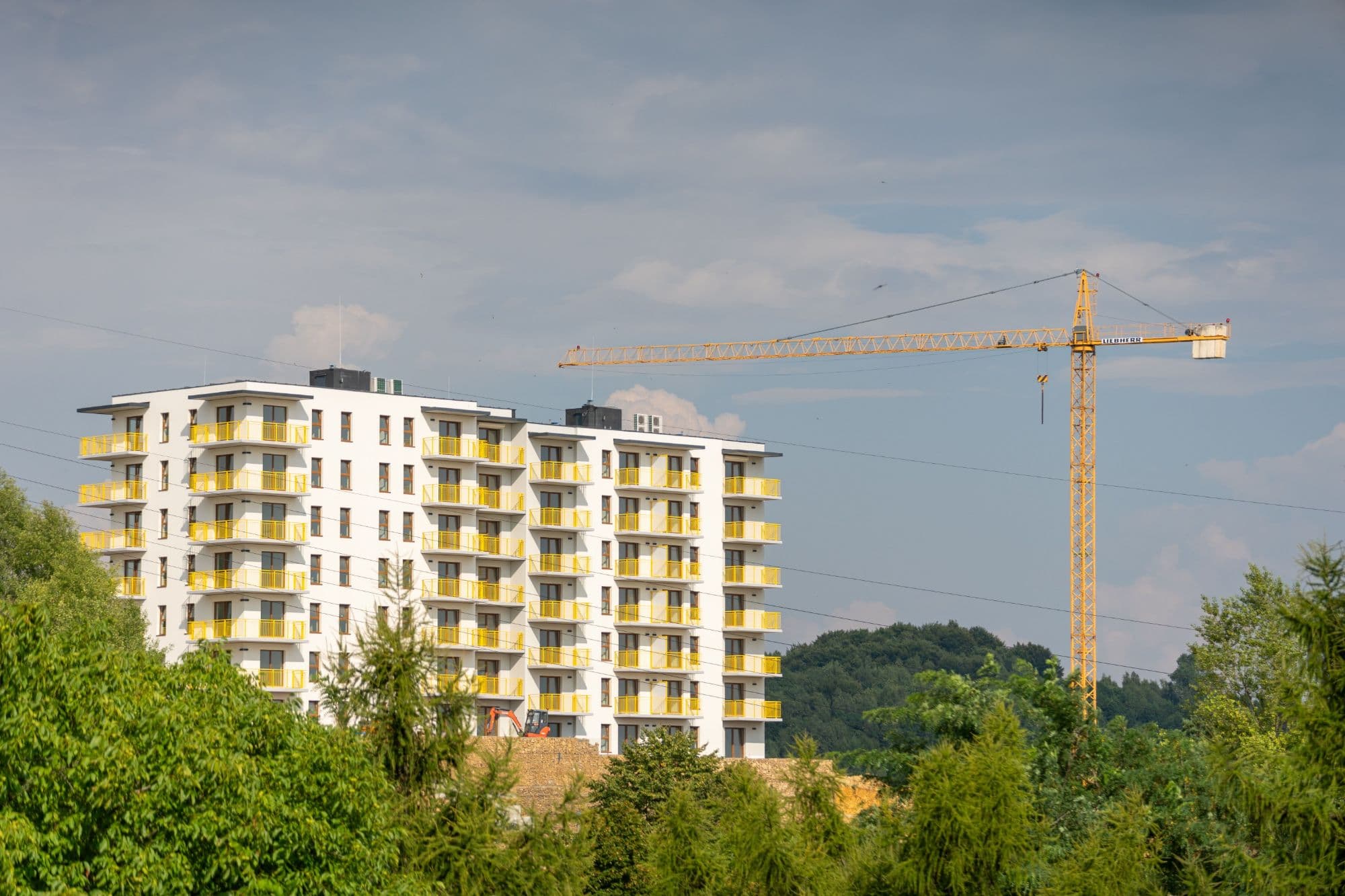
Proceeds were applied to eligible expenditure under the permanent earthquake housing programme run by the public housing agency. This use was assessed as consistent with the affordable, social and supported housing category under the Social Loan Principles.
Four elements are combined in one structure: primary legislation creating the Fund and its governance, a Treasury guarantee, an eligibility framework aligned to an international market standard, and allocation and impact reporting subject to independent audit and public disclosure. The result is a model that a public fund in another country facing comparable disaster risk can reproduce, because none of the four elements depends on the specific characteristics of this borrower.
Figure 1: Financing structure of the transaction: the Fund as borrower, the Ministry of Treasury and Finance as guarantor, the international bank consortium as lender, the housing agency as implementing body, and the exclusive financial adviser alongside the flow of proceeds and of allocation and impact reporting.

Figure 2: Timeline from the creation of the Fund under Law No. 7441 on 21 March 2023 to loan signing on 13 October 2025 and the two transfers of TRY 17 billion and TRY 6.4 billion to the permanent earthquake housing programme.

Impact
Sustainability impact
Climate
The transaction is a social financing instrument and does not carry a quantified greenhouse gas reduction. It does not target reductions in the advisory company's own Scope 1 or Scope 2 emissions, and no emission reduction is claimed for the financing itself. The loan was signed on 13 October 2025, and the base year for measuring its effect is 2023, the year the Fund was created.
Its climate relevance lies in adaptation and resilience. The Fund was created under Law No. 7441 with an institutional structure that can be used to finance reconstruction not only after earthquakes but after the floods, wildfires and other events whose frequency and severity are increasing with climate change. The permanent housing financed replaces stock destroyed by disaster with construction intended to be disaster-resilient.
Read this way, the contribution is the existence of a financing channel that can be activated after a climate-driven disaster, rather than a tonnage of avoided emissions.
Social
The social outcome is defined as safe and accessible housing for a disaster-affected population and a reduction in the socio-economic inequalities that disasters create.
The indicator used is completed housing. Financing contributed to 83,670 homes, built by the public housing agency in the provinces of Adana, Adıyaman, Diyarbakır, Elazığ, Gaziantep, Hatay, Kahramanmaraş, Kilis, Malatya, Osmaniye and Şanlıurfa.
Disbursement followed construction. TRY 17 billion was transferred to the relevant projects on 22 October 2025 and TRY 6.4 billion on 22 December 2025. A social loan report prepared after drawdown was submitted to the lead lender and confirmed that proceeds had been used in permanent earthquake housing in those provinces.
The base year for measuring the effect of the financing is 2023, the year the Fund was created, and the starting conditions are set by the population and employment figures for the 11 affected provinces.
The reported methodology has four elements: social impact is measured through the number of completed homes; the use of proceeds is tracked jointly by the Fund and the housing agency; allocations are verified against progress payment reports, invoices and payment documents; and the eligible project selection criteria, aligned with the Social Loan Principles, were not changed after the loan agreement was signed.
Accountability runs through public mechanisms as well as market ones. The Fund is subject to independent audit and to audit by the Court of Accounts, and under the law financial data on the use of resources is shared publicly at least once every three months.
Again, the distinction between financed and own impact should be kept clear: these are outcomes of the reconstruction programme that the financing enabled, not outcomes of the advisory company's own operations.
Business impact
Benefits
For the borrower, the benefit is access. A newly created public fund obtained long-tenor international funding on favourable terms, which started the flow of resources into reconstruction investment. The transaction was the Fund's first external financing and its first financing operation of any kind.
It also opened a channel rather than closing a gap once. Following the transaction the Fund's international visibility increased, new financing processes began, and the sustainability of the model was confirmed by further external funding.
For Doğan Investment Bank, the mandate converted experience gained in renewable energy and green financing into a multi-stakeholder social financing transaction at public-sector scale, which is directly transferable to comparable mandates. The transaction was announced publicly by the Fund, the adviser and the lead lender, covered in national and international media, presented as a good practice example in the group's sustainability and sustainability-standards reporting, and received a special award for service of the year at the 2025 Doğan Value Awards.
At sector level, the transaction raised awareness of social loan instruments in Türkiye and contributed to the development of a disaster financing model based on cooperation between the public sector and international financial institutions.
Costs
The costs are structural rather than capital. A transaction of this shape requires primary legislation, a sovereign guarantee, a Social Loan Framework drafted to an international standard, legal and financing documentation negotiated with an international syndicate, and an ongoing allocation and impact reporting obligation. Each of these consumes time and specialist capacity before any funding is drawn.
The guarantee is not free to the state. Treasury support is what delivers the favourable pricing, so the cost of the structure is partly carried as contingent sovereign exposure rather than as a margin paid by the Fund.
Reporting and verification create a continuing operating cost: allocation and impact reports, verification of allocations against progress payment reports, invoices and payment documents, independent audit, Court of Accounts audit and quarterly public disclosure.
The model is also conditional. It depends on suitable legal infrastructure, strong institutional governance, durable relationships with international financial institutions and the adoption of standards such as the Social Loan Principles. Where those conditions are absent, the same structure cannot simply be copied.
Costs are contained by using a single exclusive financial adviser as the interface between the public borrower and the syndicate, and by anchoring eligibility in a published market standard rather than negotiating bespoke criteria with each lender.
Impact beyond sustainability and business
Co-benefits
Protecting the employment base of the affected provinces is a benefit that runs alongside the housing outcome, given that 3.8 million people were employed there on 2021 figures (1).
The transaction was the first financing the lead lender had provided to a Turkish public legal entity other than a state bank, which widens the set of counterparties international lenders will consider in the country.
Because the Fund's mandate under Law No. 7441 is not limited to earthquakes, the same institutional model can finance reconstruction after other disaster types, so the governance work done once is reusable.
Potential side-effects
A guaranteed structure concentrates risk on the sovereign balance sheet. The favourable terms obtained by the Fund exist because the Ministry of Treasury and Finance stands behind the borrowing, and that contingent exposure should be recognised as part of the cost of the model.
Foreign currency borrowing for domestic construction expenditure introduces an exposure that has to be managed over the life of the loan.
Measuring social impact through completed housing units is straightforward and verifiable, but it captures delivery rather than outcome. It does not by itself show whether the housing reached the households most affected, which would require indicators beyond unit counts.
Replication depends on conditions that are not universally available. Without primary legislation, credible governance and a sovereign guarantee, a newly created public fund is unlikely to obtain comparable terms.
Implementation
Typical business profile
The model applies to public funds and public legal entities that need to raise long-tenor international capital for reconstruction, resilience or social infrastructure, and to the advisory institutions that structure such transactions for them.
It fits situations where the borrower is newly created and therefore lacks a credit record, where a sovereign or comparable guarantee is available, and where the expenditure to be financed maps onto a recognised social project category.
Delivery engages the borrowing fund, the guaranteeing ministry, an exclusive financial adviser, an international bank syndicate and the public body that implements the underlying investment programme.
Approach
Create the legal vehicle before approaching the market: Establish the fund under primary legislation, as was done here through Law No. 7441, so its mandate, governance and reporting duties are fixed in law rather than negotiated contract by contract.
Put a sovereign guarantee behind a borrower without a credit history: Structure the transaction with the Ministry of Treasury and Finance as guarantor, so that an entity created only two years earlier can reach long-tenor international pricing.
Write the social framework before the loan document: Build a Social Loan Framework to the Loan Market Association Social Loan Principles, defining eligible social projects, project selection criteria, use of proceeds and the allocation and impact reporting that will follow.
Map the expenditure to a recognised social category: Assess the permanent earthquake housing programme against the affordable, social and supported housing category, so eligibility can be tested by external reviewers against a published standard rather than an internal definition.
Appoint one exclusive financial adviser: Give a single institution responsibility for financing strategy, coordination with international creditors and preparation and negotiation of the financing documentation, so the public borrower faces the syndicate through one channel.
Assemble the syndicate around a lead arranger: Build the lender group around one international commercial bank willing to lead and add further international banks to reach the required size, in this case EUR 485 million.
Release proceeds against verified expenditure: Transfer funds to the implementing housing agency for eligible expenditure only, verify each allocation against progress payment reports, invoices and payment documents, and track the use of proceeds jointly between fund and agency.
Report allocation and impact, then disclose publicly: Prepare the social loan report for the lenders, measure the social result through completed housing units, and publish financial data on the use of resources at least once every three months, supported by independent audit and audit by the Court of Accounts.
Stakeholders involved
Project leads: The transaction was approved by the Fund's board, chaired by the Minister of Treasury and Finance and comprising the Ministers of Environment, Urbanisation and Climate Change, Energy and Natural Resources, Agriculture and Forestry, Interior, and Transport and Infrastructure, together with the Head of the Presidency of Strategy and Budget. The board decides under Law No. 7441 and the related legislation, and strategic management of the Fund, allocation of resources and governance processes are carried out within that legal framework.
Company functions: The group's investment banking subsidiary acted as exclusive financial adviser, taking responsibility for building the financing strategy, coordinating with international creditors, preparing the financing documentation and running the negotiation. The holding company supports its group companies' access to international sustainable financing, and the experience gained from a green financing raised for a group renewable energy company from Proparco fed directly into the social financing work on this transaction.
Main providers: International funding was provided by a syndicate of commercial banks led by a Gulf-region commercial bank, with a Kuwaiti commercial bank and the Dubai international financial centre branch of an international commercial bank as participants.
Other: The Disaster Reconstruction Fund acted as borrower and end user of the financing. The Ministry of Treasury and Finance acted not only as guarantor but also in the design of the guarantee mechanism and the financing structure. The public housing agency implemented the permanent earthquake housing programme and tracked the use of resources jointly with the Fund. Independent auditors and the Court of Accounts audit the Fund, and the Loan Market Association Social Loan Principles provided the standard against which eligibility was assessed.
Key parameters to consider
The financing is EUR 485 million, signed on 13 October 2025, with the Fund as borrower and the Ministry of Treasury and Finance as guarantor.
Drawdowns reached the housing programme in two transfers: TRY 17 billion on 22 October 2025 and TRY 6.4 billion on 22 December 2025.
The base year for impact measurement is 2023, the year the Fund was established under Law No. 7441.
Reporting runs on two tracks that have to be maintained in parallel: allocation and impact reporting to the lenders under the Social Loan Framework, and public financial disclosure at least once every three months under the law, with independent audit and Court of Accounts audit behind both.
Scaling the model depends on suitable legal infrastructure, strong institutional governance, durable cooperation with international financial institutions and adoption of international standards such as the Social Loan Principles.
Implementation and operations tips
Fix eligibility criteria before signing and leave them alone. The social loan report was able to confirm that the eligible project selection criteria had not changed after the loan agreement was signed, which is what allows an external reader to trust the allocation figures.
Verification detail carries the credibility. Allocations checked against progress payment reports, invoices and payment documents are what separates impact reporting from a narrative.
Combining a market standard with public audit is stronger than either alone. Lender reporting and Court of Accounts audit test different things, and the combination is what makes the model transferable to another public fund.
A single exclusive adviser reduces friction for a public borrower facing an international syndicate for the first time, because the borrower negotiates through one interface rather than several.