Turn organic waste into renewable energy and fertiliser
 Sütaş
Sütaş SKD Türkiye
总结
A circular farm-to-table model turns manure and organic waste into renewable energy and organic fertiliser, returning nutrients to soil while cutting emissions.
Context
Submitted through the COP31 Sustainable Transformation Awards · SKD Türkiye (WBCSD Global Network Partner)
Sütaş is a dairy group with more than 5,000 employees. It operates livestock farms, crop and feed production, dairy processing plants and biogas facilities in Türkiye under an integrated farm-to-table business model.
Before the initiative, organic waste was not used for energy generation, energy demand was met from fossil fuels, and the agricultural value of manure and organic waste was used only to a limited extent. Poorly managed animal manure also presents a risk of soil and water pollution.
The dairy value chain carries exposure on several fronts: fossil fuel prices and security of energy supply; the cost of synthetic fertiliser for feed crops; the cost and regulatory obligations of organic waste disposal; and reduced resilience of crop production under climate change. These pressures shaped the case for restructuring waste, energy, food and agricultural inputs as one system.
Location of the initiative: Four integrated production sites across different regions of Türkiye, comprising livestock farms, dairy plants and biogas facilities.
Solution
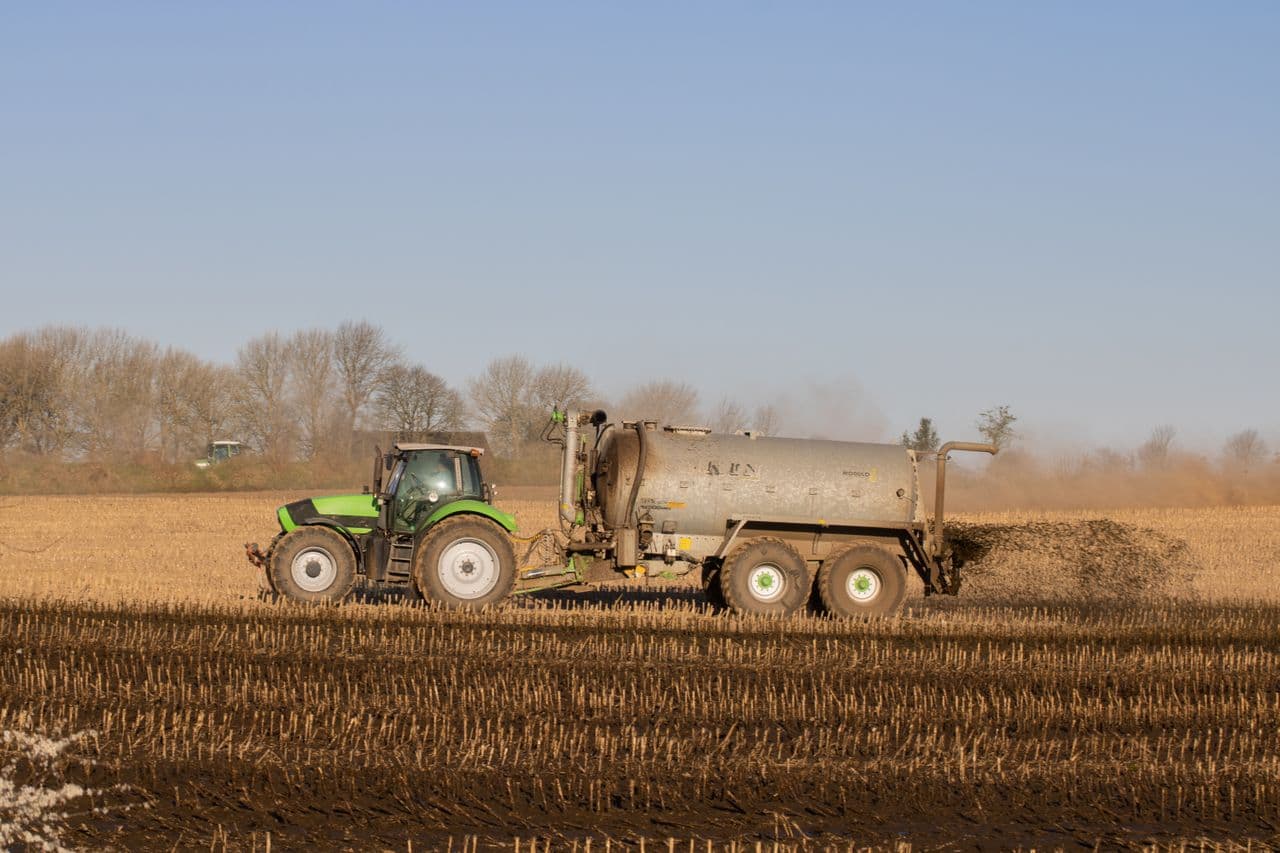
Launched in 2013, the initiative links livestock farming, crop production, food manufacturing, energy generation and waste management within a single circular system. Animal manure and organic waste are converted into energy in the biogas plants, and the digestate is processed into organic and organomineral fertiliser used in feed crop production.
Biogas feedstock is drawn from three sources: organic waste from the company's own factories; manure from its livestock farms; and organic waste sourced from the surrounding region through industrial symbiosis. Installed capacity has reached 22.4 MW of biogas-based electricity generation, 15 tonnes of steam and 13.5 MW of hot water production, covering 100% of the electricity demand and 40% of the thermal energy demand of the production plants.
The resulting emission reductions are certified and sold as carbon credits, so a stream that was previously a disposal obligation yields energy, an agricultural input and a traded environmental asset. Performance is tracked against a 2013 base year and reported annually in the company's public sustainability reporting (1).
Figure 1: The diagram shows manure and factory waste feeding biogas generation, which returns electricity, heat and organic fertilisers to the farms and plants.

Figure 2: Since 2013, the system has avoided 4 million tonnes of CO2e emissions and recovered 7 million tonnes of organic waste.

Impact
Sustainability impact
Climate
This initiative targets Scope 1 and Scope 2. Biogas displacing fossil fuels in the company's own plants, and methane avoided from manure on its own livestock farms, fall under Scope 1; self-generated electricity displacing purchased grid electricity falls under Scope 2. Organic fertiliser replacing purchased synthetic fertiliser in feed crop production falls under Scope 3, Category 1: Purchased goods and services. The scopes are classified from where each activity sits, as the reductions are reported as a single figure rather than allocated by scope.
Based on the company's measurement, the initiative avoided 420,000 tonnes of CO2e in 2025 and approximately 4 million tonnes of CO2e cumulatively against the 2013 base year. Reductions are calculated from biogas electricity generation, fossil fuel substitution and avoided methane emissions from manure. The company reports this cumulative volume as equivalent to the annual carbon uptake of around 2.3 million hectares of black pine forest.
Certified carbon credits from these reductions are sold in carbon markets. Application of organic fertiliser is also expected to store carbon in soil, supporting the natural carbon sink function of the farmland involved.
Nature
All organic waste generated is recovered in the biogas plants rather than disposed of, converting a waste stream into a production input. Recovering animal manure through the biogas system reduces the risk of soil and water pollution associated with conventional manure management.
Since 2013, 7 million tonnes of organic waste have been recovered and 2.5 million tonnes of organic fertiliser produced. Since 2013, 55,000 tonnes of organic matter were returned to 122,000 decares (12,200 ha) of farmland, improving soil structure and productivity. Higher soil organic matter raises water holding capacity, and substituting organic fertiliser for synthetic fertiliser reduces agricultural pollution pressure on water resources.
Social
The model has changed farming practice across the surrounding area. Hundreds of farmers and producer organisations have adopted organic fertiliser use, soil management and sustainable feed production, supported by field applications developed with public institutions and academic bodies.
Local economic value is created by sourcing organic waste from the region and by returning fertiliser and energy into local production. Improved soil water holding capacity supports production continuity during drought periods, which helps protect farm incomes tied to the dairy value chain.
Business impact
Benefits
Self-generated biogas covers 100% of the production plants' electricity demand and 40% of their thermal demand, lowering energy costs and reducing dependence on external and imported energy. In 2025 the plants generated 247,000 MWh of renewable energy.
The initiative converts a disposal cost into revenue: 755,000 tonnes of organic fertiliser produced in 2025 is sold and used internally, and certified carbon credits are monetised in carbon markets. Together with reduced synthetic fertiliser purchasing, these revenue streams underpin the financial case.
Generating energy on site reduces external dependence within the supply chain and supports operational resilience.
The initiative's performance is incorporated into the company's broader climate and sustainability reporting framework.
Costs
The main cost drivers are the biogas plants themselves, the equipment for electricity, steam and hot water production, and the processing capacity for organic and organomineral fertiliser. Installation takes 2–3 years, and operational impact maturity is reached in approximately 4 years, so returns build over a multi-year horizon.
Budgets for the biogas facilities are carried within the company's renewable energy investment planning and governed at Board level.
Three mechanisms reduce the financial burden: long-term offtake guarantees for biogas investments; renewable energy incentive mechanisms; and carbon credit revenue. Ongoing viability depends on a steady local supply of organic feedstock, permits from public authorities, and access to carbon markets.
Impact beyond sustainability and business
Co-benefits
The system addresses energy security, food security and soil health together. Higher soil organic matter and water holding capacity act as an adaptation mechanism, supporting feed crop production through drier seasons and reducing volatility in the dairy value chain.
Implementation
Typical business profile
The model is most relevant to dairy, livestock and food manufacturers that generate or can access large volumes of manure and organic waste close to their processing sites, and to companies integrating farming and processing within one business. It suits environment, energy, agricultural and production functions working together, and applies in geographies with renewable energy incentives, biogas permitting routes and access to carbon markets. It is adaptable across different production capacities.
Approach
Map the feedstock: Establish the manure and organic waste flows generated by the company's own farms and factories, and identify additional organic waste available from the surrounding region.
Size the capacity: Match biogas capacity to the electricity, steam and hot water demand of the processing plants so that generated energy displaces purchased fossil energy.
Secure permits: Align the design with existing renewable energy and environmental regulation, working with public institutions and local authorities.
Build and connect the plants: Construct the biogas facilities and link them to the processing sites, allowing 2–3 years for installation and around 4 years to reach operational impact maturity.
Close the nutrient loop: Process the digestate into organic and organomineral fertiliser and apply it on feed crop land, recording the area treated and the organic matter returned.
Establish integrated monitoring: Meter energy generation, waste recovery and field applications in real time at facility level, and report annually against a fixed base year.
Monetise the reductions: Certify the emission reductions and sell them as carbon credits to strengthen the financial case alongside fertiliser sales and avoided energy costs.
Secure feedstock supply: Extend sourcing through industrial symbiosis agreements with regional waste producers and integration with producer organisations.
Stakeholders involved
Project leads: The Board of Directors and the Sustainability Committee provide project leadership, monitoring the initiative through regular sustainability and investment decision processes, releasing the biogas investment budgets in phases and positioning the system within the group's integrated farm-to-table business model.
Company functions: Environment, energy and agriculture teams work jointly, coordinating the biogas plants, the agricultural production sites and the dairy processing plants so that waste management, energy generation and soil improvement are managed as one system; feedstock, energy and field application data are shared between them through the same facility-level monitoring.
Main providers: Technology, equipment and service suppliers delivered the biogas and fertiliser processing capacity, building to specifications set with the company's energy and environment teams so that generation capacity matched the processing plants' electricity and thermal demand, and remaining engaged through the 2–3 year installation period.
Other: Public institutions and local authorities supported regulatory compliance, permitting and alignment with regional development. Academic and research institutions helped develop and validate biogas, organic fertiliser and regenerative agriculture applications. Farmers and local communities apply the fertiliser in the field. Feedback is gathered through site visits, audits and collaboration platforms.
Key parameters to consider
The technology is mature and operated at commercial scale, with capacity at 22.4 MW of electricity, 15 tonnes of steam and 13.5 MW of hot water. The indicative timeline for replication is a 2–3 year installation period and around 4 years to operational impact maturity.
Key prerequisites include a reliable local flow of manure and organic waste; permitting under environmental regulation; and processing capacity for organic and organomineral fertiliser. The model is aligned with existing renewable energy and environmental legislation and climate policy. Financial viability depends on long-term offtake guarantees, renewable energy incentives and carbon credit revenue. Data have been monitored and reported annually since the 2013 base year.
Implementation and operations tips
Securing sufficient feedstock is the main constraint on scale. This was addressed by combining three streams: factory organic waste; farm manure; and regionally sourced organic waste under industrial symbiosis, so that no single source limits the plants.
Adoption of organic and organomineral fertiliser by farmers required field demonstration and validation with academic and public bodies, alongside supplier and producer organisation engagement.
Wider adoption is driven by the combination of revenue streams: avoided energy cost, fertiliser sales and carbon credit revenue together make the investment viable rather than relying on environmental benefit alone.