Decarbonise stores with solar and smart energy management
 Boyner Büyük Mağazacılık
 SKD Türkiye
总结
Solar generation, certified green supply, LED conversion, real-time monitoring and efficiency measures together removed electricity emissions across a nationwide store network.
Context
Submitted through the COP31 Sustainable Transformation Awards · SKD Türkiye (WBCSD Global Network Partner)
The company operates department stores in the retail sector across Türkiye and employs approximately 4,000 people.
Electricity is the dominant environmental impact of a department store network. It is consumed in lighting, climate control and back-of-house operations at every site, it scales with floor area and trading hours rather than with sales, and it is the source of the retailer's purchased-electricity emissions. A portfolio of stores also spreads that consumption across many small sites, which makes it difficult to see where the waste sits.
The company positions action on climate change among the priorities of its Responsibility to the World strategy, with the specific objective of decoupling operational growth from carbon emissions, raising energy efficiency and accelerating the shift to a low-carbon operating model.
The response was to manage energy as one system rather than as a series of separate projects. Generation, efficiency, digital monitoring and certified supply are treated as four components of a single programme, supported by data-driven decision making and sustainability-linked financing.
The programme was launched in 2019 with the digital energy monitoring system and the LED conversion, with 2018 as the baseline year for the efficiency measures. The solar plant, green electricity procurement and I-REC certified supply were added in 2025, which is the baseline year for the renewable energy measures, so the programme carries two baselines for its two phases.
Solution
Four components are managed under one model.
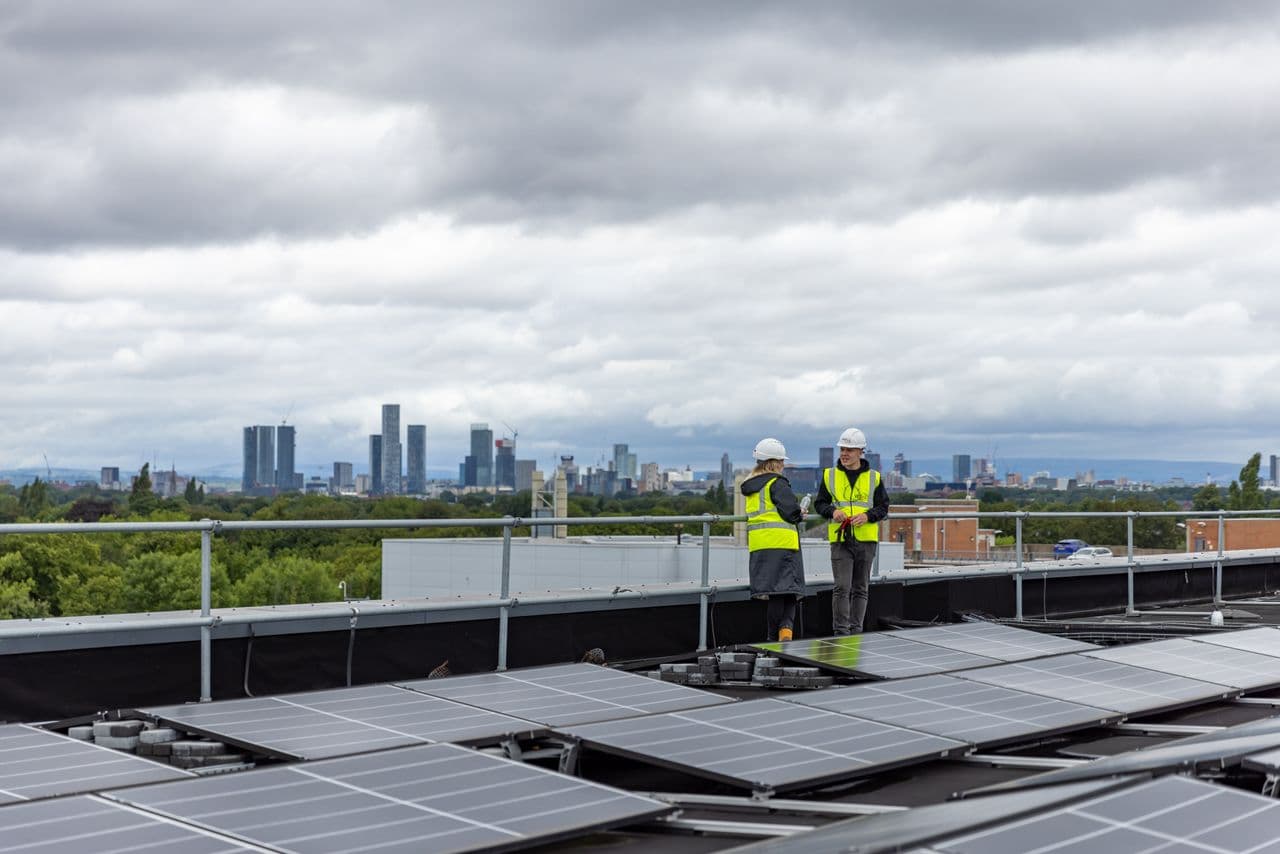
Own generation. A solar power plant with 3,066 kWp of installed capacity at Keskin, in Kırıkkale, developed in collaboration with a renewable energy developer, produces 4,783 MWh of renewable electricity a year. That output covers the annual electricity requirement of eight stores and the head office, among them the Cadde, Bursa Downtown, MaltepePark, Outlet Starcity, Anpa Outlet, Buyaka Stüdyo and Manisa Meydan sites, and it strengthens supply security as well as reducing emissions.
Certified supply. Stores with their own transformer were supplied with 5,152 MWh of renewable electricity in 2025. Every remaining store was covered by 18,245 MWh of green electricity carried by International Renewable Energy Certificates, so that the whole portfolio is addressed rather than only the sites where direct procurement is possible.
Digital monitoring. An IoT-based digital energy monitoring system has been in place across all stores since 2018. Electricity consumption is tracked in real time, comparable stores are benchmarked against each other to establish an optimum target consumption, and the sites exceeding it are identified so that efficiency actions can be directed at them. Consumption outside trading hours is addressed specifically, and air-conditioning systems are managed remotely. An artificial intelligence supported energy management platform, provided by a technology partner, analyses the consumption data behind those decisions.
Lighting efficiency. LED conversion across all stores produced 198 MWh of energy saving and delivers 70% to 80% better lighting efficiency than the conventional systems it replaced.
Financing reinforces the model rather than sitting alongside it. A sustainability-linked loan agreement with a commercial bank ties financing conditions to sustainability targets that the company has since completed, which places energy performance inside the financial planning cycle.
Impact
Sustainability Impact
Climate
The programme targets Scope 2 greenhouse gas emissions from purchased electricity, reported on a market-based approach.
In 2025 the whole of the company's 22,330 MWh of electricity consumption was met from renewable sources: 5,152 MWh of renewable electricity at stores with their own transformer and 18,245 MWh of certified green electricity elsewhere, alongside the 4,783 MWh generated by the company's own solar plant. Market-based Scope 2 emissions from electricity were reduced to zero, and 9,826 tCO2e a year is avoided. The same objective applies from 2026 onwards.
Efficiency contributes separately and against the earlier baseline. Measured against 2018 and covering stores, head office and warehouses, electricity intensity fell by 8.5% to 9%, which avoids 2,995 tCO2e a year. The LED conversion accounts for 198 MWh of saved energy within that result.
Taken together, solar generation, renewable supply, LED conversion and digital energy management avoid 9,826 tCO2e a year and eliminated the company's electricity-related Scope 2 emissions in 2025.
The indicators tracked are renewable energy generation in MWh, the share of renewable energy in consumption, total electricity consumption in MWh, the change in energy intensity, the energy saving achieved in MWh and the greenhouse gas emissions avoided in tCO2e.
Social
The most durable internal effect has been a shared awareness of energy efficiency and low-carbon transition across the organisation. Consumption data is reviewed regularly with the teams that operate the sites, and performance results are discussed with them when efficiency actions are set, which turns energy management from a head office reporting task into part of daily store operations.
Business Impact
Benefits
The first benefit is a lower and more predictable electricity bill. Own generation of 4,783 MWh a year removes that volume from market purchasing, and the efficiency measures reduce the volume that has to be bought at all, with electricity intensity down by 8.5% to 9% against 2018.
Benchmarking between comparable stores converts monitoring into money. Once an optimum target consumption is established for a store type, the sites exceeding it are visible immediately and efficiency actions can be directed at the largest gaps rather than applied uniformly across the portfolio.
Remote management of air-conditioning systems and the elimination of consumption outside trading hours produce savings without capital expenditure, and the LED conversion reduces lamp replacement and maintenance work as well as energy.
Supply security improves. Own generation and contracted renewable supply reduce exposure to price movement and to interruption in the wholesale market, which matters for a retailer whose trading depends on sites staying open and lit.
Financing terms improved through a sustainability-linked loan agreement with a commercial bank, under which the company completed the sustainability targets attached to the facility.
Costs
The cost base is a capital investment in the 3,066 kWp solar plant and in the LED conversion across all stores, together with the operating cost of the digital monitoring platform, the data infrastructure behind it and the certificate premium paid for the 18,245 MWh of certified green electricity, which is a recurring annual supply cost rather than a one-off investment.
Capital investment followed two routes. The LED conversion across the store network was funded directly by the company between 2022 and 2025 — USD 168,675 in 2022, USD 125,839 in 2023, USD 310,313 in 2024 and USD 166,835 in 2025 — a cumulative USD 771,662 as the rollout extended across the estate. The solar plant sits under a different structure: the renewable energy developer built it and operates it under an 11-year build-operate-transfer arrangement at an average project cost of approximately USD 3.15 million, so the capital is carried by the developer over the concession period rather than as a single outlay on the company's balance sheet, after which ownership of the plant passes to the company.
Operating costs shift rather than disappear. Energy purchasing falls, while platform subscription, data management, analytics capability and the maintenance of the generation asset rise, and the organisation has to carry the internal capacity to act on what the monitoring shows.
The main dependencies are regulatory and technological. Changes in electricity market rules, in the treatment of certificates, or in self-consumption and netting arrangements can alter the economics of both the generation asset and the certified supply, and technology transition affects the useful life of installed equipment.
Costs are contained by sequencing the work so that the measures requiring no investment come first: monitoring and behavioural actions establish the baseline and fund the case, lighting conversion follows, and generation investment is sized against a demand that has already been reduced. Long-term investment planning, a defined governance structure and sustainability-linked financing are the mechanisms used to manage the residual risk.
Payback periods for the two investments are not disclosed.
Impact Beyond Sustainability And Business
Co-benefits
Energy security and operational resilience improve alongside the emissions result, because a portfolio that generates part of its own supply and contracts the rest on long-term terms is less exposed to price shocks.
The data-driven approach developed for energy has extended into wider operational decision making, so resource efficiency and carbon management are considered in decisions that were previously taken on cost and convenience alone.
The model is portable. Any operator running many similar sites — retail chains, branch networks, hospitality and food service — faces the same structure of dispersed small loads, and the combination of benchmarking, targeted efficiency and portfolio-level supply contracting transfers directly.
The sustainability-linked financing arrangement demonstrates a mechanism through which environmental targets can be given financial consequence, which is replicable by other companies negotiating credit facilities.
Potential side-effects
Certificate-based supply is a contractual instrument rather than physical delivery. It is the correct mechanism for sites the company does not control, but it leaves the result dependent on certificate markets and on regulatory recognition of the market-based accounting approach, which can change.
Solar output does not follow a store load profile hour by hour. Annual generation of 4,783 MWh covers the annual requirement of eight stores and the head office, but the match between generation and consumption is an annual balance rather than a real-time one, and a company reading it as physical self-sufficiency would misstate its position.
Continuous monitoring increases dependence on the platform and on the data infrastructure behind it, and creates a requirement for analytical skills that a store operations team does not necessarily hold. The company reports that central monitoring and management of the system cover that requirement.
Intensity improvements can be outrun by growth. Energy intensity fell by 8.5 to 9 per cent, but absolute demand in a growing store portfolio can still rise, which is why the renewable supply component rather than efficiency alone is what closes the emissions gap. That is why renewable supply is built into the programme alongside efficiency.
Implementation
Typical Business Profile
The model suits companies operating many similar sites under one management structure, where individual site consumption is small but the portfolio total is significant and where the sites are broadly comparable in size and function. Retail chains are the direct case, and branch networks, hospitality, food service and multi-site service operations share the same characteristics.
It is most relevant where the operator controls fit-out and equipment decisions even when it does not own the property, since lighting conversion and control settings are the levers available in leased space, and where enough sites exist for benchmarking between them to be statistically meaningful.
Delivery engages management, sustainability, corporate risk management, technical services, operations, finance and procurement functions working to a shared performance cycle, with board-level oversight where capital investment in generation is involved.
Approach
Meter every site before investing: Install real-time consumption monitoring across the whole portfolio first, because the sites that waste the most energy are rarely the ones assumed to, and a generation investment sized against unmeasured demand will be sized wrongly.
Benchmark comparable sites against each other: Group stores by size, format and trading pattern and compare their consumption, so that an optimum target consumption can be derived from actual performance rather than from a theoretical model.
Act on the outliers first: Identify the sites exceeding the optimum target consumption and direct efficiency actions there, which concentrates limited technical resource where the gap between actual and achievable performance is widest.
Remove consumption outside trading hours: Address lighting, climate control and back-of-house equipment left running when stores are closed, and manage air-conditioning systems remotely so the settings do not depend on local discretion.
Convert lighting before anything else: Replace conventional lighting with LED across the estate, which in this case saved 198 MWh and delivered 70% to 80% better efficiency, and which requires no change to how the sites are operated.
Contract certified renewable supply for the sites you cannot reach directly: Cover stores without their own transformer through certified green electricity, so that portfolio coverage does not wait for site-by-site technical solutions.
Invest in own generation sized to reduced demand: Build or contract renewable capacity — here a 3,066 kWp plant generating 4,783 MWh a year — only after efficiency has established the demand it has to serve.
Attach the targets to financing: Negotiate a sustainability-linked facility so that energy and emissions performance carries financial consequence and is reviewed on the same cycle as financial results.
Report a fixed indicator set: Track renewable generation, the renewable share of consumption, total consumption, the change in energy intensity, the energy saved and the emissions avoided, and publish the results annually so that performance can be compared year on year.
Stakeholders Involved
Project leads: Oversight of the sustainability strategy sits with the board of directors of the parent group, and sustainability is owned at the most senior level by the chairman of the board and the vice president responsible for financial affairs and sustainability. The transformation is run under that vice president's leadership and managed by the director of sustainability and corporate risk management. Coordination runs through a five-layer structure comprising a sustainability steering committee, a sustainability leadership committee, company-level sustainability committees, a strategic working groups committee and the working groups themselves. Sustainability management representatives, responsible leaders, chief executives and sustainability teams sit within that structure, and the design, tracking, measurement and reporting of programmes is carried out through it rather than in a single department.
Company functions: Management, sustainability, corporate risk management, technical services, operations, finance and procurement teams all take an active role across planning, implementation, monitoring and continuous improvement. Consumption data is analysed regularly and performance results are evaluated with the teams responsible for the sites concerned, and the efficiency actions that follow are agreed in that forum. Technical services and operations execute the equipment and control changes, finance and procurement handle the supply contracts, certificates and the financing arrangements, and sustainability and corporate risk management consolidate the reporting.
Main providers: A renewable energy developer built the solar plant under a partnership model that integrated renewable generation into the company's own operations rather than leaving it as a purely financial arrangement. A technology provider supplies the artificial intelligence supported energy management platform used to analyse consumption data in real time and to sustain continuous improvement in energy management. Electricity suppliers provide the certified green electricity that covers the stores outside the generation and direct procurement arrangements, and a commercial bank provided the sustainability-linked loan facility whose conditions are tied to the achievement of the company's sustainability targets.
Other: Group sustainability performance has been reported publicly every year since 2008, which places the programme's results in front of investors, customers and civil society on a fixed cycle and creates an external check on the figures. Reporting, verification and financing processes together support the environmental, technological and financial dimensions of the transition, and the collaborations built around the programme have created a wider ecosystem in which suppliers, financiers and the company develop the model together.
Key Parameters To Consider
The programme carries two baselines because it was implemented in two phases: 2018 for the energy monitoring and efficiency measures, and 2025 for the renewable energy measures. Comparisons should be read against the correct baseline.
Scale parameters are a 3,066 kWp solar plant generating 4,783 MWh a year, a total 2025 electricity consumption of 22,330 MWh, of which 5,152 MWh was renewable electricity at own-transformer stores and 18,245 MWh was certified green supply.
Scope 2 emissions are reported on a market-based approach, which is the basis on which the 9,826 tCO²e figure is stated. A location-based figure would differ and is not the measure used here.
The monitoring system has been running since 2018, so the benchmarking between comparable stores rests on several years of history rather than on a single season, and the optimum target consumption for each store type is derived from that history.
The main external variables are electricity market regulation, the treatment of renewable energy certificates and the pace of technological change in lighting and building control equipment.
Implementation And Operations Tips
Sequence the components rather than starting with the visible one. Monitoring and lighting conversion require little or no capital, establish the measurement base and reduce the demand that a generation investment then has to serve, so building the solar plant first would have over-sized it.
Benchmarking is more useful than absolute targets in a multi-site estate. Comparable stores differ enough that a single consumption target is either unreachable or trivial, whereas peer comparison identifies genuine outliers.
Cover the sites you cannot reach technically. A portfolio approach that combines direct supply for own-transformer stores with certificates for the rest reaches full coverage far sooner than waiting for a site-by-site solution.
Give the targets a financial consequence. Tying performance to loan conditions moved energy from an operational topic to one reviewed alongside financial results, which sustained attention after the initial efficiency gains had been taken.
Keep both an intensity indicator and an absolute indicator. Intensity shows whether operations are improving; the absolute figure shows whether the emissions result is actually being delivered as the portfolio grows.