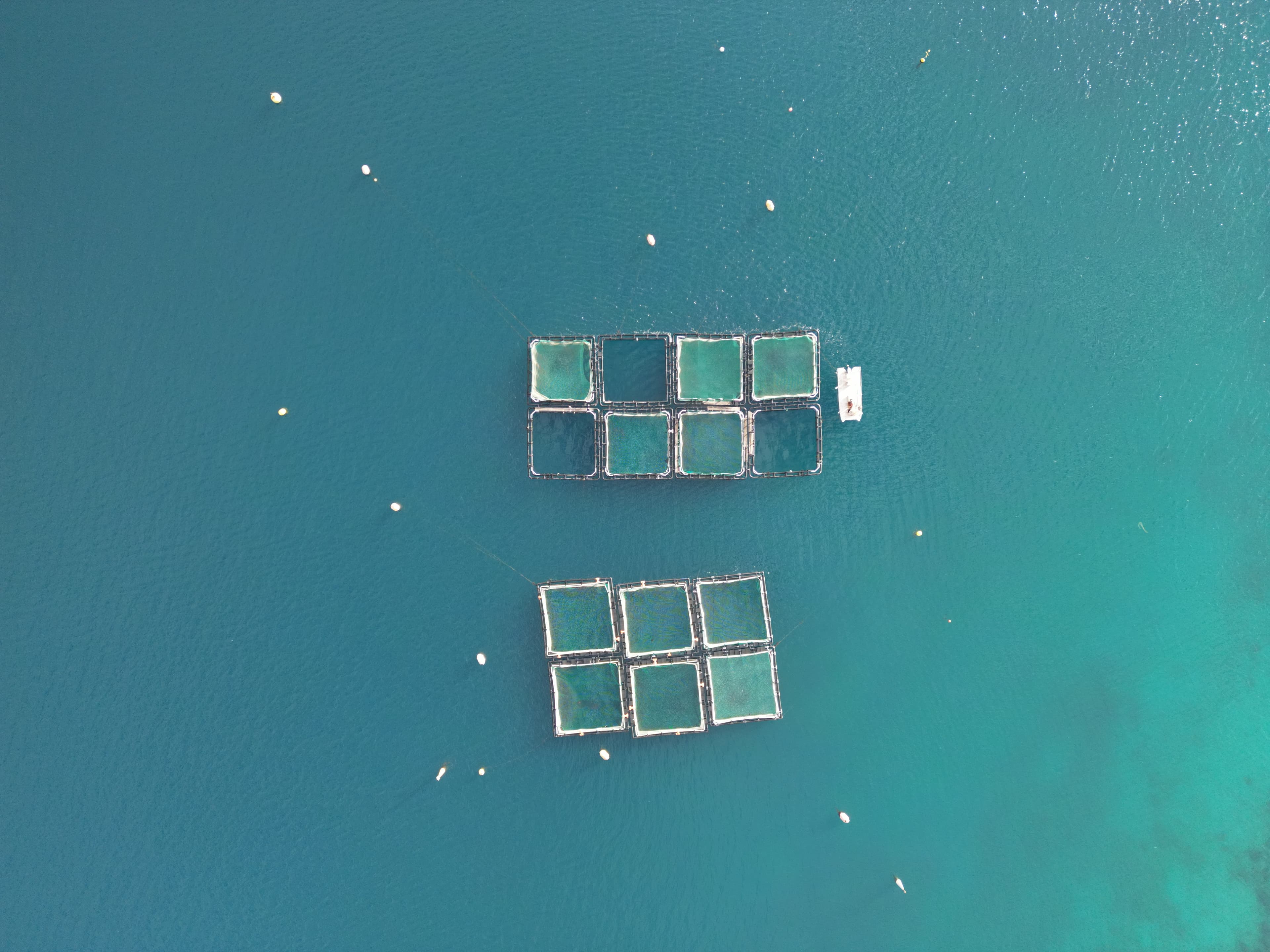
Lend blue economy finance to coastal small businesses
 QNB Bank A.Ş.
 SKD Türkiye
总结
An umbrella lending programme channels international blue finance into discounted loans for small businesses in fishing, aquaculture, shipping and sustainable tourism.
Context
The company is a bank operating across Türkiye in the financial services sector, with more than 10,000 employees and a nationwide branch network.
Marine and freshwater ecosystems carry economic activity that is dominated by small and medium-sized enterprises: fishing fleets, aquaculture farms, maritime operators and coastal tourism businesses. These are precisely the businesses least able to fund the transition to certified, lower-impact operations, because the investment is upfront and the operator is small.
International blue finance has grown to meet this gap, but it is raised at institutional scale. The practical problem is distribution: proceeds raised through a blue bond or a private placement reach the real economy only if a lender converts them into loan products that a coastal small business can actually use.
The company had already raised blue finance internationally, including the first blue bond issued by a bank in Türkiye. The programme described here is the distribution mechanism built to move that funding into the real economy rather than a second fundraising instrument.
A second obstacle is perception. Among smaller borrowers, sustainability is widely read as an added cost rather than as a route to cheaper capital, and the programme was designed to invert that reading by attaching a price advantage to certified practice (1).
Location of the initiative: Türkiye, with lending concentrated in coastal fishing, aquaculture, maritime and tourism regions
Solution
The programme is an umbrella financing structure rather than a single product. It brings the eligible blue economy activities together under one set of criteria and one approval route, so that a branch relationship manager can place a customer in it without a bespoke structuring exercise.
Eligibility is defined by international certification rather than by self-declaration. Businesses holding, or being supported to obtain, certification under the Global Sustainable Tourism Council standard for sustainable tourism or the Aquaculture Stewardship Council standard for responsible aquaculture qualify, which gives the criteria an external reference point and gives borrowers a recognised market credential. Programme criteria were built on the blue finance guidance of the International Finance Corporation.
The eligible scope covers protection of marine ecosystems, sustainable fishing, aquaculture, maritime activity and sustainable tourism, with prevention of water pollution, protection of biodiversity and encouragement of climate-friendly investment as the stated objectives.
The loan itself is deliberately conventional in form so that it fits existing customer needs. It is offered as working capital or investment finance, in Turkish lira, United States dollars or euro, and structured either with interim payments or on an instalment basis. Businesses that meet the criteria receive a discount against the bank's prevailing interest rates, which is the mechanism that converts environmental compliance into a financial advantage.
Funding comes from international blue capital raised through three transactions: the first blue bond in Türkiye and a blue diversified payment rights transaction, both with the International Finance Corporation, and a blue medium-term note private placement with a global investment bank. The programme is the channel that passes those proceeds through to borrowers.
Distribution runs through the bank's branch network and sector-specialised credit teams rather than through a central sustainability unit, which is what allows the programme to reach small businesses at scale. Borrowers are re-checked annually against the eligibility criteria for as long as the facility runs.
Impact
Sustainability Impact
Climate
The programme does not change the bank's own Scope 1 or Scope 2 emissions in any material way. Its climate effect is in the financed portfolio, which falls under Scope 3, Category 15: Investments.
The lending criteria direct capital towards climate-resilient tourism and maritime investment and towards operations certified against recognised responsible-production standards, so the intended climate effect is a change in what borrowers build and operate rather than a change in the bank's own footprint.
Nature
The environmental purpose of the programme is the condition of marine and water ecosystems. Eligibility is limited to activities that protect marine ecosystems, sustainable fishing, aquaculture, maritime operations and sustainable tourism, with prevention of water pollution and protection of biodiversity as explicit objectives.
Certification is the mechanism that makes this operational. Requiring the Aquaculture Stewardship Council standard for aquaculture and the Global Sustainable Tourism Council standard for tourism ties the loan to independently audited practice on feed, effluent, resource efficiency and waste management, rather than to a lender's own judgement.
Because eligibility is re-checked annually, a borrower that loses certification is identifiable, which keeps the environmental condition attached to the facility over its life.
The scale of the mechanism is now measurable. As at 31 March 2026 the programme had supported 317 projects with a supported blue loan project volume of USD 349 million, against 148 projects and USD 225 million at the 2025 year end, so the volume of capital tied to certified marine, aquaculture and coastal tourism practice grew from USD 225 million to USD 349 million and the number of financed projects rose from 148 to 317 within a single reporting period.
Social
The borrower group is coastal and rural small and medium-sized enterprises, so the lending supports employment and livelihoods in regions where the fishing and tourism economies are the principal source of income.
Local communities, including fishers and tourism operators, informed the design of the criteria so that the requirements match what an operator can realistically deliver, which is what keeps the programme accessible to small firms rather than only to large ones.
Access to finance is itself the social lever here: the discount attached to certified practice lowers the cost of the transition for the businesses least able to fund it from retained earnings.
Business Impact
Benefits
By 31 March 2026 the programme had supported 317 projects, and the supported blue loan project volume stood at USD 349 million. Measured against the 2025 year-end position, the number of projects supported rose from 148 to 317 and the supported volume rose from USD 225 million to USD 349 million, so the programme is scaling on both count and value at the same time.
The blue loan portfolio has grown steadily and doubled between June 2025 and June 2026, a growth rate of 100 per cent over twelve months, which demonstrates commercial demand rather than concessional placement.
The programme converts internationally raised blue funding into earning assets. Without a distribution channel, proceeds from the blue bond, the diversified payment rights transaction and the private placement would have no route into the real economy, so the programme is what makes those transactions productive.
It also opens a customer segment. Coastal small and medium-sized enterprises in fishing, aquaculture, maritime activity and tourism are reached through the existing branch network and sector-specialised credit teams, with the interest rate discount as the acquisition mechanism.
Beyond the individual loan, the programme shifts customer behaviour across the value chain. Certified borrowers pull their own suppliers, such as food suppliers to hotels and processors to fishing businesses, towards the same standards, and the perception of sustainability moves from a cost burden to a route to cheaper finance and competitive advantage.
The bank also acts as a knowledge channel, passing international standards and practice to customers alongside the funding.
Costs
The discounted interest rate is a direct margin cost, applied against prevailing rates for every eligible borrower, so the programme is funded in part by revenue the bank forgoes.
Eligibility assessment and annual re-checking add operating cost. Each facility has to be tested against the certification criteria at origination and monitored annually thereafter for as long as it is outstanding, which is a recurring workload rather than a one-off underwriting step.
The credit process requires capability the bank had to hold internally: sustainability specialists and environmental engineers sit alongside credit allocation and sector teams so that criteria are assessed against environmental effect and international standards, not only against credit risk.
On the borrower side, the certification itself is a cost. Obtaining and maintaining the required standards involves audit fees and operational change, which can put the programme out of reach for the smallest operators unless they are supported through the process.
The programme also depends on continued access to international blue funding lines. Its capacity is bounded by what can be raised from development institutions and international investors, so growth is not purely a function of domestic demand.
Costs are contained by distributing through the existing branch network rather than a dedicated unit, by using external certification instead of building a proprietary verification system, and by running one umbrella criteria set across all eligible sectors.
Impact Beyond Sustainability And Business
Co-benefits
The value chain effect extends beyond the borrower. Certified hotels and fishing businesses require their own suppliers and processors to meet compatible standards, so a single facility can move several firms towards certified practice.
Because eligibility rests on recognised international certification, borrowers gain a market credential that has commercial value in export and international tourism markets independently of the loan.
Feedback from customers, sector representatives and business partners, gathered through customer meetings and digital surveys, is used to revise the eligibility criteria, the product structure and the customer journey, so the wider ecosystem shapes the instrument rather than only consuming it.
Potential side-effects
Certification cost is the principal trade-off. Making an audited standard the eligibility test raises credibility but excludes operators who cannot fund the audit, which is a risk of the programme reaching mid-sized rather than the smallest businesses.
Without the annual re-check, an umbrella programme of this kind would be exposed to reputational risk from borrowers whose practice drifts after drawdown. The annual control is what manages that exposure, and it has to be resourced.
Concentrating lending in coastal fishing and tourism sectors also concentrates credit exposure in economies sensitive to season, weather and climate shocks, so portfolio diversification has to be managed alongside the environmental objective.
Implementation
Typical Business Profile
The model suits commercial banks that have already raised, or can raise, thematic funding from development institutions and international investors, and that have a branch network capable of reaching small and medium-sized borrowers directly.
It is most relevant in economies with a significant coastal or water-dependent real economy, such as fishing, aquaculture, maritime services and tourism, where the environmental exposure is concentrated in firms too small to finance the transition on their own balance sheets.
Delivery engages corporate banking, international banking, small and medium-sized enterprise banking, risk management and sustainability functions, with environmental engineers and sustainability specialists embedded in the credit assessment chain.
Approach
Raise thematic funding before building the product: Secure blue capital through instruments such as a blue bond, a diversified payment rights transaction and a private placement, so that the lending programme has a dedicated funding source rather than competing for general balance sheet capacity.
Adopt an external framework for the criteria: Base eligibility on published blue finance guidance from a development finance institution rather than on internal definitions, so that the criteria are defensible to investors, auditors and customers.
Define eligibility by independent certification: Require the Global Sustainable Tourism Council standard for tourism businesses and the Aquaculture Stewardship Council standard for aquaculture, and allow businesses working towards certification to qualify so that the programme finances the transition rather than only rewarding those who have completed it.
Bring science and civil society into the criteria design: Use biodiversity and sustainable tourism evidence from academic and non-governmental partners to set the thresholds, and test them against what local fishers and tourism operators can realistically meet.
Structure the loan as a conventional product: Offer working capital and investment finance in Turkish lira, United States dollars and euro, with interim payment or instalment structures, so that eligibility is the only difference the customer experiences.
Price the environmental condition: Apply a discount against prevailing interest rates for businesses meeting the criteria, so that certified practice produces a measurable financial advantage and sustainability is read as access to finance rather than as cost.
Distribute through the branch network and sector specialists: Place the programme with existing relationship and credit teams, supported by sustainability specialists and environmental engineers in the assessment chain, so that small businesses are reached at scale.
Re-check eligibility annually and feed results back: Verify each borrower against the criteria every year for the life of the facility, and use customer meetings and digital surveys to revise criteria, product structure and process at each cycle.
Stakeholders Involved
Project leads: The chief executive and the Sustainability Committee govern the programme, with the chief executive co-chairing the committee, so that sustainability strategy and performance indicators are reviewed at the most senior level. Implementation and progress against objectives are followed by the responsible executive vice presidents, which places accountability inside the business lines rather than in a staff function.
Company functions: Corporate banking, international banking, small and medium-sized enterprise banking and risk management run credit allocation within the development institution's guidelines. A multidisciplinary team drawn from sustainability, risk management, credit allocation and sector expertise assesses applications, and environmental engineers and sustainability specialists contribute the assessment of criteria against environmental effect and international standards.
Main providers: A multilateral development finance institution provided both the blue finance guidance on which the criteria are based and two of the three funding transactions, and a global investment bank provided the private placement. Independent certification bodies operating the sustainable tourism and responsible aquaculture standards perform the audits that determine eligibility.
Other: Local communities of fishers and tourism operators shaped the criteria so that the programme responds to conditions in the field. Non-governmental organisations and academic institutions supplied the scientific evidence on biodiversity and sustainable tourism used to set the certification requirements. Borrowing small and medium-sized enterprises are both beneficiaries and a feedback source, through customer meetings and digital surveys that inform criteria and product revisions.
Key Parameters To Consider
The programme is live and had supported 317 projects, carrying a supported blue loan project volume of USD 349 million, as at 31 March 2026, compared with 148 projects and USD 225 million at the 2025 year end. Its capacity is set by the international funding lines behind it, so growth depends on continued access to development institution and investor capital as much as on domestic demand.
Eligibility rests on two international certification standards, which means the programme inherits their audit cycles, their cost and their sectoral coverage. Sectors without a comparable standard cannot be added without building a new assessment basis.
The interest rate discount is applied against prevailing rates rather than at a fixed level, so the incentive moves with the rate environment and has to be reviewed as market conditions change.
Annual eligibility re-checking runs for the life of each facility, which makes monitoring capacity a structural requirement rather than a project-phase activity.
Implementation And Operations Tips
Build the distribution channel at the same time as the funding instrument. Thematic capital raised without a lending programme behind it reaches the real economy slowly, and the programme is what turns a treasury transaction into field-level change.
Use external certification rather than proprietary criteria. It gives the borrower a credential with independent market value, removes the lender from the position of judge, and gives auditors and investors a reference they already accept.
Price the incentive visibly. A discount against prevailing rates is what shifts the customer's reading of sustainability from cost to opportunity, and that shift is what generates demand.
Put environmental expertise inside the credit chain. Sustainability specialists and environmental engineers working alongside credit teams is what keeps eligibility assessment consistent when the programme is distributed across a branch network.
Support borrowers through certification rather than only financing those who already hold it. Allowing businesses working towards a standard to qualify is what makes the programme a transition instrument rather than a reward mechanism.