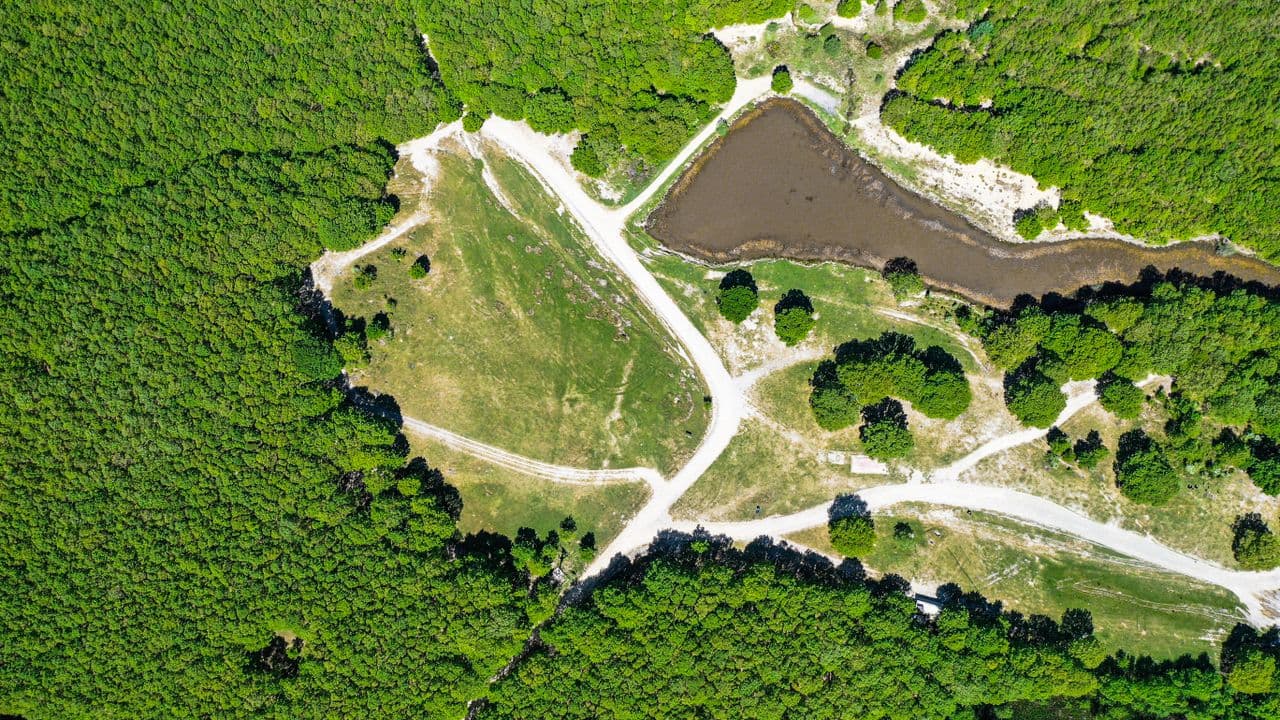
Map biodiversity risk onto the grid to protect wildlife
 Enerjisa Enerji
 SKD Türkiye
总结
Protected areas, migration routes, habitats and network assets are integrated on one map, so biodiversity risks shape investment and maintenance decisions.
Context
Submitted through the COP31 Sustainable Transformation Awards · SKD Türkiye (WBCSD Global Network Partner)
Enerjisa Enerji is an electricity company with more than 10,000 employees, operating Türkiye's largest electricity distribution grid across 14 cities and a population of more than 20.3 million, supplying more than 11 million retail customers, and running a solutions business to decarbonise entire industries.
A distribution network is linear infrastructure. Overhead lines, poles and substations run for thousands of kilometres through farmland, forest, wetland margins and protected areas. Where they cross bird migration corridors or sensitive habitats, careful planning and management can help minimise potential interactions with birds and habitats, while construction and maintenance activities can be planned to avoid unnecessary disturbance. These considerations are also closely linked to network reliability, as bird-line interactions can result in faults and interruptions to electricity supply.
The challenge was not the absence of intent to protect biodiversity but the availability of data. Biodiversity information sat outside the systems used to plan investment and maintenance, making it difficult to locate environmental risk on the network, prioritise actions and measure progress over time.
In 2025 the company started a biodiversity management project for its distribution network. The objective is to make the effect of the network on biodiversity measurable, and to turn that measurement into a decision criterion for investment, maintenance and operational planning. Starting from a baseline of 0, progress against the relevant KPIs was tracked throughout 2025 and 2026.
The project sits inside the company's sustainability governance, and its performance data feeds CDP reporting, ISSB (IFRS / TSRS) and GRI aligned disclosure, with independent third-party assurance.
Location of the initiative: 14 provinces across three electricity distribution regions, Türkiye
Solution
The project brings environmental and operational data into a single Geographic Information System based decision support environment, so that biodiversity is analysed on the same map as the network itself.
Three data layers are combined: national protected area data; bird migration routes and sensitive habitat information drawn from published literature and field observation; and the company's own network and operational records. 125 protected areas were analysed against the network in this way.
The combined layers produce risk maps that show where the network and biodiversity intersect, translating a general environmental consideration into specific line sections, poles and substations that can be prioritised for action.
A reported route for bird-related network events and carcasses was added, so that incidents observed by field crews are recorded rather than lost, and so that the desk analysis is supported by what happens in the field.
Physical mitigation follows the maps. On the sections identified as high risk, 27,000 metres of line insulation, 8,500 insulators and 11,500 bird protection devices have been applied.
Capability is treated as part of the solution rather than as an addition to it: 619 employees have been trained on biodiversity.
The methodology and the data model require no new technology investment, building on capabilities that already exist within a distribution business. Rather than requiring a new technology layer, the approach consolidates existing geographic information, asset management and enterprise resource planning capabilities with biodiversity data, creating a shared decision-making environment that can be readily adapted and transferred to other network operators.
Figure 1: A map showing the intersection of protected areas, bird migration corridors and distribution network assets, with prioritised high-risk line sections highlighted across three electricity distribution regions operated by Enerjisa Enerji

Figure 2: Overhead line pole with protective insulation installed as part of the BioGrid initiative.

Impact
Sustainability impact
Nature
The initiative addresses the effect of linear grid infrastructure on birds and habitats, and it does so preventively rather than after the event.
125 protected areas have been analysed against the network, while migration routes and sensitive habitats have been integrated into risk maps, enabling biodiversity considerations to inform planning before work is undertaken.
Progress is monitored through geographic information system analysis, enterprise resource planning operation records, the bird incident and carcass reporting route, field observation and training records. National protected area data, published literature, operational network data and internal records are assessed together, providing an evidence base for tracking biodiversity outcomes over time.
From an SDG perspective, the initiative enables potential interactions with birds and habitats to be identified and addressed proactively to reduce negative biodiversity impact.
SDG 15 – Life on Land: BioGrid supports the protection of species and habitats by reducing potential biodiversity impacts associated with electricity distribution activities. 125 protected areas have been analysed against the network, while migration routes and sensitive habitats have been integrated into risk maps. On prioritised sections, 27,000 metres of insulation, 8,500 insulators and 11,500 bird protection devices have been installed.
Social
By helping reduce bird-related network events, the initiative supports the continuity of electricity supply for households, critical infrastructure and local economies across 14 provinces. In this way, biodiversity protection and continued access to reliable energy for customers are addressed through the same operational approach.
619 employees have been trained on biodiversity, strengthening environmental risk competence across Enerjisa Enerji workforce.
From an SDG perspective, the initiative supports the continuity and reliability of access to energy by reducing operational risks and strengthening the resilience of electricity distribution infrastructure.
SDG 7 – Affordable and Clean Energy: By reducing bird-related network risks, BioGrid supports the reliability and resilience of electricity distribution infrastructure. Preventive measures help reduce potential interruptions and strengthen the continuity of access to electricity for households, critical infrastructure and local economies.
SDG 17 – Partnerships for the Goals: Collaboration with the General Directorate of Nature Conservation and National Parks, municipalities, Doğa Derneği and Association of Electricity Distribution System Operators (ELDER) supports joint capacity building, knowledge sharing and the potential wider adoption of the methodology across the sector.
Climate
Its climate relevance is indirect and is treated as an enabling effect. The 27,000 metres of insulation, 8,500 insulators and 11,500 bird protection devices installed on the prioritised areas in the 2025 to 2026 period prevent bird-related faults on overhead lines, and each fault prevented is an interruption, an emergency call-out and a repair journey that does not take place on a network serving more than 22 million people. Making biodiversity an investment and maintenance criterion also prepares the distribution network that the clean energy transition runs on for the physical and regulatory pressure that climate and nature policy will place on it.
No reduction in the company's Scope 1 or Scope 2 emissions is claimed at this stage. The associated emissions reduction potential, particularly from avoided field interventions and repair journeys, will be assessed in the next implementation periods.
Business impact
Benefits
Bird-related events are recognised among causes of outages on overhead distribution networks, so equipment that prevents electrocution and collision also prevents the interruption, the emergency call-out and the customer minutes lost that follow, which supports the regulated supply continuity performance the business is measured on. The business case rests on prevented faults.
Risk mapping changes the quality of capital allocation. Instead of applying protective equipment evenly or reactively, the company can direct insulation and bird protection spending to the sections where exposure is concentrated. Environmental risk falls, because protected areas, migration routes and habitats are known before an investment or maintenance intervention is planned rather than discovered during it.
The project also produces disclosure-grade biodiversity data. The records that drive operational decisions feed CDP reporting, ISSB (IFRS / TSRS) and GRI aligned disclosure and independent assurance, which avoids building a separate reporting exercise.
From an SDG perspective, the initiative integrates biodiversity considerations into the planning and management of linear grid infrastructure.
SDG 9 – Industry, Innovation and Infrastructure: The project brings environmental and operational data together in a single GIS-based decision support environment, integrating biodiversity considerations into investment, maintenance and risk management processes and creating a data-driven approach to more resilient infrastructure planning.
Costs
The investment combines physical mitigation with the company's existing technical, operational and environmental capabilities. It includes 27,000 metres of insulation, 8,500 insulators and 11,500 bird protection devices, applied by field teams and subcontractors.
The analytical effort builds on existing capabilities by integrating protected area, migration and habitat data with network and operational data in the GIS, supported by incident reporting and the training of 619 employees.
Rather than requiring a separate technology infrastructure, BioGrid creates additional value by consolidating and connecting capabilities and systems already embedded in the business. This keeps the marginal cost of extending the approach relatively low and supports its scalability across the network.
With investment in physical mitigation measures exceeding TRY 2.5 million, the project combines targeted infrastructure interventions with the company's existing technical, operational and environmental capabilities. The investment will continue as protective measures are maintained and extended, while monitoring and data integration support continuous improvement.
Impact beyond sustainability and business
Co-benefits
The methodology and data model have been shared with the Association of Electricity Distribution System Operators (ELDER) members, whose biodiversity working group the company chairs, so that other operators can adopt the approach without repeating the development work. Because the model needs no new technology, the cost of sector-wide replication is low and its potential for scalability is high.
Cooperation with the national General Directorate of Nature Conservation and National Parks, municipalities, a nature conservation organisation (Doğa Derneği) and academic experts builds a shared reading of environmental risk between a network operator and the bodies that regulate and study it, which shortens later permitting and consultation.
Inside the business, employees, contractors and public bodies work to one environmental risk language, so biodiversity moves out of environmental management and into investment, maintenance and operations.
Potential side-effects
The indicators reported so far primarily capture implementation progress, while outcome measurement will develop through continued incident and carcass monitoring across multiple seasons. This ongoing data collection will strengthen the evidence base and support continuous refinement of the risk maps and mitigation measures.
The risk-based prioritisation approach allows mitigation to be progressively extended and updated as new data and observations become available, supporting a dynamic approach to biodiversity management.
Implementation
Typical business profile
The model suits electricity distribution and transmission operators, and more broadly any business running linear infrastructure such as rail, pipelines or telecommunications across a large licensed territory where assets intersect protected areas, migration corridors and sensitive habitats.
It assumes a geographic information system, an asset management or enterprise resource planning system holding operational records, and a field organisation able to retrofit equipment on existing assets, so the entry requirement is data integration maturity rather than capital.
Delivery engages environment and sustainability, network investment, maintenance, field operations, geographic information and procurement functions, and works best where a cross-functional biodiversity group and a board-level sustainability governance route already exist.
Approach
Locate the network on the biodiversity map: Obtain national protected area boundaries, bird migration route data and sensitive habitat information, and overlay them on the asset register inside the geographic information system, so that intersections are identified as specific line sections and poles rather than as general areas of concern.
Analyse each protected area against the assets it contains: Work through the areas systematically, as the company did for 125 protected areas, and record for each one the asset types present, the species and habitats at stake and the operational activities that could affect them.
Build risk maps that rank exposure: Combine species sensitivity, habitat value and asset characteristics into a ranking that produces a prioritised list of sections, so that limited retrofit budgets go to the places where exposure is concentrated.
Open an incident and carcass reporting route: Give field crews, contractors, conservation organisations and local communities a defined way to report bird-related network events and carcasses, and feed those records back into the risk maps so that the desk analysis is corrected by observation.
Select the mitigation per risk type: Match the intervention to the failure mode — line insulation where electrocution risk dominates, insulators at the contact points, and bird protection devices where birds perch or nest — instead of applying one standard product across the whole network.
Install the protection on the prioritised sections: Plan the outages and access needed to retrofit energised assets, brief the subcontractors that carry out the work, and record every installation against the asset so that coverage is auditable; 27,000 metres of insulation, 8,500 insulators and 11,500 bird protection devices were applied this way.
Train the teams who plan and do the work: Deliver biodiversity training to investment, maintenance and field staff — 619 employees so far — so that risk maps are used in daily planning and field observations are reported correctly.
Set a baseline and report against it: Fix the starting position, in this case 0 applications in 2025, define the indicators to be tracked, monitor them through geographic information analysis, operational records, training systems and incident reports, and take the results into corporate sustainability governance and external disclosure.
Stakeholders involved
Project leads: The environmental teams of the electricity distribution business lead the implementation of the project, working closely with the maintenance, investment and field operations teams responsible for carrying out the physical implementation activities. The Sustainability Executive Committee provides guidance and oversight on sustainability performance in alignment with the company's ESG strategy, while the Corporate Governance Committee of the Board of Directors provides oversight of the processes outcomes from a sustainability governance perspective.
Company functions: A cross-functional Biodiversity Working Group, comprising representatives from different business units, supports the development of applications and facilitates knowledge sharing across the organisation. This structure helps ensure that the risk maps remain closely connected to operational realities.
Main providers: Insulation measures and the installation of bird protection devices are carried out by the company's own field teams.
Other: BioGrid has been developed and implemented through a multi-stakeholder approach, bringing together non-governmental organisations (NGOs), specialised consultancy firms and the company's operational teams. The model combines different sources of knowledge and data, including protected areas and species expertise, GIS and network operations, to establish a shared approach to biodiversity risk management. This collaboration extends beyond implementation, creating a continuous feedback and knowledge-sharing loop that supports the further development and wider adoption of the model.
BioGrid has been developed in collaboration with NGOs, specialised consultancy firms and the company's operational teams. Data on protected areas, species and habitats, migration routes and operational network information are brought together to inform the risk mapping approach.
BioGrid is intended to create value beyond the company itself. Through the ELDER Biodiversity Working Group, which is chaired by the company, knowledge, methodology and experience in data modelling are shared with other electricity distribution companies, supporting common capacity building and the wider adoption of biodiversity-informed network management practices across the sector.
Key parameters to consider
The project began in 2025 and is measured against a baseline of 0 applications at that point, with delivery tracked through 2025 and 2026. It is designed as a continuing management model rather than as a closed project.
It has been applied across three distribution regions, 14 provinces and a service area of more than 22 million people, spanning different climates, habitats and migration corridors, which is the evidence base for its adaptability to other ecological and operational conditions.
The critical dependency is data integration rather than capital: the model works wherever protected area, migration and habitat data can be joined to an existing asset register inside a geographic information system.
Long-term effects on bird-related events and operational performance are still accumulating and will continue to be reported as the project matures.
Implementation and operations tips
Successful implementation depends on embedding biodiversity into existing decision-making, operational processes and organisational capabilities, while creating a feedback loop that allows the approach to evolve over time. The key lessons are:
Integrate biodiversity into existing decision-making systems. The key is to place environmental data within the GIS and operational systems already used for investment and maintenance planning, so that biodiversity considerations become part of everyday decision-making rather than a separate reporting exercise.
Prioritise before implementing. Risk-based analysis helps identify where protective measures can deliver the greatest value, enabling interventions to be targeted to the network sections where they are most relevant.
Build field feedback into the model from the start. Establishing clear incident and carcass reporting processes ensures that field observations complement desk-based analysis and can be used to continuously refine risk maps and mitigation priorities.
Share and scale through sector collaboration. Sharing the methodology through industry platforms such as ELDER enables other operators to build on the approach, extending its potential biodiversity impact beyond a single distribution network.