Measure urban microforest cooling and biodiversity effects
总结
Pilot a regenerative urban microforest as measurable climate infrastructure to mitigate urban heat, support biodiversity and test nature-based solutions in a dense city centre.
Context
City Developments Limited (CDL) is a global real estate developer and manager that has embedded sustainability into its business strategy under its long-standing "Conserving as We Construct" ethos since 1995. Singapore is warming at approximately twice the global average rate, and the urban heat island effect can make built-up areas several degrees hotter than forested land. For a developer, this is both an operating cost and an asset-value consideration: hotter precincts can reduce outdoor amenity and thermal comfort, affect the attractiveness and usability of surrounding spaces, and increase long-term climate adaptation risks and costs.
To measure the outcomes of nature-based solutions applied to the built environment sector, CDL decided to explore whether dense urban greenery such as Microforests could work as natural infrastructure with quantifiable performance, even at a small scale, and to build evidence needed to justify scaling it.
Location of the initiative: Singapore.
Solution
In March 2025, CDL inaugurated a 2,800 sq ft (260 m²) regenerative tropical microforest at City Green, the urban park adjacent to City Square Mall in Singapore. Rather than treating it as a landscaping feature, the company designed it as urban natural infrastructure and a research platform to test whether the nature-led cooling delivers measurable results in a high-density retail precinct.
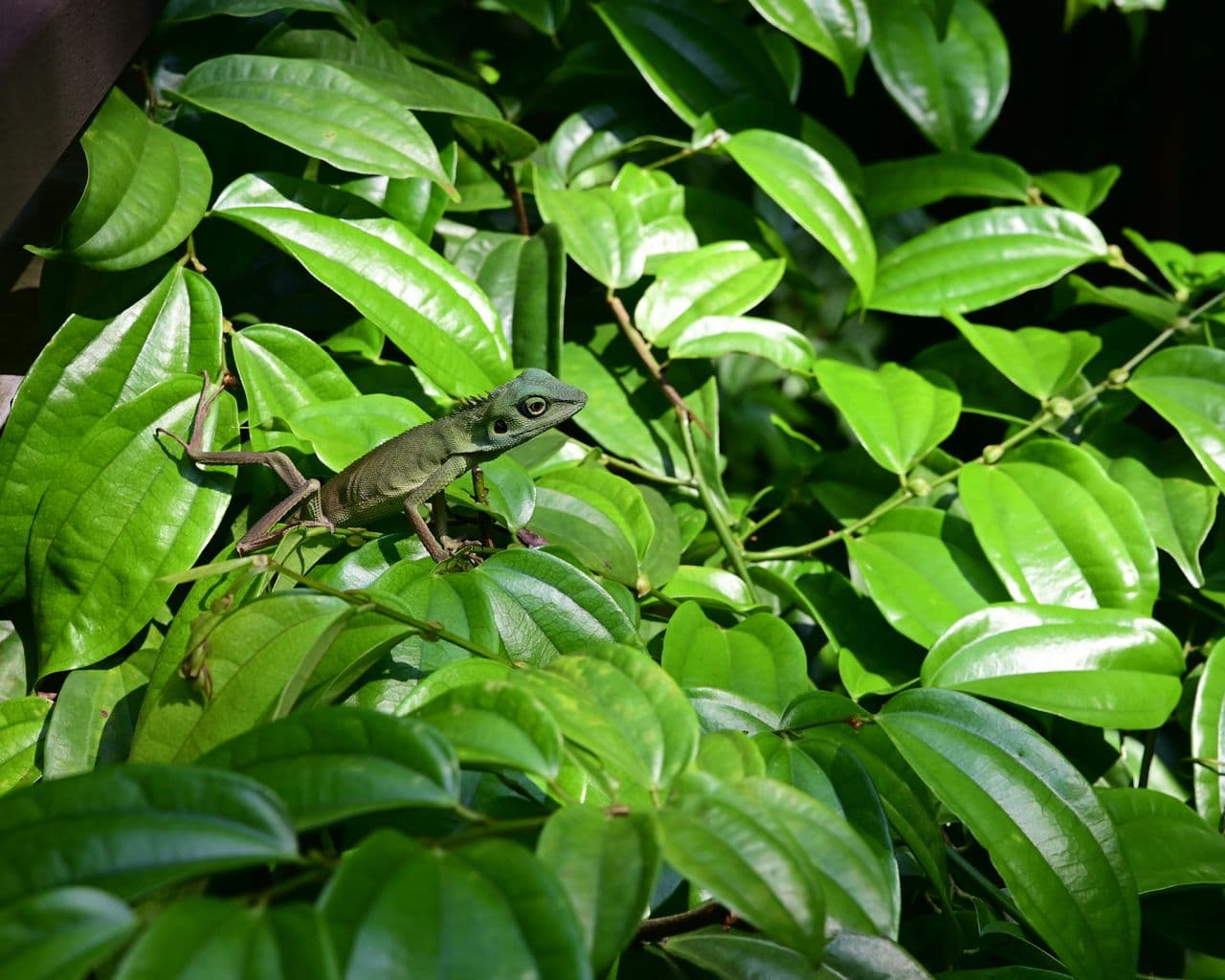
The microforest was co-developed with ecology experts from the National University of Singapore (NUS) and supported by the Singapore National Parks Board (NParks), including mostly native species, with layers that mimic the structure of a tropical forest, creating habitat for pollinators, dispersers and other urban wildlife while shading and cooling the ground beneath.
Over the first year, CDL and NUS monitored the site to gather preliminary data using:
Environmental DNA (eDNA) sampling for species richness
Bioacoustic monitoring of bird call activity
Species surveys and biodiversity assessments
Surface and ambient temperature monitoring, including transects from the forest interior outwards
First-year results are preliminary findings from a pilot study, released in March 2026, with NUS continuing to refine the methodology for ongoing multi-year research. The pilot’s purpose is to build a defensible evidence base for replication.
In March 2026, the microforest was doubled to 5,600 sq ft (≈520 m²) as part of the mall’s asset enhancement initiative, announced alongside the first-year data. It is designed as a long-term intervention expected to mature over decades, with monitoring continuing beyond the pilot.
Impact
Sustainability Impact
Nature
eDNA sampling indicates approximately 70% more species richness inside the microforest than in a comparable grass patch nearby.
Bioacoustic monitoring recorded higher bird call activity within the microforest than in surrounding areas.
Millipedes and springtails were detected via eDNA; presence suggests varied microhabitats and soil conditions.
Habitat created using mostly native species, on a site previously occupied by bushes and scattered trees.
Climate
Temperatures inside the microforest were up to 5°C lower than surrounding and roadside areas.
Surfaces within 1-2 meters of the forest edge were up to 4°C cooler than urban surfaces further away, a sign of potential cooling effects beyond the forest boundary that CDL and NUS have flagged for further monitoring and investigation.
People
From March 2026, citizen-science observations were added via the iNaturalist app, recording 65 observations across 46 species in its first weeks.
Business Impact
Benefits
Lower landscape maintenance costs. Based on an internal calculation comparing the microforest’s maintenance costs with those of similarly sized garden patches across other CDL properties, CDL estimates potential savings of up to SG$10,000 (≈US$7,800) per month, as an established forest system needs less irrigation, mowing and replanting.
Possible pedestrian-flow effect. Footfall on the walkway between the road and the mall entrance is estimated to have risen 15-20% against pre-2025 levels. A wider mall enhancement completed in the same period, so the effects are complementary rather than separable.
Enhanced visitor experience and tenant interest, alongside the mall’s broader sustainability offerings including the CDL EcoTrain, an operationally net-zero climate education hub.
Reputational positioning. Extensive national and international coverage and strong interest from government agencies and the sustainability community.
Cost
Construction cost of approximately SG$184 (≈US$145) per m², or roughly SG$48,000 (≈US$38,000) for the 260 m² pilot, excluding land.
For comparison, a Miyawaki-style tiny forest of approximately 250 m2 on Roosevelt Island, New York, has been reported at around US$216 per m2 (about US$54,000).
Land cost is not included: the microforest sits on CDL-managed land owned by Singapore’s National Parks Board (NParks). Costs will differ where land must be acquired or where opportunity cost is priced in.
Ongoing costs are ecological maintenance plus research and monitoring. CDL fully funded the first microforest; the expansion and upcoming sites draw partial support from Singapore’s SG Eco Fund for planting, maintenance and community engagement, with the balance of operating costs and the whole research component funded by CDL.
Future Opportunities
Using restored ecosystems to mitigate long-term asset value risk.
Linking measured nature outcomes to sustainable finance instruments and biodiversity-linked products.
Potential to command a premium (none measured to date).
Implementation
Typical Business Profile
Most relevant for real estate developers and asset owners with managed outdoor space in dense urban settings (retail and mixed-use precincts, residential developments, hospitality) and for municipalities, infrastructure owners and fund managers seeking measurable, low-cost adaptation interventions.
Approach
Frame the problem as business risk. Starting from urban heat and asset resilience put the project in front of asset management and sustainability leadership rather than the landscaping budget.
Engage scientific partners. NUS ecologists shaped the planting, and with it the baseline, control site and monitoring protocol that supports credible results.
Design for outcomes measurement. Complementary methods such as eDNA, bioacoustics, temperature transects, surveys allow organization to track outcomes.
Scale in stages. First-year data, even with explicit caveats built interest and generated the visibility that supports replication. The expansion was part of the mall’s asset enhancement initiative and was announced alongside the first-year data.
Build governance for long-term stewardship. Seek support for the concept from internal asset teams and, for community sites, with public partners.
Stakeholders Involved
Internal: Sustainability and environmental management teams as project leads, with property development, asset and facilities management, finance, procurement and communications.
External: National University of Singapore (ecological design, monitoring and analysis); National Parks Board (land, permissions and technical support); the SG Eco Fund (grant funding for expansion); the People’s Association and relevant Town Councils for community sites; landscape contractors, suppliers, tenants and local communities.
Key Parameters To Consider
Maturity: intermediate to advanced, relevant for organizations with landscape management capability and a research partner
Timeline: roughly 6–12 months from concept to launch; monitoring runs over multiple years.
Lifetime: long-term, expected to mature over decades
Prerequisites: defined business challenge; secured site and land tenure; ecological expertise; baseline and comparison site; executive sponsorship for the research component.
Geographical Factors: designed for dense tropical contexts, species selection and cooling performance will differ by climate zone.
Funding: corporate capital for the pilot; public environmental funds and sustainable finance instruments available for scaling
Lessons Learned
Small footprints move fast. 260 m² was large enough to generate initial data and small enough to approve, fund and plant quickly, useful de-risking for an unfamiliar asset type.
Define a baseline to be able to measure outcomes. Baseline conditions anchor the measurement, making observed gains credible and comparable over time.
Reclassifying greenery as infrastructure changes the economics. Compared against a manicured landscape rather than treated as amenity, the microforest may produce an operating cost case alongside the environmental one.