Power airport operations with off-site renewables
 iGA Havalimanı İşletmesi A.Ş.
 SKD Türkiye
总结
An airport operator commissioned a 240 MW off-site solar plant that met 54% of the operator's own electricity consumption in 2025 and more than 100% in early 2026.
Context
Submitted through the COP31 Sustainable Transformation Awards · SKD Türkiye (WBCSD Global Network Partner)
iGA Havalimanı İşletmesi A.Ş. is an airport operator in the airport operations and infrastructure sector, running İstanbul Airport with more than 1,000 employees and round-the-clock operations concentrated on a single site.
Airport operations are electricity-intensive. Before the project, most of this electricity was purchased from the grid and the renewable share was limited, making purchased electricity the largest contributor to the company's carbon footprint and the principal constraint on its 2050 net zero commitment.
Generation on the terminal building itself was not considered feasible, as panels mounted on the building would have affected its architectural integrity. The company therefore required renewable capacity at a scale matching its own electricity consumption at the airport without modifying the terminal.
Location of the initiative: Eskişehir, Türkiye (solar plant); İstanbul Airport, Türkiye (point of consumption)
Solution
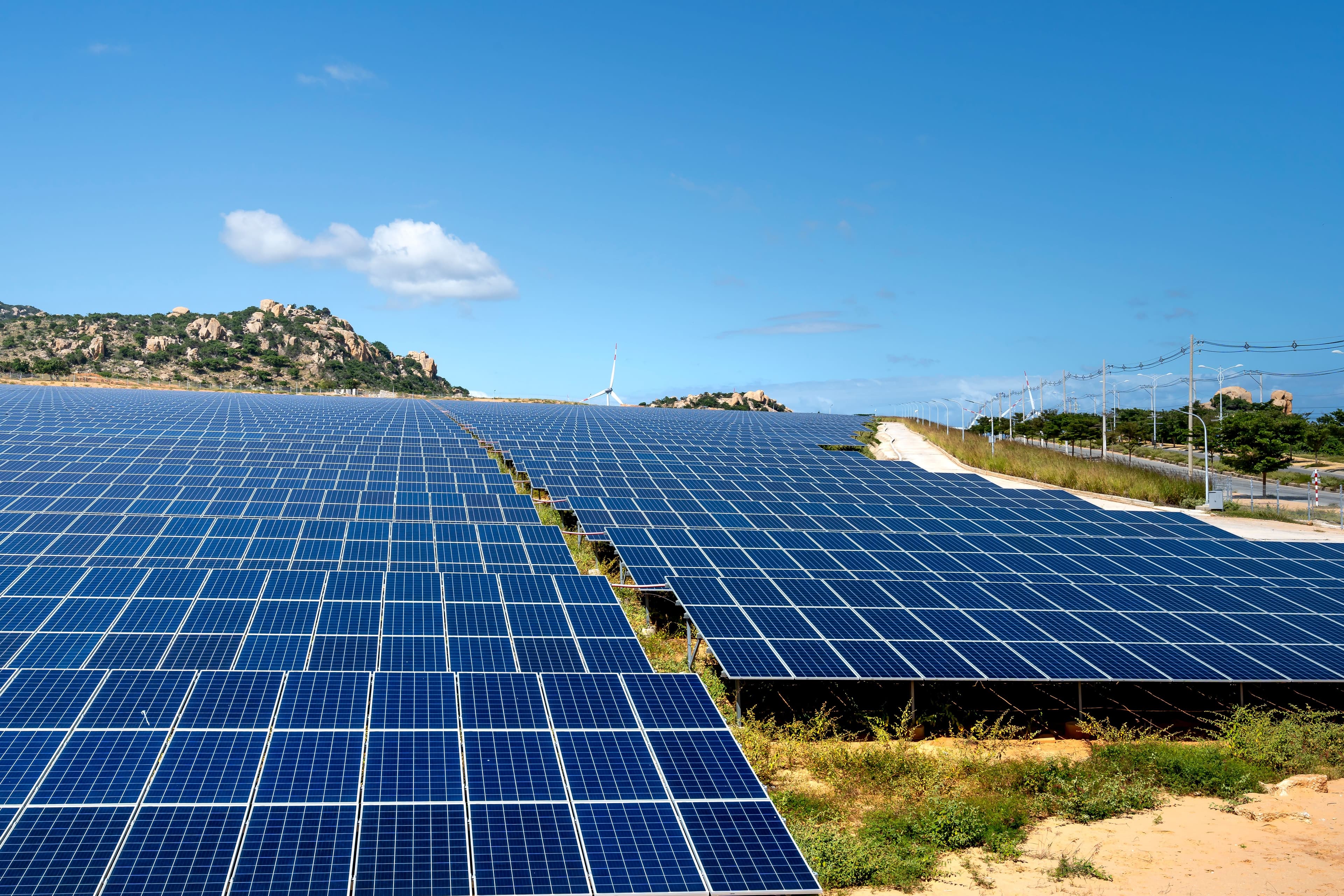
The company developed a 240 MW solar power plant in Eskişehir, covering approximately 3 million m2, with an investment of EUR 220 million. Construction began in 2024, the plant was commissioned in August 2025, and it is designed for an economic life of 25 years.
The plant sits outside the airport perimeter.
Türkiye's regulatory framework allows off-site renewable electricity generation to be offset against electricity consumption at the airport, enabling electricity generated in Eskişehir to be matched against airport consumption without requiring the generation facility to be located within the airport perimeter.
Alongside construction and operation of the plant, the initiative covers generation monitoring, the integration of energy indicators into corporate performance reporting, and biodiversity measures applied from the construction phase onwards.
The 2030 renewable energy target has since been raised from 50% to 90%, and the plant is positioned as a component of the 2050 net zero roadmap.
Figure 1: Site layout of the Eskişehir solar plant, with an aerial view of the panel field and the substation that connects the plant to the grid

Figure 2: Monthly electricity generation of the solar plant against the company's own electricity consumption at the airport, August 2025 to July 2026

Impact
Sustainability Impact
Climate
This initiative targets Scope 2 emissions from purchased electricity, within the company's Scope 1 and 2 reduction pathway against a 2019 base year and a 2050 net zero commitment. Avoided emissions are calculated using Türkiye's national grid emission factor.
Following commissioning in August 2025, the plant generated 132,572,404.69 kWh over the remainder of the year, covering 54.08% of the company's own annual electricity consumption and avoiding 57,833.96 tCO2e.
In the first seven months of 2026, generation reached 190,807,191.51 kWh, equivalent to 131.64% of the company's own electricity consumption, so renewable generation exceeded electricity use over the period. The annual avoided-emissions target is 212,800 tCO2.
The company reports Scope 1 and 2 emissions 27.8% below the 2019 base year, and progress against the net zero roadmap running 30–40% ahead of plan. Generation and consumption have been monitored monthly since August 2025 and are incorporated into annual sustainability reporting (1).
Electricity generation is monitored separately for the Eskişehir solar power plant and the airport car park solar power plant. From August to December 2025, the Eskişehir plant generated 132,572,404.69 kWh, while the car park plant contributed an additional 309,877.70 kWh. Their combined generation of 132,882,282.39 kWh was equivalent to 54.21% of the company's own annual electricity consumption in 2025.
In the first seven months of 2026, the Eskişehir plant generated 190,807,191.51 kWh and the car park plant generated 453,178.00 kWh, bringing combined generation to 191,260,369.51 kWh, equivalent to 131.95% of the company's own electricity consumption over the same period. Over the 25-year economic life of the plant the company expects an environmental benefit equivalent to the carbon sequestration capacity of approximately 517 million red pine trees.
Nature
Biodiversity measures have been applied since the construction phase. A soil and seed bank was managed throughout construction, and fauna protection protocols were carried out under the supervision of a biologist and an ornithologist.
Groundwater is managed through 3,500 m of drainage channels, and two wildlife crossing corridors were constructed across the site.
Business Impact
Benefits
Renewable generation displaces grid electricity purchases for a 24-hour operation with high and predictable demand, reducing exposure to electricity price movements and to carbon regulation over the plant's 25-year economic life.
Siting the plant away from the airport avoided modification of the terminal building and disruption to airport operations during construction.
Performance is tracked against defined key performance indicators, reported to senior management on a regular cycle and incorporated into annual sustainability reporting. Targets are validated by the Science Based Targets initiative (SBTi); the company reports to CDP on climate, water and forests, aligns disclosure with ISSB (IFRS S1–S2), TCFD and TNFD, and obtains independent third-party assurance.
Costs
The principal cost driver is the capital expenditure of EUR 220 million for 240 MW of capacity. The plant occupies approximately 3 million m2, so land acquisition represents both a significant cost and a significant constraint. Large solar projects also carry long planning and permitting timelines, and regulatory variability is a further risk that requires institutional capacity and regulatory foresight to manage.
Biodiversity mitigation, including drainage channels, crossing corridors and soil and seed bank management, adds a further construction-phase cost.
On operating costs, generation from the plant displaces purchased grid electricity at a site with high and predictable demand, replacing a variable energy bill with the cost of operating and maintaining owned capacity across a 25-year life.
Costs are contained by applying the remote renewable energy regulation, which removed the need to retrofit the terminal, and by sizing the plant against the company's own consumption in full rather than a partial share of it. For replication, public-private partnerships, infrastructure investment funds and multilateral financing mechanisms are identified as available routes.
Impact Beyond Sustainability And Business
Co-benefits
The project serves as a reference point for suppliers and business partners across the airport ecosystem, extending renewable energy expectations along the value chain.
Potential side-effects
A plant of approximately 3 million m2 has a material land footprint and causes disturbance during construction. These effects are managed through soil and seed bank management, fauna protection protocols supervised by a biologist and an ornithologist, 3,500 m of drainage channels for groundwater management, and two wildlife crossing corridors.
Implementation
Typical Business Profile
The model is most relevant to energy-intensive infrastructure operators with a fixed, high-consumption site, including airports, logistics hubs, industrial facilities and large-scale urban infrastructure.
It suits organisations that already measure a site energy baseline and hold a net zero target, for which purchased electricity is the dominant emissions source and the next step is procuring renewable capacity at full-consumption scale. Implementation engages energy, infrastructure, sustainability and finance functions.
Geographic relevance is set by regulation: the model applies only where national rules permit electricity to be supplied from a remote renewable plant, and where land with sufficient area and solar resource is available on the same grid. It is particularly suited to cases where on-site generation is constrained by architecture, safety or available space.
Approach
Establish the consumption baseline: Determine total site electricity consumption and the share currently met by renewable sources, and fix a base year for emissions comparison.
Confirm the regulatory route: Verify that national regulation permits remote renewable supply and that generation can be matched against consumption at a separate site, then size the plant against total consumption rather than against a partial target.
Secure a suitable site: Identify land with the area, solar resource and grid connection required, in this case approximately 3 million m2 for 240 MW of capacity.
Screen for biodiversity impacts: Assess the site before construction and apply mitigation from the outset, including soil and seed bank management, fauna protocols under specialist supervision, groundwater drainage and wildlife crossing corridors.
Establish executive sponsorship: Place the project under direct chief executive ownership and coordinate planning, construction and operation across the energy, infrastructure and sustainability teams.
Monitor generation against consumption: Track both monthly against defined key performance indicators, report the results to senior management, and calculate avoided emissions using the national grid emission factor.
Report and revise targets: Incorporate verified results into annual sustainability reporting under independent assurance, and raise forward targets as performance allows.
Stakeholders Involved
Project leads: The chief executive sponsored the project directly, placing it at the highest level of the corporate sustainability strategy and taking the decisions on siting and scale. Delivery teams report performance back to senior management against defined key performance indicators.
Company functions: Energy, infrastructure and sustainability teams were brought in at the planning stage and worked as a single project group: the energy team set the consumption baseline and the plant sizing, the infrastructure team ran construction and grid connection, and the sustainability team defined the indicators and the emissions calculation. Operational units coordinated the interfaces between them.
Main providers: Equipment suppliers and construction contractors delivered the plant to the design and schedule set by the company's project group. Specialist ecologists, a biologist and an ornithologist, supervised fauna protection on site and advised on the timing of works, so that mitigation was applied as construction progressed rather than retrospectively.
Other: The Ministry of Energy and Natural Resources supported the project, and dialogue with policymakers on the remote renewable energy regulation informed the project design. Local authorities, non-governmental organisations, academia, suppliers and local communities are engaged as stakeholder groups, and the project is used as a reference point in supplier discussions on renewable supply.
Key Parameters To Consider
Utility-scale solar is a mature technology. Construction ran from 2024 to commissioning in August 2025, and the plant is designed for a 25-year economic life.
Key prerequisites include:
a site of approximately 3 million m2 with adequate solar resource;
grid connection; and
national regulation permitting remote renewable supply, which was the decisive enabling condition in this case.
The main constraints are long planning and permitting processes, difficulty securing land, and regulatory variability.
Monitoring has been carried out monthly since August 2025 and feeds annual sustainability reporting, with independent third-party assurance.
Implementation And Operations Tips
The principal design constraint was that the terminal building could not carry the generation capacity required. Locating the plant away from the airport and applying the remote renewable supply regulation addressed this, and is the element most likely to transfer to other constrained sites.
The main delivery challenges are land acquisition, long permitting timelines and regulatory change. Managing them requires institutional capacity, regulatory foresight and early engagement with the responsible ministry.
Adoption is supported by the fact that the model requires no modification to the consuming asset, so it can be applied to buildings and facilities that cannot host generation themselves.