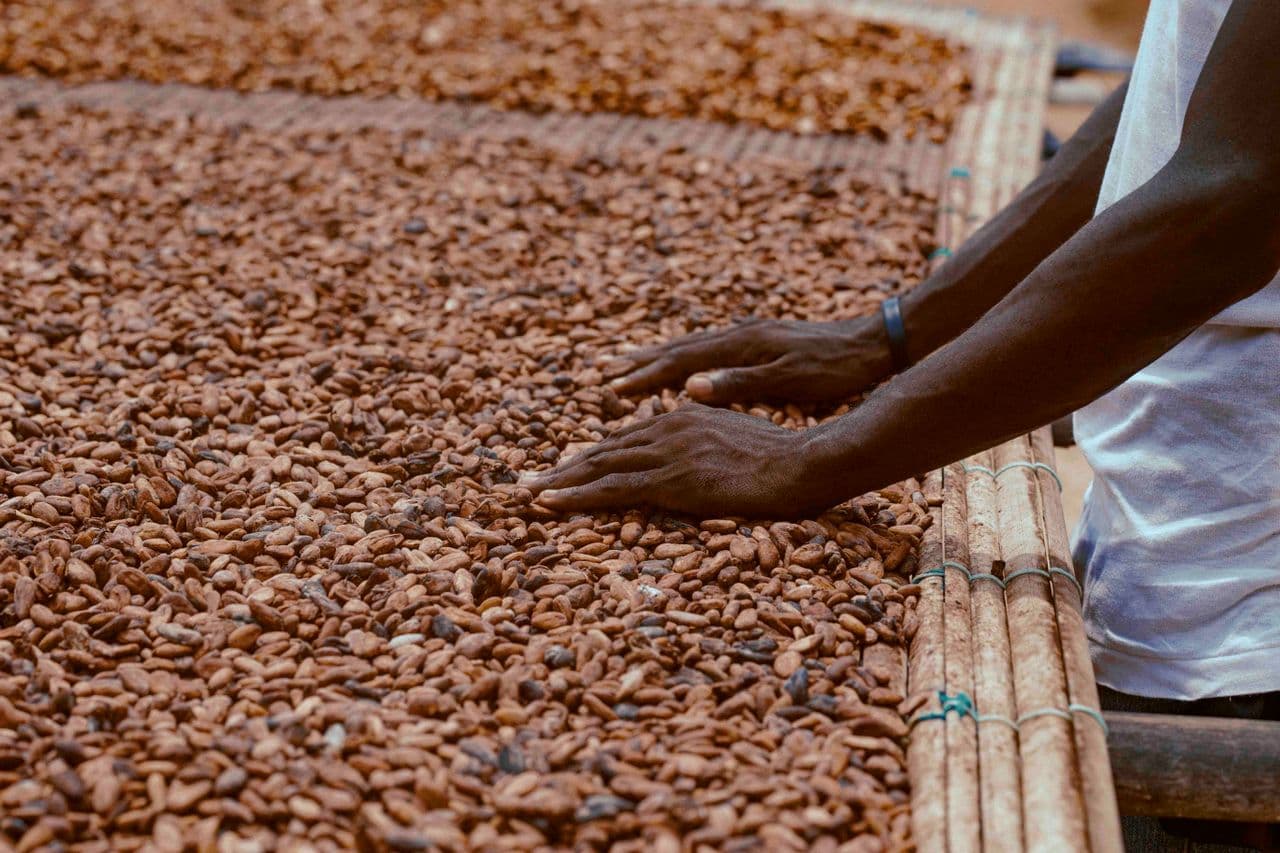
Put farmer and community welfare at the core of sourcing
 Ülker Bisküvi San. A.Ş.
 SKD Türkiye
总结
Cocoa and hazelnut sourcing programmes pair farmer training with child labour monitoring, mobile health services, clean water and school infrastructure.
Context
Submitted through the COP31 Sustainable Transformation Awards - SKD Türkiye (WBCSD Global Network Partner)
Ülker Bisküvi San. A.Ş. is a food manufacturer with more than 1,000 employees, and cocoa and hazelnut are two of the agricultural raw materials on which its production depends.
Both crops are grown by large numbers of smallholders, and both carry social risks that a conventional sourcing relationship does not reach. The issues identified in these supply chains are income fragility, the risk of child labour, the limited participation of women in economic and social life, and restricted access to health and education services.
The response was to treat social conditions in the growing communities as part of raw material sourcing rather than as philanthropy running alongside it. Two programmes were built on that basis: a cocoa programme launched in 2020 in Côte d’Ivoire and a hazelnut programme launched in 2023 in Türkiye, both designed to go beyond legal requirements and conventional supply chain practice.
The stated objective is to strengthen the social and economic resilience of farmers, their families and the wider community, not only to secure sustainable raw material supply. Impact data cover the 2023 to 2025 period, with 2023, the year the programmes began to scale, taken as the baseline year.
Location of the initiative: Hazelnut producing regions of Türkiye and cocoa producing regions of Côte d’Ivoire
Solution
The two programmes run on a common methodology that is adapted to each commodity, geography and producer profile. Both combine agronomic support with services the producing communities lack, so that yield, income and welfare are addressed through the same field structure.
Farmer capability is the first component. Producers receive good agricultural practice training, technical advisory and support for income generating activities, delivered by field teams that visit them through the season rather than through one-off events.
Child protection is the second. A monitoring and remediation system in the cocoa supply chain registers the children of farming households, identifies those at risk and triggers referral and intervention processes when a risk is found.
Health and community infrastructure form the third component. Mobile health services reach communities with no fixed provision nearby, with screening and follow-up focused on maternal and child health, and the programmes fund water and school infrastructure for community use.
The participation of women is designed into the hazelnut programme rather than added to it. Half of the farmers enrolled are women, and dedicated communication and feedback channels allow them to raise needs, expectations and opinions directly.
Cooperative capability carries the model in cocoa. Six cooperatives are assessed against the programme's own criteria and against the requirements of the European Union deforestation regulation, with an action plan for each development area identified, so that traceability, human rights, governance and environmental performance are strengthened in the structures farmers actually belong to.
A sustainability field organisation established in Côte d’Ivoire in 2023 gives the model a permanent local presence and creates local employment.
Results are tracked through field visits, farmer surveys, training attendance records, a digital farm data management system, health service reports, child protection monitoring mechanisms and stakeholder feedback, and are integrated into annual sustainability reporting (1).
Figure 1: Ulker's Cocoa and Hazelnut Programmes

The two programmes in one field structure: farmer training, child protection, mobile health, water and school infrastructure, women's empowerment and cooperative capacity building, delivered by a single sustainability field team in cocoa (Côte d’Ivoire) and hazelnut (Türkiye).
Chart of Farmers and Family Members Reached (2023-2025)
Programme | 2023 | 2025 |
Beyond Cocoa | 5,900 | 9,906 |
Beyond Hazelnut | 50 | 350 |
Impact
Sustainability impact
Climate
This initiative sits in Scope 3, Category 1: Purchased goods and services - the cocoa and hazelnut bought from smallholder producers - rather than in the company's own operations. Its reported climate effect is avoided emissions from deforestation-free cocoa sourcing. In 2022 the company commissioned Carbon Trust to carry out a life cycle assessment of the cocoa beans bought from Côte d’Ivoire and to calculate their global warming potential, establishing separate emission factors for cocoa from conventional areas and from areas with No Deforestation Verification (NDV), whose status is confirmed by a third-party verifier using satellite imagery. Applying those factors to the volumes bought from NDV areas, the company calculates avoided emissions of 70,915 tCO2e in 2023, 33,700 tCO2e in 2024 and 75,181 tCO2e in 2025, 179,796 tCO2e in total over the 2023 to 2025 reporting period; the calculation workings are available on request.
Its enabling effect on emissions runs through land. Over the 2023 to 2025 period producers adopting the good agricultural practices taught recorded an average yield increase of 35%, which raises output from land already in production and reduces the pressure to clear new land for the same volume. The six cooperatives through which the cocoa is bought are assessed against the requirements of the European Union deforestation regulation, with an action plan for each development area identified, and that assessment is the instrument that reaches land use change emissions directly in the structures the purchased volumes actually pass through.
The company's wider climate position is quantified separately: its targets are approved by the SBTi, and climate, water and forests performance is disclosed through CDP and reported in line with ISSB (IFRS S1-S2) and TCFD (1).
Social
Across the two programmes, 10,256 farmers and their family members have been reached in Türkiye and Côte d’Ivoire.
Scale was built from small pilots. The cocoa programme began in 2020 with about 1,500 farmers, stood at 5,900 farmers in the 2023 baseline year and reached 9,906 by 2025; the hazelnut programme, launched in 2023, grew from 50 farmers to 350 over the same period.
Child protection is the largest activity by volume. In the cocoa supply chain 9,494 children of farming households are monitored on a regular basis under the child labour monitoring and remediation system, with referral and intervention processes run wherever a risk is identified.
Mobile health services in Africa reached 2,440 farmers and family members, with screening and follow-up directed in particular at maternal and child health.
Community infrastructure was funded to improve living conditions. 5,764 school kits, 728 school desks and 10 latrines were made available for community use, three water wells were provided, and water pumps were installed in three regions.
The hazelnut programme supports 175 women farmers with access to information, training and participation in decision-making, and half of the farmers in that programme are women. Communication and feedback mechanisms were built specifically so that women can express needs and opinions directly, and the knowledge sharing networks that have formed between them carry good practice beyond the individual farm.
Training, technical advisory and sustainable agriculture practice produced an average yield increase of 35% among producers adopting good agricultural practices, which strengthens income generation potential and economic resilience.
The sustainability field organisation established in Côte d’Ivoire in 2023 created local employment in the sourcing region itself.
Business impact
Benefits
The commercial rationale is supply security in two crops that are exposed to social risk. Producers who adopt the practices taught recorded an average yield increase of 35%, which raises their income and makes continued production and a continued supply relationship more likely.
Cooperative assessments against the programme criteria and the European Union deforestation regulation strengthen traceability, governance and human rights performance in the structures the company buys through, which is also what regulatory compliance in the cocoa supply chain now depends on.
Child labour monitoring gives the company documented evidence on a risk that would otherwise be managed by assertion, and the monitoring data support customer, investor and regulatory scrutiny.
External recognition supports the standing of the approach: the work on the empowerment of women received the Gender Award in the Chocolate Scorecard 2024, and the model is now cited in the sector as a reference practice.
Reporting credibility rests on alignment with SBTi approved targets, CDP disclosure on climate, water and forests, and reporting aligned with ISSB (IFRS S1-S2) and TCFD (1). Sustainability indicators have been part of the performance system of all managers and employees, including the chief executive, since 2018.
Costs
The cost base is continuous rather than project-based: field teams and agronomic advisory in two countries, training delivery, mobile health services, water and school infrastructure, the digital farm data management system, and the child labour monitoring and remediation system.
The permanent field organisation established in Côte d’Ivoire in 2023 carries a standing personnel cost, and mobile health provision recurs each cycle rather than being a single investment.
Costs are shared with partners. The Earthworm Foundation supports human rights work, cooperative development and traceability in cocoa; the Hazelnut Research Institute and a hazelnut supplier contribute technical advisory and training in Türkiye; and the Genç Hayat Vakfı contributes to social risk analysis. Continuity is funded through the company's 2030 sustainability targets, annual investment plans and responsible sourcing approach rather than through discretionary budgets.
Two structural constraints apply. Social outcomes accrue over seasons, so expenditure precedes measurable change. And scale in cocoa is limited by cooperative capacity as much as by farmer numbers, which is why cooperative assessment and action planning is funded alongside farmer-level work.
Impact beyond sustainability and business
Co-benefits
Knowledge sharing networks among women producers have created a community-based learning mechanism, so good practice spreads beyond the farmers formally enrolled.
Health services, water wells and pumps benefit whole communities rather than only the households that supply the company, and school kits, desks and latrines improve conditions for children who are not themselves in the monitoring system.
The field organisation in Côte d’Ivoire employs local staff, which keeps capability and income in the sourcing region.
Cooperative assessment against the European Union deforestation regulation raises the governance standard of organisations that also supply other buyers, so the effect extends beyond the volumes the company purchases.
Potential side-effects
Child labour monitoring only creates value if remediation capacity sits behind it. Identifying a case without a referral and intervention route would produce a record of risk without a response, so the monitoring system and the response mechanism have to be funded together.
Dependence on a single buyer's programme is a risk for producer communities. It is managed by working through cooperatives, research institutes and public institutions rather than by direct provision alone, so that capability remains locally held.
Growth in farmer numbers can outrun the capacity of the field organisation to maintain contact quality. Scale in cocoa is therefore pursued through cooperative capacity building as well as enrolment, and the hazelnut programme grows against a defined target rather than as fast as possible.
Reported yield gains are averages across adopting producers and depend on the season, so a company replicating the model should expect variation between regions and years.
Implementation
Typical business profile
The model suits food and beverage manufacturers, and other buyers of agricultural commodities, whose material social risk sits with smallholder producers rather than inside their own operations, particularly where sourcing spans several countries and producer profiles.
It is most relevant where the company buys through cooperatives or aggregators and can therefore reach producers systematically, and where purchase volume justifies a permanent field presence in the growing region.
Delivery engages sustainability, procurement, supply chain and quality functions, supported by field agronomy teams and by NGO, research institute and public sector partners.
Approach
Define the social risks of the specific supply chain: Identify income fragility, child labour risk, exclusion of women and gaps in health and education access for the crops and regions actually sourced, instead of applying a generic community programme.
Set a baseline year and build the measurement system first: Fix the year from which change is measured and establish field visits, farmer surveys, training attendance records and a digital farm data management system before enrolment scales.
Start with a pilot cohort in each commodity: Begin with a limited group of producers, about 1,500 in cocoa and 50 in hazelnut, so that the method can be corrected before it is applied across the sourcing base.
Deliver agronomic and income support first: Provide good agricultural practice training, technical advisory and income generating activities, because yield and income improvement is what sustains farmer participation in the social components.
Register and monitor children in farming households: Operate a child labour monitoring and remediation system that identifies children at risk and triggers referral and intervention, and fund the response capacity at the same time as the monitoring.
Design the participation of women into the structure: Enrol women as programme farmers rather than as beneficiaries, set the share explicitly, and create dedicated communication and feedback channels so their needs reach programme design directly.
Fund community services through the same field structure: Add mobile health services, water provision and school infrastructure where sourcing communities lack them, and record beneficiaries with the same rigour as agronomic data.
Assess and develop the cooperatives: Review each cooperative against the programme's own criteria and against regulatory requirements such as the European Union deforestation regulation, agree an action plan for each development area, and add cooperatives year by year.
Establish a permanent local field organisation: Employ local staff in the sourcing country so that monitoring, training and feedback continue between visits and local employment is created in the region.
Stakeholders involved
Project leads: The Board of Directors owns the corporate sustainability strategy and reviews sustainability performance regularly. A Sustainability Committee established in 2024 is responsible for tracking targets, developing policy and reporting. The company's own sustainability team manages design, implementation, monitoring and improvement directly and maintains continuous contact with farmers, cooperatives and partners through regular field visits, so the programmes are run in-house rather than delegated to external consultants.
Company functions: Corporate integration runs through a Sustainability Platform on which the relevant functions sit together and review progress and performance regularly. Sustainability indicators have been embedded in the performance system of all managers and employees, including the chief executive, since 2018, which is what moves human rights, farmer welfare, the empowerment of women and child protection out of project status and into normal business practice, supported by 2030 sustainability targets, annual investment plans and the responsible sourcing approach.
Main providers: In the hazelnut supply chain a supplier and the Hazelnut Research Institute contribute technical advisory, training and application capacity, working with the company's field team on the same producer group. In cocoa the company works through six cooperatives, which are both the route to producers and the object of the capacity building work. A digital farm data management system provides the survey and monitoring data behind both commodities, and mobile health provision is delivered by health service partners reporting into the same records.
Other: The Earthworm Foundation supports human rights work, cooperative development and traceability in the cocoa supply chain and carries out the programme and European Union deforestation regulation assessments of the cooperatives together with the company. The Genç Hayat Vakfı contributes a social risk analysis that will be used to evaluate needs in more depth and to design new applications. Public institutions, local administrations, academic institutions, suppliers, NGOs and local communities take part in design, implementation and improvement. Producers are treated as stakeholders rather than beneficiaries: their feedback, collected through regular field visits, telephone calls, surveys, evaluations and group meetings, shapes the programmes. In cocoa this runs through digital data systems and surveys, and in hazelnut through communication groups and direct field contact, reflecting the different producer profiles.
Key parameters to consider
Impact data cover the 2023 to 2025 period, with 2023 as the baseline year, and are collected through field visits, farmer surveys, training attendance records, a digital farm data management system, health service reports, child protection monitoring mechanisms and stakeholder feedback.
The hazelnut programme currently reaches 350 farmers and targets 1,000 farmers by 2030. Scale in cocoa is measured through cooperative capacity as well as farmer numbers, and the number of cooperatives is increased each year.
Prerequisites include a route to producers through cooperatives or suppliers, a permanent field presence in the sourcing country, and a digital data system able to hold farmer, training, health and child protection records in one place.
Reporting is aligned with SBTi approved targets, CDP disclosure on climate, water and forests, and ISSB (IFRS S1-S2) and TCFD requirements.
Implementation and operations tips
Enrol women as farmers, not as an add-on. Setting the target at half of the programme cohort changed who received information, training and a role in decision-making, and the feedback channels created for women made their needs visible in programme design.
Fund the response, not only the monitoring. Child labour monitoring is credible only where referral and intervention capacity exists, and building both together avoids creating a register of unaddressed risk.
Use cooperative assessment as the scaling instrument in commodities bought through intermediaries. Adding farmers without strengthening the cooperative produces reach without capability.
Keep programme management inside the company. Direct management of design, implementation and monitoring by the sustainability team, with regular field visits, keeps the feedback loop between producers and programme design short.