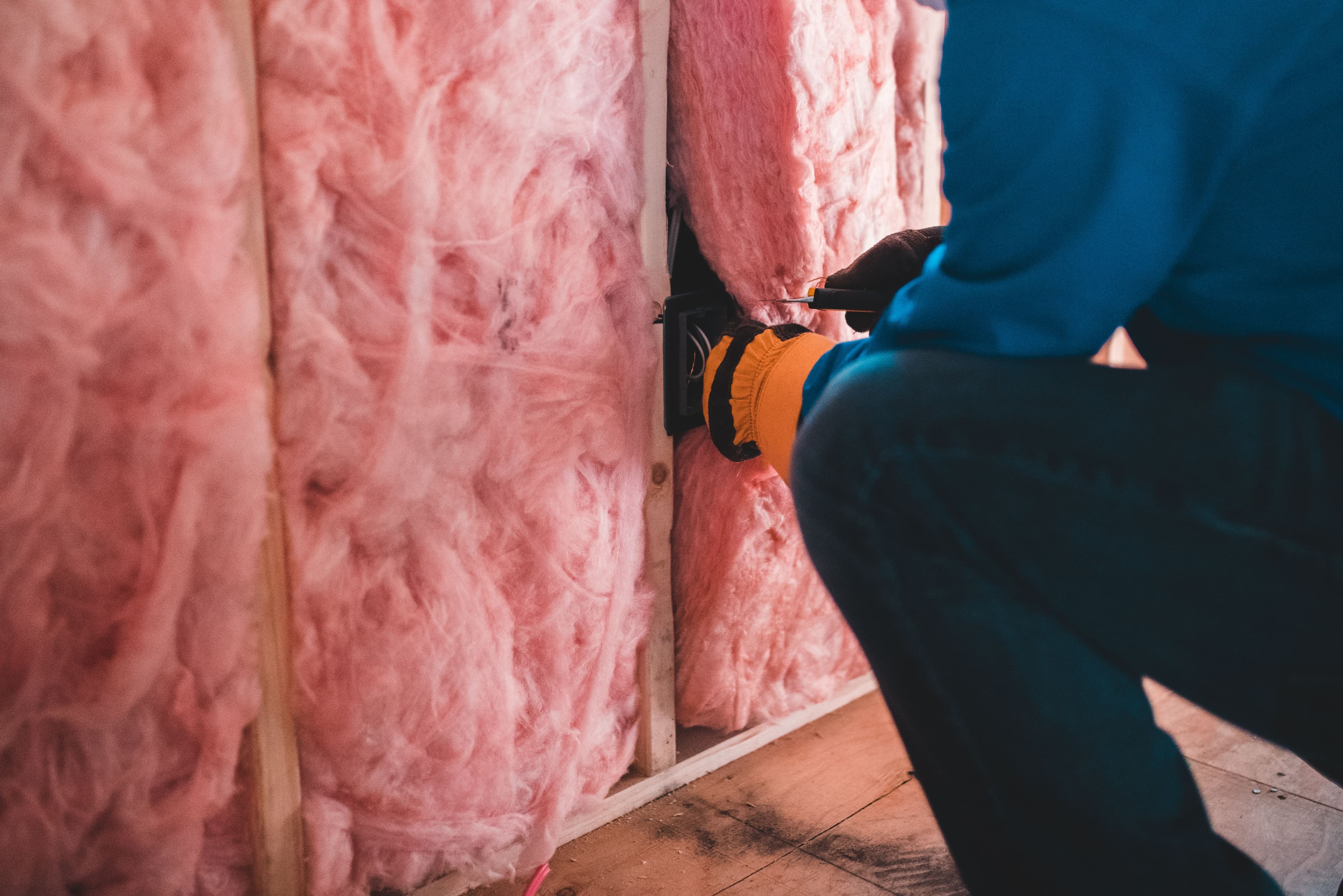
Replace fossil polyol with recycled PET in insulation
 Assan Panel
 SKD Türkiye
总结
A halogen-free and octoate-free polyurethane insulation system built on recycled PET polyol lowers product carbon footprint and removes toxic gas release in fire.
Context
Submitted through the COP31 Sustainable Transformation Awards · SKD Türkiye (WBCSD Global Network Partner)
The company has manufactured industrial insulation systems since 1990 and produces sandwich panels for the construction sector as part of a Turkish industrial group, exporting to more than 85 countries across six continents (1).
The product range covers roof, façade and cold room panels together with structural insulation solutions. The insulating core of these panels is a rigid polyurethane system, and the chemistry of that core settles three questions at the same time: how much fossil raw material the panel embodies, how the panel behaves in a fire, and how easily it meets the substance restrictions that apply in export markets.
Conventional rigid polyurethane formulations depend on fossil-based polyols and contain halogenated and octoate constituents. In a fire those constituents release toxic gases, which is a risk to building occupants and to the people who handle the material, while the fossil polyol carries much of the embodied carbon of the finished panel.
The company set out to establish a production standard for the insulation sector with a lower environmental impact and aligned with the green transition, and to convert a circular economy objective into a product that could be sold rather than a statement of intent. Compliance with REACH and with IEC 61249-2-21 was treated as part of the development brief, so that adaptation to the European Green Deal would be early rather than reactive.
The initiative has reached a developed and qualified formulation. The annual volume of recycled content it is intended to absorb is a stated target rather than a reported result, and is identified as a target wherever it appears below.
Location of the initiative: Balıkesir, Türkiye
Solution
The technology is a next-generation rigid polyurethane insulation system in which two changes are made to the core formulation at the same time.
The first change is to the raw material base. Polyol derived from recycled post-consumer PET replaces part of the fossil-based polyol, so that plastic waste enters the panel core as a feedstock instead of primary petrochemical material.
The second change is to the additive chemistry. The formulation is halogen-free and octoate-free, which removes the constituents responsible for toxic gas formation when a panel is exposed to fire.
The two changes were developed together rather than sequentially, because each affects the reaction profile and the insulation performance of the core. The result reported by the company is the first example in the Turkish insulation sector in which halogen-free chemistry, octoate-free chemistry and circular content are delivered in one system.
The reformulated core is qualified against REACH and IEC 61249-2-21, and the company reports that the product carbon footprint is reduced by up to 30 per cent while thermal insulation performance is maintained.
The system is intended for the company's existing panel families — roof, façade and cold room panels and structural insulation solutions — so that circular content reaches the standard product range rather than a separate demonstration line.
Figure 1: N3 roof panel, one of the panel families the reformulated insulating core is intended for

Impact
Sustainability Impact
Climate
The company reports a reduction of up to 30 per cent in the product carbon footprint, obtained by substituting recycled PET-based polyol for fossil-based polyol in the insulation core.
Because the reduction comes from the raw material rather than from the company's own combustion or electricity use, it sits in Scope 3 emissions embodied in purchased raw materials, and it transfers to the buyer of the panel as a reduction in the embodied carbon of the building envelope.
The newly developed formulation has a low thermal conductivity, similar to conventional insulation materials. This contributes to high thermal insulation performance and supports the construction of highly energy-efficient buildings.
Nature
The recycled PET-based polyol takes post-consumer plastic waste back into a production cycle instead of leaving it in disposal routes. The company has set a target of returning 20 tonnes of plastic waste per year to the production cycle through this route; the figure is a target and not yet a reported result.
Substituting recycled feedstock for fossil polyol also lowers demand for primary petrochemical raw material for the volume that is substituted.
Removing halogenated and octoate constituents from the formulation takes those substance groups out of the panel and out of the emissions released if the panel burns.
Social
The reformulated core does not generate toxic gas in a fire, which protects the health of building occupants and of the workers who produce and install the panels. In an industrial or cold storage building, where insulation is present in large quantity in the envelope, that behaviour changes the exposure profile during an incident.
The development programme also created a learning and development environment for young researchers in chemistry, materials engineering and production engineering. Women make up 40 per cent of the young engineers on the project team, which the company reports as a contribution to diversity and inclusive employment.
Developing the chemistry domestically reduces dependence on imported formulations for a material used widely in the national building stock.
Business Impact
Benefits
The benefits reported are qualitative rather than financial.
Early conformity with REACH and with IEC 61249-2-21 reduces regulatory exposure in export markets. For a manufacturer shipping to more than 85 countries across six continents, a formulation that already meets restricted substance requirements avoids reformulating market by market as rules tighten under the European Green Deal.
The reformulated core gives customers a panel with a lower embodied carbon figure without a change in the product family they already specify, which supports customers who are working on the embodied carbon of their own buildings.
Developing the chemistry in-house reduces dependence on imported raw material systems and keeps the formulation knowledge inside the company.
The fire behaviour of the core is a product property that matters to insurers, specifiers and building operators, and it is achieved by removing constituents rather than by adding a further additive.
Although no commercial sales have been realised to date, based on current market demand, sales of approximately 500,000 m2 are projected by the end of 2030. In addition, the PET-based polyol is expected to replace approximately 50% of the polyol used in the conventional system.
Costs
The research and development expenditure incurred to date is approximately USD 11,000, covering formulation development and raw material sourcing, pilot panel production and analyses, laboratory activities, and certification-related expenses. The cost differential between recycled PET-based polyol and conventional fossil-based polyol is approximately 15%.
Two dependencies are visible from what is reported. The first is feedstock: the system relies on suppliers of post-consumer PET feedstock, from which the polyol is produced in-house, and the annual volume target depends on that supply being available at the quality the formulation requires. The second is qualification: because the change is to the core chemistry rather than to the panel geometry, fire, thermal and durability performance has to be re-evidenced for each affected product family before the material can be sold.
The reformulated system has been successfully developed and qualified; however, it is currently at a limited production stage and has not yet been implemented in full-scale serial production across the entire panel range.
Impact Beyond Sustainability And Business
Co-benefits
Removing toxic gas formation from a widely used building material is a safety gain that reaches beyond the company. Industrial buildings, cold stores and logistics facilities contain large volumes of insulation, and the behaviour of that insulation during a fire affects occupants and emergency responders rather than only the owner of the building.
The development programme built capability as well as a product. Young engineers in chemistry, materials and production engineering worked on a live reformulation problem, and the resulting expertise stays with the company for later product development.
Creating demand for post-consumer PET as a polyol feedstock supports the collection and chemical recycling ecosystem upstream, which is a precondition for other manufacturers to make the same substitution.
Potential side-effects
The substitution creates a dependency on post-consumer PET. Recycled PET is also the feedstock for bottle-to-bottle recycling and for textile fibre, so demand from insulation competes with those uses and is exposed to the same price and availability pressure.
Recycled feedstock is more variable than virgin material, which means incoming quality control becomes a permanent operational requirement rather than a one-off qualification exercise.
The introduction of the new halogen-free, octoate-free and recycled-content formulation required optimisation of the reaction profile, fire performance and industrial processability. During development, adjustments were made through R&D studies to balance these parameters without compromising product performance. As a result, the formulation was optimised to achieve reaction behaviour, fire performance and overall processing characteristics comparable to those of the conventional system.
Implementation
Typical Business Profile
The approach suits manufacturers of insulation materials and sandwich panels that hold their own formulation and research and development capability, rather than buying a finished chemical system from a supplier, because the substitutions have to be developed and tested together.
It is most relevant for manufacturers exporting into markets with restricted substance regimes and embodied carbon requirements, where regulatory change arrives as a product specification rather than as a reporting obligation.
Delivery engages chemistry, materials engineering, production engineering, quality and testing functions, together with procurement for the recycled feedstock.
Approach
Write the specification from the regulation, not from the product: Define the target as a formulation that is halogen-free, carries circular content and conforms with REACH and IEC 61249-2-21, so that the development brief is set by external requirements and by fire behaviour rather than by incremental improvement of the existing recipe.
Identify the constituents that have to leave: Establish which parts of the conventional rigid polyurethane formulation carry the fire toxicity and the substance restriction risk — the halogenated and octoate constituents — and treat their removal as a fixed constraint rather than as one option among several.
Secure a recycled raw material stream before setting volume targets: Set a technical specification for the post-consumer PET feedstock, select suppliers that can meet it, produce and test the polyol in-house, and size the annual waste volume the production cycle is intended to absorb against what the supply can actually deliver.
Develop the substitutions together in-house: Run the chemistry, materials engineering and production engineering work as one programme, because removing the halogen and octoate constituents and introducing a recycled polyol both change the reaction profile and cannot be qualified separately.
Test fire behaviour as the primary gate: Verify by test that the reformulated core no longer releases toxic gas during fire, since this is the health outcome that justifies removing the halogenated constituents and it cannot be inferred from the substance list.
Hold insulation performance constant: Qualify the thermal and mechanical performance of the reformulated core against the previous formulation for each affected panel family, so that specifiers are not asked to accept a performance trade-off in exchange for circular content.
Quantify the product carbon footprint against a stated baseline: Calculate the footprint of the reformulated core against the conventional core using a defined boundary and baseline, so that the reduction claimed to customers can be evidenced in their own reporting.
Build the team while building the product: Staff the development programme so that young engineers carry real formulation and testing responsibility, and track team composition, so that the capability created outlasts the single product.
Stakeholders Involved
Project leads: The development programme was led by the R&D Department under the responsibility of the R&D Manager. Project funding and key development decisions were approved by senior management. Technical findings and major project decisions were escalated from the R&D team to the R&D Manager and, where required, to the relevant senior management level for approval.
Company functions: The research and development function carried the work, drawing on chemistry, materials engineering and production engineering, and the programme served as a learning and development environment for young researchers in those three disciplines, with women making up 40 per cent of the young engineers on the team. The R&D team carried out the formulation development and technical optimisation activities. The Quality Control team supported the qualification process by verifying the physical, thermal and fire performance of the reformulated system against product requirements. The R&D and Production teams conducted pilot and industrial-scale trials and contributed to the optimisation of process parameters for implementation on the production line. The Procurement function supported supplier selection, sourcing and availability of the recycled PET feedstock and other required raw materials.
Main providers: Suppliers provide the post-consumer PET feedstock. The PET-based polyol was not jointly developed with or purchased as a finished polyol from the supplier. A technical specification was established for the PET feedstock and shared with the Procurement team, and suppliers were selected based on their ability to meet these requirements. Upon receipt, the PET raw material is subjected to incoming quality control, including water content, FTIR analysis, certificate verification, appearance and density checks. The PET-based polyol is subsequently produced and developed in-house by the R&D team. Before being approved for use, the resulting polyol is evaluated against defined quality criteria, including hydroxyl number, water content, viscosity, acid number, FTIR, colour and appearance. Only materials meeting the specified acceptance criteria are approved for further use in the formulation and production process.
Other: The formulation development activities were carried out internally by the company’s R&D team, using in-house test methods and laboratory equipment throughout the development process. Support from accredited testing and certification bodies was obtained for the independent validation of product performance. In addition, ISCC PLUS certification was obtained as part of the sustainability and traceability framework of the initiative.
Key Parameters To Consider
The initiative has been developed and qualified and is in limited production rather than full-scale serial production. The reformulated system is reported as successfully developed and compliant; the recycled content volume of 20 tonnes of plastic waste per year is a target rather than an achieved result.
The reported reduction of up to 30 per cent in product carbon footprint is an upper bound, and the boundary and baseline behind it are not stated.
The technical constraint that shapes the work is that the three attributes — halogen-free, octoate-free and recycled content — interact within the same reaction. Each is achievable alone; delivering them together is what required the development programme.
Regulatory references are REACH and IEC 61249-2-21, with the European Green Deal as the wider driver.
Implementation And Operations Tips
Treat the three attributes as a single specification. A formulation that is halogen-free but still fossil-based, or circular but still halogenated, does not answer the requirement that export markets are moving towards, and reworking the recipe twice costs more than developing it once.
Evidence fire behaviour by test rather than by substance list. Removing the halogenated constituents is the mechanism, but the claim that matters to a specifier is the measured gas release, and only a test produces that.
Secure the recycled feedstock before publishing a volume target. The annual tonnage that can be returned to the production cycle is set by supply and by incoming quality, not by the formulation.
Qualify performance parity explicitly. Circular content is adopted by customers when the panel behaves exactly as before; any performance concession moves the conversation from procurement to engineering approval and slows adoption.