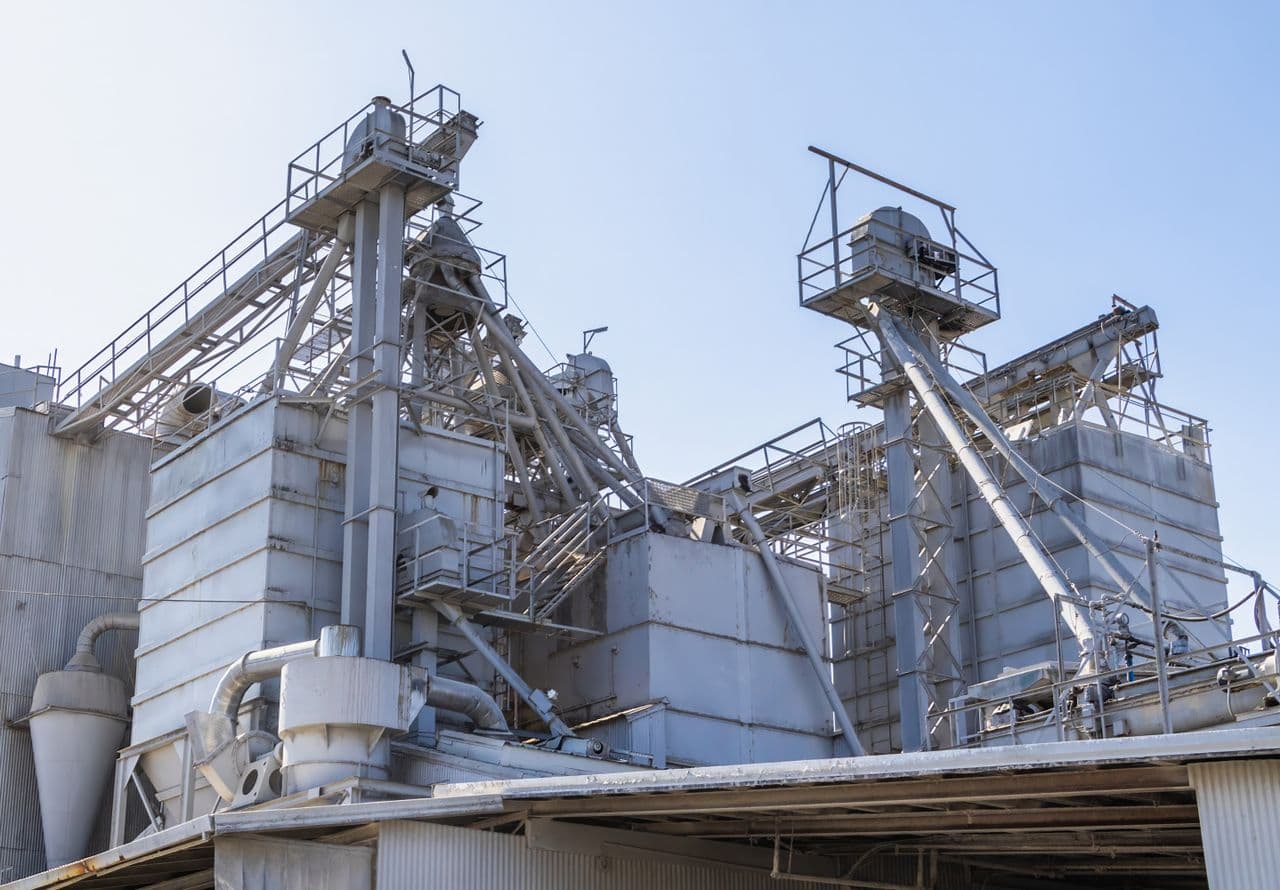
Replace imported air cannons with an in-house shock system
 Nuh Çimento
 SKD Türkiye
总结
Clinker build-up on kiln lines is cleared by an in-house multiple air-shock system that replaces imported air cannons, cutting compressed air consumption and electricity use.
Context
Submitted through the COP31 Sustainable Transformation Awards · SKD Türkiye (WBCSD Global Network Partner)
The company is a Turkish cement producer operating several kiln lines together with the associated grinding and material handling plant, and it employs several hundred people.
Blockages and clinker build-up in kiln lines create a continuous cleaning requirement. They reduce operational efficiency, cause tonnage losses through stoppages and raise maintenance costs, and the standard remedy across the sector is a system of air cannons that fire compressed air into the affected area.
Those systems are normally of foreign origin, which makes an operational necessity into a supplier dependency: installation cost, spare parts and technical support all sit outside the plant. Compressed air is itself an expensive utility, produced by electrically driven compressors, so a system that fires frequently consumes a significant amount of electricity.
The company chose to develop its own system instead. Work began in December 2023, using 100 per cent domestic means and the plant's own technical staff, with the objective of building a low-cost, high-efficiency shocking system that would prevent tonnage losses from stoppages and improve energy efficiency at the same time.
The measurement base year is 2023, compared against 2024, with a formal monitoring period running from 1 January 2024 to 31 December 2025. The work sits inside an Energy Management Unit established under the ISO 50001 energy management system.
Location of the initiative: Cement plant kiln lines, Türkiye
Solution
The system is built from standard industrial components combined in a different configuration. Air tanks of 200 to 300 litres, purpose-designed collectors and pneumatically actuated valves are assembled into multiple shocking units serving between two and seven discharge points from a single reservoir.
The operating principle differs from a conventional air cannon installation. Rather than firing small, frequent blasts, the system releases a larger coordinated shock less often: the previous arrangement fired every three minutes, while the new one fires every ten minutes and prevents build-up more effectively than the system it replaced.
That change in firing pattern is where the energy saving comes from. Hourly air consumption fell from 121.20 cubic metres per hour to 72.25 cubic metres per hour, a net saving of 48.95 cubic metres per hour or 40.4 per cent in compressed air and therefore in the electricity used to produce it.
Cost follows the same pattern. An existing imported system cost 4,271 USD to install, while the domestically built unit was delivered at 854 USD, roughly five times lower, with a failure rate close to zero.
The design is modular, so a unit can be adapted to different kiln capacities and technical requirements. It was piloted on the cooling unit of one kiln line and, after the results were confirmed, extended across the remaining kiln lines, the additive mill and the feed bunkers.
The system was awarded third prize in the Industrial Energy Efficiency Project Competition organised by the Ministry of Energy and Natural Resources, and it is known inside the plant by the name Koca Yusuf.
Figure 1: Multiple air-shock unit in the pilot kiln area: the air tank outlet feeds a multi-port manifold, each port fitted with a pneumatically actuated butterfly valve and connected to the main piping by a flexible hose.

Figure 2: Kiln 3 area before and after installation: blasting cycles, hourly compressed air consumption and the resulting annual energy and cost savings.

Impact
Sustainability impact
Climate
Compressed air is produced by electrically driven compressors, so the reduction shows up as purchased electricity and the effect sits in Scope 2.
Over the monitoring period the system saved 5,527 MWh of electricity: 2,400 MWh during 2024 and 3,127 MWh during 2025. The base year for comparison is 2023.
Emissions were calculated using the national information form on Türkiye electricity generation and electricity consumption point emission factors, applying a consumption-point factor of 0.436 tonnes of CO2 equivalent per MWh. On that basis the system avoided a total of 2,410 tonnes of CO2 equivalent across 2024 and 2025, and each additional unit installed continues to add to the reduction.
The underlying data are not estimated. Flow meters, pressure measurement devices and electricity meters in the plant monitor consumption continuously, and the figures are reviewed monthly by the Energy Management Unit and reported to the Energy Committee under the ISO 50001 framework.
Social
The system was designed and built entirely by the plant's own personnel, which developed the problem-solving capacity of the technical staff and reinforced a culture of solving engineering problems on site rather than procuring the answer.
Developing a fully domestic system also raised motivation among the people who built it, creating a form of corporate social capital that goes beyond meeting a legal energy efficiency obligation.
The change improved occupational safety. Preventing blockages more reliably reduces the manual intervention needed in hot, dusty areas of the kiln line, which turns the operation into a safer working model.
Materials were sourced from domestic suppliers, which supported the local economy while reducing external dependency, and the results have been shared with sector peers through the national cement industry association, Türk Çimento so that the energy efficiency knowledge spreads beyond one plant.
Business impact
Benefits
The financial result is reported as a total saving of 11,085,780 TRY, made up of 5,283,114 TRY in investment cost, 3,136,000 TRY in maintenance cost and 2,666,666 TRY in compressed air.
The electricity saved has been valued directly: 2,400 MWh at 2,270 TRY per MWh gives 5,448,000 TRY for 2024, and 3,127 MWh at 2,480 TRY per MWh gives 7,754,960 TRY for 2025.
The company reports the total economic gain of the project across 2024 and 2025 as 24,288,740 TRY, which combines the 11,085,780 TRY saving above with the electricity savings valued at 5,448,000 TRY in 2024 and 7,754,960 TRY in 2025.
The payback period is 0.16 years, which is a consequence of the installed cost: 854 USD for a domestically built unit against 4,271 USD for an imported system, roughly five times lower.
Operationally, the plant gained more than the utility saving. Preventing blockages more effectively removes tonnage losses caused by stoppages, and during more than a year of monitoring no significant operational failure occurred in the areas where the system is installed.
Breaking the dependency on foreign-origin equipment removes an exposure to import pricing, lead times and external spare part supply that the plant previously carried.
Costs
The capital requirement is low but not zero. Each unit requires air tanks of 200 to 300 litres, purpose-designed collectors and pneumatically actuated valves, together with the fabrication and installation labour, at an installed cost of 854 USD per unit against 4,271 USD for the imported alternative.
Capital and maintenance expenditure on the installed base totalled 2,843,969 TRY across 2024 and 2025, made up of 1,082,632 TRY of capital expenditure and 1,761,337 TRY of maintenance. In 2024 the spend was confined to the kiln 3 area, at 307,954 TRY of capital expenditure and 100,125 TRY of maintenance. In 2025 capital expenditure of 774,678 TRY covered four process areas — kilns 1 and 2 (606,271 TRY), the crusher area (67,363 TRY), the trass mill (67,363 TRY) and the eight-bunker area (33,681 TRY) — and maintenance for kilns 1, 2 and 3 combined was 1,661,212 TRY.
The real precondition is capability rather than cash. The system was designed with the company's own resources and the labour of in-house technical personnel, which means a replicating plant needs mechanical and pneumatic engineering competence, a workshop able to fabricate collectors and valve assemblies, and the instrumentation to measure the result.
Ongoing costs sit in the valves and actuators, which are the wearing components, and in the metering that proves the saving. Because the design is internal, spare parts, drawings and technical documentation also have to be maintained internally rather than being supplied with the equipment.
Costs were held down by financing the work from the company's own resources, by sourcing materials from domestic suppliers and by using a modular design that can be adapted rather than re-engineered for each new location.
Impact beyond sustainability and business
Co-benefits
The most transferable feature is the cost position. A five times lower investment cost and a payback of 0.16 years mean the system can be financed from a plant's own resources without a capital approval process, which is what allows it to be replicated quickly.
The design is not specific to cement. It applies to high-temperature, dusty operations in many sectors where material builds up on vessel and duct walls, and the modular unit adapts to different capacities and technical requirements.
Inside the company the project reinforced a culture of engineering solutions being developed on site, which raised the technical staff's problem-solving capacity and produced a safer working model at the same time.
At sector level it demonstrates that energy-intensive industries can reach carbon reduction targets with low-cost, high-efficiency measures rather than only through major capital programmes, and that domestic engineering can replace an imported technology model that had been treated as the standard.
Potential side-effects
An internally designed system carries no external warranty. Reliability, spare parts, drawings and technical documentation all become the plant's own responsibility, and the arrangement only holds while the engineering capability that created it is retained.
Extending the interval between blasts from three minutes to ten has to be tuned to each location. The interval that prevents build-up on one kiln cooler will not automatically suit a different vessel, feed material or temperature profile, so each installation needs its own commissioning period.
Scaling depends on internal workshop capacity. Because the units are fabricated in house, the rate of roll-out is set by the availability of the same technical staff who run the plant's other maintenance work.
The energy saving is real but its carbon value depends on the grid factor applied. The reported reduction uses a consumption-point factor of 0.436 tonnes of CO2 equivalent per MWh, and the tonnage will move as the national grid changes even though the MWh saved does not.
Implementation
Typical business profile
The approach suits cement plants and other energy-intensive process operations that run high-temperature, dusty equipment where material builds up on vessel walls, ducts, coolers and bunkers and where compressed air cleaning systems are already in use.
It requires a plant with in-house mechanical and pneumatic engineering capability, a workshop able to fabricate collectors and valve assemblies, and metering — flow, pressure and electricity — sufficient to prove a before-and-after result.
Delivery engages auxiliary operations, electrical and electronic maintenance, clinker production management and energy management, with senior management approval because the change replaces a supplier-provided system with an internally supported one.
Approach
Locate the points that actually cause stoppages: Record where clinker build-up and blockages occur on each kiln line and how much cleaning time and tonnage loss each location causes, so the pilot is placed where the return is largest.
Measure the existing air consumption as a baseline: Use flow meters and pressure measurement devices to record hourly compressed air use and blast frequency before any change, which here established 121.20 cubic metres per hour and a blast every three minutes.
Design a multiple shock unit instead of individual cannons: Combine air tanks of 200 to 300 litres, purpose-designed collectors and pneumatically actuated valves so that between two and seven discharge points fire from one reservoir.
Pilot on a single line before standardising: Install the first units on one kiln cooling unit and monitor build-up, air consumption and failures for long enough to confirm the design rather than the intention.
Retune the firing interval against measured build-up: Extend the interval between blasts — here from three minutes to ten — and verify that build-up is prevented more effectively at the lower air consumption before adopting the setting.
Fabricate in house and source materials domestically: Build the units with internal technical personnel and locally procured components, which brought the installed cost to 854 USD against 4,271 USD for the imported equivalent.
Roll out across kiln lines and material handling: Extend the system to the remaining kiln lines, the additive mill and the feed bunkers, adapting the modular unit to each capacity and technical requirement.
Govern the result through the energy management system: Track consumption monthly through the Energy Management Unit under ISO 50001, report to the Energy Committee, and convert the MWh saved into CO2 equivalent using the published consumption-point emission factor.
Stakeholders involved
Project leads: Corporate approval was given by the General Manager, and responsibility for execution was assigned to the auxiliary operations supervision and engineering unit. Ownership therefore runs from senior management down to operational level rather than sitting with a single department.
Company functions: Employees from auxiliary operations, electrical and electronic maintenance and the clinker production directorate — the people who experience the blockages directly — took an active role in the decision-making during the idea and design phases. Their feedback was tested through pilot installations, which is what shaped the final technical configuration.
Main providers: No external design partner was involved. The system was designed with the company's own resources and the labour of in-house technical personnel, and materials were procured from domestic suppliers, which removed the external dependency that the imported alternative carried.
Other: Corporate integration runs through the Energy Management Unit established at the plant, which comprises a chairman, a vice-chairman and 16 members drawn from various departments. Results are shared each month at Energy Committee meetings with senior management and the energy managers, and this is the mechanism through which process tracking and data evaluation are carried out. Beyond the company, the results have been shared with sector stakeholders through the national cement industry association, Türk Çimento to spread energy efficiency awareness, and the system received third prize in the Industrial Energy Efficiency Project Competition organised by the Ministry of Energy and Natural Resources.
Key parameters to consider
Development began in December 2023, the base year is 2023 and the comparison year is 2024, with a formal monitoring period from 1 January 2024 to 31 December 2025.
Five indicators are tracked: 1. total energy saved; 2. carbon footprint reduction; 3. the compressed air saving rate; 4. economic gain; 5. investment payback period.
The measured parameters are hourly air consumption reduced from 121.20 to 72.25 cubic metres per hour, a 40.4 per cent air saving, 5,527 MWh of electricity saved, 2,410 tonnes of CO2 equivalent avoided and a payback of 0.16 years. Data are gathered continuously from flow meters, pressure measurement devices and electricity meters.
The roll-out sequence matters for anyone replicating it: the pilot ran on one kiln cooling unit, then the system was applied successfully to the other kiln lines, which is the clearest evidence of its applicability.
Medium and long-term continuity is secured through resources and policies integrated with the company's strategic objectives, including a net-zero roadmap covering 2030 and 2050 and planned renewable energy investment. Because the system is built and supported internally, its continuity does not depend on an external supplier.
Implementation and operations tips
Measure the utility before redesigning the equipment. Hourly compressed air consumption and blast frequency are cheap to instrument and they are what converts a maintenance improvement into an energy efficiency result that can be reported.
Question the firing frequency, not just the hardware. The saving here came from firing a larger coordinated shock every ten minutes instead of a small one every three, which is a control decision rather than a procurement decision.
Put the people who clean the blockages into the design team. The auxiliary operations, maintenance and clinker production staff who experience the problem directly produced the configuration that worked, and pilot testing of their feedback shaped the final design.
Build the modularity in at the start. A unit that serves between two and seven discharge points and adapts to different capacities can be rolled out from a kiln cooler to a mill and a feed bunker without redesign.
Keep the documentation as carefully as the hardware. An internally built system has no supplier manual, so drawings, spare part lists and commissioning settings have to be maintained deliberately if the saving is to survive staff changes.