Restore burnt forest with drone seeding and local labour
 ASAŞ ALÜMİNYUM SAN. TİC. A.Ş.
 SKD Türkiye
总结
Seeds coated in clay by local women are dispersed by drone over land burnt in a wildfire, with stakeholders triggering each sowing request through a digital link.
Context
Submitted through the COP31 Sustainable Transformation Awards · SKD Türkiye (WBCSD Global Network Partner)
ASAŞ ALÜMİNYUM SAN. TİC. A.Ş. is an aluminium producer in Türkiye with more than 3,000 employees.
In 2021 a major fire in the Muğla-Marmaris area destroyed the ecosystem balance of the Hisarönü district. Biodiversity was severely damaged, the flora and fauna that depended on the forest were lost, and the bare ground was left exposed to erosion risk. The land stayed idle until it reached a phase suitable for sowing in 2025.
The same fire had a social consequence. Women in the surrounding area were among those affected socio-economically by the climate crisis, and their need for employment persisted long after the fire had left the news.
The response was designed as a voluntary sustainability investment rather than a compliance measure. Industrial facilities are subject to environmental legislation and legal carbon obligations, and this initiative sits outside both: its purpose is ecosystem restoration and a direct answer to the biodiversity crisis rather than to a regulatory requirement.
The framing is deliberate. The aim was not simply to plant trees but to revive the biodiversity destroyed by fire and to rebuild a home for the living things that had lost theirs, with employment for local women built into the method rather than added as a donation.
Location of the initiative: Hisarönü, Marmaris, Muğla province, Türkiye
Solution
The initiative combines three elements that are usually kept apart: a nature-based restoration method, aerial sowing by unmanned aircraft, and paid local labour in the preparation stage.
Species selection came first. Instead of a single species, a habitat mix of Turkish red pine, black pine, carob and bay laurel was chosen, four species that together feed an ecosystem rather than producing a uniform stand.
The seeds are not sown bare. Women in the surrounding area coat them in a special clay layer, producing seed balls that protect the seed from damage in the open and raise the germination rate. This step is where the environmental method and the social benefit meet: the coating is a technical requirement, and the work is paid.
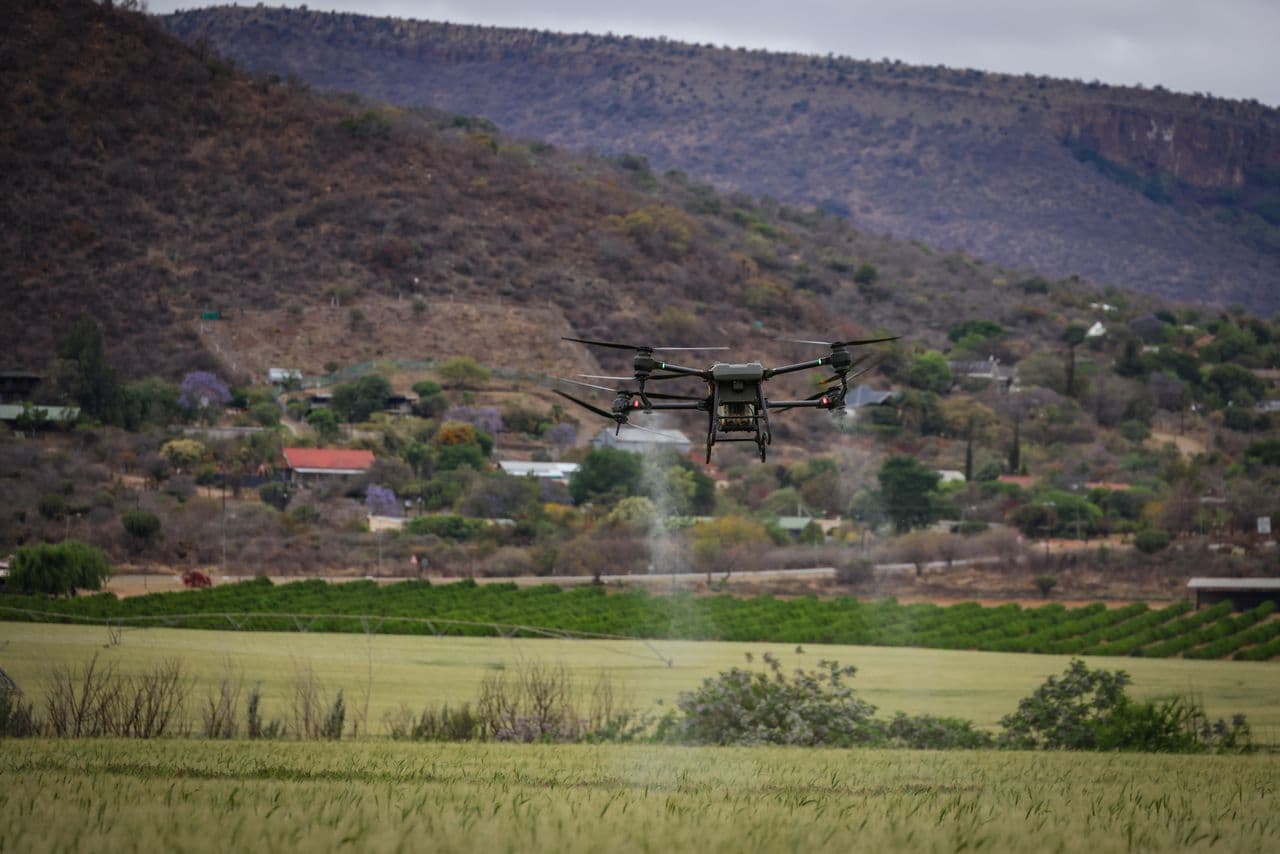
Sowing is carried out from the air. An unmanned aerial vehicle operated by a technology partner disperses the coated seeds across terrain that is difficult and slow to cover on foot, which is what makes a burnt hillside restorable at this pace.
Participation is digital. Links published on the company website and social media channels allowed employees, their families, customers, suppliers and any visitor to the site to trigger a seed request with a single click, which turned a restoration operation into a participation channel across the whole value chain.
Verification runs through a cloud-based monitoring panel. Field data, sowing videos and operation records are tracked in real time, and the operational outputs coming from the field are periodically verified and integrated into corporate sustainability reporting.
Figure 1: Campaign identity of the “Bir Tık, Bir Tohum, Bin Umut” digital sowing programme.

Figure 2: Hisarönü restoration area inside the Datça-Bozburun Special Environmental Protection Area, a habitat for the European turtle dove, the spur-thighed tortoise and the saker falcon.

Impact
Sustainability impact
Climate
The initiative does not reduce the company's own Scope 1 or Scope 2 emissions, and it is not presented as an offset against the company's value chain footprint. It is a voluntary sequestration and adaptation measure on land outside the operational boundary.
The carbon result is a target rather than an achievement. A sequestration potential of 8,813 tonnes of CO2 is targeted with the aim of reducing long-term climate vulnerability, modelled using IPCC standards and ecosystem-based biomass calculation methods. Because sowing took place in 2025 and 2026, none of that sequestration has occurred yet, and the figure describes the mature vegetation the site is intended to carry.
In the near term the climate relevance is adaptation rather than mitigation. Re-establishing vegetation on burnt ground reduces erosion risk and rebuilds the capacity of the land to hold soil and water.
Nature
A total of 31,250 m2 of fire-damaged land was returned to the ecosystem, and 250,000 seeds were delivered to the soil across the site.
The species mix was chosen for habitat function rather than for growth rate. Turkish red pine, black pine, carob and bay laurel together provide cover, food and structure for different parts of the food chain, which is what habitat reconstruction for fauna requires and what a single-species planting does not deliver.
The clay coating applied before sowing prevents the seed from being damaged in the open and raises the germination rate, so the ecological return per seed is higher than broadcast sowing alone would achieve.
Restoration on burnt slopes also addresses erosion. The site was exposed to erosion risk after the fire, and re-establishing vegetation is the mechanism by which that risk falls.
Social
Women in disadvantaged circumstances in the area carried out the clay coating work, spending a total of 694.44 hours on the process. The work was paid and structured as fair employment inside the method rather than as a separate community donation.
The employment was directed at a group affected socio-economically by the climate crisis in the same area the fire damaged, so social and environmental recovery are addressed in one intervention.
Digital participation extended engagement beyond the company. Employees, their families, customers, suppliers and website visitors requested seeds through participation links, which built environmental awareness across the value chain and moved stakeholders from spectators to participants in the restoration.
Business impact
Benefits
The main business benefit is engagement reach at low unit cost. Because sowing requests were generated through digital links, employees, families, customers and suppliers could take part without travel, logistics or event cost, and the participation itself became the awareness campaign.
Impact data is verified rather than asserted. Operational outputs are confirmed through the cloud-based panel and converted into reports that feed corporate sustainability reporting, and that reporting carries independent third party external assurance, which makes the results usable in disclosure.
The results confirmed the environmental, social and governance priorities approved by senior management, which strengthens the internal case for the next cycle of investment.
The project also leaves an operational asset behind: a documented, ready-to-apply method and corporate memory that allow similar mobilisations to be restarted in other geographies and on new sites without redesigning the model.
Global policies such as the European Green Deal and the Carbon Border Adjustment Mechanism are expected to ease access to new ESG funding sources over a one to three year horizon, which is an expectation rather than a realised benefit.
Costs
The project was funded from regular resources set aside in the company's annual sustainability budget, which is what allowed it to be completed rather than deferred.
The cost base is the partnership with the technology provider supplying the aerial sowing capability and the monitoring panel, the seed material behind 250,000 seeds, the paid clay coating work of 694.44 hours, and the verification carried out on the outputs.
There is no revenue and no payback. The return is ecological, social and reputational, so the initiative has to be justified inside a sustainability budget rather than through a financial case.
Germination depends on weather, which is the main risk to the value delivered. That risk is managed by standardising the clay coating methodology applied by the local women and by artificial intelligence supported field monitoring, but a poor season still reduces the yield of a given sowing.
Costs are contained by the digital participation model, which removes event and travel costs, and by working with a specialist technology partner instead of building aerial sowing capability in-house.
Impact beyond sustainability and business
Co-benefits
Bringing women in disadvantaged circumstances into production created a circular social effect, raising the resilience of the local economy against the climate crisis rather than delivering a one-off payment.
The model is modular and suited to replication without geographic or sector restriction. The same aerial restoration method can be used in the rehabilitation of mine sites, the improvement of barren land and the greening of industrial basins.
The digital participation bridge is transferable in its own right. It is flexible enough to be integrated into customer or employee loyalty schemes in any sector, from e-commerce to banking, which gives companies without land assets a route into restoration.
Potential side-effects
Germination risk tied to climate conditions is the acknowledged weakness of aerial sowing. Seeds delivered to the soil are not seedlings established, and the gap between the two is decided by rainfall in the seasons that follow.
Counting seeds is not the same as counting trees. The reported indicator is seeds delivered to the soil, and survival over the coming years will determine the restored biomass and the sequestration that follows from it.
Digital participation can create an impression of contribution at no cost to the participant. The model holds only because the seeds behind each click are actually sown and verified through the panel, and that verification is what keeps the mechanism credible.
Implementation
Typical business profile
The model suits companies with a sustainability budget and a large stakeholder base rather than companies with land holdings, since the restoration site does not have to be owned by the sponsor. Industrial producers, and any organisation running customer or employee loyalty schemes, can operate it.
It applies directly to organisations facing restoration on their own ground as well, including mine site rehabilitation, barren land improvement and the greening of industrial basins.
Delivery requires an environmental management function, a sustainability function and corporate communications working as a single group with board-level sponsorship, plus an external technology partner for the aerial sowing and a local community route for the preparation work.
Approach
Choose a site that is ready rather than a site that is recent: Confirm that the burnt ground has reached a phase suitable for sowing before committing, since the Hisarönü land needed until 2025 to reach that state after the 2021 fire.
Select a habitat mix instead of a single species: Specify species that together feed the ecosystem, here Turkish red pine, black pine, carob and bay laurel, so that the outcome is habitat reconstruction for fauna rather than a uniform stand.
Contract the aerial sowing capability rather than building it: Work with a technology partner that operates unmanned aerial vehicles for restoration, and define the partnership and monitoring period explicitly, here 23 September 2025 to 20 August 2026.
Build the preparation work into local employment: Have the clay coating of seeds carried out as paid work by women in the surrounding community, so that the step which raises germination is also the step that delivers the social benefit.
Open a digital participation route: Publish sowing links on the corporate website and social media so that employees, families, customers, suppliers and visitors generate the seed demand themselves, with each request corresponding to seeds that are actually sown.
Run the sowing as defined operations: Group the flights into discrete operations, here two, and record flight count and flight hours so that the field work is auditable against the seed volume claimed.
Verify through a cloud panel rather than a site visit: Track field data, sowing videos and operation records in real time, and verify the operational outputs coming from the field periodically.
Convert the outputs into reporting and corporate memory: Integrate the verified results into corporate sustainability reporting in a fixed format and document the method so that the same mobilisation can be restarted on a new site.
Stakeholders involved
Project leads: The project was owned at Board of Directors level from the first day to closure and supported as a strategic priority. End-to-end coordination and field follow-up were carried out by a joint working group formed by the Environmental Management unit, the Sustainability unit and the Corporate Communications department, so that environmental delivery, impact measurement and stakeholder participation were handled by the same group rather than passed between functions.
Company functions: Environmental management ran the restoration method and the site relationship, the sustainability unit owned the indicators and their integration into corporate reporting, and corporate communications built and operated the digital participation bridge through the company website and social media platforms. Operational efficiency and impact results were managed through the digital monitoring panel in real time and transparently.
Main providers: A technology partner provided the unmanned aerial vehicle sowing capability and the cloud-based monitoring panel, and had the largest role in delivering the project. The partner was involved at the design stage as well as in execution, so the restoration method and the measurement approach were specified together.
Other: Women in disadvantaged circumstances in the Marmaris area carried out the clay coating of the seeds as paid work. Employees, suppliers, customers and every visitor to the company website who sowed a seed took part through the digital participation route, and feedback from participating stakeholders was positive. The environmental unit and the corporate communications unit carried the stakeholder relationship through the design and decision-making stages.
Key parameters to consider
Base year 2025. Before: fire-damaged, idle land at Hisarönü that had lost its ecosystem balance after the 2021 Muğla-Marmaris fire and was exposed to erosion risk. After: 31,250 m2 returned to the ecosystem through sowing and local labour, with habitat restoration for fauna started.
Impact data covers the partnership and monitoring period from 23 September 2025 to 20 August 2026.
Operational parameters: 250,000 seeds delivered to the soil; two separate operations completed at Hisarönü, in the second half of 2025 and the first half of 2026; 42 flights totalling 10.50 flight hours; 694.44 hours of clay coating work.
Five indicators are reported: seeds delivered to the soil, area restored, targeted CO2 sequestration potential, hours of women's employment, and operational reach measured through flight count and flight hours.
Methodology: nature-based solutions integrated with unmanned aerial vehicle technology; seed retention and germination success tracked through field data, sowing videos and operation records on a cloud-based management panel; long-term sequestration potential modelled with IPCC standards and ecosystem-based biomass calculation methods.
Implementation and operations tips
Wait for the ground. Sowing before a site has recovered enough to support germination wastes both seed and credibility; here the interval between the fire and the sowing ran to several seasons.
Put the social component inside the method rather than beside it. Because the clay coating is technically necessary, the employment it creates cannot be cut as a discretionary cost when budgets tighten.
Make each digital click correspond to a verified seed. The participation model holds only if the panel can show the flights, the videos and the operation records behind the claim.
Report seeds delivered rather than trees planted. The honest indicator at this stage is what reached the soil, with survival tracked separately as the seasons pass.
Standardise the coating method if the model is to be repeated. Germination risk is climate driven, and consistency in preparation is the part of that risk which can be controlled.