Turn a campus kitchen into a regional employment route
 IC Holding
 SKD Türkiye
总结
A holding group and a foundation built the region's first professional gastronomy teaching kitchen at a state university, and 82 students moved on to placements and jobs.
Context
Submitted through the COP31 Sustainable Transformation Awards · SKD Türkiye (WBCSD Global Network Partner)
The company is a diversified holding group with more than 1,000 employees whose businesses include a tourism group and hotel operations.
Ağrı, in eastern Türkiye, faces persistently high unemployment, compounded by limited employment opportunities and a lack of sector-specific infrastructure. According to TÜİK (Turkish Statistical Institute), the province's unemployment rate stood at 13.1 per cent in 2024, when the initiative was launched, placing Ağrı among the provinces with relatively high unemployment levels nationwide. Although the rate declined to 9.3 per cent in 2025, employment opportunities, particularly for young people, remain limited.
TÜİK does not publish province-level unemployment data specifically for the 15–24 age group; however, nationally, youth unemployment for this age group stood at 14.5 per cent in July 2026. The shortage of local job opportunities contributes to the migration of many young people from Ağrı to western provinces or abroad in search of employment. These challenges are further compounded by gaps in vocational infrastructure.
The consequence was a gap between academic study and professional practice. Students could complete a gastronomy degree without meeting industrial kitchen standards, and employers in the tourism sector could not recruit from the region because the skills they needed were not being produced there.
The response was designed as an ecosystem rather than as a training course. Four partners hold it: the holding group, its foundation, the state university in the province and the group's hotel business, each contributing a capability the others do not have.
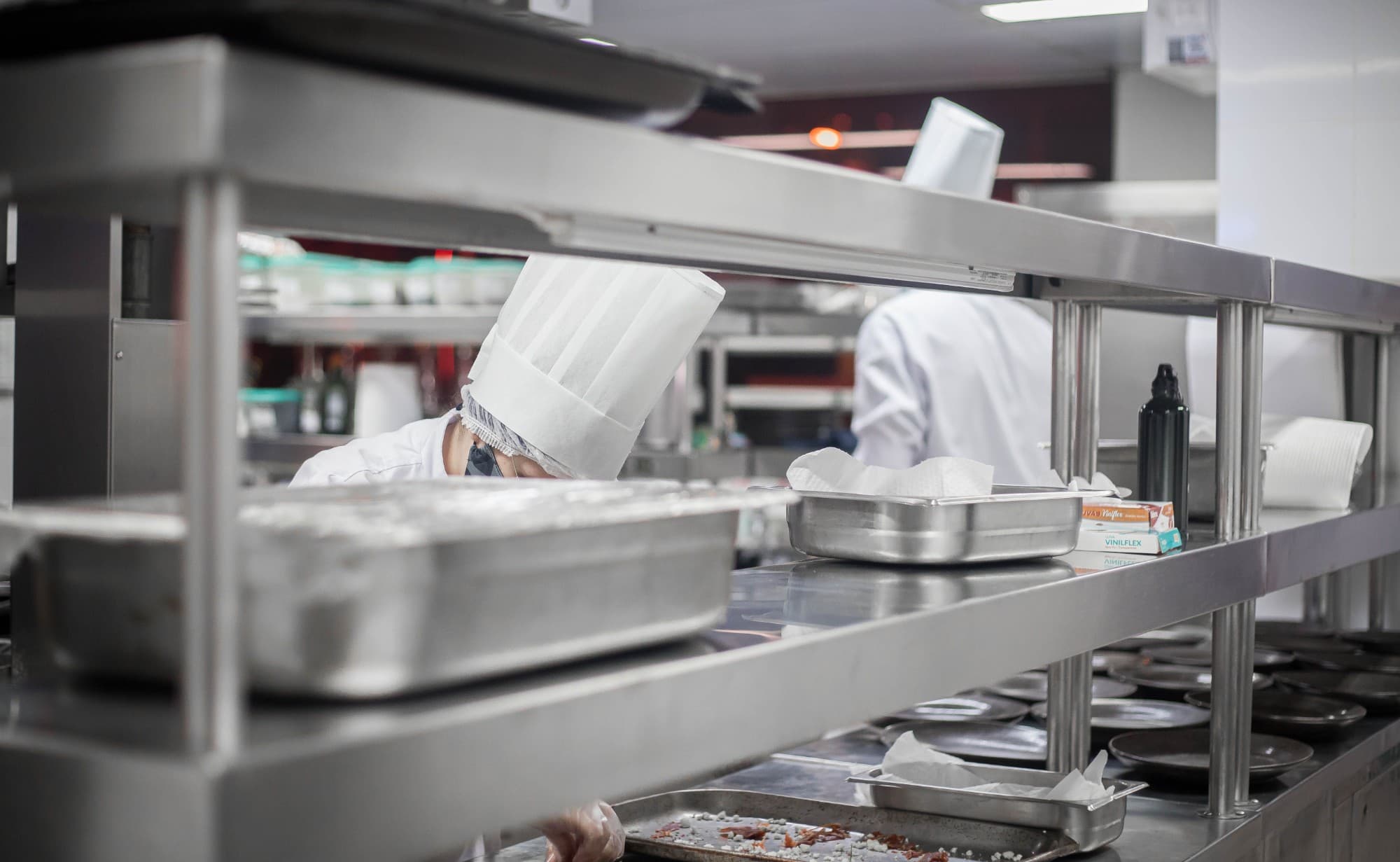
A 500 square metre industrial kitchen and a gastronomy library were built at the university and left in place as permanent infrastructure. It is described as the first professional gastronomy training kitchen in eastern Anatolia, and unlike a training programme it does not end when a cohort finishes.
The initiative began in 2024 and impact data covers the three intake years from 2024 to 2026.
Location of the initiative: Ağrı, Türkiye, with internships and employment at the group's hotels
Solution
Zirvenin Şefleri, meaning Chefs of the Summit, connects a permanent teaching facility, an intensive sector curriculum and a defined route into employment, so that a student moves from classroom to industrial kitchen to job without leaving the region to do it.
The physical asset comes first. The 500 square metre industrial kitchen and gastronomy library give students access to professional standards that the province did not previously offer, and the facility remains with the university rather than with the company.
Teaching is delivered by working professionals rather than by trainers. Seven professional chefs from the group's hotels, within a wider pool of 22 chefs and tourism professionals, deliver a 12-hour sector curriculum alongside 10 technical training sessions and 15 thematic workshops, and 5 technical trips take students into operating environments.
The employment route is structured rather than incidental. It follows the foundation's Kariyer Köprüsü, or Career Bridge, methodology: an integrated model that connects the theoretical education of university students and graduates to the practical requirements of business, and places them into strategic internship and employment networks with group subsidiaries and sector employers.
Local sourcing is built into the operating model. All training materials are procured from local producers, which turns a teaching budget into demand for the regional economy and shortens the supply distance for the ingredients used.
The curriculum reaches past technique. Regional recipes are reinterpreted with modern methods, culinary heritage is recorded and local products are made visible, so that the programme contributes to cultural continuity as well as to employability. Inclusion is extended to the local community and to groups with specific dietary needs, including people with coeliac disease.
Figure 1: Students and teaching chefs outside the gastronomy and culinary arts application laboratory, the 500 square metre teaching kitchen built at the state university in Ağrı

Figure 2: Internships and recruitments by intake year, 2024 to 2026: 82 students in total, 60 per cent of them women; in 2026, 27 placements were within the group's hotels and 5 within its sister company CCN

Impact
Sustainability Impact
Climate
The initiative sets no emission reduction target and reports no change in the Scope 1 or Scope 2 emissions of the group's own operations over the 2024 to 2026 period covered by the results.
Its enabling effect sits in procurement rather than in operations. 100 per cent of the training materials used by the programme are sourced from producers in the province, which shortens the distance those materials travel and, in the company's description, lowers the carbon footprint of the teaching activity while sustaining a fair local supply chain. The curriculum applies the same logic, being built on regional products and recipes instead of standardised national supply. These are purchased goods and upstream transport emissions rather than emissions from the group's own sites.
Accordingly, the emissions associated with the locally sourced training materials are primarily classified under GHG Protocol Scope 3 Category 1 (Purchased Goods and Services), while the related transportation of these materials to the programme site falls under Scope 3 Category 4 (Upstream Transportation and Distribution).
No measured emission figure is published. The company estimates, from the sourcing distances involved, that local procurement avoids approximately 29–49 kg CO2e per delivery, so the reported outcome remains the 100 per cent local sourcing share rather than a verified reduction in tonnes of carbon dioxide equivalent.
Nature
The environmental dimension sits in procurement rather than in operations. 100 per cent of the training materials for the programme are sourced from local producers, which shortens supply distances and, in the company's description, lowers the carbon footprint of the teaching activity while sustaining a fair local supply chain.
Regional products and recipes are used as the raw material of the curriculum, which keeps demand attached to local varieties and local production practice rather than to standardised national supply.
Based on the estimated sourcing distances, the local procurement approach avoids approximately 145–195 km of transportation distance per delivery, around 97 per cent less than a non-local sourcing scenario. This is estimated to correspond to approximately 29–49 kg CO2e of avoided emissions per delivery, depending on vehicle type and loading conditions.
Social
The social result is the purpose of the initiative and it is measured through direct beneficiaries and inclusion.
A total of 82 students have been supported through internship and employment opportunities. By intake year: in 2024, 18 internships and 9 recruitments, totalling 27; in 2025, 8 internships and 15 recruitments, totalling 23; and in 2026, 32 students placed across two employers, 27 of them within the group's hotels and 5 within CCN, a sister company within the group.
Inclusion is measured rather than asserted: 60 per cent of the young people trained and taking part in the programme are women students, in a province where participation in the workforce by women has been constrained by access to qualified training.
Knowledge transfer is quantified as contact: 7 professional chefs from the group's hotels, within a total of 22 chefs and tourism professionals, delivered a 12-hour curriculum together with 10 technical training sessions and 15 thematic workshops, and 5 technical trips were organised.
The infrastructure is the part that outlasts the cohorts. A 500 square metre professional gastronomy kitchen and a gastronomy library remain with the university and are available to students who were never part of a single intake, to the local community and to disadvantaged groups.
All training materials are procured from local producers, which extends the benefit to producers in the region alongside the students.
Business Impact
Benefits
The programme functions as a recruitment channel with a long observation period. Students are seen across a 12-hour curriculum, 10 technical training sessions, 15 thematic workshops, 5 technical trips and a compulsory internship before any employment decision is taken, which reduces the risk that ordinary recruitment carries.
The hotel businesses gain candidates trained to their own kitchen standards, so induction is shorter and the gap between academic preparation and operational requirement is closed before the first shift rather than after it.
In 2026 alone, 27 of the 32 participating students were taken into the group's hotels, which demonstrates that the pipeline supplies real vacancies rather than symbolic placements.
Employer standing in the region improves in a way that is hard to buy. A company that built the province's first professional gastronomy kitchen is a different proposition to local candidates than one that advertises vacancies there.
The chefs who teach gain structured development in instruction and assessment, and the feedback returning from students and from the university updates the design of the teaching kitchen itself.
Local sourcing of all training materials builds supplier relationships in a region where the group also operates, and cultural work on regional recipes and heritage feeds directly into menu development in the hotels.
Costs
The cost base is carried by the holding group and its tourism business. It covers the capital investment in the 500 square metre industrial kitchen and gastronomy library at the university, the Kariyer Köprüsü budget which is integrated into the holding's human resources planning, and the operating costs of curriculum delivery, workshops and technical trips.
The largest recurring input is professional time. Teaching is delivered through the hotel business's employee volunteering model, drawing on 7 professional chefs and a wider pool of 22 chefs and tourism professionals who are released from operational duty to teach.
That model is also the main dependency. The company identifies the long-term sustainability of chef and tourism professional volunteering, together with regional logistics, as the principal risks to continuity, since both rest on goodwill and distance rather than on contract.
Regional logistics add cost. Moving trainers, materials and students in and out of a province distant from the group's hotel operations is a permanent overhead rather than a start-up expense.
Costs are contained by placing the facility inside an existing university rather than building a separate centre, by integrating the employment route into human resources planning instead of running it as a separate scheme, and by procuring training materials locally.
The total budget committed to the programme, covering the capital investment in the professional teaching kitchen and gastronomy library and the programme's operating costs, is approximately USD 500,000.
Impact Beyond Sustainability And Business
Co-benefits
Local producers gain a steady customer, because all training materials are procured from them, which turns an education budget into regional economic activity.
Culinary heritage is documented rather than lost. Regional recipes are reinterpreted with modern technique, gastronomic heritage is recorded and local products are made visible, which adds cultural continuity to the vocational result.
Inclusion extends past the student group to the local community and to people with specific dietary requirements, including those with coeliac disease, so the kitchen serves needs that a purely vocational facility would not address.
Perceptions of women's participation in the workforce shift as a consequence of qualified training being available locally, with 60 per cent of participants being women students.
The model has already crossed a company boundary: in 2026 it extended to CCN, a sister company within the group, where 5 students were placed, which shows that the route can be repeated outside the hotel business that created it.
Potential side-effects
Volunteer-delivered teaching is the strength and the fragility of the model. Seven chefs and a pool of 22 professionals carry the curriculum alongside their operational roles, and a busy season or a change of personnel can interrupt the teaching calendar in a way that a contracted trainer would not.
Concentrating the route on the group's own hotels risks narrowing the students' options to one employer. Extending to a sister company in 2026 widens it, but every placement so far has been inside the group.
A permanent facility creates a permanent obligation. A 500 square metre industrial kitchen requires maintenance, consumables and technical support long after the donation, and those costs fall on the university if the partnership weakens.
Social value has not yet been monetised, so the case rests on participation and employment counts rather than on a valuation of the outcome.
Implementation
Typical Business Profile
The model suits large employers with a distributed operating footprint and a recurring need for vocationally trained staff, operating in or near regions where youth unemployment is high and sector infrastructure is thin.
It is described by the company as transferable beyond tourism, to sectors such as technology, construction and healthcare, because the structure is a career bridge rather than a curriculum: a permanent training facility at a local university, teaching delivered by the employer's own professionals, and a defined internship and employment route.
It presumes three institutional conditions: a partner university with a matching academic programme, an employer able to release working professionals to teach, and a foundation or equivalent body able to coordinate regional dynamics and community benefit.
Delivery engages holding senior management, the foundation, the tourism group and hotel kitchens, university management, human resources, and local producers as suppliers.
Approach
Establish the regional gap in numbers before designing anything: Measure youth unemployment and the absence of sector infrastructure in the target province, and identify which academic programme is producing graduates who cannot reach professional standards locally.
Build the missing facility and hand it to the institution that will keep it: Invest in the physical infrastructure the region lacks, here a 500 square metre industrial kitchen and a gastronomy library, and site it inside the university so that it outlasts any single cohort.
Form a partnership in which each side holds a distinct decision: Let the academic partner define theoretical requirements and student needs, the foundation coordinate regional dynamics and community benefit, and the employer set industrial standards, curriculum content and employment strategy.
Staff the teaching with working professionals, not trainers: Release chefs and tourism professionals from operations to deliver the curriculum, so that students are assessed against the standards of a working kitchen rather than of a classroom.
Structure the curriculum as contact hours with named components: Deliver a defined sector curriculum, technical training sessions, thematic workshops and technical trips, and record the volume of each so the teaching load can be planned and repeated.
Connect the teaching to a defined employment mechanism: Run the placement through an established career bridge methodology integrated into human resources planning, so that internships and recruitment are managed as a pipeline rather than arranged case by case.
Procure the operating materials locally: Source training materials entirely from producers in the region, which converts the operating budget into local economic activity and shortens the supply chain.
Track inclusion as a target, not as a by-product: Measure the share of women among participants and design outreach around it, since regional participation shifts only if the intake composition is managed deliberately.
Extend the route beyond the operating company that created it: Open placements to other companies in the group, as was done in 2026, and to employers outside it, so that students are not dependent on a single organisation's hiring cycle.
Close the loop from placement performance back into the facility: Track intern and employee performance, feed the findings back through the coordination committee and update the structure of the teaching kitchen and the curriculum accordingly.
Stakeholders Involved
Project leads: The initiative is owned at the most senior level, with the holding group's executive management and the foundation acting as patron and providing the corporate vision behind it.
Operational delivery and monitoring sit with a coordination committee formed of the tourism group, the professional chefs from the hotel business and the management of the state university in the province, which places academic and industrial decision-making in the same body rather than in parallel structures.
Company functions: Human resources holds the Kariyer Köprüsü budget and the placement pipeline, which is what integrates the programme into workforce planning rather than into corporate social responsibility reporting.
Hotel kitchens supply the teaching capacity through an employee volunteering model, procurement applies the local sourcing policy for training materials, and the group's employment mechanisms absorb the students who complete the route.
Main providers: Local producers in the province supply all training materials for the programme, which was a deliberate procurement decision rather than a convenience. Equipment and fit-out suppliers delivered the 500 square metre industrial kitchen and the gastronomy library.
Other: Ağrı İbrahim Çeçen Üniversitesi provides the academic side of the partnership, defining theoretical requirements and student needs and hosting the permanent facility.
The İbrahim Çeçen Vakfı coordinates regional dynamics and the community benefit focus, and its Kariyer Köprüsü methodology structures the connection between education and employment.
IC Hotels and the wider tourism group set the industrial kitchen standards, the sector curriculum and the employment strategy. CCN, a sister company within the group, joined in 2026 and took 5 students.
Feedback runs in both directions during the 12-hour technical curriculum, the 15 thematic workshops and the 5 technical trips, and intern performance is tracked back into the design of the teaching kitchen.
Key Parameters To Consider
The programme started in 2024 and the impact data covers three intake years to 2026, so the results describe an established but young pipeline rather than a mature one.
The permanent asset is a 500 square metre industrial kitchen with a gastronomy library, located at the university and not at a company site, which is the parameter that makes the benefit regional rather than corporate.
Teaching capacity is set by professional availability: 7 chefs from the hotel business within a pool of 22 chefs and tourism professionals, delivering 12 hours of curriculum, 10 technical training sessions and 15 thematic workshops.
Continuity rests on the Kariyer Köprüsü budget inside human resources planning, the employee volunteering model and the capital already committed to the facility. The risks tracked are the long-term sustainability of professional volunteering and regional logistics.
Implementation And Operations Tips
Invest in infrastructure that stays with the region. A training programme ends with the cohort; a kitchen inside a university keeps producing value for students who were never on the participant list.
Let the employer teach. Chefs delivering the curriculum bring the operational standard with them, which is precisely what academic teaching cannot supply, and it also means the employer already knows the candidates by the time recruitment starts.
Attach the programme to human resources planning, not to corporate social responsibility. Placing the budget and the pipeline inside workforce planning is what turned placements into a repeating annual flow rather than an annual gesture.
Set the inclusion target explicitly. The share of women among participants reached 60 per cent because the intake was managed towards it, not because the applications happened to arrive that way.
Buy the operating inputs where the programme runs. Sourcing all training materials from producers in the province turned a teaching budget into regional demand, and it is also where the environmental case sits, since a training programme moves emissions through procurement rather than through its own operations.
Plan the valuation work alongside delivery. A social return analysis is intended but not yet carried out, and the baseline data needed for it is easiest to collect while the cohorts are running.