Turn organic factory waste into renewable biomethane
 PepsiCo
 SKD Türkiye
总结
Organic production waste is anaerobically digested and upgraded to 99 per cent pure biomethane, replacing natural gas on food production lines.
Key resources
Context
Submitted through the COP31 Sustainable Transformation Awards · SKD Türkiye (WBCSD Global Network Partner)
PepsiCo Türkiye is a food manufacturer with more than 3,000 employees, processing potatoes and other agricultural raw materials into snack products.
Production of this kind generates a continuous stream of degradable organic material: potato and crisp residues, starch, oil and wastewater treatment sludge. Before the initiative, the organic waste at the company's Manisa plant was not converted into a high-purity biomethane equivalent to natural gas, so it left the site as waste while the same production lines continued to burn purchased natural gas for process heat.
The company's response, set inside its pep+ sustainability strategy, was to treat that waste stream as a fuel source rather than as a disposal cost, and to build the conversion capacity on the production site itself instead of sending material to a third-party facility.
The plant was commissioned in the closing months of 2023, and 2024 was tracked as the first output year. Investment was approximately TRY 150 million, funded 100 per cent from the company's own equity.
Location of the initiative: Manisa, Türkiye
Solution
The plant converts degradable organic waste — potato, crisp, starch and oil residues together with wastewater treatment sludge — into a fuel that the factory can burn in place of purchased natural gas.
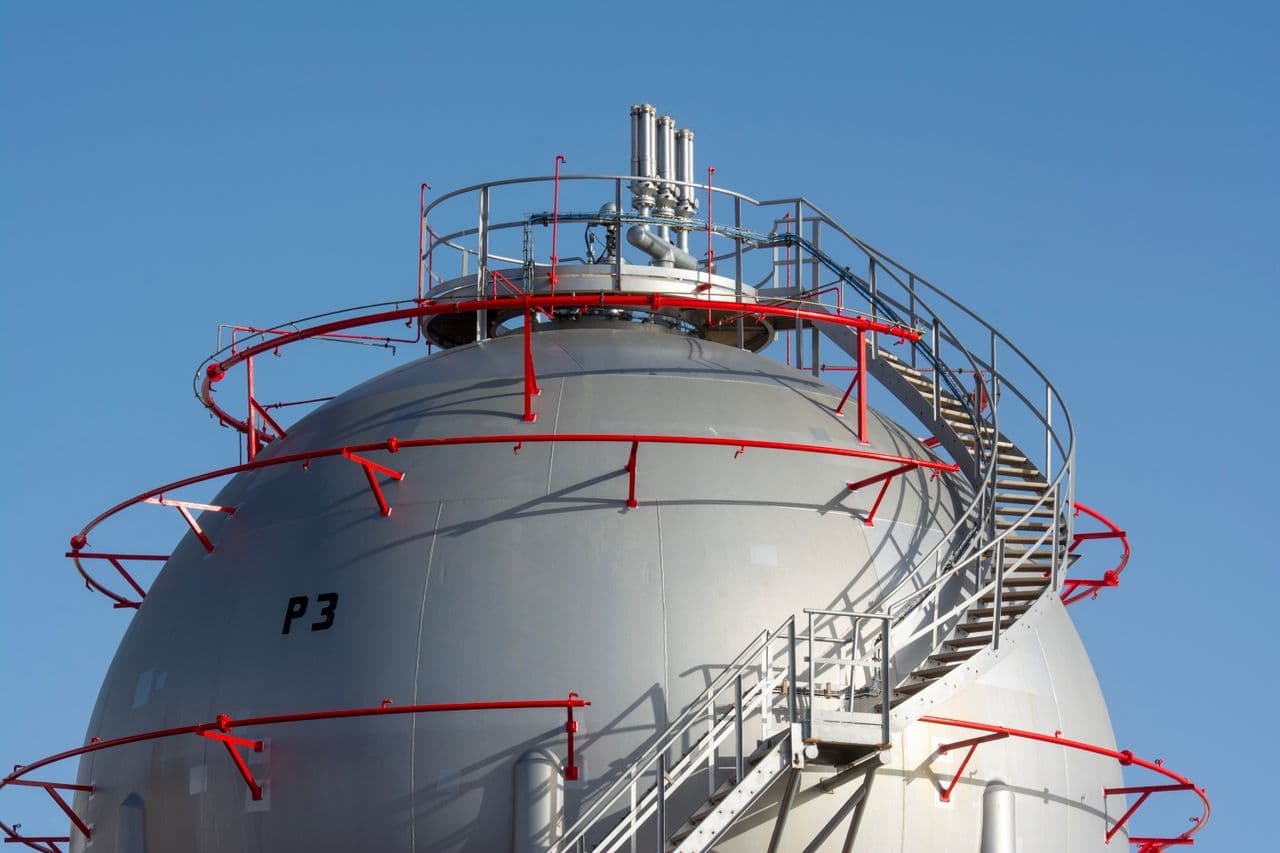
The process has two stages. Anaerobic digestion over a retention period of 25 to 30 days breaks the organic load down into biogas. A methane generation unit then upgrades that biogas, removing carbon dioxide and other components until the output reaches 99 per cent methane purity.
Purity is what makes the output usable rather than merely renewable. At 99 per cent, the gas is equivalent to natural gas in specification, so it can be fed to existing production line burners without modifying the combustion equipment or blending it down.
The installation is monitored from one central control point through an Industry 4.0-compliant automation infrastructure, which gives continuous visibility of digester conditions, gas output and purity rather than periodic sampling.
Biogas production itself is an established technology in the sector. What distinguishes the Manisa configuration is the combination of high-purity upgrading with a direct substitution role: the output is positioned specifically against the site's natural gas consumption rather than sold as raw biogas or used for electricity generation.
The plant is designed to accept feedstock from outside the site, which is the basis for extending it into a shared industrial resource rather than a single-factory asset.
Figure 1: Aerial view of the biomethanisation plant at the Manisa site: the anaerobic digester dome, the gas upgrading column and the pipework that carries the biomethane to the production halls

Figure 2: Employees at the Manisa plant, where the potato and crisp production residues that feed the digester are generated

Impact
Sustainability Impact
Climate
The initiative addresses Scope 1 emissions: the fuel burned on the company's own production lines. Every unit of biomethane fed into those burners displaces a unit of purchased fossil natural gas, so the reduction occurs inside the site boundary rather than through procurement of an offset.
In 2025 the plant produced 7.8 million kWh of biomethane and avoided 1,430 tonnes of CO2 emissions. The company expresses that volume as equivalent to the annual carbon absorption capacity of 65,000 mature trees, which is presented as a communication comparison rather than as an accounting method.
Biomethane purity of 99 per cent is itself an emissions parameter, because a lower-grade gas would have to be blended with natural gas rather than replacing it outright.
Five indicators are tracked: annual biomethane output, avoided CO2 emissions, tree equivalence, biomethane purity and communication reach.
Nature
Organic waste that previously left the plant as a disposal stream is now retained as an input, which reduces the volume requiring off-site treatment and the transport associated with it.
The streams entering the digester — potato and crisp residues, starch, oil and treatment sludge — are exactly the fractions that carry the highest organic load, so diverting them removes the most treatment-intensive part of the plant's waste profile.
Since 2025 the same capacity has absorbed organic waste from neighbouring factories, extending the diversion effect beyond the company's own boundary.
Social
The commissioning and communication activity around the plant reached 2.4 million people, and the initiative was presented publicly at general manager level with an emphasis on the private sector's responsibility to collaborate on environmental transformation.
Business Impact
Benefits
The plant converts a cost line into a supply line. Organic waste that had to be managed and paid for becomes a fuel that displaces purchased natural gas on the production lines, which reduces both disposal spend and energy procurement exposure at the same time.
Self-produced fuel also reduces the site's exposure to natural gas price movements and supply interruption, because part of the thermal demand is met from a source generated on site.
The automation infrastructure allows the process to be followed from one point, so performance deviations are visible immediately rather than at month end, and the same data supports operational and sustainability reporting without a separate collection exercise.
Within the group, the Manisa plant became a reference model: the approach has been implemented in Portugal and is planned for other markets, which turns a single site investment into transferable technical knowledge.
Costs
The investment was approximately TRY 150 million, financed 100 per cent from equity rather than through debt or subsidy, which is a significant capital commitment for a single production site.
Environmental permitting is a substantial part of the effort rather than an administrative step, and delay in those processes is identified by the company as one of the main risks to replication.
Operating cost shifts rather than disappearing: a specialist team of 29 people, digester management, upgrading unit operation, automation and maintenance replace the simpler arrangement of handing waste to a contractor.
The economics depend on feedstock continuity. A digester sized for a given organic load needs that load to arrive consistently, so extending supply to neighbouring factories introduces a dependency on other companies' production schedules and waste segregation discipline.
Costs are contained by using waste that is already generated on site, by placing the plant next to the demand it serves so no gas distribution investment is needed, and by sharing the technical model across the group rather than redesigning it for each market.
Impact Beyond Sustainability and Business
Co-benefits
The arrangement gives neighbouring factories a route for their organic waste that does not involve landfill or a distant treatment facility, which lowers their own disposal burden while filling the digester.
Because the model has been transferred to Portugal and is planned elsewhere, the technical learning from a single Turkish site is being converted into group-level capability rather than staying local.
The communication activity around the plant reached 2.4 million people, which raises the visibility of waste-to-energy conversion as an industrial option rather than a demonstration project.
Potential side-effects
Taking waste from other companies changes the risk profile. The plant becomes dependent on external suppliers for a material it needs continuously, and interruption in that supply reduces gas output at the moment the production lines expect it.
A continuously running biological process with an upgrading stage is more demanding to operate than a waste collection contract. It requires permanent technical staffing, and unplanned downtime in the automation or upgrading equipment converts the fuel supply back into a waste stream until it is restored.
The initiative substitutes the fuel rather than reducing the underlying thermal demand of the production lines. Process energy efficiency has to be pursued separately, otherwise the digester is sized against a demand that could itself have been lowered.
Environmental permitting timelines are outside the company's control and are the main determinant of how quickly a comparable plant can be built elsewhere.
Implementation
Typical Business Profile
The model suits food, beverage and agricultural processing manufacturers that generate a large, predictable stream of degradable organic waste on a single site and burn fossil gas for process heat at the same location.
It is most relevant where the waste and the thermal demand sit inside the same fence line, because the value comes from short-circuiting the two rather than from selling gas into a network.
Sites on organised industrial estates have an additional advantage, since neighbouring plants can supply further feedstock without long-distance transport.
Delivery engages production, engineering, maintenance, sustainability, environmental compliance and procurement functions, with senior management ownership because the capital commitment and the permitting timeline both sit above plant level.
Approach
Characterise the organic waste streams: Measure the volume, composition and seasonality of potato, crisp, starch, oil and treatment sludge residues, because digester sizing and gas yield depend on the organic load available rather than on total waste tonnage.
Size the plant against on-site gas demand: Set capacity by reference to the natural gas the production lines consume, so that the output has a guaranteed use and does not need a distribution route or an export tariff to be viable.
Start environmental permitting early and treat it as a critical path: Engage the environment and agriculture authorities and the industrial estate administration before construction planning, since permit timing determines the commissioning date more than the build does.
Build the anaerobic digestion stage: Install digesters operating on a retention period of 25 to 30 days, with feed preparation that keeps a mixed organic load stable rather than optimised for a single waste type.
Add an upgrading stage rather than stopping at biogas: Purify the raw biogas to 99 per cent methane so the output is specification-equivalent to natural gas and can enter existing burners without blending or equipment change.
Instrument the whole chain for central monitoring: Use Industry 4.0-compliant automation to track digester conditions, gas volume and purity continuously from one control point, and use the same data for operational control and sustainability reporting.
Extend feedstock beyond the site: Negotiate organic waste supply with neighbouring factories through the industrial estate and industry associations, with specifications and continuity terms agreed before the volume is built into the plant's operating plan.
Report a fixed indicator set: Track biomethane volume, avoided CO2, purity, tree equivalence and communication reach, and publish the results so that the model can be assessed and repeated by others.
Stakeholders Involved
Project leads: The initiative is run as a corporate transformation programme owned at senior management level inside the pep+ sustainability strategy, rather than as a standalone engineering project with its own governance. Ownership is integrated across production, engineering, sustainability and stakeholder management, which is what allows feedstock agreements with outside companies and permitting work to proceed alongside plant operation. The initiative was presented publicly at general manager level, which established the collaboration commitment externally as well as internally.
Company functions: A specialist team of 29 people operates the plant on site, supported by the company's engineering teams and by specialists from two of the group's other markets, Germany and Portugal, who contributed to installation, operational efficiency and knowledge transfer. Production, maintenance, environmental compliance, sustainability and procurement functions work to a shared monitoring cycle built on the automation infrastructure, so that gas output, purity and process conditions are read by all of them from the same source.
Main providers: Local suppliers and equipment contractors provided installation and technical support, and neighbouring industrial firms supply organic waste as feedstock under arrangements coordinated through the industrial estate. The supply relationships are structured as continuity commitments rather than spot transactions, because digester performance depends on a stable organic load.
Other: The Ministry of Environment, Urbanisation and Climate Change and the Directorate of Agriculture and Forestry are central to environmental permitting, compliance and site coordination. The organised industrial zone administration provides the framework within which waste sharing between neighbouring plants is arranged. Local authorities and industrial associations contribute to feedstock collaboration and local development. Public institutions and private sector representatives were brought together during the commissioning process, which is how the waste-sharing discussions with neighbouring companies began.
Key Parameters to Consider
Retention time of 25 to 30 days and an upgrading target of 99 per cent purity are the two technical parameters that determine whether the output can substitute natural gas directly.
Scalability rests on three conditions identified by the company: reliable supply of organic waste, management of environmental permitting and policy compliance, and continuity of production through advanced technology and automation. The corresponding risks are permitting delay, interruption of external waste supply and failure to keep the technical infrastructure running without interruption.
Capital structure matters for replication: the plant was financed entirely from equity, so the case does not depend on a subsidy or a specific incentive scheme being available.
The plant was commissioned in late 2023 and the model was extended to external feedstock in 2025, which indicates the interval between commissioning a single-site installation and operating it as shared industrial infrastructure.
Implementation and Operations Tips
Purity is the parameter to design around. A biogas plant that produces a lower-grade gas leaves the site still buying natural gas for the same burners; upgrading to specification equivalence is what converts the project from waste treatment into fuel substitution.
Permitting should be started before engineering is finalised. The company identifies permit delay as a primary replication risk, and it is the one element that cannot be compressed by spending more.
Feedstock agreements with neighbouring plants need specification and continuity terms, not goodwill. The digester is sized against an expected organic load, and a supplier changing its own process can move that load without notice.
Measuring reach alongside output was deliberate. The company tracks communication reach as a formal indicator because part of the intended effect is to change waste-management behaviour in the surrounding industrial base, which will not happen if the result stays inside the plant.