Turn quarry rehabilitation into measured nature recovery
 Çimsa Çimento Sanayi ve Ticaret AŞ
 SKD Türkiye
总结
Extraction sites are screened for ecological sensitivity, then managed under site-level biodiversity plans built on field inventories, seasonal surveys and camera traps.
Context
Submitted through the COP31 Sustainable Transformation Awards · SKD Türkiye (WBCSD Global Network Partner)
The company is a cement and construction materials producer operating in Türkiye and internationally, with more than 1,000 employees and quarry operations attached to its plants.
Cement production has a high land footprint. Extraction changes topography, hydrology and habitat over decades, and the sector's standard answer has been rehabilitation as a legal obligation discharged at the end of a licence, most often understood as tree planting on a worked-out surface.
That framing produces two problems. It arrives too late to influence how the site is operated, and it measures effort rather than outcome: an area can be planted without any evidence that ecological function has returned.
The company started from a different question in 2023 — which of its sites actually matter for nature, and what is living there now — in order to move site practice onto a data-based and prioritised footing. A materiality analysis examined 13 locations. A sensitivity analysis then ranked them on ecosystem integrity, biodiversity value and water risk, and prioritised 6.
Biodiversity is one of the 13 priority sustainability topics under Board oversight and is classified in the high-priority category, which is what gave the work a budget line and a reporting route rather than a project status.
Location of the initiative: Eskişehir plant and quarry sites, Türkiye, with the model extended to the company's plant site in Ireland
Solution
The programme replaces end-of-life rehabilitation with a management system that runs while the site is still working.
Screening comes first. Materiality analysis establishes which locations are in scope, and sensitivity analysis ranks them on ecosystem integrity, biodiversity value and water risk, so that scarce ecological expertise is directed at the sites where it changes the outcome.
Prioritised sites then receive a Biodiversity Management Plan. The plans are developed using WBCSD and Cement Sustainability Initiative guidance with the technical support of a specialist conservation organisation, and are built to prevent, reduce and manage effects on flora, fauna and habitats. Methodologically the model follows the IUCN mitigation hierarchy and the TNFD LEAP approach, so the sequence of avoid, reduce, restore and offset is explicit rather than implied.
Measurement covers four areas: species diversity and population status against the IUCN Red List, habitat integrity, ecosystem services, and water risk. The evidence comes from field inventories, seasonal observation, camera trap studies and an ecosystem services assessment framework — methods that record what uses the site rather than what was planted on it.
The plans are then written into operational practice. Operations are scheduled around species life cycles, and biological data enters decision-making alongside production data. The plans sit inside environmental legislation and compliance obligations, permit and licence processes, the ISO 14001 environmental management system and TNFD and TSRS reporting requirements, so the biodiversity plan is administered through structures that already exist.
Management is adaptive. Expert field reports and monitoring data feed a periodic review cycle, and plans are updated annually rather than fixed at approval.
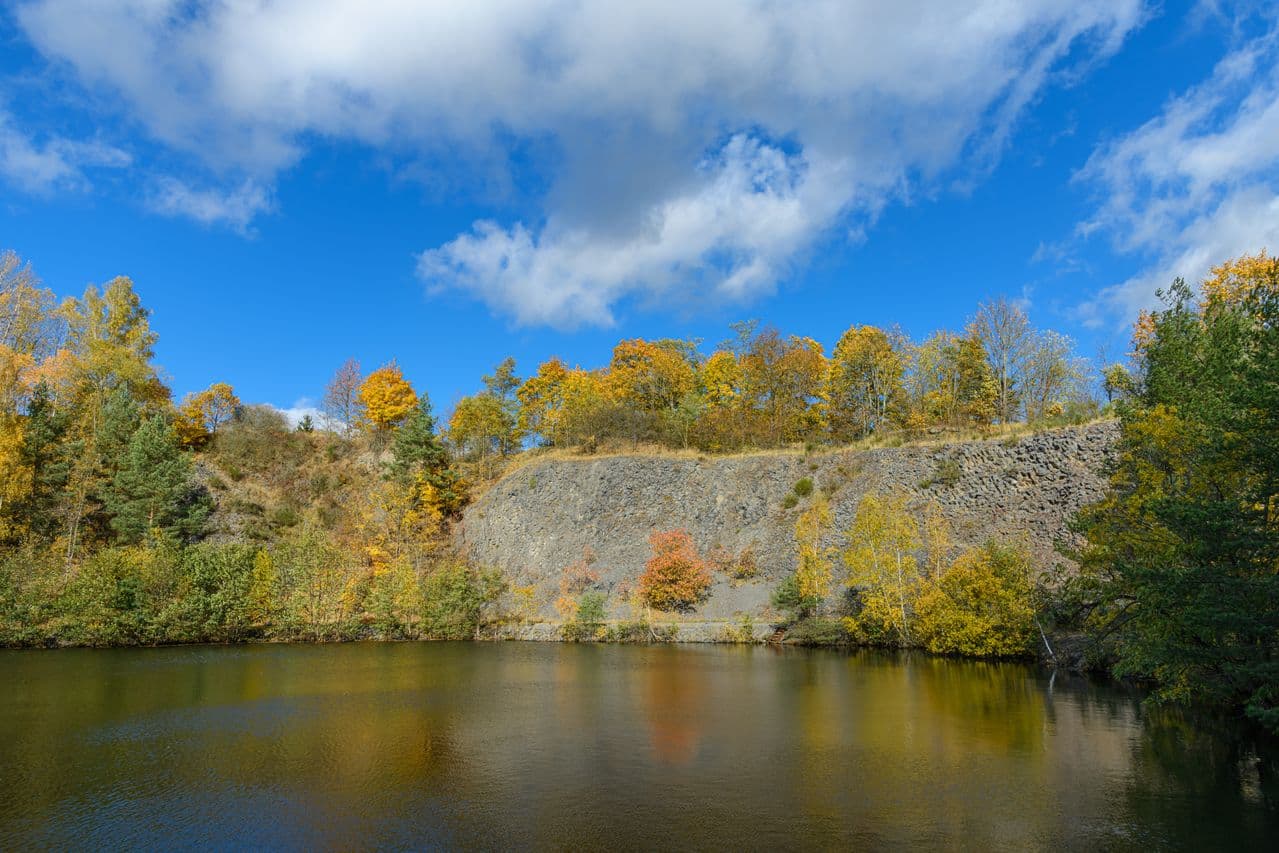
Figure 1: The wetland formed in the worked-out quarry inside the Eskişehir plant site, now monitored as habitat under the biodiversity programme

Impact
Sustainability impact
Climate
The programme does not target Scope 1 or Scope 2 emissions from cement production, which are handled separately under the Climate Crisis Management focus group, and no greenhouse gas reduction is claimed for the biodiversity plans themselves.
Two climate contributions are claimed, both on the adaptation side. Strengthening habitat integrity raises the resilience of local ecosystems to climate stress, and the wetland that formed on the worked-out extraction area inside the Eskişehir plant boundary, supported by afforestation and surface water routing, sustains the natural water cycle as well as habitat. Both are judged by the return of local species and the reintegration of ecosystems with natural cycles rather than by an emissions account.
The afforestation and the wetland will hold carbon, but the four indicators that carry the programme - plan coverage of priority locations, species recorded, site visits, and priority or threatened species - do not measure it, so no figure exists for the 2023 baseline year or for the 2023 to 2025 reporting period.
Nature
The programme's core result is that biodiversity at the priority sites is now measured rather than assumed. Structured Biodiversity Management Plan coverage of priority locations stood at 0 per cent in 2023, the baseline year, and reached 33 per cent by 2025.
At the two locations covered by the plans developed at the Eskişehir plant in 2025, 34 field visits recorded 76 different species. Alongside notable flora such as the plants known locally as Kocaçöven and Külgüzeli, the surveys documented active use of the area by three critical bird species — bearded vulture, golden eagle and white-tailed eagle — by two reptile species, the spotted terrapin and the land tortoise, and by three mammal species: otter, brown bear and the Anatolian blind mole rat. Species status is assessed against the IUCN Red List, so priority and threatened species are tracked as a distinct indicator.
The clearest before-and-after evidence comes from a worked-out extraction area inside the plant boundary. Left after its operating life ended, and supported by afforestation and surface water routing, the void gradually took on the character of an artificial lake and then of a wetland. It is now a feeding and breeding area for many bird and mammal species and provides habitat for both aquatic and terrestrial species.
Monitoring is seasonal and continuous: field visits, species counts and expert analysis over the three years from 2023 to 2025, with findings routed into a periodic reporting cycle and into revisions of the plans themselves.
Social
The programme treats biodiversity as a shared asset rather than as a technical compliance area. Awareness activities involving employees, students and local residents, seed collection walks and information meetings open the sites beyond their operational function.
That matters where a quarry has been part of a local landscape for decades: demonstrating that a worked-out extraction area can become a wetland used by protected species changes what the community expects from the site after operations end.
Ownership inside the company is also broad. Biodiversity performance is carried into the individual performance targets of all employees, not only of the environmental function, so the topic is present in day-to-day site decisions.
Business impact
Benefits
The first benefit is regulatory and permitting resilience. Because the plans are managed inside environmental legislation and compliance obligations, permit and licence processes and the ISO 14001 environmental management system, the evidence needed for a permit renewal or an inspection is already collected in a defensible form.
The second is disclosure readiness. Species, habitat, ecosystem service and water risk data assembled under the TNFD LEAP approach feeds TNFD and TSRS reporting directly, which removes the reporting scramble that follows a nature disclosure requirement arriving without underlying data.
The third is access to finance. Continuity of the programme is underwritten in part by green financing from the European Bank for Reconstruction and Development, alongside operational budgets and technical collaborations.
Operationally, planning activity around species life cycles reduces the risk of an unanticipated stoppage or a conflict discovered late, and a standard methodology applied across sites lowers the marginal cost of assessing each additional location.
Costs
The financing model is deliberately unexotic: field studies are integrated into operational budgets rather than funded as a separate programme, and technical collaborations with specialist partners extend implementation capacity.
The two material cost drivers are the need for local ecological expertise and the cost and time burden of site-based data collection. Seasonal observation, camera trap deployment and repeat visits — 34 at the first two locations alone — are labour-intensive and cannot be compressed, because the point of seasonality is that different species appear at different times of year.
Local ecological expertise is scarce and geographically specific. A company operating in several regions cannot rely on one advisory relationship, which raises coordination cost.
Both risks are managed through a standardised methodology and central coordination, so that each new site follows an established protocol instead of starting a fresh design. The trade-off is that the standard has to be maintained centrally, which requires a permanent function rather than a project team.
Impact beyond sustainability and business
Co-benefits
The programme shifts a sector definition. Where rehabilitation has been understood as tree planting, the model reframes it as the recovery of ecological function — a change that propagates through contractors, regulators and neighbouring operators once results are published.
Wetland formation on a worked-out extraction area supports the natural water cycle as well as habitat, and stronger habitat integrity raises the resilience of local ecosystems to climate stress.
Smaller interventions extend the approach beyond quarries. At the plant site in Ireland, a kestrel camera and bee colony support applications bring the same monitoring logic to an industrial site with a very different ecology, which demonstrates that the framework travels.
Potential side-effects
Coverage is still partial. Plans reach 33 per cent of priority locations, which means most prioritised sites are not yet under a structured plan, and results published from the covered sites should not be read as portfolio-wide performance.
Measurement creates obligations. Once a protected species is documented on a site, operational flexibility narrows: scheduling around life cycles can constrain the timing of extraction, blasting or haulage. That is the intended effect, but a company adopting the model should expect production planning to absorb it rather than treat it as an exception.
Species records are seasonal and vary between years, so a single survey season is not a baseline. Adaptive management with annual plan updates is what keeps the conclusions honest, and it means the monitoring cost is recurring rather than one-off.
Implementation
Typical business profile
The model is designed for companies with a high land footprint — cement, mining, quarrying and infrastructure businesses — where operations physically alter habitat over long periods.
It suits organisations with multiple sites, because the value of the screening step comes from comparing locations against each other before committing ecological resources.
Delivery requires plant management, raw material and extraction teams, and environment and sustainability functions working across their usual boundaries, plus access to external ecological expertise.
Approach
Screen the whole site portfolio for materiality: Assess every location — 13 in this case — against a consistent set of criteria, so that prioritisation is an evidence-based decision rather than a response to whichever site is under scrutiny.
Rank the shortlist on ecological sensitivity: Apply a sensitivity analysis covering ecosystem integrity, biodiversity value and water risk to select the priority locations; 6 of the 13 were prioritised on this basis.
Set a baseline and a coverage indicator before any field work: Record the starting position honestly — structured plan coverage of priority sites was 0 per cent in 2023 — so that progress is measured against a real baseline, reaching 33 per cent by 2025.
Build the plan on established methodology rather than local invention: Use the IUCN mitigation hierarchy and the TNFD LEAP approach, with WBCSD and Cement Sustainability Initiative guidance, and bring in a specialist conservation organisation as technical adviser for species and habitat prioritisation and monitoring design.
Run a structured field programme: Combine field inventories, seasonal observation, camera trap studies and ecosystem service assessment; 34 site visits across two locations produced records of 76 species with status assessed against the IUCN Red List.
Treat worked-out extraction areas as habitat assets: Support natural succession with afforestation and surface water routing so that a depleted quarry can develop into a wetland, and monitor the result instead of declaring the site closed.
Write biodiversity into operational decisions: Schedule operations around species life cycles, route biological data into planning, and manage the plan inside environmental legislation, permit and licence processes, the ISO 14001 environmental management system and TNFD and TSRS reporting.
Review, adapt and replicate: Report periodically, update plans annually on the basis of expert field reports, extend the method to the remaining priority locations, and apply the same monitoring logic at other sites — such as the kestrel camera and bee colony support applications at the plant in Ireland.
Stakeholders involved
Project leads: Biodiversity is one of the 13 priority sustainability topics under Board oversight and is held in the high-priority category, with the sustainability strategy shaped under Board leadership. Operational ownership sits with the Sustainability, Occupational Health and Safety and Environment Directorate, reporting to the Deputy General Manager for Human Resources and Sustainability. The Sustainability Management Committee, which meets at least four times a year, and the Climate Crisis Management focus group monitor implementation and performance of environmental priorities including biodiversity. Ownership is not confined to senior management: biodiversity objectives are integrated into the individual performance targets of all employees.
Company functions: Implementation runs through cross-functional collaboration between plant managements, raw material teams and the environment and sustainability functions. That combination is deliberate. Plant management controls the operating schedule, the raw material team controls where and when extraction happens, and the environmental function holds the ecological evidence; a plan agreed by only one of the three does not survive contact with the production plan.
Main providers: A specialist conservation organisation acts as technical adviser, with an active role in species and habitat prioritisation, monitoring methodology and the planning of field visits. Local academics and ecological experts are engaged site by site, which is what allows region-specific ecological knowledge to enter the management plans directly rather than being approximated from national data.
Other: WBCSD and the Cement Sustainability Initiative supply methodological input at the global level through their guidance documents. The European Bank for Reconstruction and Development provides green financing that underwrites continuity of the work. Local communities, students, local residents and employees participate through awareness activities, seed collection walks and information meetings. The feedback mechanism runs through expert field reports and a continuously updated management approach: monitoring data and scientific findings are used to revise site practice on a regular cycle, which turns the programme into a learning process rather than a fixed model.
Key parameters to consider
The programme began in 2023, which is also the baseline year; reported data covers 2023 to 2025. The stated objectives are to halt and reverse biodiversity loss in the company's area of influence by 2030 and to improve ecosystems by 2050 — these remain targets, and progress against them is measured by the return of local species and the reintegration of ecosystems with natural cycles rather than by area treated.
Four indicators carry the programme: the share of priority locations with a Biodiversity Management Plan started, the number of species recorded, the number of site visits, and the number of priority or threatened species.
Methodology follows the IUCN mitigation hierarchy and the TNFD LEAP approach; management runs inside the ISO 14001 environmental management system and TNFD and TSRS reporting requirements. Corporate disclosure is aligned with ISSB (IFRS S1 and S2) and TCFD, reported to CDP, and subject to independent third-party external assurance.
Funding comes from operational budgets, technical collaborations and green financing from the European Bank for Reconstruction and Development. The main risks are the availability of local ecological expertise and the cost and time burden of field data collection, both managed through standard methodology and central coordination.
Implementation and operations tips
Screen before planting. The most valuable step is the comparison of sites against each other; committing ecological budget to a low-sensitivity location because it is convenient is the most common way this work loses its value.
Record a zero honestly. Starting the coverage indicator at 0 per cent in the baseline year made the subsequent 33 per cent meaningful; a baseline chosen to look favourable removes the ability to demonstrate progress.
Camera traps and seasonal repeat visits are what make species claims defensible. A single walk-through survey will miss nocturnal and seasonal species, and an unverifiable species list will not survive external assurance.
Bring in local ecological expertise rather than relying on national datasets. Region-specific knowledge is what identifies which species matter on a given site.
Attach the plan to structures that already exist — permits, the environmental management system, the reporting cycle — so that biodiversity is administered rather than championed, and put the objective into everyone's performance targets so that it survives a change of personnel.