Use swimming to include children with Down syndrome
 Abdi İbrahim
 SKD Türkiye
总结
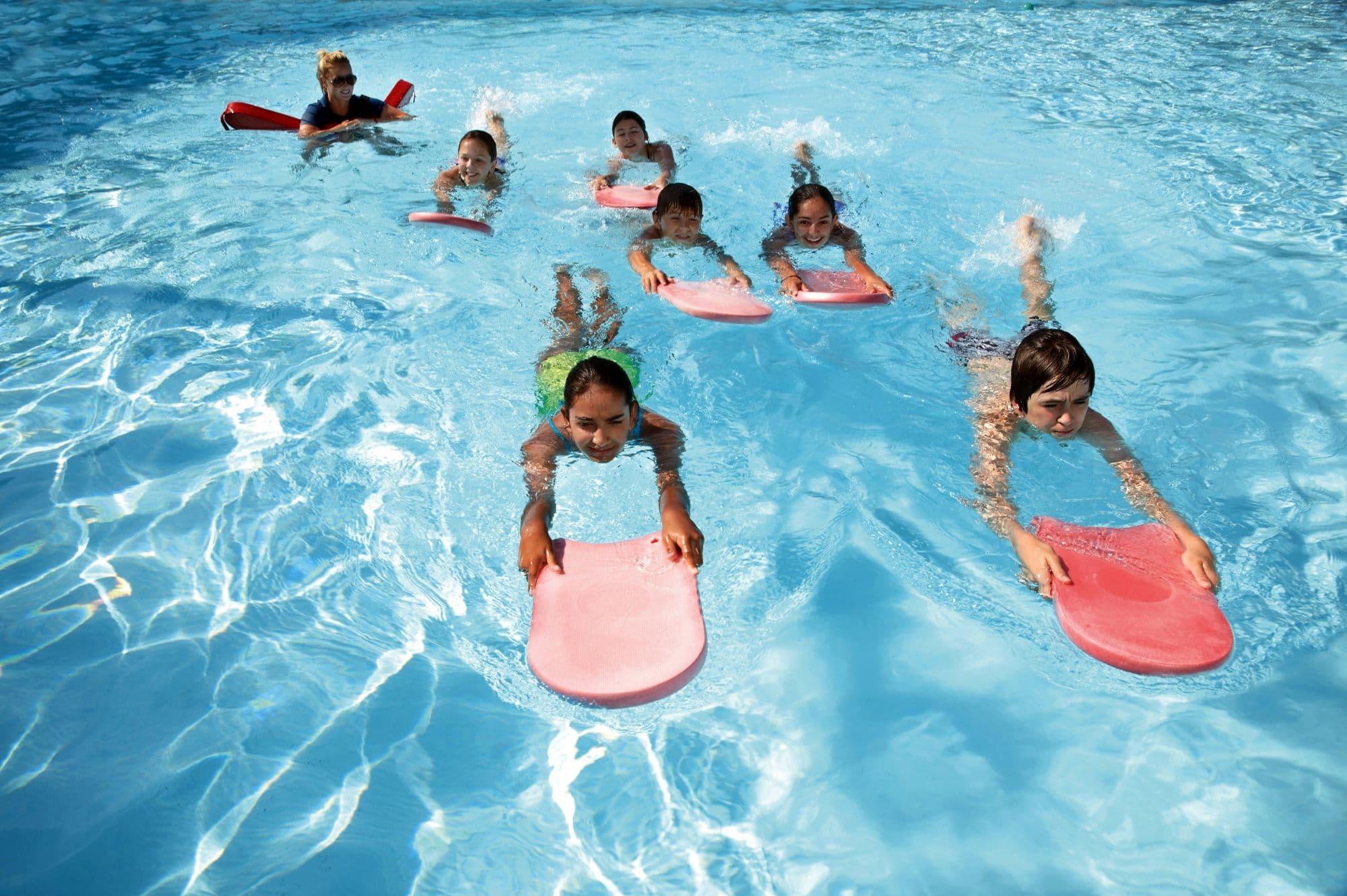
Children with Down syndrome learn to swim in structured 16-week terms with specialist instructors, building water safety, confidence and social participation.
Context
Submitted through the COP31 Sustainable Transformation Awards · SKD Türkiye (WBCSD Global Network Partner)
The organisation is a corporate foundation employing fewer than 50 people, whose social investment portfolio covers health access and the inclusion of groups excluded from mainstream provision.
Children with Down syndrome face an access gap in sport that has nothing to do with capability. Mainstream swimming provision assumes a coaching ratio, a pace of instruction and a level of independent supervision that does not fit a child who needs individual attention in the water, and specialist provision is scarce, expensive or geographically limited. The result is that a physical activity with unusually strong developmental returns for this group is the one they are least likely to receive.
The returns are not confined to swimming. Water work develops physical coordination, but also confidence, social interaction and autonomy, because a child who learns to be safe in an environment that initially frightens them carries that competence into other settings.
Families are affected as directly as children. Where no suitable programme exists, parents supervise activity themselves without specialist support, or withdraw from it, and their expectations of what their child can achieve narrow accordingly.
The foundation set out to close the gap with a structured programme rather than a one-off event, and to measure whether it worked. The initiative began in 2024, which is the baseline year for impact monitoring, and has run continuously since.
Location of the initiative: Türkiye, delivered with Türkiye Down Syndrome Association, with extension to further provinces planned
Solution
The initiative is a structured swimming programme for children with Down syndrome, designed and delivered with Türkiye Down Syndrome Association, which shapes the content around the developmental needs of the children rather than around a standard learn-to-swim syllabus (1).
The programme runs in terms of 16 weeks each, with 20 children admitted per term, aged 5 to 9. The term length is the design decision that separates this from an activity day: skills in the water consolidate over months, and a shorter course produces exposure rather than competence.
Professional instructors deliver the sessions and specialists follow each child's development individually throughout the term, so progress is tracked per child rather than per group.
The declared purpose extends past the swimming stroke. Sessions are structured to build confidence, discipline, social interaction and a sense of independence, and children who begin needing support with water adaptation, confidence and social interaction end the term with a safer relationship with water, an acquired swimming skill and more active participation in social settings.
Families are brought into the process rather than left at the poolside. Their observation and feedback are collected systematically, which supports the child's development journey as a whole and gives the programme its main source of design input for the following term.
Visibility is treated as part of the design. National-team swimmers take part as role models, which raises the children's motivation and, together with certificate ceremonies, social media content and press work, raises public awareness of what children with additional needs achieve.
Four consecutive terms have run since 2024.
Impact
Sustainability impact
Climate
This initiative targets neither Scope 1 nor Scope 2 emissions. It is a sport and social inclusion programme, and no greenhouse gas figure has been calculated for it since delivery began in 2024.
The one place a climate consideration could be designed in is the planned extension to further provinces, where running terms locally rather than concentrating provision in one city would shorten the journeys families make each week. No such calculation has been made. The sustainability impact of the initiative is social and is reported under Social impact below.
Social
The programme addresses inequality of opportunity in access to sport for children with additional needs, and the results are measured per term rather than claimed in general.
Attendance has been sustained above 85 per cent across the terms delivered to date, which for a programme requiring a weekly journey to a pool over 16 weeks is the primary evidence that the design fits the families it serves.
Progress was recorded for 100 per cent of participating children in at least one of four development areas: physical development, social and behavioural development, cognitive development, and autonomy. Recording improvement in at least one area, rather than in a single headline skill, is what allows the claim to hold across children who start from very different points.
Family satisfaction reached 94 per cent in feedback collected from parents.
The before-and-after comparison is qualitative and specific. Children who arrived needing support with water adaptation, confidence and social interaction finished the term with a safer relationship with water, an acquired swimming skill and more active participation in social environments.
Measurement uses instructor observation, individual development assessment, attendance tracking and family feedback surveys, monitored throughout each 16-week term and reported at term end.
Beyond the participants, the programme has changed how families view sport for their children and has increased visibility for children with additional needs through social media, certificate ceremonies and awareness work.
Business impact
Benefits
The programme has become a standing part of the foundation's social investment portfolio rather than a one-off activity, which gives the organisation a repeatable commitment it can plan and budget against across years.
Measured results support that continuity. Attendance above 85 per cent, improvement in at least one development area for 100 per cent of children and 94 per cent family satisfaction give the foundation an evidence base for continuation and expansion decisions that a participation count alone would not provide.
Partnering with the specialist association removes the need to build clinical and pedagogical expertise in-house. Target group identification, content design and expert support come from the partner, which is what allows a foundation of fewer than 50 people to run a specialist programme at all.
The structure is standardised, so extending to another province is an operational exercise rather than a redesign, and operational sustainability is secured through expert delivery partners rather than through direct employment.
Visibility is achieved at low marginal cost. Role model athletes, certificate ceremonies and communications work generate awareness without a separate campaign budget, and the awareness contributes directly to the inclusion objective rather than sitting alongside it.
Internally the programme has strengthened the culture of inclusion and social responsibility in the founding organisation, because education, communications and impact measurement are managed as one integrated activity.
Costs
The recurring cost is delivery: pool access for 16 weeks per term, professional instructor fees, and the time of psychologists, specialists and coordinators who follow each child individually.
The cost per child is deliberately high. A high ratio of specialists to children is what makes the programme safe and effective, and reducing it to serve more children would change the outcome the measurements record. That trade-off is the central economic constraint of the model.
Assessment carries its own cost. Individual development evaluation, attendance tracking, family surveys and term-end reporting require specialist time separate from the poolside hours, and it is that spend which produces the evidence base rather than the swimming itself.
There is no participant fee. The programme is funded from the foundation budget, so cost is not offset by revenue and continuation is a budget decision each term.
Geographic extension multiplies the fixed elements before it multiplies the reach: each new province requires its own pool arrangement, its own instructor network and its own coordination, even though the curriculum transfers unchanged.
Medium and long-term sustainability is supported through budget planning, expert delivery partners and periodic impact measurement, and the scope of the programme has been developed from term to term in the light of the results.
Impact beyond sustainability and business
Co-benefits
The programme has changed how participating families view sport for their children, which affects activity choices beyond the 16 weeks and beyond swimming.
Awareness of inclusive sport practice has increased more widely, and the visibility of children with additional needs has strengthened through social media content, certificate ceremonies and communications work that carry individual success stories to audiences well beyond the programme.
Instructors and specialists build inclusive coaching capability that stays with them and is applied in their other work, which extends the effect into mainstream provision.
Potential side-effects
20 places per term against a far larger eligible population means selection, waiting and disappointment. Families who are not admitted experience the programme as another closed door, and demand management is part of running it honestly.
A 16-week term ends. Water confidence and social gains can regress without a continuation route, so the developmental claim is only fully justified where families can access a follow-on activity, and the programme does not currently provide one.
Attendance and satisfaction figures describe families who chose to enrol and were able to travel weekly for 16 weeks. They are strong results for the participating group and should not be read as representative of all families with a child with Down syndrome, particularly those with the least transport and time flexibility.
Recording improvement in at least one of four development areas is a deliberately broad measure. It is honest about the diversity of starting points, but it does not distinguish a small gain from a large one, and a more granular measure would strengthen the evidence.
Relying on appearances by national-team athletes for visibility is not repeatable at scale, so a provincial rollout needs a communications approach that does not depend on their availability.
Implementation
Typical business profile
The model suits corporate foundations and social investment functions that want a measurable, repeatable programme in the inclusion field rather than event-based giving, and that are prepared to fund a high specialist-to-participant ratio.
It requires a partnership with a condition-specific organisation able to identify the participants and shape the content, access to a suitable pool and a network of instructors and psychologists able to work with children with additional needs.
It applies to any sport where safety requires close supervision and where the developmental returns extend past physical fitness. It is not a fit for organisations seeking high participant numbers per unit of spend, because the ratio that produces the results is also what limits the scale.
Approach
Partner with a condition-specific organisation before designing anything: Work with the national association for the condition to identify the target group, shape the content around the children's developmental needs and supply expert input, rather than adapting a mainstream syllabus after the fact.
Fix the age band and the group size deliberately: Admit a defined cohort per term, here 20 children aged 5 to 9, so that instruction can be pitched to a comparable developmental range and supervision remains close enough to be safe.
Set a term length long enough for skill to consolidate: Run 16-week terms so that water competence is acquired rather than merely sampled, and so that instructors have enough contact time to assess development reliably.
Staff for supervision rather than throughput: Deploy professional instructors alongside psychologists and coordinators, and have specialists follow each child's development individually through the term, accepting the cost per child that this implies.
Define the development areas before the first session: Agree in advance the areas to be assessed, in this case physical development, social and behavioural development, cognitive development and autonomy, so that progress is measured against a stated framework rather than described afterwards.
Enrol families as participants, not spectators: Collect regular feedback, observation and satisfaction surveys from parents through the term, and use the results to shape the following term, so the programme develops with the needs of the participants.
Convert delivery into visibility deliberately: Involve role model athletes in sessions to raise the children's motivation, and use certificate ceremonies, social media and press work to carry participants' achievements to a wider audience as an inclusion outcome in its own right.
Report at the end of every term and standardise what worked: Compile instructor evaluations, family feedback and attendance data at term end, adjust the scope for the next term, and hold the structure stable enough that another province can run the same programme without redesigning it.
Stakeholders involved
Project leads: The initiative is run by the foundation in coordination with the corporate communications function of the founding organisation, and is supported by senior management as one of the institution's social investment areas rather than as a communications activity. Stakeholder management, communications, impact measurement and operational processes are each tracked by specialist teams, and medium and long-term sustainability is supported through budget planning, expert delivery partners and periodic impact measurement.
Company functions: Foundation programme management runs admissions, scheduling and partner coordination. Corporate communications handles visibility, certificate ceremonies and press work. Impact measurement compiles instructor evaluations, family feedback and attendance data at the end of each term. Managing education, communications and social impact as one integrated activity is what has embedded the programme in the institution rather than leaving it dependent on a single sponsor, and it has strengthened the internal culture of inclusion in the process.
Main providers: Professional swimming instructors, psychologists and coordinators deliver the programme as specialist partners, and pool operators provide the facilities. Operational sustainability rests on these expert partners rather than on directly employed staff, which is what allows a small foundation to run a programme requiring a high ratio of specialists to children.
Other: Türkiye Down Syndrome Association took an active role in identifying the target group, shaping the education content to the children's developmental needs and providing expert support. The children's families are active stakeholders rather than observers. Regular feedback, observation processes and satisfaction surveys collect their views, and those responses are used in developing subsequent terms. National-team swimmers take part as role models, raising participants' motivation and contributing to public awareness. The local community is reached through social media content, certificate ceremonies and visibility work, which is where the awareness effect beyond the participants is produced.
Key parameters to consider
The programme began in 2024. The fourth term completes in June.
Term structure: 16 weeks per term, 20 children per term, participants aged 5 to 9.
Results to date: attendance above 85 per cent, progress in at least one development area for 100 per cent of children, family satisfaction 94 per cent.
Measurement: instructor observation, individual development assessment, attendance tracking and family feedback surveys, monitored through each term and reported at term end.
Extension: delivery in further provinces and a larger number of participating children are targeted, supported by partnerships with non-governmental organisations, local authorities, sports clubs and companies. The standardised education structure is what makes delivery in other regions practical.
Implementation and operations tips
Term length and group size are the two variables that decide whether the programme develops competence or only provides activity. Shortening the term or enlarging the group will produce participation numbers and lose the results.
A condition-specific partner organisation is the route to both the right children and the right content. Recruiting participants directly, without that partner, tends to reach the families already best served.
Assess against at least one improvement area per child rather than a single common outcome. Children start from very different points, and a single benchmark either excludes them or overstates what was achieved.
Treat family feedback as the operational signal, not as a public relations output. It is the practical basis for deciding whether to run the next term and what to change in it.
Plan the exit before the first term starts. A programme that ends after 16 weeks without a continuation route risks losing the confidence it built, and identifying local clubs willing to receive participants afterwards costs little at the design stage.